
Why Microfiber Lining Is Strategic for High-End Footwear
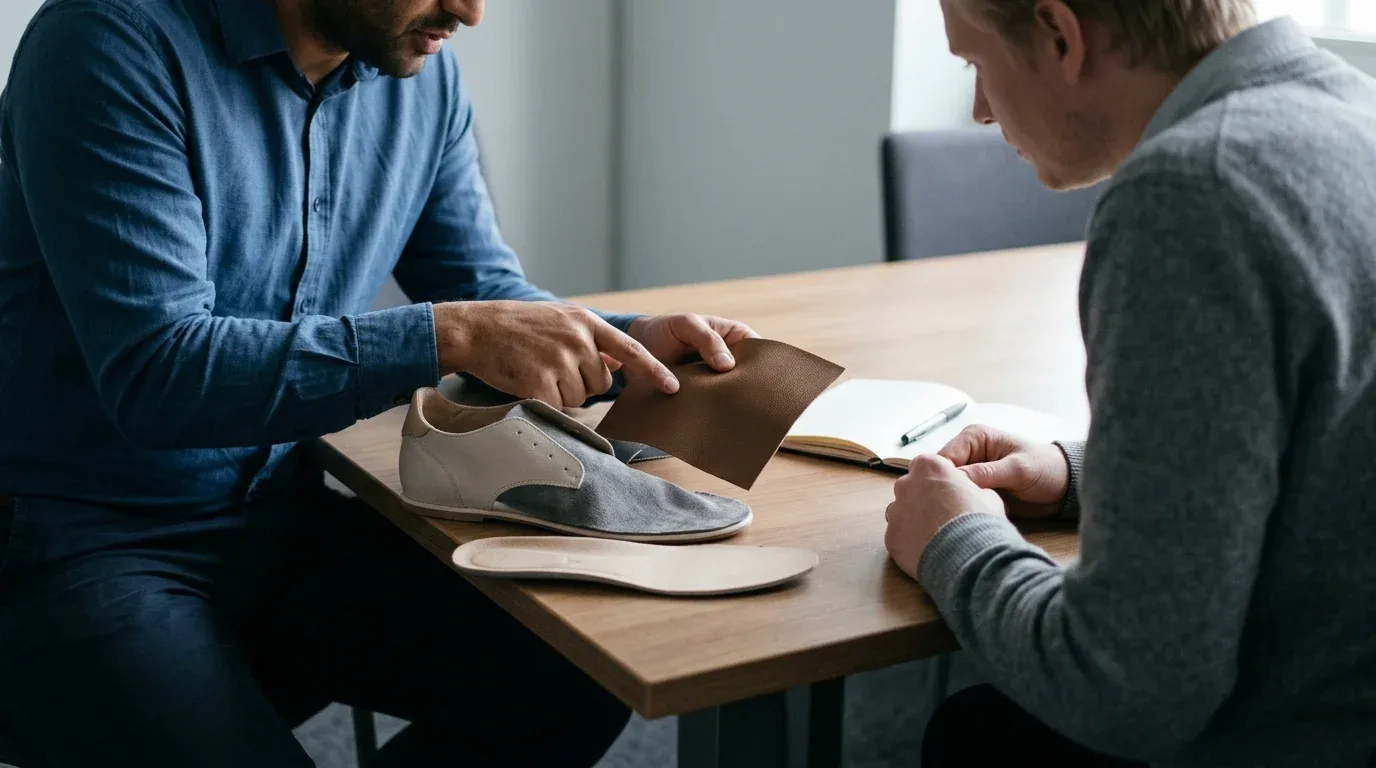
The transition from traditional leather to advanced synthetic materials has fundamentally reshaped global footwear manufacturing. For B2B procurement teams and factory managers, microfiber lining represents a critical upgrade in the bill of materials, balancing premium aesthetics with highly predictable manufacturing metrics.
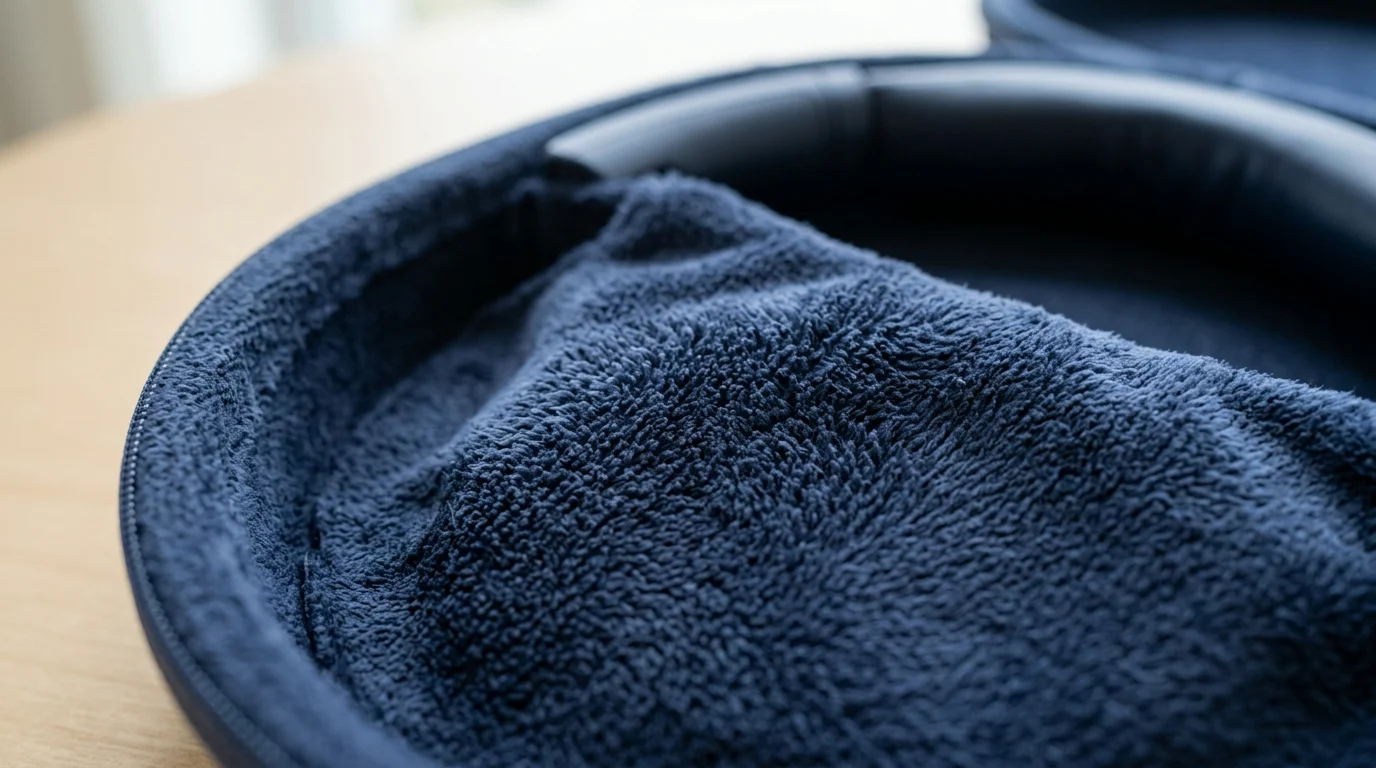
Unlike standard polyurethane (PU) or polyvinyl chloride (PVC) synthetics, microfiber lining closely mimics the microscopic structure of natural collagen fibers. This structural similarity allows brands to elevate their product positioning without incurring the unpredictable costs and supply chain volatility associated with genuine animal hides.
Premium positioning and brand value
Microfiber lining allows footwear brands to maintain premium product positioning while drastically optimizing production efficiency. A primary driver of this value is material consistency. Natural hides inherently suffer from scars, irregular shapes, and inconsistent thickness, resulting in a standard cutting yield of just 70% to 75%.
In contrast, microfiber lining is manufactured in continuous rolls with uniform edge-to-edge quality, enabling automated CNC cutting systems to achieve yields exceeding 98%. This near-zero waste metric translates into significant cost savings at scale, allowing brands to reinvest margins into other technical components while delivering a consistently premium interior feel to the end consumer.
Footwear categories driving demand
Demand for high-grade microfiber lining is heavily concentrated in performance athletics, luxury vegan footwear, and specialized occupational boots. In the athletic sector, internal friction and moisture management are paramount. High-performance running and court shoes require lining materials capable of sustaining a moisture vapor transmission rate (MVTR) exceeding 3,000 g/m²/24h to ensure thermal regulation.
Furthermore, the rapid growth of the luxury vegan market requires materials that pass strict aesthetic and tactile evaluations while avoiding animal derivatives. In heavy-duty occupational and tactical footwear, microfiber is selected for its superior dimensional stability and resistance to caustic chemicals, outperforming traditional pigskin or cow split linings under sustained mechanical stress.
Microfiber Lining Basics and Key Technical Specifications
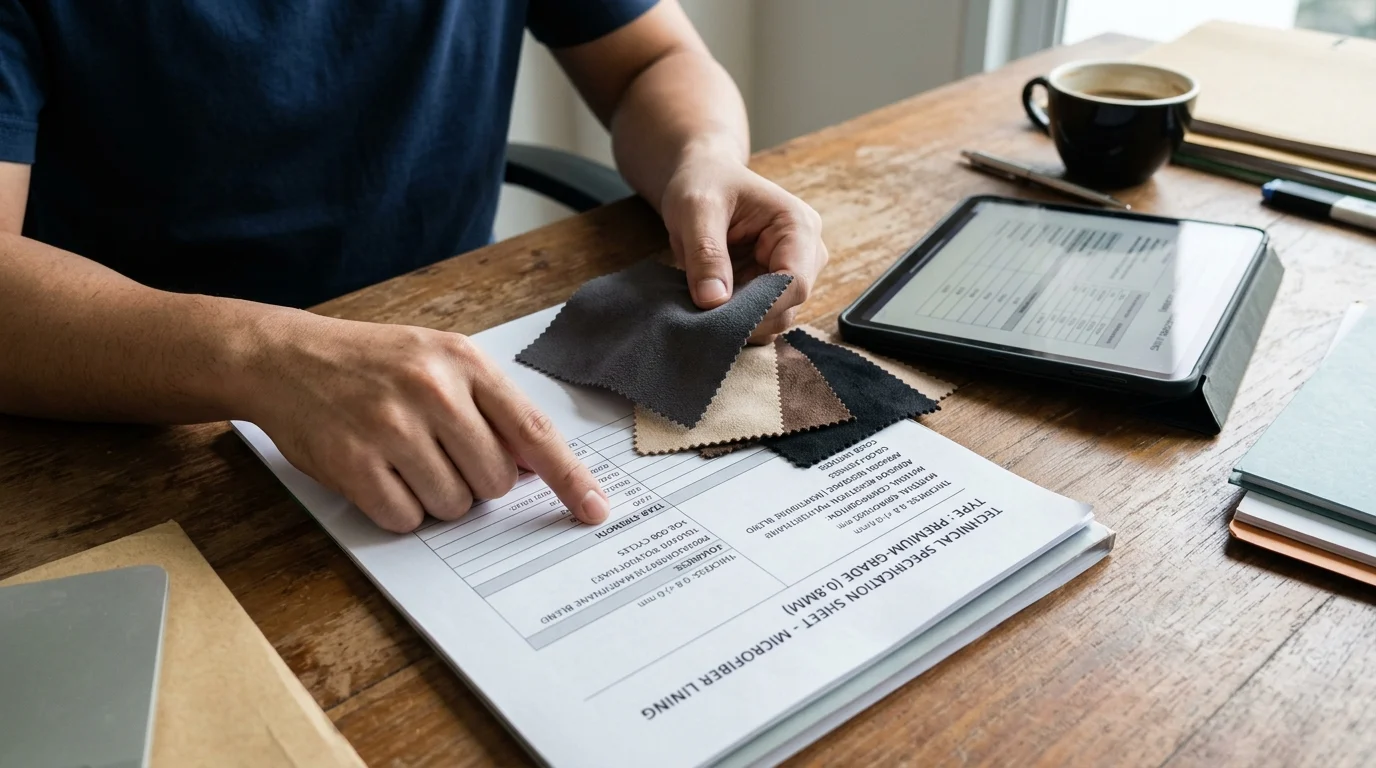
Understanding the technical architecture of microfiber lining is essential for sourcing professionals when evaluating material data sheets. The performance of the final footwear product is directly correlated to the precision of the synthetic base and the quality of the polyurethane impregnation.
Construction and material structure
True microfiber lining utilizes a sophisticated sea-island spinning technique, creating ultra-fine polyamide (nylon) or polyester fibers that are typically less than 0.01 denier in thickness. These microfibers are needle-punched into a dense, three-dimensional non-woven matrix.
Once the structural matrix is formed, it is impregnated with high-grade polyurethane resin through a coagulation process. The polyurethane fills the microscopic voids between the fibers, resulting in a composite material that replicates the porous, breathable, and flexible nature of natural dermis.
Core performance indicators for buyers
Procurement teams must mandate specific performance thresholds to ensure durability and comfort. A high-quality footwear lining should achieve a Martindale abrasion resistance of at least 51,200 cycles without exhibiting significant pilling or structural failure.
Colorfastness is another critical indicator, particularly for linings that will be exposed to sweat and friction. Buyers should specify a colorfastness to rubbing (both wet and dry) of Grade 4 or higher to prevent dye transfer onto the wearer’s socks. Additionally, peel strength between the PU surface and the microfiber base should consistently exceed 3.0 kg/3cm to prevent delamination during the lasting process.
Comparison criteria for supplier evaluation
When auditing potential suppliers, buyers should utilize a standardized matrix to compare material capabilities. The table below outlines standard benchmarks used to evaluate footwear lining options.
| Evaluation Criteria | Microfiber Lining | Standard PU Synthetic | Genuine Pigskin Lining |
|---|---|---|---|
| Thickness Tolerance | +/- 0.05 mm | +/- 0.10 mm | +/- 0.30 mm |
| Cutting Yield | > 98% | > 95% | 70% – 75% |
| Breathability (MVTR) | High (> 3,000 g/m²) | Low (< 1,000 g/m²) | Moderate to High |
| Tear Strength | Excellent (> 40N) | Moderate (15N – 25N) | Variable (depends on hide) |
| Cost Predictability | Highly Stable | Stable | Highly Volatile |
This comparative data provides a foundation for cost-benefit analyses, proving that while microfiber may carry a higher per-meter FOB price than standard PU, its superior yield and failure rate reduction often result in a lower total cost of manufacturing.
How to Source Microfiber Lining for Footwear Programs
Transitioning a footwear program to microfiber lining requires a structured sourcing strategy to mitigate supply chain risks. Identifying capable manufacturing partners ensures consistent lot-to-lot quality and adherence to strict delivery schedules.
Supplier qualification criteria
Effective supplier qualification mandates evaluating a manufacturer’s vertical integration and historical footprint. Suppliers with over 20 years of dedicated expertise in synthetic leather are generally better equipped to handle custom formulations.
Buyers should prioritize factories capable of handling both the non-woven substrate creation and polyurethane impregnation in-house. This vertical integration reduces lead times and ensures strict quality control over the fiber density. Furthermore, ISO 9001 certification and a documented quality management system (QMS) are non-negotiable baselines for high-volume B2B partnerships.
Sampling, pricing, and packaging review
Standard minimum order quantities (MOQs) for custom-dyed microfiber lining typically range from 500 to 1,000 linear meters per colorway. Pricing is heavily dependent on material thickness and physical treatments; a standard 0.6mm to 0.8mm lining generally costs between $3.50 and $5.50 per linear yard, FOB China.
Packaging integrity is equally vital to prevent transit damage. High-end microfiber should be rolled on sturdy cardboard cores (typically 3-inch diameter) in lengths of 30 to 50 meters. To prevent moisture ingress and pressure marks during maritime shipping, rolls must be wrapped in double-layer polyethylene bags and clearly labeled with batch numbers, thickness, and yardage.
Practical sourcing workflow for buyers
A secure sourcing workflow begins with the approval of A4-sized lab dips to verify color matching under standard D65 lighting. Once the color is approved, the buyer should commission physical property testing via independent labs like SGS or Intertek.
Following successful lab tests, procurement teams should order a 50-meter trial roll. This allows the footwear factory to conduct real-world cutting, skiving, and lasting tests to verify tooling compatibility. Upon factory approval, bulk production can commence, with standard lead times generally spanning 15 to 25 days from purchase order confirmation to ex-works delivery.
Compliance, Sustainability, and Logistics Considerations
Global footwear supply chains operate under increasingly stringent regulatory, environmental, and logistical frameworks. Ensuring that microfiber lining meets international trade standards is critical to avoiding customs seizures and protecting brand reputation.
Compliance requirements and test standards
Footwear materials imported into the European Union and North America must pass rigorous third-party testing protocols. Crucial mechanical standards include SATRA TM31 for abrasion resistance and SATRA TM25 for rub fastness.
From a chemical standpoint, strict adherence to the EU’s REACH directive and California’s Proposition 65 is mandatory. Suppliers must provide valid testing reports proving the absence of restricted heavy metals, azo dyes, and phthalates in the polyurethane coating and fiber matrix.
Sustainability and restricted substance control
The synthetic leather industry is rapidly shifting toward more sustainable manufacturing processes. A primary focus is the elimination of Dimethylformamide (DMF), a toxic solvent traditionally used in PU coagulation. Progressive brands now require DMF-free microfiber, mandating residual DMF levels to remain strictly below 30 ppm (parts per million).
Additionally, the adoption of water-based PU resins and recycled PET base fibers is accelerating. Buyers targeting eco-conscious demographics should seek suppliers offering Global Recycled Standard (GRS) certified microfiber, which provides verifiable traceability for post-consumer recycled content.
Shipping and logistics factors
Logistics optimization provides a distinct advantage when sourcing microfiber lining compared to genuine leather. Because microfiber is uniform in weight and dimension, freight planning is highly predictable. A standard material weight for 0.8mm lining is approximately 350 g/m².
For high-volume programs, container loading efficiency is a key cost driver. A standard 20-foot shipping container (TEU) can accommodate approximately 18,000 to 20,000 meters of 0.8mm microfiber lining packaged in standard 50-meter rolls. Maximizing this volumetric capacity significantly reduces the per-meter landed freight cost, improving overall gross margins.
How to Decide if Microfiber Lining Is the Right Choice

Determining the viability of microfiber lining for a specific footwear program requires a comprehensive analysis of the total landed cost and end-use requirements. Procurement decisions must look beyond the initial per-meter price to evaluate manufacturing efficiencies and product lifespan.
Best-fit application scenarios
Microfiber lining is the optimal choice for high-friction and high-stress internal components. It excels in applications such as heel counters, collar linings, and insoles, where its superior tear strength—often exceeding 40N—outlasts conventional PU and lower-grade splits.
It is also the definitive material for scale-driven footwear programs that utilize automated cutting machinery. By transitioning from leather to microfiber, factories often report a 5% to 10% reduction in direct labor costs associated with material inspection, manual pattern placement, and defect sorting.
Procurement decision checklist
To finalize the material selection, procurement managers should utilize a structured evaluation checklist to ensure alignment between the supplier’s capabilities and the footwear program’s commercial goals.
| Procurement Checklist Item | Target Metric / Requirement | Business Impact |
|---|---|---|
| Volume & MOQ Alignment | Can the supplier support 500m MOQs and scale to 50,000m+ monthly? | Ensures scalability without over-committing capital on initial runs. |
| Chemical Compliance | REACH compliant; DMF < 30 ppm; Azo-free. | Mitigates legal risk and product recall scenarios in strict markets. |
| Physical Performance | Martindale > 51k; Tear Strength > 40N. | Reduces consumer warranty returns and elevates brand perception. |
| Cutting Yield Verification | Minimum 98% usable material per roll. | Directly lowers the per-pair cost of goods sold (COGS). |
By meticulously evaluating these criteria, footwear brands can successfully integrate microfiber lining into their supply chains, achieving a strategic balance of performance, sustainability, and scalable profitability.
Key Takeaways
- Wholesale sourcing and supply-chain implications for Microfiber Lining
- Specifications, compliance, and commercial terms buyers should validate
- Actionable recommendations for distributors and procurement teams
Frequently Asked Questions
What is microfiber lining in footwear?
It is a nonwoven microfiber base impregnated with PU to mimic natural leather structure, giving shoes a soft touch, stable quality, and better process control than standard PU or PVC linings.
Why do premium footwear brands choose microfiber lining?
It supports a high-end feel with consistent thickness, strong durability, and cutting yields above 98%, helping brands reduce waste and keep product quality uniform at scale.
Which specs should buyers check for microfiber lining?
Focus on MVTR above 3,000 g/m²/24h, Martindale abrasion at least 51,200 cycles, rubbing colorfastness Grade 4+, and peel strength over 3.0 kg/3cm.
How does microfiber lining compare with genuine leather lining?
Microfiber offers more predictable cost, tighter thickness tolerance, and better roll-to-roll consistency, while avoiding hide defects that lower cutting yield and complicate mass production.
Can HAOHAO support large-scale microfiber lining programs?
Yes. HAOHAO combines 3 specialized factories, 50 million meters annual capacity, and a 60+ member service team to support development, sampling, and volume production.