
Why Is Synthetic Leather a Strategic Material Category for Global
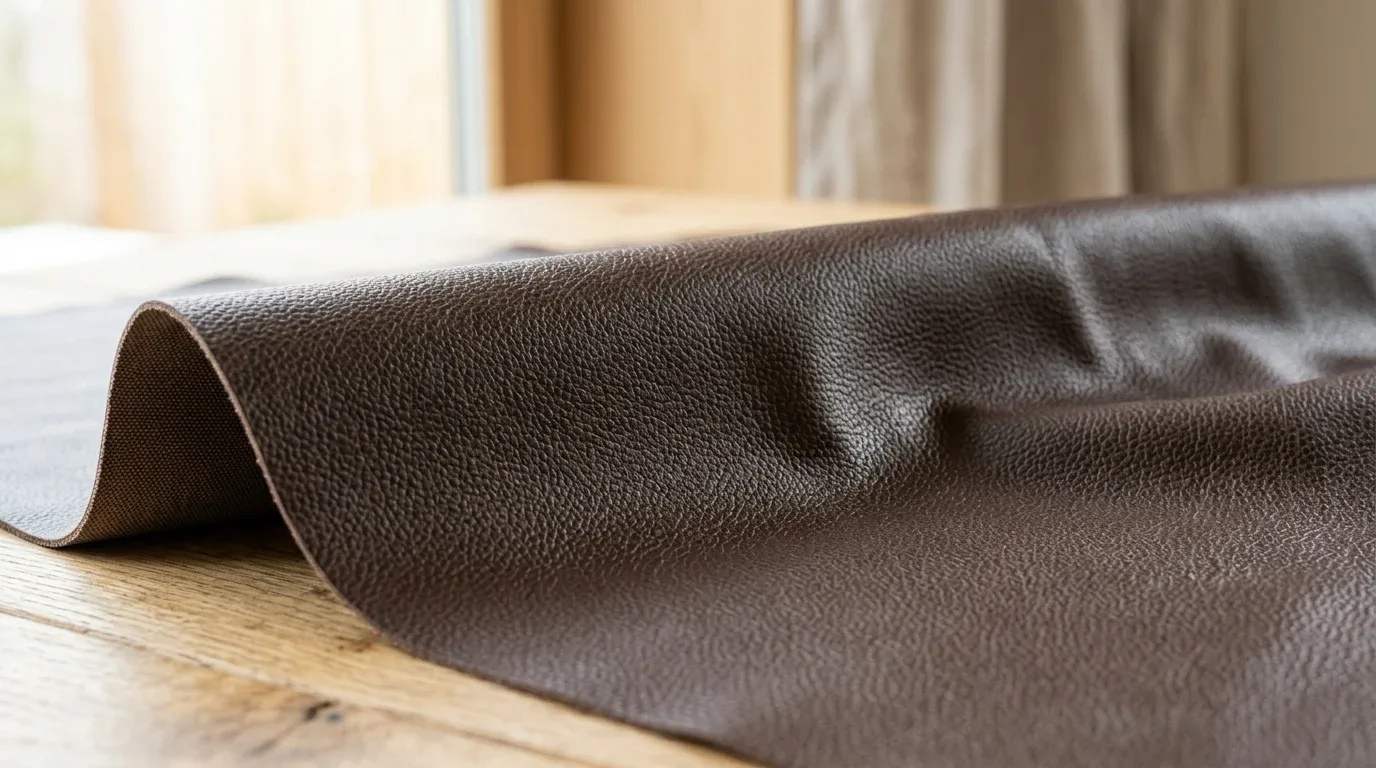
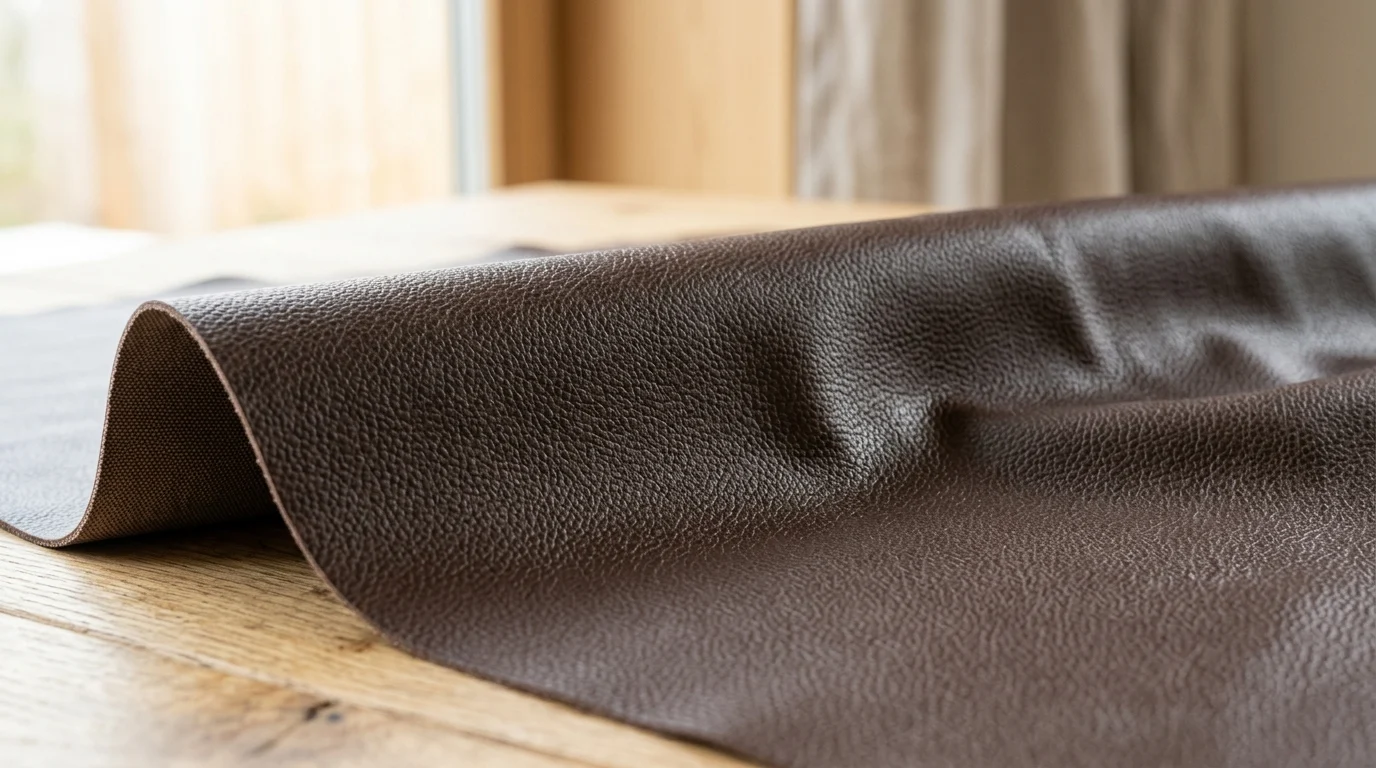
Synthetic leather has transitioned from a basic cost-saving substitute to a highly engineered, strategic material category for global manufacturing. Driven by advancements in polymer chemistry and textile engineering, modern artificial leathers offer performance metrics that often surpass genuine leather in durability, uniformity, and environmental compliance.
For procurement teams managing high-volume production lines, securing a reliable supply of synthetic leather is critical. The material’s consistent physical properties eliminate the natural defects associated with animal hides, streamlining automated cutting processes and significantly reducing manufacturing waste while maintaining premium aesthetics.
Cost structure, scalability, and application flexibility
The fundamental advantage of synthetic leather lies in its predictable cost structure and immense scalability. Unlike genuine leather, which is subject to agricultural commodity fluctuations and variable processing yields, synthetic alternatives offer a stable pricing matrix based on polymer indices and textile costs. This stability allows buyers to forecast margins with a high degree of accuracy over multi-year production cycles.
Application flexibility is another primary driver. Supplied in continuous rolls with a standard usable width of 1.37 meters (54 inches), synthetic leather enables nesting algorithms in automated cutting machines to achieve utilization rates exceeding 95%. This uniformity reduces cutting waste to below 5%, compared to the 20-30% waste typical when processing natural hides. Manufacturers can seamlessly scale from pilot runs of a few hundred meters to mass production involving tens of thousands of meters without variations in grain or texture.
Key downstream sectors driving demand
Demand for advanced synthetic leather is heavily concentrated in several high-growth downstream sectors, each dictating specific material formulations. In the automotive industry, the shift toward vegan interiors has accelerated the adoption of high-performance polyurethane (PU) and silicone-based leathers, which must withstand extreme UV exposure, temperature fluctuations, and rigorous abrasion standards.
The footwear and apparel sectors remain massive consumers, requiring breathable, flexible microfiber structures that mimic the collagen bundling of natural leather. Additionally, the furniture and commercial upholstery markets rely heavily on heavy-duty polyvinyl chloride (PVC) and solvent-free PU for high-traffic environments. Niche applications, such as technical gloves, luggage, and specialized packaging, further diversify the demand profile, pushing manufacturers to continuously innovate their coating and backing technologies to meet specific tactile and structural requirements.
What Raw Materials and Manufacturing Processes Define Synthetic Leather
The defining characteristics of any synthetic leather product are dictated by the synergy between its polymer coating system and its underlying textile structure. Understanding these components is essential for buyers to specify the correct material for their intended application, balancing cost against performance and ecological impact.
PU, PVC, TPU, water-based PU, and silicone systems
The surface layer of synthetic leather is formulated from various polymer resins, each offering distinct advantages. Traditional PVC is highly durable and cost-effective but relies on plasticizers, making it less favorable for eco-conscious brands. Standard PU offers a softer hand-feel and better breathability, dominating the footwear and apparel markets. Thermoplastic Polyurethane (TPU) provides superior elasticity and scratch resistance, ideal for technical gear.
As environmental regulations tighten, the industry is shifting toward water-based PU and silicone systems. Water-based PU eliminates harmful solvent emissions (DMF-free), while silicone leather offers non-toxic properties, flame retardance, and exceptional resistance to hydrolysis.
| Material Type | Relative Cost | Breathability | Environmental Profile | Primary Application |
|---|---|---|---|---|
| PVC | $ | Low | Poor (Phthalate concerns) | Commercial seating, marine |
| Traditional PU | $$ | Medium | Moderate (Solvent use) | Footwear, apparel, bags |
| Water-based PU | $$$ | High | Excellent (Low VOC) | Automotive, high-end fashion |
| Silicone | $$$$ | High | Excellent (No solvents) | Medical, premium automotive |
Backing fabrics, surface finishes, and process controls
The backing fabric provides the structural integrity, tear strength, and drape of the final product. Common substrates include woven, knitted, and non-woven textiles. For premium applications, microfiber backings are utilized; these are engineered with ultra-fine synthetic fibers bundled to replicate the microscopic structure of natural leather dermis, offering superior tear resistance and a luxurious feel.
Surface finishes are applied to replicate natural grains or create entirely synthetic textures. This involves heated embossing rollers, release paper casting, or specialized printing techniques. Advanced process controls during finishing regulate surface tension, gloss levels, and tactile properties, ensuring that a batch produced months later matches the master sample perfectly.
Process steps and comparison criteria for buyers
Manufacturing synthetic leather typically involves either a wet or dry process. The wet process involves coagulating PU resin onto a fabric backing in a water bath, creating a porous, breathable structure. The dry process utilizes release paper to cast the polymer film, which is then laminated to the backing, allowing for highly precise surface textures.
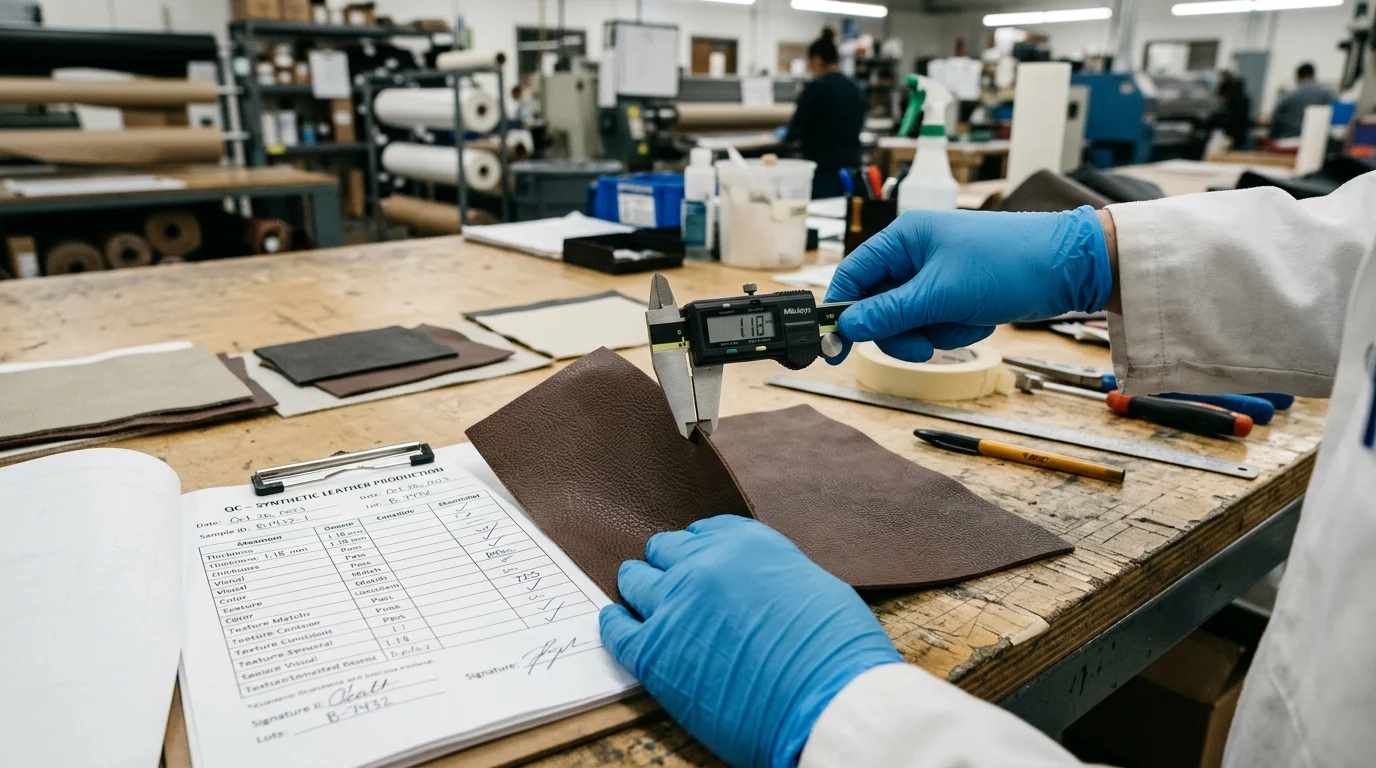
When comparing processes, buyers should evaluate criteria such as total thickness (commonly ranging from 0.6mm for garments to 1.5mm or more for footwear and upholstery), weight (measured in grams per square meter or GSM), and the specific gravity of the coating. Understanding these process steps allows procurement teams to accurately audit supplier capabilities and ensure the manufacturing method aligns with the product’s end-use requirements.
How Should Procurement Teams Evaluate Synthetic Leather Specifications
Evaluating synthetic leather requires moving beyond tactile evaluation to strict empirical data. Procurement teams must establish rigorous technical specifications and compliance mandates to ensure material integrity, regulatory adherence, and ultimately, end-user satisfaction.
Critical technical specifications for sourcing
Technical specifications form the contractual baseline between buyer and supplier. Key metrics include peel strength, which measures the bond between the coating and the backing, and tear strength, which ensures the material will not fail under stress. Abrasion resistance and colorfastness are equally critical, particularly for items exposed to friction and sunlight. Establishing clear, acceptable thresholds for these metrics prevents downstream quality disputes.
| Technical Specification | Typical Test Method | Standard B2B Threshold |
|---|---|---|
| Peel Strength | ASTM D751 | > 3.0 kg / 3cm |
| Tear Strength | ISO 4674 | > 25 N |
| Taber Abrasion | ASTM D3884 | > 100,000 cycles (Automotive) |
| Colorfastness to Light | ISO 105-B02 | Grade 4 to 5 |
| Flex Resistance | Bally Flex Test | > 80,000 continuous flexes |
Compliance, testing, and sustainability requirements
Global trade requires strict adherence to chemical compliance and sustainability standards. Buyers importing into the European Union must ensure materials comply with REACH regulations, while those targeting the US must navigate California Proposition 65. This necessitates rigorous testing for restricted substances, including heavy metals, azo dyes, and volatile organic compounds (VOCs).
For PVC products, phthalate-free formulations are increasingly mandated, with limits typically set below 1,000 parts per million (ppm). Furthermore, sustainability requirements are driving demand for Global Recycled Standard (GRS) certified materials, ensuring that a verified percentage of the backing fabric or polymer matrix is derived from post-consumer recycled content.
Factory reliability, quality systems, and sampling review
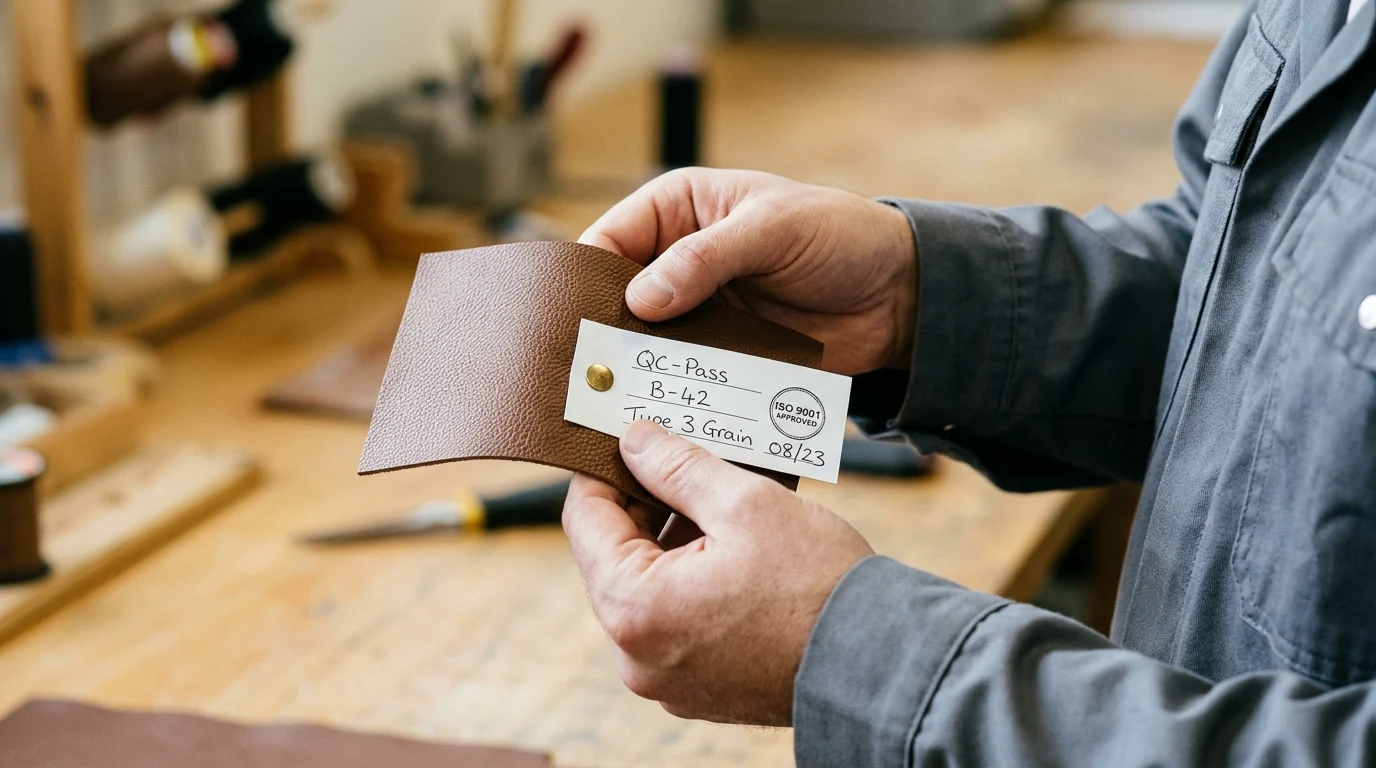
A supplier’s ability to meet specifications on paper is only valid if supported by robust factory reliability and quality management systems. Procurement teams should prioritize factories with ISO 9001 (Quality) and ISO 14001 (Environmental) certifications. The presence of an in-house testing laboratory equipped for spectrometry, tensile testing, and abrasion cycling is a strong indicator of a capable manufacturer.
The sampling review process must be structured and methodical. It typically begins with A4-sized swatches for visual and tactile approval, progresses to 5-10 meter sample rolls for prototype construction, and concludes with a pilot production run. Throughout this process, buyers should monitor the defect rate; a reliable tier-one supplier will maintain an in-line defect rate of less than 1.5%.
What Are the Key Sourcing, MOQ, Packaging, and Logistics Considerations
Executing a successful procurement strategy involves navigating complex logistics, production variables, and financial structuring. For B2B buyers, understanding the mechanics of minimum order quantities, packaging standards, and freight optimization is as important as the material’s technical specifications.
MOQ, lead times, and color matching management
Minimum Order Quantities (MOQ) in the synthetic leather industry are dictated by the setup costs of coating lines and dye vats. Standard MOQs typically range from 500 to 1,000 meters per color and thickness. For custom textures requiring new embossing rollers, the MOQ may increase, or the buyer may need to amortize tooling costs.
Lead times generally span 15 to 25 days for standard production, though peak seasons can extend this to 30-40 days. Color matching is a critical precursor to production; suppliers usually require 3 to 5 days to produce ‘Lab Dips’ (small color swatches) using spectrophotometers to ensure the target Delta E (color variance) remains below 1.0 before bulk production commences.
Packaging, roll length, loading, warehousing, and shipping
Proper packaging is vital to prevent transit damage, such as pressure marks, moisture absorption, or mold. Synthetic leather is wound onto hard paper tubes (typically 3-inch inner diameter) in standard roll lengths of 30, 40, or 50 meters. Each roll is tightly wrapped in protective PE film and an outer woven bag to maintain a relative humidity environment below 60%.
Container loading requires precise volumetric planning because synthetic leather is a bulky commodity. A standard 20-foot shipping container can accommodate approximately 15,000 to 18,000 meters of 1.0mm thick material, while a 40-foot High Cube container can hold upwards of 40,000 meters. Maximizing container utilization is essential for reducing the per-meter landed cost.
Pricing models, margin planning, and channel considerations
Pricing models in this sector are highly sensitive to raw chemical indices, particularly petroleum derivatives. Procurement teams must negotiate clear Incoterms (e.g., FOB vs. CIF) and understand how polymer choices impact costs. For example, standard PVC might price around $1.50 to $2.50 per meter, while high-end silicone or microfiber PU can exceed $8.00 per meter.
Margin planning must incorporate these material costs alongside fluctuating ocean freight rates and import duties. Channel considerations also play a role; distributors buying for wholesale will prioritize broader color ranges and standard specifications, whereas direct-to-manufacturer buyers will focus on strict, application-specific tolerances and just-in-time delivery schedules.
How Can Buyers Choose the Right Synthetic Leather Supplier
Selecting a manufacturing partner in the synthetic leather industry requires assessing technical depth, production capacity, and strategic alignment. The right supplier acts as an extension of the buyer’s R&D and supply chain teams, driving innovation while mitigating operational risks.
Decision framework for matching suppliers to application needs
A robust decision framework for matching suppliers to application needs begins with auditing their technological infrastructure. Buyers should look for manufacturers operating a minimum of 3 to 5 continuous production lines, which ensures redundancy and reliable capacity during peak demand. The supplier’s expertise must align with the buyer’s sector; a factory excelling in lightweight garment PU may lack the calendering equipment necessary for heavy-duty automotive PVC.
Additionally, buyers must evaluate the supplier’s raw material sourcing network. Manufacturers with integrated supply chains or strategic partnerships with major chemical conglomerates can offer better price stability and faster access to next-generation resins, such as bio-based polyurethanes or recycled textile bases.
Benefits of long-term partnerships with technically capable suppliers
The benefits of establishing long-term partnerships with technically capable suppliers extend far beyond unit cost reductions. Tier-one suppliers with 20 or more years of global market expertise provide invaluable engineering support, enabling joint development of custom textures, specialized coatings, and proprietary backing structures that give buyers a competitive edge.
Furthermore, long-term partnerships ensure priority allocation during global supply chain disruptions and stabilize pricing against chemical market volatility. By integrating a trusted synthetic leather manufacturer into their core supply chain, B2B buyers guarantee a scalable, compliant, and high-quality material flow that supports sustainable business growth.
Key Takeaways
- Wholesale sourcing and supply-chain implications for Synthetic Leather
- Specifications, compliance, and commercial terms buyers should validate
- Actionable recommendations for distributors and procurement teams
Frequently Asked Questions
What raw materials most affect synthetic leather performance?
The key variables are the polymer topcoat and backing fabric. PU, TPU, PVC, water-based PU, and silicone each change feel, durability, breathability, and compliance, while microfiber, woven, or non-woven backings determine strength and structure.
How do I choose between PU, PVC, TPU, and silicone synthetic leather?
Match the resin to the use case: PU for soft footwear and bags, PVC for cost-driven upholstery, TPU for elastic technical products, and silicone for premium automotive or medical applications needing high durability and low-toxicity performance.
Why is microfiber synthetic leather popular for premium products?
Microfiber offers a leather-like hand feel, strong tear resistance, and better consistency than natural hides. It works well in footwear, gloves, automotive interiors, and bags where appearance, durability, and stable large-volume supply all matter.
Can HAOHAO support development from sampling to mass production?
Yes. HAOHAO provides R&D-to-production support with 3 specialized factories, 20+ years of experience, and 50 million meters annual capacity, helping B2B buyers scale from material selection and sampling to stable bulk delivery.
What should buyers check before ordering synthetic leather in bulk?
Confirm application requirements, resin type, backing, abrasion and hydrolysis targets, compliance needs, color consistency, and lead time. For large programs, also verify factory capacity, quality control, and whether the supplier can maintain the same specification across repeat orders.