
Introduction
Engineered to meet the demands of modern manufacturing, synthetic leather now serves far more than a low-cost substitute for natural hide. Its controlled composition, scalable production, and tunable surface properties make it a practical choice for industries that need consistent quality, predictable costs, and specific performance traits. This article explains the main types of synthetic leather, outlines their key benefits and trade-offs, and shows how they are used across sectors such as automotive, footwear, furniture, and industrial products, providing the context needed to evaluate where each material fits best.
Why synthetic leather is becoming a strategic material
Synthetic leather has evolved from a simple cost-saving substitute into a highly engineered strategic material. Driven by advancements in polymer chemistry and shifting consumer preferences, the global synthetic leather market is projected to exceed $40 billion by the end of the decade, growing at a compound annual growth rate (CAGR) of approximately 7.5%.
Manufacturers across diverse industries are adopting these materials not just for ethical or environmental reasons, but for tangible performance and economic advantages that natural hides simply cannot match at scale.
Cost stability and design flexibility
The primary driver for adopting synthetic leather is pricing predictability. Natural leather prices are highly volatile, tied directly to agricultural cycles, weather events, and global meat consumption. In contrast, synthetic leather maintains a stable cost band, typically ranging from $3 to $15 per linear yard, depending on the polymer grade and backing material.
Furthermore, synthetic leather is manufactured in continuous rolls, offering up to 99% usable cutting area. Natural hides, which feature irregular shapes, scars, and blemishes, often yield only 65% to 70% usable material. This predictable yield allows factories to implement highly automated cutting processes, drastically reducing material waste and labor costs.
Growing use in automotive and footwear
The automotive industry has become a major consumer of synthetic leather, utilizing it extensively for seating, door panels, and dashboards. A critical engineering advantage is weight reduction; high-grade synthetic leather is up to 30% lighter than traditional bovine leather. This weight savings is a vital metric for improving traditional vehicle fuel efficiency and extending the battery range of electric vehicles (EVs).
Simultaneously, the footwear sector relies heavily on these materials for high-volume athletic and casual shoe production. With over 60% of modern athletic footwear incorporating synthetic components, the material’s ability to be precisely molded, embossed, and bonded at high speeds makes it an indispensable asset for global supply chains.
What synthetic leather is and how PU, PVC, and silicone
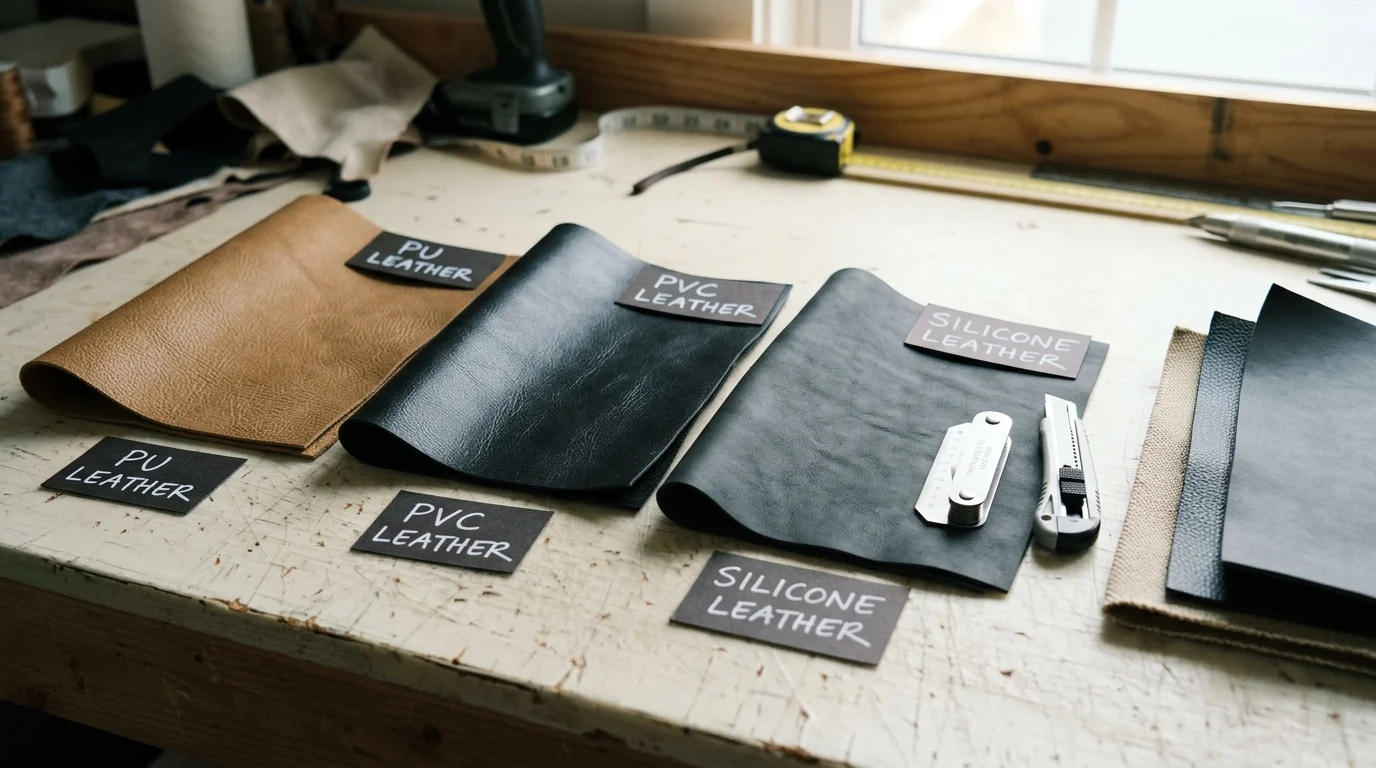
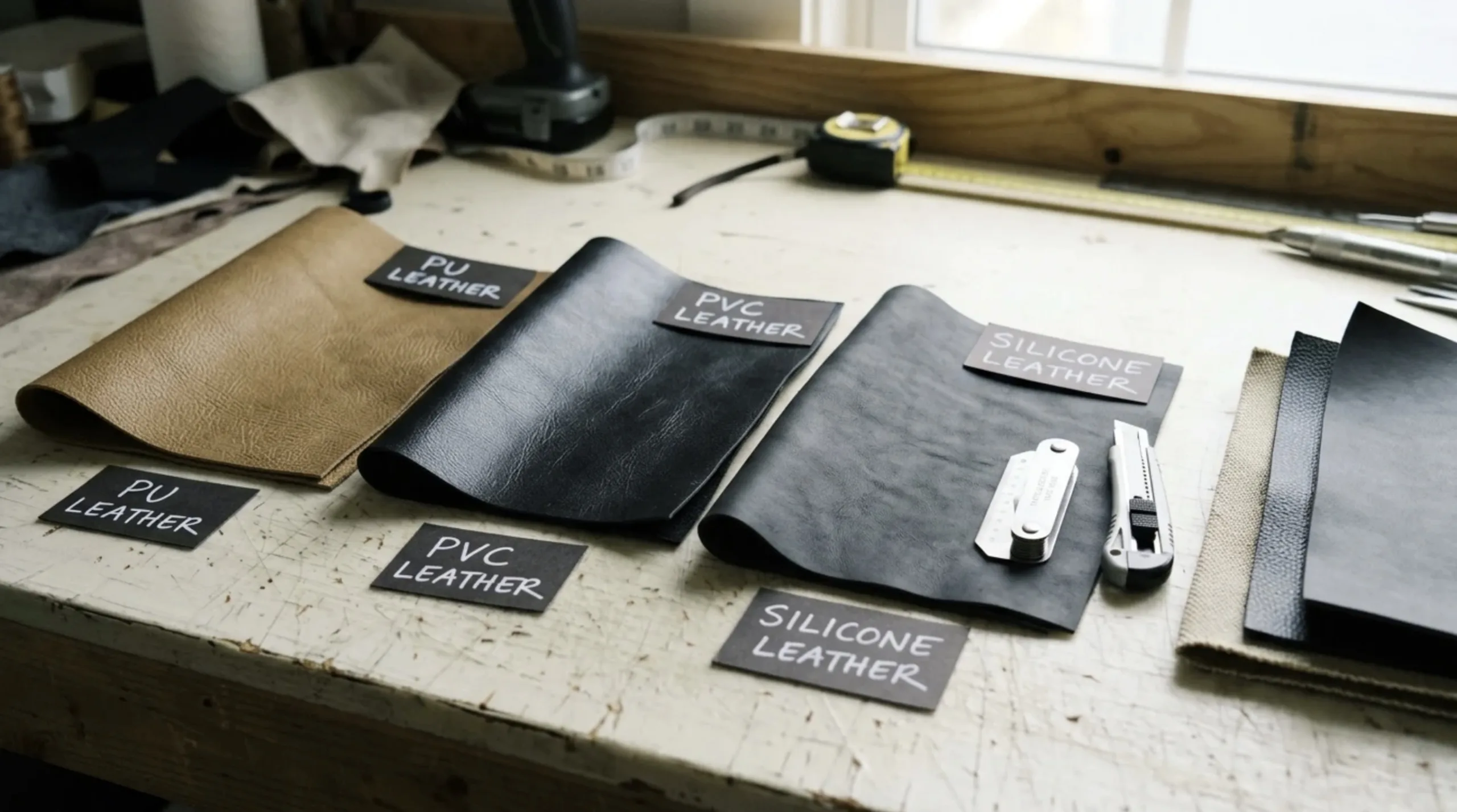
At its core, synthetic leather is a composite material engineered to replicate the look, feel, and durability of natural leather. The specific characteristics of the final product depend heavily on the type of polymer applied to the base fabric, with polyurethane (PU), polyvinyl chloride (PVC), and silicone representing the three primary categories in commercial manufacturing.
Construction and material layers
Most synthetic leathers utilize a standardized three-layer construction. The foundation is a backing fabric, typically knitted or woven polyester, cotton, or a synthetic blend, which provides the necessary tensile strength and tear resistance. Above this substrate sits an intermediate expanded foam layer that dictates the material’s plushness, volume, and structural memory.
The top layer is a solid polymer skin coating that seals the material and receives the final surface treatments, such as mechanical embossing for grain texture or chemical finishes for gloss and matte effects. The total thickness of these combined layers generally ranges from 0.5mm for lightweight apparel to 1.5mm or more for heavy-duty commercial upholstery.
Performance and appearance differences
PVC leather is the oldest and most rigid variant, recognized for exceptional durability, total water resistance, and low production costs. However, it lacks breathability and can become brittle in extreme cold. PU leather, by contrast, is manufactured with micro-pores that allow for moisture vapor transmission. This gives it a softer, more natural hand-feel, making it the preferred choice for applications in direct contact with skin.
Silicone leather represents the newest generation of synthetic hides. It is naturally resistant to UV degradation, highly flame retardant without the use of toxic additives, and inherently stain-resistant. While significantly more expensive, silicone eliminates the need for the plasticizers required in PVC and the potentially hazardous solvents traditionally used in PU manufacturing.
Buyer comparison table
To assist procurement teams in selecting the correct polymer base, the following table outlines the key operational differences between the three main synthetic leather types.
| Polymer Type | Cost per Yard | Breathability | Durability (Double Rubs) | Primary Applications |
|---|---|---|---|---|
| PVC | $3 – $6 | Low | 100,000+ | Marine, Healthcare, Commercial Seating |
| PU | $6 – $12 | High | 50,000 – 100,000 | Apparel, Footwear, Consumer Automotive |
| Silicone | $15 – $25 | Medium | 200,000+ | High-end Automotive, Outdoor Upholstery |
Benefits, trade-offs, and key specifications
Transitioning to synthetic leather requires a thorough understanding of its mechanical profile. While the material offers significant advantages in manufacturing efficiency, industrial buyers must carefully evaluate technical specifications against the intended lifecycle of the end product to mitigate long-term performance risks.
Core advantages for manufacturers
For large-scale manufacturers, the core advantage lies in throughput efficiency. Synthetic leather’s uniform thickness and continuous roll format enable multi-ply automated cutting, a process practically impossible with natural hides. This consistency translates directly to elevated quality control; defect rates for synthetic leather rolls are typically under 2%, compared to the 10% to 15% rejection rate commonly seen with natural leather due to inherent biological scarring.
Additionally, the inherent water resistance and edge-fray resistance of most synthetic leathers streamline the manufacturing of consumer goods, eliminating the need for secondary waterproofing treatments and reducing overall production cycle times.
Technical specifications to evaluate
Procurement and engineering teams must evaluate several standardized specifications before approval. Abrasion resistance is critical, typically measured using the Wyzenbeek or Martindale test methods. Commercial-grade synthetic leather should withstand a minimum of 50,000 double rubs, while heavy-duty transit or hospitality applications may require 100,000 or more.
Tear strength and seam slippage are equally vital, particularly for upholstery and footwear that endure dynamic stress. A standard high-quality PU leather should exhibit a minimum tear strength of 15 to 20 pounds. Furthermore, colorfastness to light must be verified; outdoor or automotive applications require a minimum Grade 4 rating on the AATCC grayscale to prevent fading under sustained UV exposure.
Common limitations and risks
Despite its advantages, synthetic leather carries inherent limitations. The most prominent risk with PU leather is hydrolysis—a chemical breakdown caused by prolonged exposure to heat and humidity, leading to surface flaking or delamination. High-grade PU is formulated to resist hydrolysis for 5 to 7 years in controlled testing, but lower grades may fail within two years.
For PVC leather, the primary concern is the off-gassing of volatile organic compounds (VOCs) and the gradual leaching of plasticizers, which can cause the material to stiffen and crack over time. Buyers must also account for the thermal retention of synthetic materials, which can become uncomfortably hot in direct sunlight compared to natural, porous hides.
How to source and qualify synthetic leather
Securing a reliable supply of synthetic leather requires rigorous vetting of manufacturing partners. Because the quality of the polymer coating and backing fabric can vary drastically between mills, establishing strict qualification protocols is essential for maintaining consistent product integrity.
Selection process for procurement teams
The selection process should begin with auditing a supplier’s production capacity, machinery age, and environmental controls. Procurement teams must negotiate Minimum Order Quantities (MOQs), which typically range from 500 to 1,000 meters per custom color or texture. For standard, off-the-shelf black or white variants, suppliers may offer reduced MOQs of 300 meters.
Buyers should actively request production samples from multiple runs to verify color consistency across different batches. Slight variations in dye lots or embossing pressure can easily disrupt large-scale manufacturing operations and lead to mismatched final products.
Quality control, testing, and certifications
Quality control must be backed by recognized third-party certifications. Suppliers should hold ISO 9001 certification for quality management. For the European market, the material must be strictly REACH compliant, ensuring it is free from restricted substances like heavy metals, specific phthalates, and azo dyes.
Furthermore, products intended for apparel, footwear, or furniture should ideally carry the OEKO-TEX Standard 100 certification, which verifies that the textile has been tested for harmful substances and is safe for human contact. Routine batch testing should be contracted to independent laboratories to verify supplier claims regarding abrasion and hydrolysis resistance.
Sourcing and logistics considerations
Logistics plays a major role in calculating the total landed cost of synthetic leather. Standard production lead times usually span 3 to 6 weeks, but complex custom embossing or unique chemical finishes can add an additional two weeks. Material is shipped in rolls, typically measuring 30 to 50 meters in length and 54 inches (1.37 meters) in standard width.
Because synthetic leather is shipped by volume rather than weight, optimizing container space is critical. A standard 40-foot shipping container can hold approximately 20,000 to 25,000 meters of synthetic leather, depending heavily on the thickness of the foam layer and the diameter of the cardboard core. Moisture-absorbing desiccants must be included in all shipping containers to prevent mold growth on the fabric backing during extended ocean transit.
How to choose the right synthetic leather for long-term use
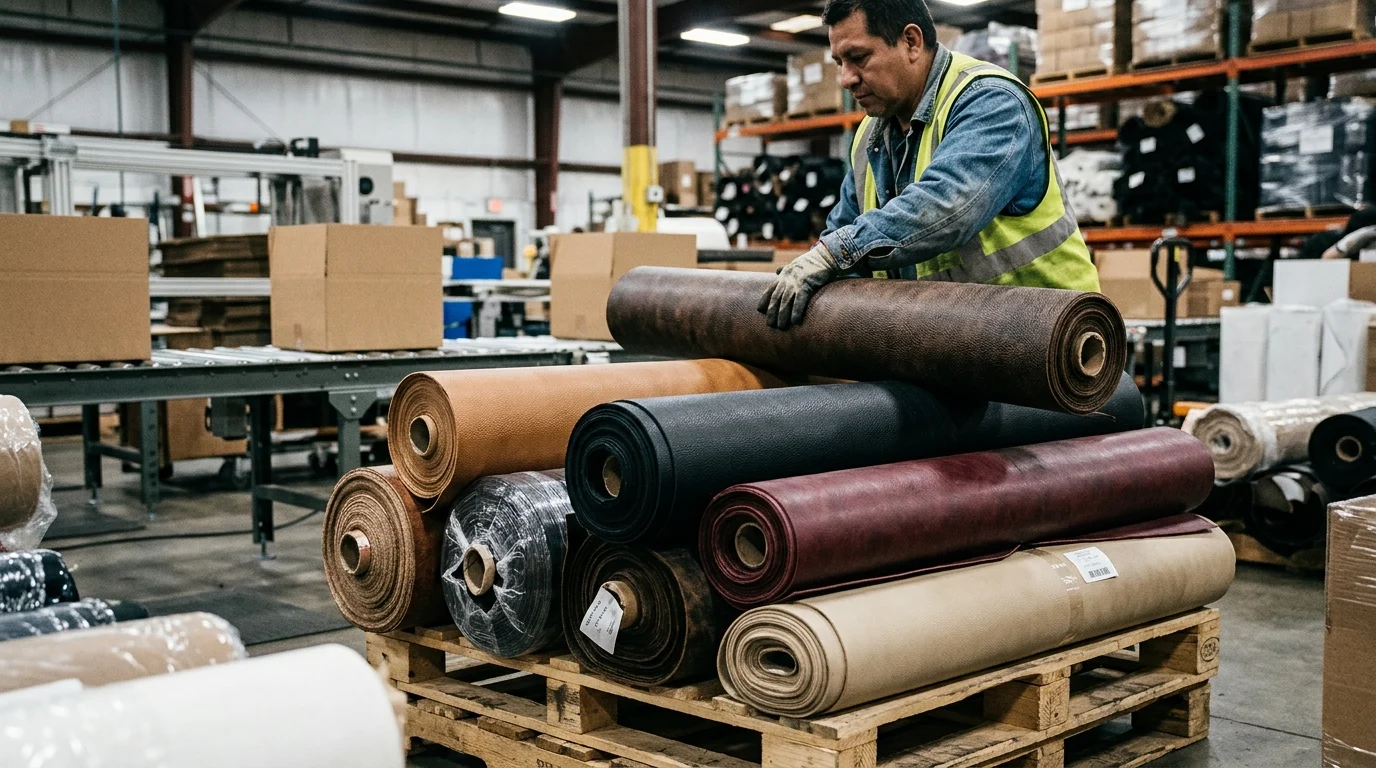
Choosing the optimal synthetic leather is not a matter of finding the objectively best material, but rather identifying the polymer and construction that precisely matches the demands of the final application. Long-term success depends entirely on aligning material capabilities with real-world user expectations.
Decision criteria for performance and aesthetics
Decision-makers must weigh environmental exposure against aesthetic requirements. For marine or outdoor environments, the material will face constant UV radiation, salt spray, and temperature extremes. In these harsh scenarios, silicone leather or marine-grade PVC engineered to withstand over 1,000 hours of accelerated UV testing is mandatory to prevent rapid degradation.
Conversely, for fashion apparel or luxury automotive interiors where tactile softness, drape, and breathability are paramount, premium microfiber-backed PU leather is the superior choice, providing luxury aesthetics despite its lower resistance to harsh outdoor elements.
Final decision matrix
To streamline the selection process, the following decision matrix aligns common industrial applications with the recommended synthetic leather specifications and polymer types.
| Application | Recommended Polymer | Key Specification Focus | Expected Lifespan |
|---|---|---|---|
| Automotive Interiors | Premium PU / Silicone | Hydrolysis resistance (7+ years), low VOC | 10 – 15 years |
| Marine Seating | Marine-grade PVC | UV resistance (1,000+ hrs), anti-mildew | 5 – 10 years |
| Athletic Footwear | Microfiber PU | High tear strength (>20 lbs), breathability | 1 – 3 years |
| Contract Furniture | PVC / Heavy-duty PU | Abrasion (>100,000 rubs), flame retardancy | 7 – 10 years |
Key Takeaways
- The most important conclusions and rationale for synthetic leather
- Specs, compliance, and risk checks worth validating before you commit
- Practical next steps and caveats readers can apply immediately
Frequently Asked Questions
What is synthetic leather made of?
It is usually a layered material: a fabric backing, a foam or cushioning layer, and a polymer surface such as PU, PVC, or silicone.
How do PU and PVC synthetic leather differ?
PU is softer and more breathable, so it suits footwear and apparel. PVC is tougher, more water-resistant, and lower cost, making it common in marine, healthcare, and commercial seating.
Why do manufacturers choose synthetic leather over natural leather?
It offers more stable pricing, consistent roll-to-roll quality, and higher cutting yield. That helps factories reduce waste, automate production, and control costs better.
Which synthetic leather is best for automotive interiors?
PU is widely used for seats and trim because it balances comfort, appearance, and weight. For higher UV or stain resistance, silicone can be a premium option.
Where can buyers source synthetic leather for industrial applications?
Industrial buyers can work with suppliers like HH-MF to compare PU, PVC, and other coated fabrics by use case, thickness, backing, and performance needs.