
Introduction
Modern footwear has to do more than look durable: it must manage heat, moisture, and repeated stress while meeting rising expectations around consistency and sustainability. Breathable microfiber leather has emerged as a practical solution because it combines leather-like structure with engineered air permeability, helping shoes stay more comfortable during long wear and active use. This article explains why that matters in footwear, how the material supports performance and durability, and where it offers advantages over both traditional synthetic uppers and natural leather. From moisture control to manufacturing reliability, the discussion that follows clarifies why breathable microfiber leather is becoming a key material choice for modern shoe design.
Why Is Breathable Microfiber Leather Important in Footwear
The transition toward advanced synthetic materials has fundamentally reshaped footwear manufacturing. Among these innovations, breathable microfiber leather stands out as a critical upgrade over conventional synthetics and a viable alternative to natural hides. This material mimics the microscopic structure of natural leather through a densely packed matrix of ultrafine fibers, providing structural integrity without compromising air permeability. As global footwear markets increasingly prioritize functional performance alongside ethical production, breathable microfiber leather has become a cornerstone material for brands seeking to balance durability with consumer comfort.
How do comfort, performance, and sustainability needs drive demand
The demand for breathable microfiber leather is heavily driven by intersecting consumer expectations for comfort, athletic performance, and environmental sustainability. In active use, the human foot can produce up to 200 milliliters of sweat per day, necessitating upper materials that actively vent moisture to prevent blistering and fungal growth. Breathable microfiber leather addresses this by maintaining continuous airflow, directly enhancing wearer comfort during prolonged use.
Furthermore, sustainability mandates are compelling footwear brands to reconsider their supply chains. Compared to traditional bovine leather tanning, which is notoriously water-intensive, the production of high-grade microfiber leather can reduce water usage by up to 50% and lower associated carbon emissions by 30% to 40%. This ecological efficiency allows manufacturers to meet stringent corporate sustainability goals while delivering a product that performs exceptionally well under mechanical stress.
Where is breathable microfiber leather used in footwear categories
Breathable microfiber leather is utilized across a diverse spectrum of footwear categories, each demanding specific performance metrics. In athletic and running shoes, manufacturers typically specify thicknesses between 1.2mm and 1.4mm to achieve an optimal weight-to-strength ratio, ensuring the shoe remains lightweight while offering necessary lateral support. In the safety footwear sector, thicker variants ranging from 1.8mm to 2.0mm are deployed to meet rigorous puncture and abrasion resistance standards while preventing the internal heat buildup common in steel-toe boots. Additionally, the casual and fashion sneaker markets utilize this material for its premium aesthetic and crease recovery, allowing brands to offer vegan-friendly alternatives that do not sacrifice the tactile qualities of genuine leather.
What Defines Breathable Microfiber Leather for Footwear
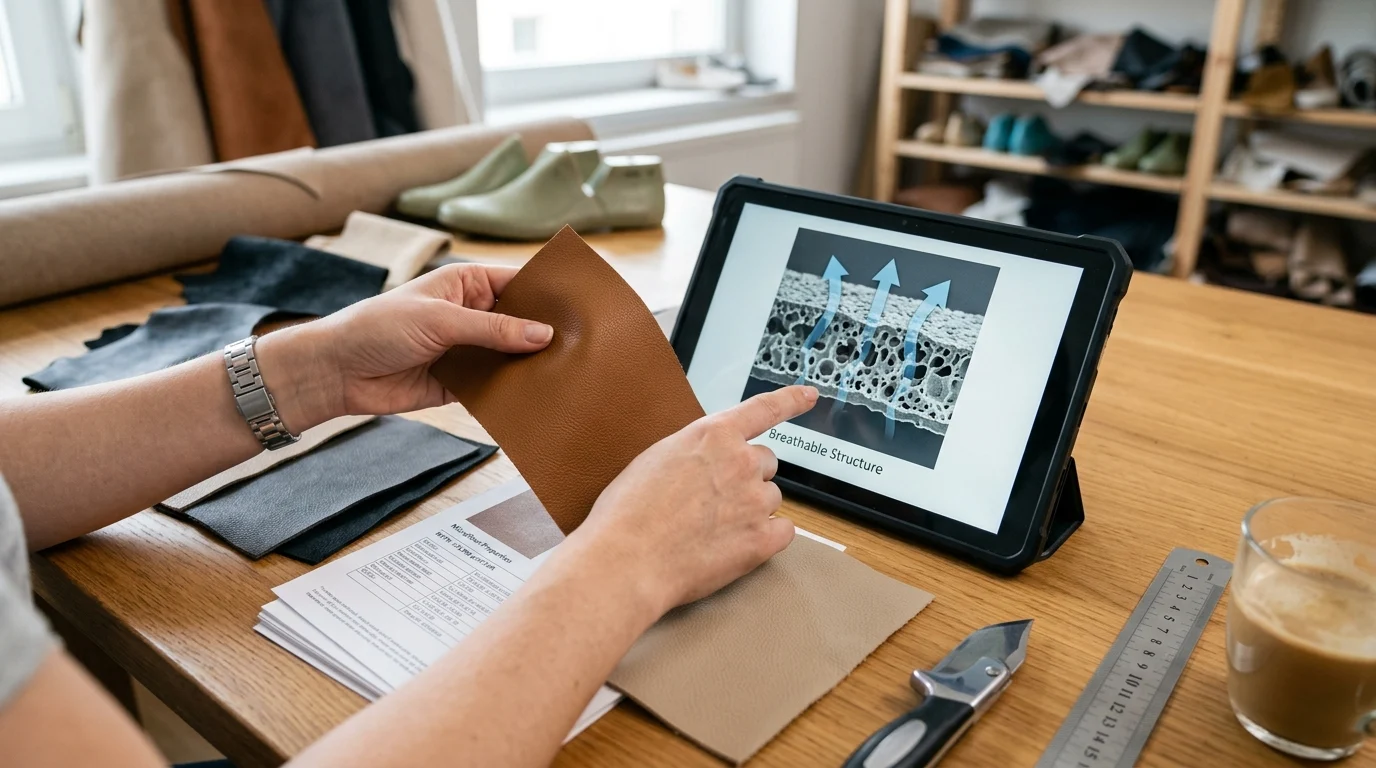
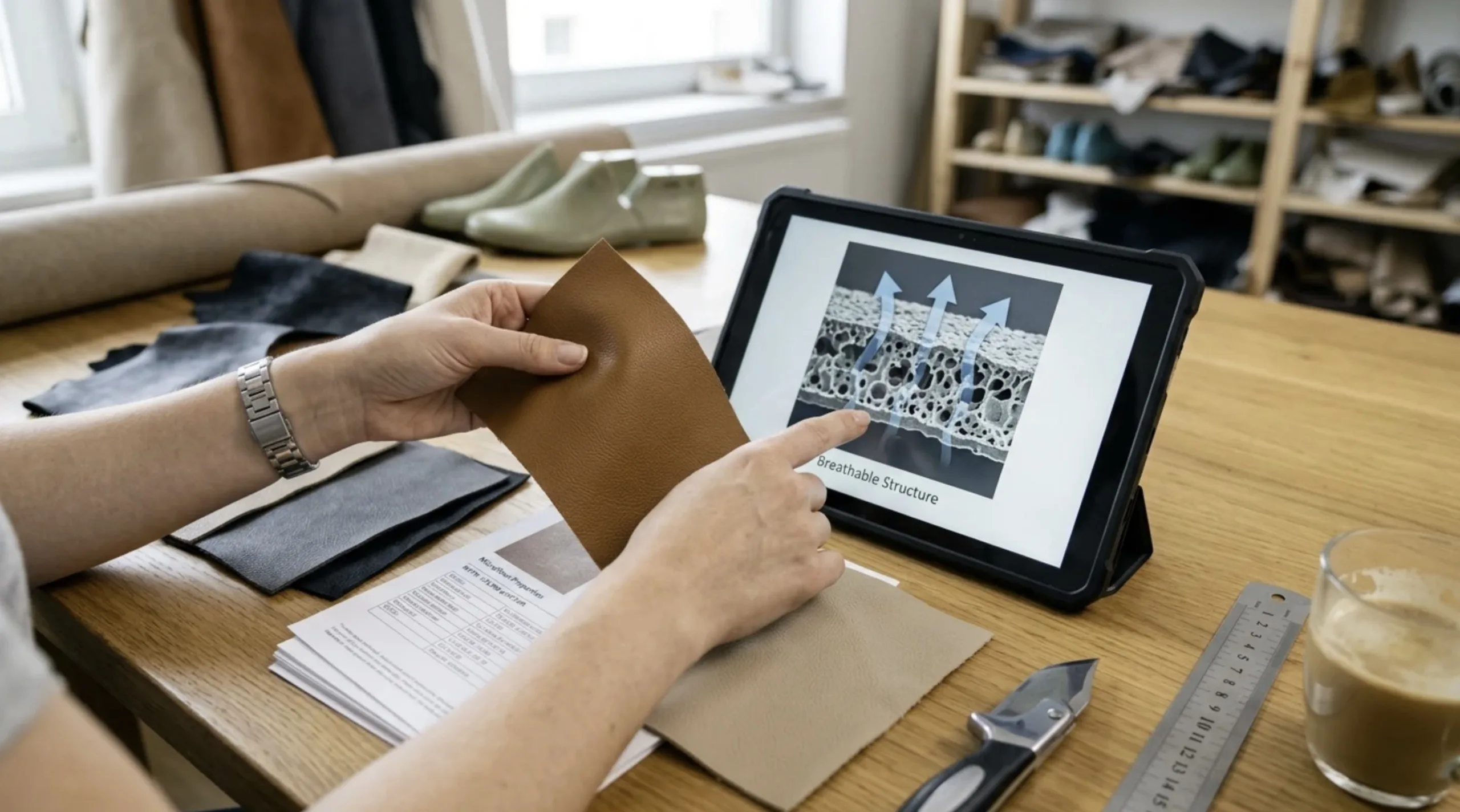
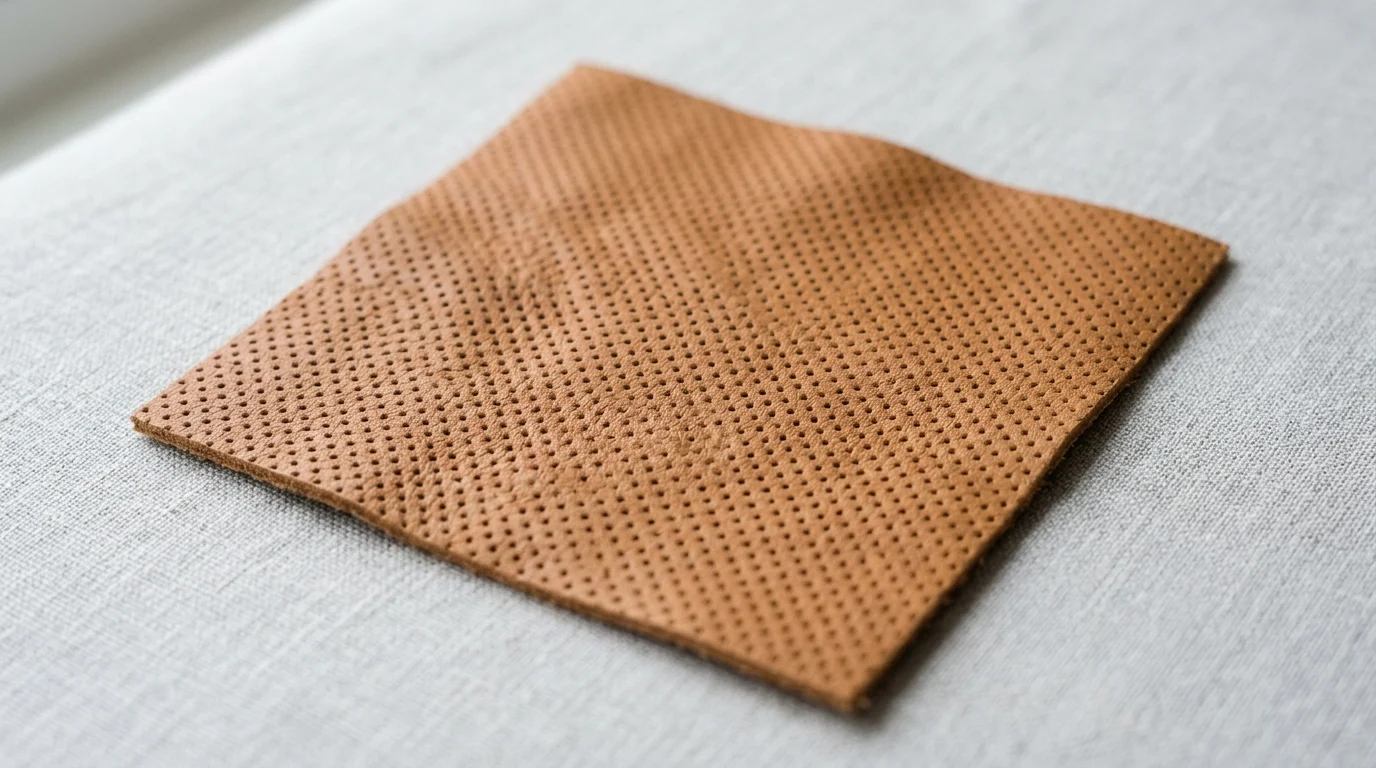
To fully leverage breathable microfiber leather, footwear developers must understand the technical attributes that differentiate it from rudimentary synthetic coatings. True microfiber leather is engineered using a sophisticated non-woven three-dimensional structure of polyamide (nylon) fibers embedded in a porous polyurethane (PU) resin. This architecture replicates the collagen fiber bundles found in natural dermis, yielding a material that is intrinsically breathable rather than relying on mechanical perforation.
Which material features affect breathability and moisture management
The core of the material’s breathability lies in the microscopic dimensions of its constituent fibers, which are typically extruded at less than 1 denier, often measuring between 0.01 and 0.001 denier. This ultra-fine matrix creates millions of microscopic pores that are large enough to allow water vapor molecules to escape but small enough to prevent liquid water droplets from penetrating. This capillary action provides superior moisture management, drawing sweat away from the foot and dispersing it across the outer surface for rapid evaporation, thereby maintaining a dry microclimate within the shoe cavity.
Which test methods and benchmarks evaluate performance
Evaluating the performance of breathable microfiber leather requires rigorous adherence to standardized testing methodologies. The most critical metric for footwear applications is the Moisture Vapor Transmission Rate (MVTR), which quantifies the mass of moisture that passes through a square meter of fabric over 24 hours. High-performance footwear applications generally require an MVTR exceeding 300 g/m²/24h.
Industry professionals rely on established protocols published by organizations like the ISO standards body to ensure consistency. For example, ISO 14268 outlines the specific parameters for determining water vapor permeability in leather and synthetic alternatives.
| Footwear Component | Typical Thickness (mm) | Target MVTR (g/m²/24h) | Minimum Tear Strength (N) |
|---|---|---|---|
| Athletic Upper | 1.2 – 1.4 | > 400 | 120 |
| Dress Shoe Upper | 1.4 – 1.6 | > 300 | 100 |
| Internal Lining | 0.6 – 0.8 | > 600 | 60 |
| Safety Boot Upper | 1.8 – 2.0 | > 250 | 150 |
How do thickness, backing, and finishing influence end use
The physical dimensions and secondary processing of microfiber leather heavily dictate its final application. Thickness must be carefully calibrated; a 0.6mm profile is ideal for internal linings where flexibility and rapid moisture wicking are paramount, whereas a 1.6mm profile with a reinforced backing provides the structural rigidity required for trekking boots. Finishing techniques, such as embossing, buffing, or the application of durable water repellent (DWR) coatings, can alter the surface tension and aesthetic appeal but must be carefully engineered to avoid sealing the microscopic pores that facilitate breathability.
How Does Breathable Microfiber Leather Compare with PU Synthetic Leather
While both standard Polyurethane (PU) synthetic leather and breathable microfiber leather fall under the umbrella of artificial leather, their structural compositions and performance capabilities differ vastly. Standard PU leather typically consists of a woven or knitted fabric base coated with a solid layer of polyurethane. While cost-effective, this construction traps heat and moisture. In contrast, microfiber leather’s integrated non-woven matrix offers a leap in both functional performance and manufacturing utility.
Which criteria matter most when comparing footwear materials
When comparing materials for footwear production, procurement teams evaluate breathability, mechanical durability, weight, and aesthetic longevity. Standard PU often suffers from hydrolysis—a chemical breakdown caused by humidity and heat—leading to surface peeling within one to two years. Breathable microfiber leather, formulated with high-grade, hydrolysis-resistant resins, effectively resists this degradation, maintaining structural integrity for up to five years or more under similar environmental conditions.
| Material Type | Breathability (MVTR) | Flex Resistance (Cycles) | Cutting Yield | Relative Cost Index |
|---|---|---|---|---|
| Genuine Bovine Leather | Moderate to High | ~80,000 | 60% – 70% | High ($$$) |
| Standard PU Synthetic | Very Low (< 50) | ~40,000 | 95% | Low ($) |
| Breathable Microfiber | High (> 300) | > 100,000 | 85% – 90% | Medium ($$) |
What are the main performance and cost trade-offs
The primary trade-off between standard PU and microfiber leather centers on the balance of performance versus unit cost. Breathable microfiber leather generally incurs a 20% to 40% higher material cost than standard knitted-base PU. However, this upfront expenditure buys significantly enhanced mechanical properties. Microfiber variants routinely withstand over 100,000 continuous flex cycles at room temperature without exhibiting surface cracking, far surpassing the 40,000-cycle threshold where standard PU often fails. For brands targeting the mid-to-premium market, the reduction in warranty returns and enhanced customer satisfaction easily justify the higher raw material investment.
How do manufacturing efficiency and design flexibility differ
Manufacturing efficiency heavily favors microfiber leather over natural hides and matches the convenience of standard PU. Delivered in continuous rolls—typically 1.37 meters wide and 30 to 50 meters long—microfiber leather allows automated CNC cutting machines to achieve an 85% to 90% yield. This predictable, defect-free surface eliminates the labor-intensive sorting, grading, and nesting processes required for natural leather, which often yields only 60% to 70% usable material due to scars and irregular edges. Furthermore, the synthetic nature of microfiber allows for infinite design flexibility, supporting high-frequency welding, digital printing, and precise color matching across disparate production batches.
What Should Buyers Check in Sourcing and Compliance
Transitioning a footwear line to breathable microfiber leather requires rigorous supply chain management to ensure consistent quality and regulatory compliance. The synthetic leather manufacturing process involves complex chemical formulations, meaning buyers must implement strict vetting protocols to avoid substandard materials that fail performance tests or violate international toxicity standards.
How should buyers qualify suppliers and reduce sourcing risk
To mitigate sourcing risks, buyers must systematically qualify suppliers through comprehensive factory audits. Procurement teams should evaluate a facility’s extrusion capabilities, solvent recovery systems, and internal quality control laboratories. A reputable supplier should be able to demonstrate consistent batch-to-batch color fastness (typically a rating of 4 or higher on the grayscale) and mechanical uniformity. Establishing a robust pilot run of 50 to 100 linear meters before committing to bulk orders allows manufacturers to test the material’s behavior during lasting, cementing, and stitching processes on the actual production line.
Which compliance, traceability, and certification requirements matter
Compliance and chemical traceability are non-negotiable in the modern footwear industry. Buyers must ensure that the microfiber leather adheres to stringent regional regulations, such as the European Union’s REACH directive, which governs the registration and restriction of chemical substances. A critical parameter is the limitation of Volatile Organic Compounds (VOCs) and restricted substances like dimethylformamide (DMF). High-quality eco-microfibers are now manufactured using water-borne polyurethane systems, driving residual DMF levels below 30 parts per million (ppm), or eliminating them entirely. Aligning these material choices with global initiatives, such as the UN sustainable development goals, helps brands ensure their products are safe for both factory workers and end consumers.
How should teams review MOQ, lead time, and production support
Commercial viability depends heavily on negotiating favorable Minimum Order Quantities (MOQs), lead times, and post-sale production support. While basic colors like black and white might be available from stock, custom-dyed and specific-textured breathable microfiber leather usually requires MOQs ranging from 300 to 500 meters per colorway. Production lead times typically span 15 to 25 days, depending on the complexity of the backing and finishing processes. Buyers should partner with suppliers who offer responsive technical support, particularly when troubleshooting adhesive compatibility, as the porous nature of breathable microfiber can interact differently with standard footwear cements compared to impermeable PU.
How Should Brands Decide Whether to Use Breathable Microfiber Leather

The decision to integrate breathable microfiber leather into a footwear collection requires a strategic assessment of the brand’s market positioning, target demographics, and internal cost structures. While the material offers distinct advantages, its deployment must align with the specific commercial realities of the product line to ensure maximum return on investment.
Which product types and sales channels benefit most
Breathable microfiber leather delivers the highest value in product types where performance and durability are critical selling points. High-performance court shoes, professional work boots, and premium vegan lifestyle sneakers benefit immensely from the material’s high flex resistance and moisture management. These products typically sit in the $50 to $150 retail tier, where consumers are willing to pay a premium for enhanced comfort and longevity. Furthermore, direct-to-consumer (DTC) sales channels, which often rely on strong narrative marketing around sustainability and advanced material science, provide an ideal platform for brands to educate buyers on the specific advantages of microfiber over traditional materials.
What decision framework helps balance performance, cost, and brand goals
To balance performance, cost, and brand goals, footwear developers should employ a comprehensive decision framework centered on total landed cost rather than just the raw material price per meter. The upper material typically accounts for 15% to 25% of a shoe’s total Bill of Materials (BOM). While upgrading to breathable microfiber leather increases this specific line item, the overall impact on the final product cost is often mitigated by manufacturing efficiencies. With cutting yields exceeding 85% and production defect rates consistently dropping below 2%, the hidden costs of waste and rework are virtually eliminated. By framing the decision around long-term durability, reduced return rates, and alignment with eco-conscious consumer trends, brands can confidently justify the adoption of breathable microfiber leather as a cornerstone of their future footwear collections.
Key Takeaways
- The most important conclusions and rationale for breathable microfiber leather
- Specs, compliance, and risk checks worth validating before you commit
- Practical next steps and caveats readers can apply immediately
Frequently Asked Questions
What makes breathable microfiber leather different from ordinary synthetic leather?
It uses an ultra-fine fiber base with porous PU, so airflow comes from the material itself, not just surface holes. This improves comfort and moisture management in footwear.
How breathable should microfiber leather be for footwear?
For many shoe uppers, a practical target is MVTR above 300 g/m²/24h. Ask suppliers like HH Microfiber for test data based on footwear-specific standards.
Which footwear types benefit most from breathable microfiber leather?
Athletic shoes, safety boots, and casual sneakers all benefit. It helps reduce heat buildup, supports moisture release, and maintains shape under repeated wear.
Is breathable microfiber leather a sustainable alternative to natural leather?
It can be. High-grade microfiber leather may use less water and produce lower emissions than traditional tanning, while also offering a vegan-friendly option for footwear brands.
What should buyers check before sourcing breathable microfiber leather?
Confirm thickness, MVTR, tear strength, abrasion resistance, and application use. On hh-mf.com, request material specs and test reports matched to your shoe category.