
Introduction
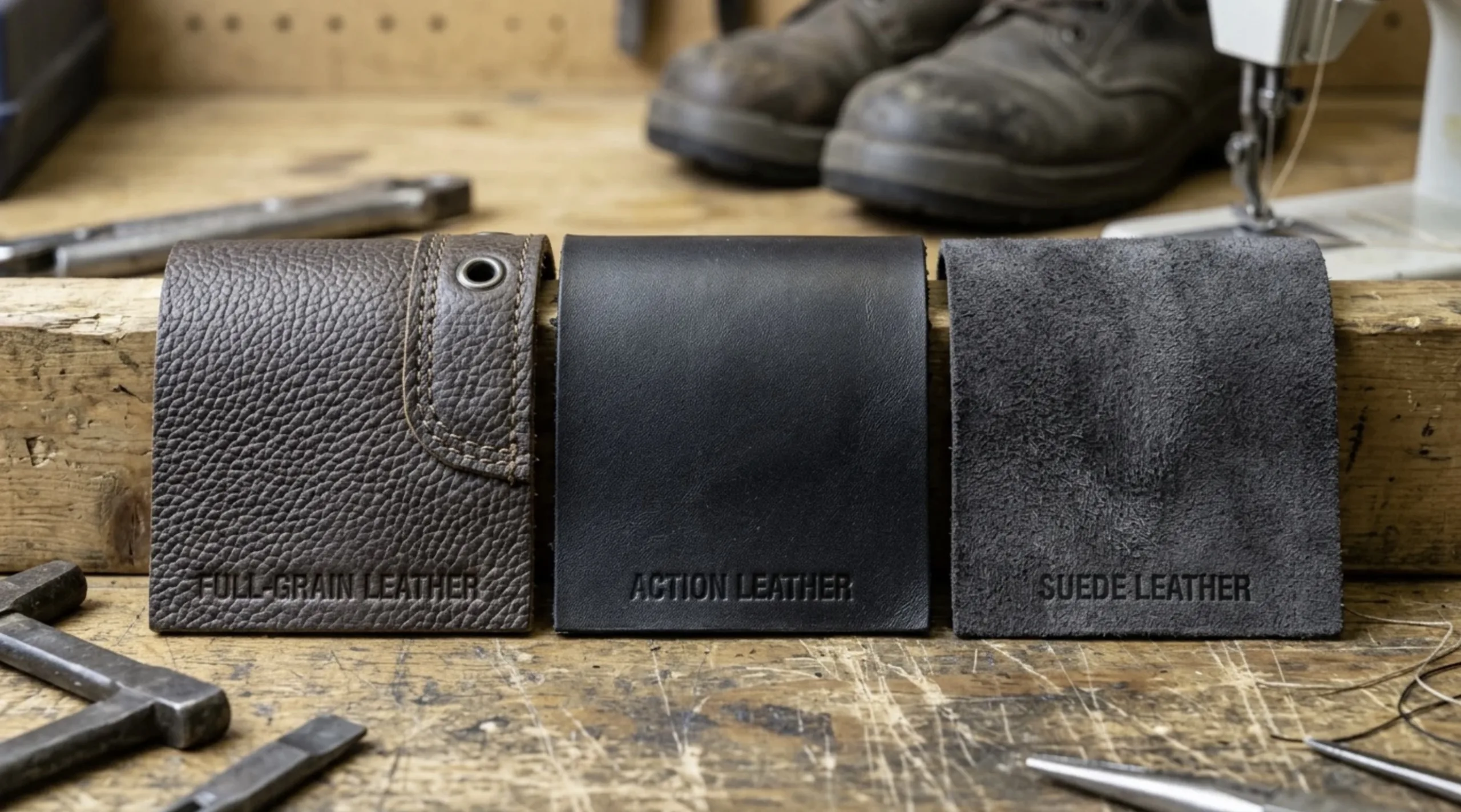
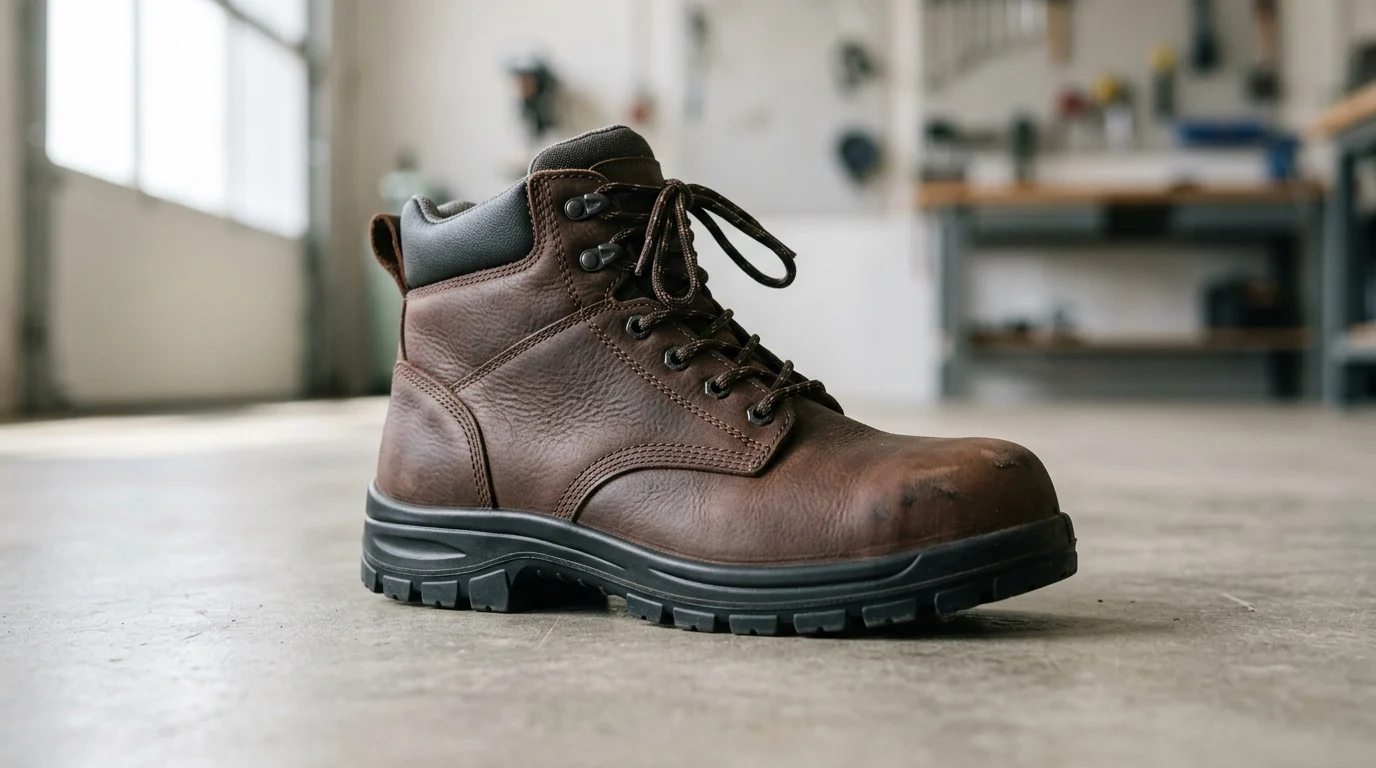
Choosing leather for industrial safety footwear is not just a material preference; it directly affects protection, service life, comfort, and compliance. Different leather types respond very differently to abrasion, water, heat, oils, and repeated flexing, so the right choice depends on the hazards the shoe is built to handle. This article explains the main leather materials used in safety shoes, how their performance characteristics compare, and where each option fits best in real working environments. By the end, readers will have a practical framework for selecting safety shoe leather that balances durability, worker needs, and manufacturing requirements.
Why safety shoe leather selection matters
The selection of safety shoe leather represents a critical engineering decision that dictates the protective capabilities, durability, and commercial viability of industrial footwear. As the primary barrier between the wearer’s foot and hazardous operational environments, the upper material must withstand severe mechanical stress, chemical exposure, and thermal extremes. Unlike fashion footwear, where aesthetics drive material choices, occupational footwear demands rigorous performance metrics. A miscalculation in leather specification can lead to catastrophic failures in the field, compromising worker safety and exposing manufacturers to severe liability.
How end-use conditions shape leather requirements
The operational environment directly dictates the physical and chemical requirements of the leather upper. For heavy construction and foundry applications, footwear must often meet Heat Resistant Outsole (HRO) standards, requiring the assembly—and by extension the lower edges of the leather—to withstand contact heat of 300°C for 60 seconds without degradation. Conversely, agricultural and petrochemical sectors demand high resistance to liquid penetration. In these environments, leather must achieve Water Resistant Upper (WRU) compliance, typically requiring water absorption to remain below 30% and water penetration to stay under 0.2 grams after 60 minutes of dynamic testing. Indoor logistics and warehousing, however, prioritize breathability and flexibility over heavy armor, shifting the requirement toward lighter, highly permeable materials.
Which commercial risks come from poor leather selection
Failing to match leather specifications to end-use conditions introduces substantial commercial risks. Premature degradation of the upper material—such as cracking due to insufficient fatliquoring or delamination of polyurethane coatings—triggers elevated warranty claims and product recalls. In the highly regulated personal protective equipment (PPE) market, a defect rate exceeding the standard acceptable limit of 1.5% to 2.5% can result in the loss of lucrative B2B supply contracts. Furthermore, non-compliance with chemical restrictions can lead to shipments being seized at customs, resulting in severe financial penalties, delayed delivery schedules, and irreversible brand damage.
What safety shoe leather types perform best
Industrial footwear relies on a specific hierarchy of bovine leathers, each processed to maximize distinct protective attributes. The tanning, splitting, and finishing processes fundamentally alter the hide’s structural integrity, creating a spectrum of materials suited for different hazard levels and budget constraints. Understanding the structural differences between these leather types is essential for optimizing the balance between durability, comfort, and cost.
How full grain, corrected grain, nubuck, and split leather compare
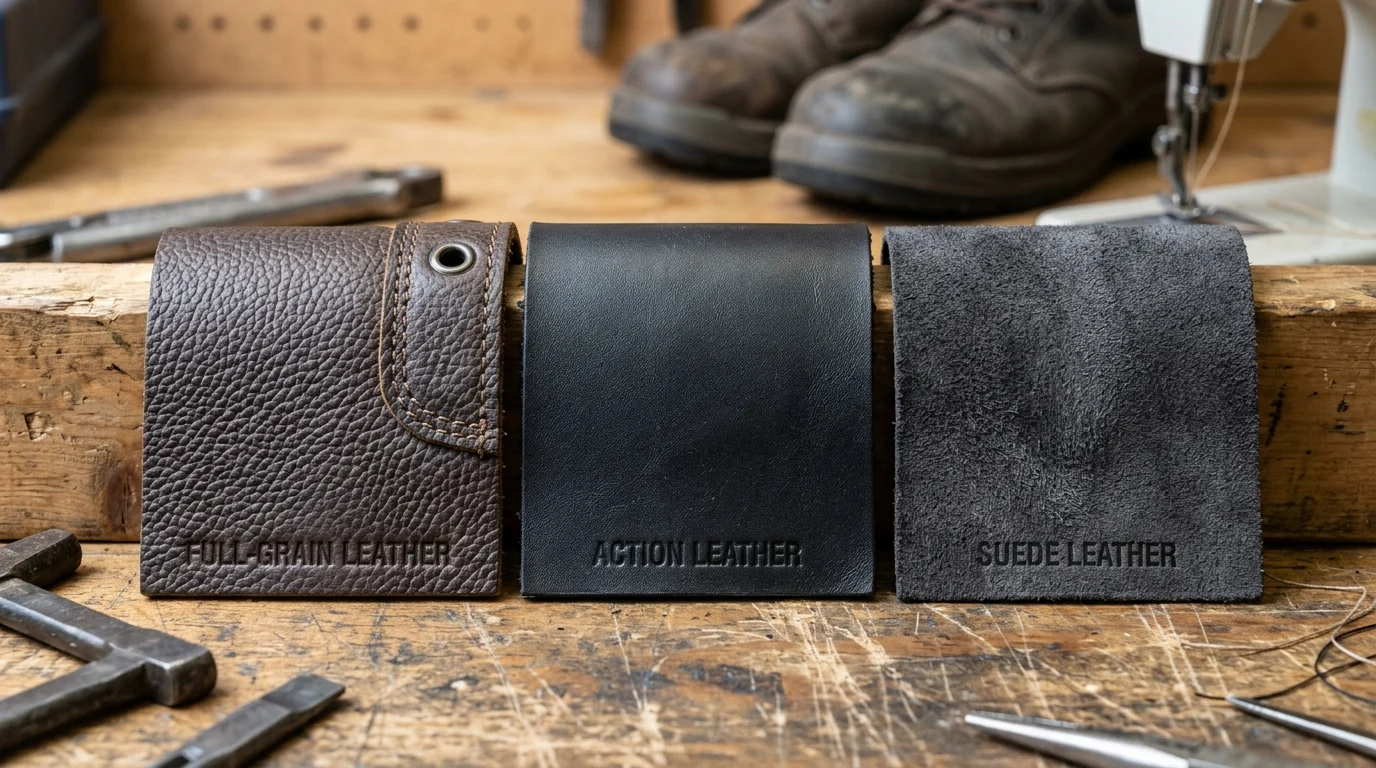
Full grain leather retains the complete natural grain layer, offering the highest structural integrity, superior breathability, and exceptional moisture vapor permeability. Typically utilized in premium heavy-duty boots, it ranges from 1.8 mm to 2.2 mm in thickness. Corrected grain leather undergoes buffing to remove surface imperfections and receives a synthetic coating (often polyurethane), making it highly resistant to water and abrasion, though it sacrifices significant breathability. Nubuck is a top-grain leather that has been sanded to create a slight nap; while it offers excellent flexibility and a premium aesthetic, it requires specialized treatments to resist oil and water absorption.
Split leather is derived from the lower corium layers of the hide after the top grain is removed. While inherently weaker than top-grain options, it is highly cost-effective. When finished as suede, it provides maximum breathability for dry, indoor environments. Alternatively, it can be heavily coated with polyurethane (action leather) to simulate smooth grain leather, typically measuring 1.4 mm to 1.6 mm in thickness, providing an economical solution for entry-level safety footwear.
Which physical properties matter most
The performance of safety shoe leather is quantified through rigorous physical testing. Tear strength is paramount; premium safety leathers must typically exceed 120 N of tear resistance to prevent snags from turning into catastrophic upper failures. Tensile strength, measuring the force required to pull the material apart, should consistently register above 15 N/mm². Flex resistance is critical for wearer comfort and longevity; high-grade leather must endure over 100,000 continuous flex cycles in a Bally flexometer at room temperature without showing signs of surface cracking or finish delamination.
What comparison criteria help buyers evaluate options
Procurement teams must weigh these physical properties against commercial constraints. Evaluating options requires a matrix that balances structural specifications against yield and cost indices.
| Leather Type | Typical Thickness | Minimum Tear Strength | Breathability | Cost Index (Relative) |
|---|---|---|---|---|
| Full Grain | 1.8 – 2.2 mm | > 120 N | Excellent | High (1.0) |
| Corrected Grain | 1.6 – 2.0 mm | > 100 N | Low | Medium (0.75) |
| Nubuck | 1.8 – 2.0 mm | > 110 N | High | High (0.95) |
| PU Coated Split | 1.4 – 1.6 mm | > 60 N | Very Low | Low (0.45) |
Using these criteria, buyers can accurately align the mechanical capabilities of the leather with the specific safety ratings required for the finished footwear.
How to evaluate specifications and compliance
Compliance in the safety footwear sector is non-negotiable. Leather used in occupational shoes is heavily scrutinized under international regulatory frameworks to ensure it poses no chemical hazard to the wearer and performs reliably under duress. Evaluating these specifications requires a deep understanding of standard test methods and global regulatory directives.
Which leather specifications matter most
Beyond mechanical strength, chemical specifications dictate the stability and safety of the leather. The pH value of the leather must be carefully controlled, typically required to be greater than 3.2; a lower pH indicates excessive residual acids from the tanning process, which can rapidly degrade the cotton or synthetic stitching threads used in the shoe assembly. Furthermore, the extractable fat content must be optimized (usually between 8% and 12%) to ensure the leather remains supple in cold environments without interfering with the adhesion of direct-injection polyurethane outsoles.
How EN ISO, ASTM, REACH, and customer requirements apply
Global standards provide the baseline for compliance. The EN ISO 20345:2022 standard dictates specific minimums for upper materials, including water vapor permeability (minimum 0.8 mg/(cm²·h)) and a water vapor coefficient of at least 15 mg/cm². In North America, ASTM F2413 outlines similar performance baselines, particularly emphasizing dielectric properties if the leather is used in electrical hazard (EH) footwear. Crucially, the European REACH regulation imposes strict limits on restricted substances. Leather must test negative for harmful Azo dyes and maintain Chromium VI levels strictly below 3 mg/kg, as Cr(VI) is a known sensitizer and carcinogen that can form post-tanning under certain environmental conditions.
What factory audits, test reports, and defect criteria to review
Validating compliance requires a stringent audit and testing protocol. Buyers should prioritize tanneries holding Leather Working Group (LWG) Gold or Silver certifications, which verify environmental stewardship and chemical management capabilities. Batch test reports from accredited third-party laboratories (such as SATRA or SGS) must accompany shipments, verifying Chromium VI and physical performance metrics. During incoming quality control, manufacturers typically apply an Acceptable Quality Limit (AQL) of 1.5 for major defects (such as deep flay marks or off-shade coloring) and 4.0 for minor defects, ensuring consistency before the cutting phase begins.
What sourcing and cost trade-offs affect supply
Procuring safety shoe leather involves complex supply chain dynamics where origin, processing methods, and logistics directly impact the final cost of the footwear. Because leather is a natural commodity, its price is subject to agricultural cycles, hide quality, and global chemical costs. Effective sourcing requires balancing the immediate price per square foot against processing yields and supply chain reliability.
How tannery origin, hide grade, and finishing affect cost
The geographic origin of the raw hide heavily influences both quality and cost. European hides, particularly from regions with fewer barbed-wire enclosures and cooler climates, yield cleaner surfaces suitable for premium full-grain leathers, often commanding prices upwards of $2.50 per square foot. Conversely, South American and Asian hides may feature more insect bites and brand marks, relegating them to corrected grain or split applications at $1.20 to $1.80 per square foot. Hide grade directly dictates the cutting yield; Grade A/B hides can achieve a 70% to 75% cutting yield for safety boot uppers, whereas Grade C/D hides may drop below 55% yield due to the necessity of cutting around extensive defects, negating any upfront cost savings.
Which logistics, lead-time, and color consistency issues matter
Logistical constraints and production lead times require careful forecasting. The tanning and finishing process is resource-intensive, typically requiring lead times of 4 to 8 weeks from raw hide procurement to finished crust. Tanneries enforce Minimum Order Quantities (MOQs) that generally range from 1,000 to 3,000 square feet per color to justify the batch processing in tanning drums. Color consistency across these massive batches is a persistent challenge; buyers must establish tight delta-E (ΔE) tolerances for color matching, as variations exceeding a ΔE of 2.0 can result in mismatched panels on the finished footwear, leading to retail rejection.
What sourcing steps reduce claims and delays
To mitigate supply chain friction, procurement teams must implement robust sourcing protocols. Establishing master batch approvals ensures that future production runs have a physical and chemical baseline for comparison. Implementing pre-shipment inspections at the tannery level—rather than waiting for the leather to arrive at the shoe factory—prevents the costly transport of defective materials. Furthermore, negotiating staggered delivery schedules helps manage cash flow and inventory space while ensuring a continuous feed of material to the cutting lines.
How to choose the best leather for safety shoes
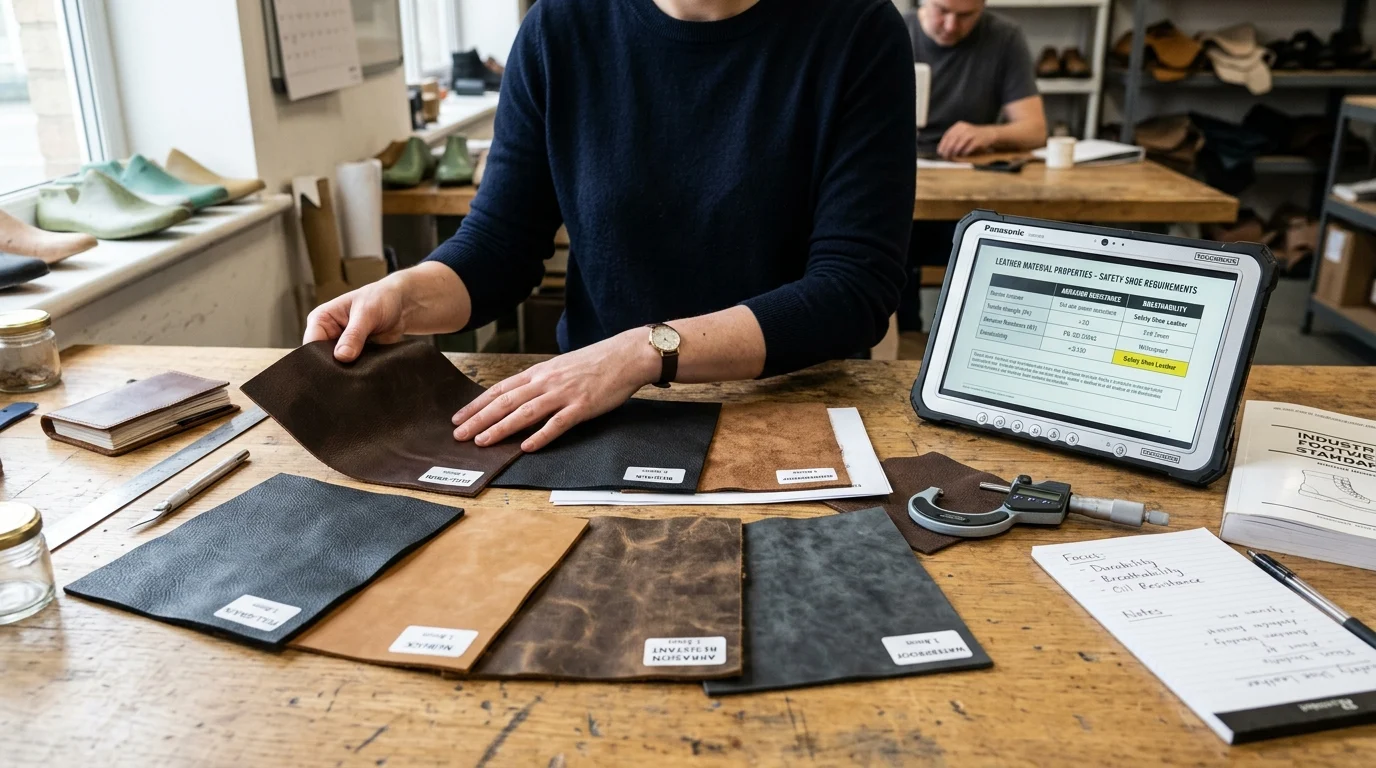
Selecting the optimal leather for safety footwear is not a singular choice but a calculated alignment of material properties with the intended end-use environment and commercial targets. Manufacturers must synthesize physical specifications, compliance mandates, and cost variables to engineer a product that delivers both safety and value.
How to match leather to product and work environment
The primary driver of leather selection must be the specific hazards of the work environment. Heavy industrial applications, such as mining and metallurgy, unequivocally require 2.0 mm to 2.2 mm full-grain leather treated for maximum heat and water resistance, as the cost of material failure is unacceptably high. In contrast, footwear designed for light manufacturing, electronics assembly, or indoor logistics should prioritize flexibility and breathability, making 1.4 mm to 1.6 mm suede splits or lightweight nubuck the optimal choice. Over-engineering a shoe for a low-hazard environment merely adds unnecessary weight and cost, reducing wearer compliance and commercial competitiveness.
What decision framework helps buyers and manufacturers
To systematize the selection process, procurement and product development teams can utilize a decision framework that maps hazard profiles to material specifications.
| Application Environment | Primary Hazard Focus | Recommended Leather Type | Target Thickness | Key Compliance Metric |
|---|---|---|---|---|
| Mining / Heavy Construction | Abrasion, Impact, Water | Full Grain (WRU treated) | 2.0 – 2.2 mm | Tear Strength > 120 N |
| Petrochemical / Oil & Gas | Chemical Spills, Moisture | Corrected Grain (PU Coated) | 1.8 – 2.0 mm | Chemical / Oil Resistance |
| Indoor Warehousing | Heat Retention, Fatigue | Suede Split / Nubuck | 1.4 – 1.6 mm | Permeability > 0.8 mg/(cm²·h) |
| General Manufacturing | Moderate Abrasion | Action Leather (Coated Split) | 1.6 – 1.8 mm | Flex > 100k cycles |
By applying this framework, manufacturers can standardize their sourcing strategies, ensuring that every square foot of leather purchased directly supports the safety ratings, lifecycle expectations, and pricing models of their footwear lines.
Key Takeaways
- The most important conclusions and rationale for safety shoe leather
- Specs, compliance, and risk checks worth validating before you commit
- Practical next steps and caveats readers can apply immediately
Frequently Asked Questions
Which leather is best for heavy-duty safety shoes?
Full grain bovine leather is usually best for heavy-duty industrial footwear because it offers high strength, durability, and breathability at typical 1.8–2.2 mm thickness.
When should WRU leather be specified?
Use WRU leather for wet workplaces like agriculture, food processing, and petrochemical sites, where low water absorption and minimal penetration are required.
Is corrected grain leather a good choice for industrial footwear?
Yes, if water and abrasion resistance matter more than breathability. Its coated surface performs well in harsh environments but feels less breathable than full grain.
Can split leather work for safety shoes?
Yes, for budget or indoor models. Split leather suits dry environments, and PU-coated action leather can provide a lower-cost smooth-finish option for entry-level safety shoes.
What leather tests should buyers check before ordering from a supplier like hh-mf.com?
Check tear strength, tensile strength, flex resistance, thickness, and any WRU or heat-related requirements. These metrics help match leather performance to the target work environment.