
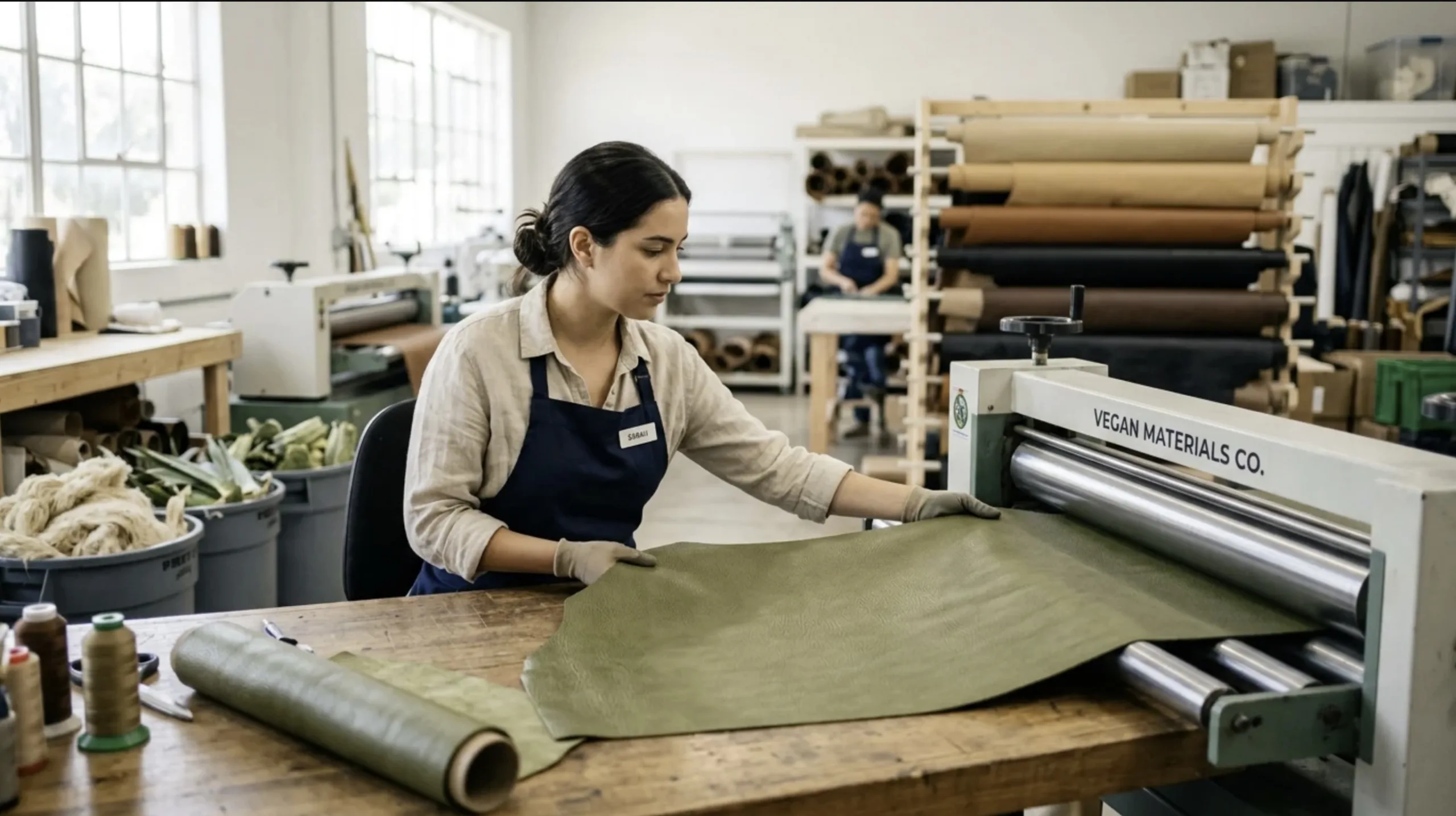
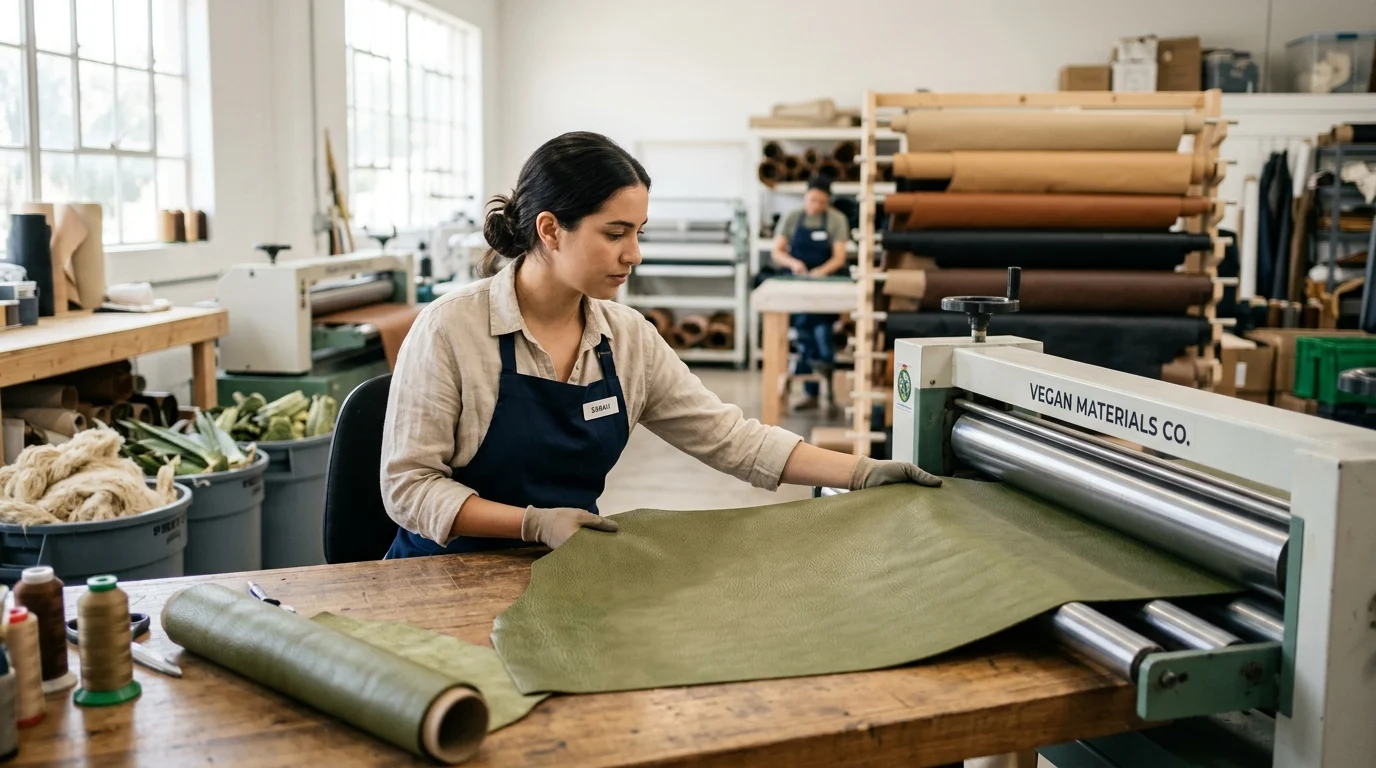
Introduction
Choosing a vegan leather manufacturer is a strategic sourcing decision that affects product quality, delivery reliability, compliance, and brand credibility. The market includes widely different materials, processes, and claims, so surface-level samples rarely reveal whether a supplier can meet real production demands. This article explains how to assess manufacturers beyond appearance, including material composition, consistency, testing standards, certifications, capacity, and communication practices. You will learn which warning signs suggest hidden risk, which questions help verify technical and ethical performance, and how to compare suppliers in a way that supports both commercial goals and sustainability requirements.
Why Choosing the Right Vegan Leather Manufacturer Matters
The global market for alternative leathers continues to expand rapidly, driven by shifting consumer preferences and strict corporate sustainability mandates. As brands transition from traditional animal hides and conventional plastics to advanced synthetic and bio-based alternatives, the role of a reliable vegan leather manufacturer becomes a critical determinant of commercial success.
Sourcing these innovative materials requires far more than evaluating a swatch. Because the category encompasses everything from basic polyvinyl chloride (PVC) to highly engineered plant-based polymers, procurement professionals must rigorously evaluate potential partners to ensure alignment with production, financial, and ethical standards.
Business risks of choosing the wrong supplier
Partnering with an unverified or technically deficient supplier introduces severe operational and financial vulnerabilities. Subpar manufacturing processes often yield elevated defect rates that quickly erode profit margins. While an Acceptable Quality Limit (AQL) of 2.5% is standard for premium rolled goods, incompatible backing fabrics or improper curing processes can drive defect rates above 10%.
Such inconsistencies lead to production bottlenecks at the cut-and-sew stage, costly material replacements, and delayed product launches. Furthermore, suppliers with unstable financial backing or poorly managed supply chains pose a high risk of sudden capacity shortages, leaving brands unable to fulfill retail orders during peak seasons.
How supplier choice affects product quality and brand trust
A manufacturer’s technical proficiency directly dictates the longevity and aesthetic appeal of the final product, which in turn safeguards brand reputation. Poorly formulated polyurethane (PU) or improperly stabilized bio-based resins can suffer from premature hydrolysis, causing surface delamination and peeling within six to 12 months of consumer use.
Beyond physical durability, brand trust relies heavily on the accuracy of marketing claims. If a supplier falsely advertises a high bio-content percentage or obscures the use of heavy metals, brands risk severe reputational damage and regulatory penalties tied to greenwashing. Securing a highly capable and transparent partner ensures that material durability and ecological claims align perfectly with rigorous brand standards.
What Buyers Should Verify First
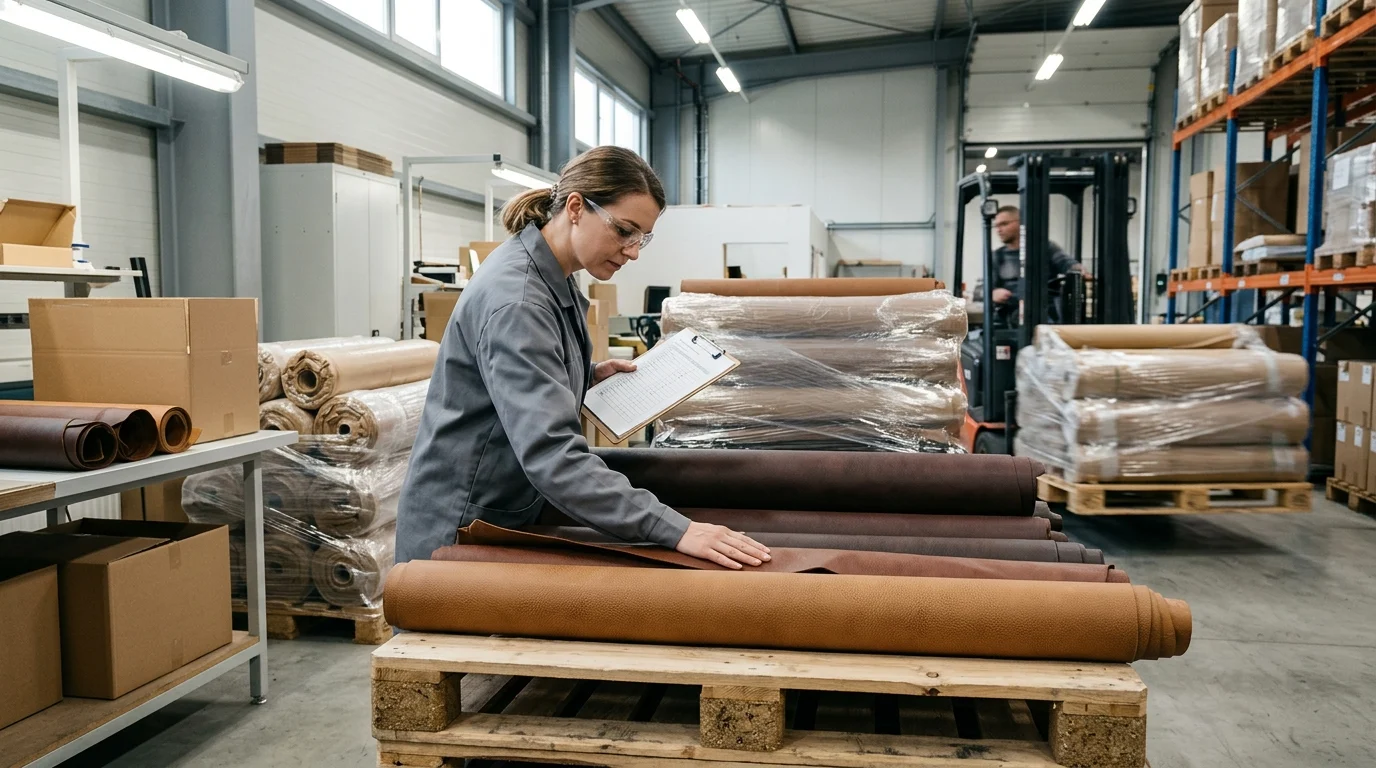
Before committing resources to prototyping and sampling, procurement teams must conduct rigorous initial vetting. The primary objective is to separate manufacturers with genuine technical expertise and transparent supply chains from those acting merely as trading intermediaries or relying on deceptive marketing terminology.
Material composition and performance claims
Understanding the exact chemical composition of the vegan leather is paramount. Many materials marketed as “plant-based” still rely heavily on fossil-derived polymers for structural integrity and flexibility. Buyers must request precise compositional breakdowns and Material Safety Data Sheets (MSDS).
For instance, a high-quality cactus or apple leather might contain 30% to 50% bio-based matter, with the remainder consisting of water-borne PU and a Global Recycled Standard (GRS) certified cotton or polyester backing. Verifying these exact ratios prevents brands from making unsubstantiated marketing claims and ensures the material possesses the necessary tensile strength for its intended application.
Key criteria for a supplier comparison scorecard
Implementing a standardized supplier comparison scorecard allows procurement teams to objectively evaluate potential partners across multiple dimensions. Key metrics should encompass production capabilities, baseline costs, chemical management, and compliance history.
Below is a foundational framework for evaluating potential vegan leather manufacturers:
| Evaluation Criteria | Target Benchmark | High-Risk Indicator |
|---|---|---|
| Bio-based Content | Certified >30% (e.g., USDA BioPreferred) | Unverified or <10% bio-content |
| Solvent Usage | 100% Water-based (DMF-free) | Uses Dimethylformamide (DMF) |
| Baseline Cost (per yard) | $15 – $35 (Bio-based premium range) | <$10 (Likely standard PVC/solvent PU) |
| Backing Material | GRS-certified Recycled PET or Organic Cotton | Virgin synthetic fibers without traceability |
How to Assess Quality, Compliance, and Sustainability
A reliable manufacturer must consistently produce materials that withstand rigorous physical wear while adhering to stringent environmental and chemical safety regulations. Evaluating a supplier’s commitment to quality control and compliance is non-negotiable for brands aiming to scale globally.
Testing standards and certifications to check
Physical performance must be validated through standardized, internationally recognized laboratory testing. For upholstery, automotive, or footwear applications, buyers should demand Martindale or Wyzenbeek abrasion test results. A premium commercial-grade vegan leather should endure a minimum of 50,000 to 100,000 double rubs without significant surface degradation.
Additionally, colorfastness to light (ISO 105-B02) and flex resistance are critical indicators of polymer stability and dye retention. Buyers should look for Bally flex testing results that demonstrate the material can withstand over 100,000 cycles at room temperature without cracking, ensuring the material will perform well in dynamic consumer applications.
How to verify sustainability data and claims
Sustainability claims must be substantiated by accredited third-party documentation rather than internal estimates. Manufacturers should be able to provide comprehensive Life Cycle Assessments (LCAs) detailing the carbon footprint, water usage, and energy consumption per square meter of material produced.
Furthermore, the facility must demonstrate compliance with strict chemical restrictions, such as the European Union’s REACH directive or OEKO-TEX Standard 100. Ensuring the complete elimination of toxic solvents like Dimethylformamide (DMF)—which is heavily restricted to limits often below 10 ppm in finished goods—is essential for both environmental safety and the occupational health of factory workers.
Which Operational Factors Matter Most
Even the most innovative material is commercially unviable if the manufacturer cannot meet delivery schedules, accommodate order sizes, or scale production efficiently. Assessing a supplier’s operational infrastructure ensures alignment with the brand’s inventory models and cash flow requirements.
MOQ, lead time, and sampling capabilities
Minimum Order Quantities (MOQs) and production lead times are primary drivers of supply chain agility. Specialized bio-based vegan leather manufacturers typically require MOQs ranging from 500 to 1,000 linear meters per colorway due to the complexities of custom resin formulation and coating line setups.
However, highly accommodating suppliers may offer pilot runs at 200 to 300 meters, albeit typically at a 15% to 25% price premium. Standard production lead times should fall between four to six weeks for established formulations, extending to eight to 12 weeks for custom color matching (lab dips) and novel embossing patterns. Buyers must ensure these timelines fit their seasonal go-to-market calendars.
Factory audits and supply chain reliability
Supply chain reliability is best verified through comprehensive factory audits. Buyers should prioritize manufacturers holding ISO 9001 (Quality Management) and ISO 14001 (Environmental Management) certifications, which indicate formalized, repeatable operational procedures.
Additionally, ethical labor practices must be confirmed via social compliance audits such as SMETA (Sedex Members Ethical Trade Audit) or BSCI. An audit report revealing high employee turnover, excessive machine downtime, or poor raw material storage conditions often serves as an early warning sign of future shipment delays and inconsistent batch-to-batch quality.
How to Make the Final Supplier Decision
Selecting the optimal vegan leather manufacturer ultimately requires balancing competing priorities. Procurement, sustainability, and product development teams must synthesize the collected data to finalize a partnership that supports both immediate product launches and long-term brand equity.
Key trade-offs in supplier selection
Decision-makers frequently face trade-offs between material innovation, unit cost, and scalability. Highly experimental materials, such as lab-grown mycelium leathers, offer unparalleled sustainability narratives but often come with severe production constraints, yielding less than 10,000 square feet per month at costs exceeding $40 per yard.
Conversely, advanced water-based PU offers high scalability and lower costs ($10 to $15 per yard) but lacks the compelling bio-based marketing angle of agricultural byproducts.
| Supplier Profile | Primary Advantage | Typical Trade-off | Ideal Application |
|---|---|---|---|
| Bio-based Innovator (e.g., Apple/Cactus) | Strong sustainability narrative, >30% bio-content | Higher cost ($20-$35/yd), longer lead times | Premium footwear, luxury accessories |
| Advanced Water-based PU Mill | High scalability, excellent durability (100k+ rubs) | Lower bio-content, less unique marketing | Automotive interiors, mass-market apparel |
| Boutique Experimental Lab (e.g., Mycelium) | Cutting-edge innovation, near-zero plastic | Extremely low capacity, highest cost ($40+/yd) | Limited edition capsules, haute couture |
Trials, approvals, and long-term partnership planning
Before executing long-term purchasing agreements, brands must conduct rigorous production trials. A successful pilot run—typically encompassing 50 to 100 meters—allows the buying team to evaluate the manufacturer’s communication, adherence to technical specifications, and packaging standards.
Once the trial material passes internal prototyping and quality assurance, brands can confidently transition to formalizing Service Level Agreements (SLAs). These contracts should explicitly define acceptable defect rates, strict penalty clauses for delayed shipments, and intellectual property protections for custom colors and textures, thereby establishing a resilient and collaborative supply chain partnership.
Key Takeaways
- The most important conclusions and rationale for vegan leather manufacturer
- Specs, compliance, and risk checks worth validating before you commit
- Practical next steps and caveats readers can apply immediately
Frequently Asked Questions
What should I verify first when choosing a vegan leather manufacturer?
Ask for the exact material composition, MSDS, and whether the supplier is a real manufacturer or only a trader. Confirm bio-based percentage, backing fabric, and solvent system before sampling.
How can I tell if vegan leather quality is reliable?
Request test reports for abrasion, peeling, hydrolysis, and colorfastness. For demanding uses, look for about 50,000–100,000 rubs and consistent AQL performance on rolled goods.
Which sustainability claims should I check carefully?
Verify certified bio-content, DMF-free or water-based production, and traceable backing materials such as GRS-certified recycled PET or organic cotton. Avoid vague “eco” claims without documents.
What warning signs suggest a supplier may be unreliable?
Red flags include prices far below market, unclear composition, no MSDS, missing test reports, unstable lead times, and refusal to disclose certifications or factory details.
How can hh-mf.com help buyers source vegan leather?
Use hh-mf.com to review available vegan leather materials and start supplier discussions. Ask for technical data sheets, compliance documents, and application-specific recommendations before placing bulk orders.