
Introduction
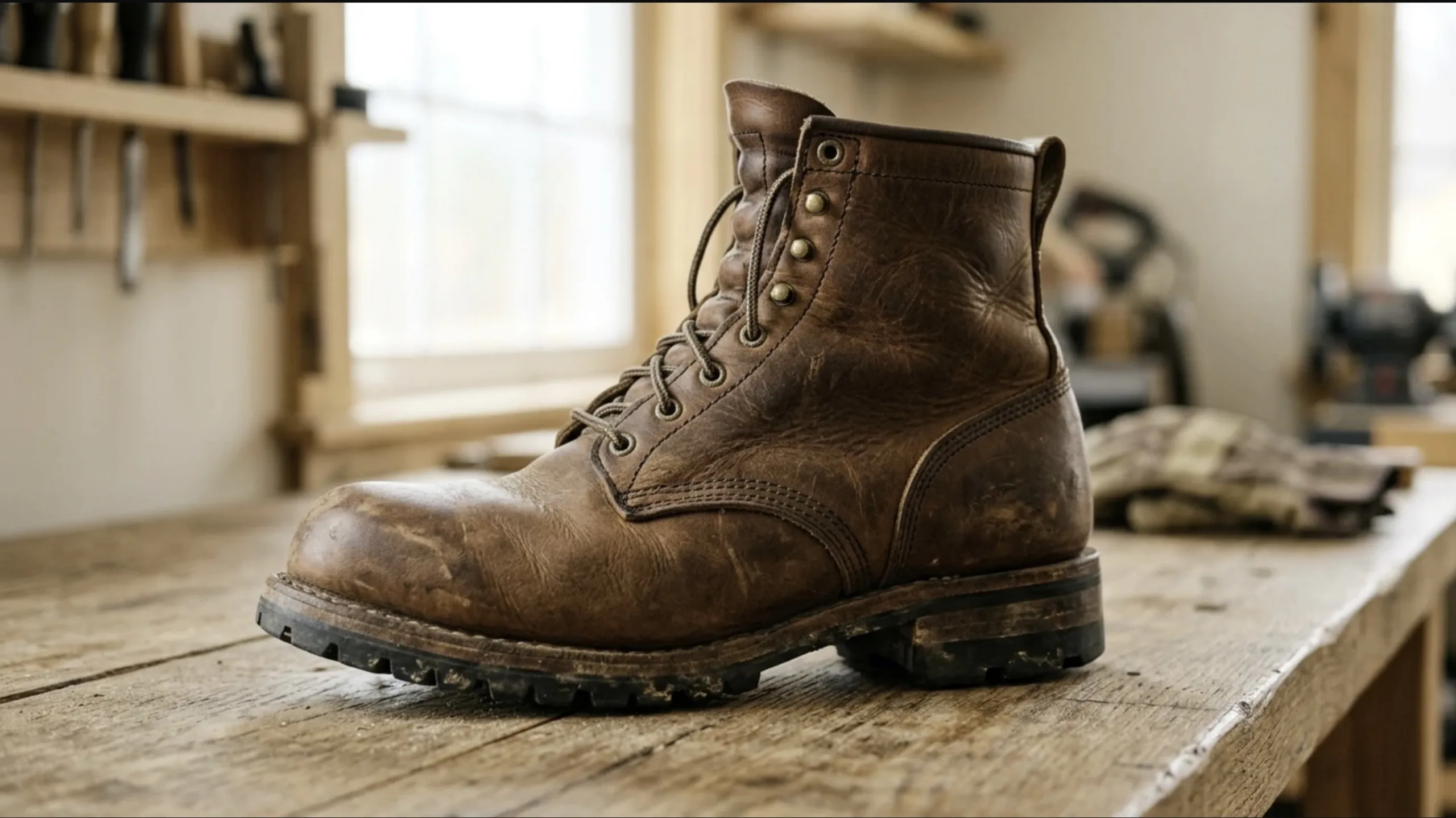
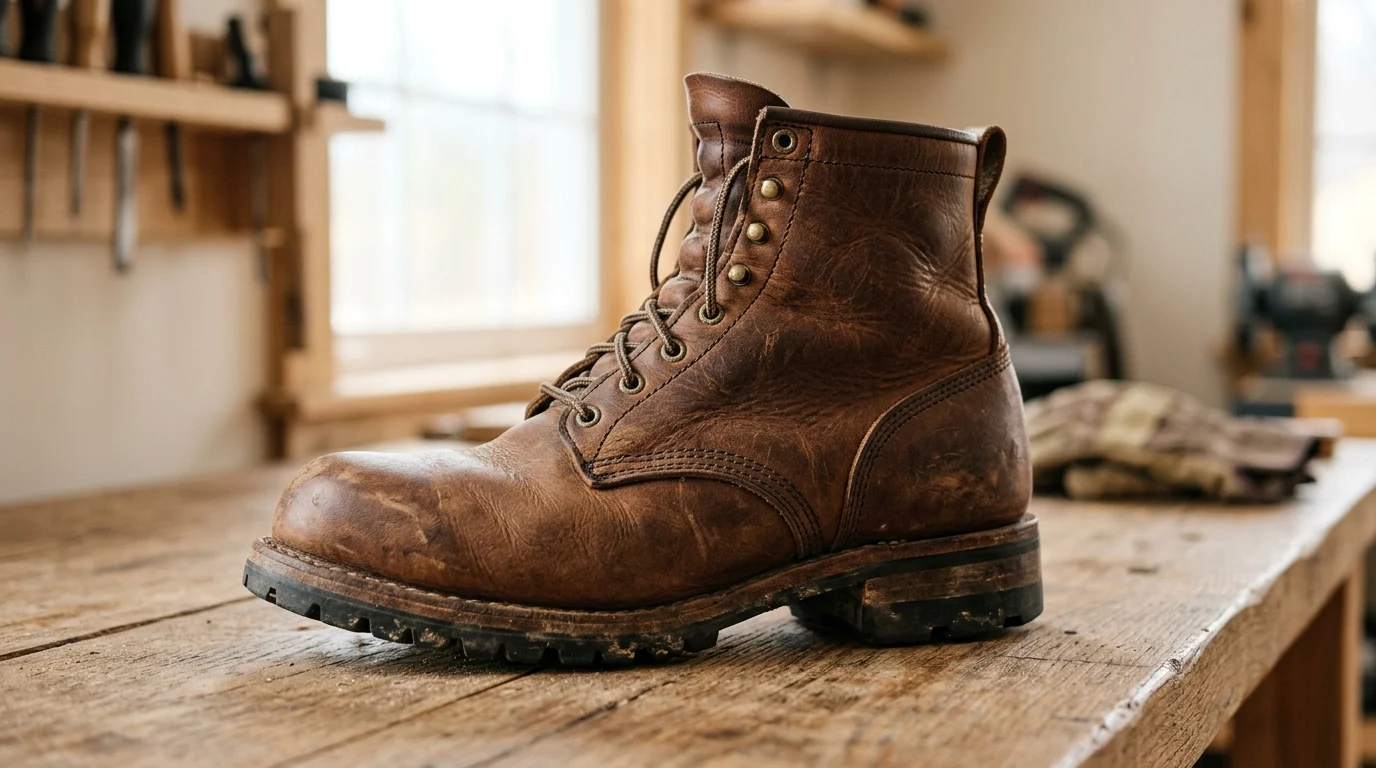
Not all work boot leather performs the same under heavy loads, abrasive surfaces, moisture, and chemical exposure. The material you choose affects how well a boot resists scuffs, holds its structure, sheds water, and survives long shifts without breaking down early. This article explains the main leather types used in heavy-duty work boots, how grain quality and thickness influence durability, and where common trade-offs appear between toughness, flexibility, and maintenance. By the end, you’ll have a clearer basis for comparing options and selecting leather that matches demanding jobsite conditions rather than relying on labels alone.
Why does work boot leather selection matter for heavy-duty use
Selecting the appropriate work boot leather material is a critical engineering and procurement decision that directly impacts worker safety, operational efficiency, and long-term equipment costs. In heavy-duty industrial environments, footwear is subjected to severe mechanical stress, chemical exposure, and extreme weather. A suboptimal leather choice accelerates structural degradation, leading to compromised foot protection and frequent replacement cycles.
How does leather type affect abrasion resistance
The abrasion resistance of leather is primarily dictated by the density and integrity of its corium and grain layers. Heavy-duty applications typically require a leather thickness between 2.0mm and 2.4mm to withstand continuous friction against rough surfaces such as concrete, steel grating, or crushed stone. The natural fiber matrix found in the outermost grain layer provides an inherent shield that synthetic materials struggle to replicate without adding significant weight.
When the grain layer remains intact, the material exhibits superior tensile strength and scuff resistance. Laboratory abrasion tests, such as the Taber abrasion method, consistently demonstrate that high-density, unaltered leather can withstand up to three times the rotational wear cycles of excessively sanded or split alternatives before structural failure occurs.
What trade-offs shape leather choice for construction work
Specifying leather for construction and heavy industrial use involves navigating unavoidable trade-offs between durability, weight, and breathability. Maximizing water and chemical resistance often requires heavily oiled or waxed finishes. While these treatments are highly effective at repelling moisture, they can increase the overall weight of the upper material by 15% to 20% and significantly reduce the leather’s natural vapor permeability.
Conversely, prioritizing breathability for hot-weather construction environments often necessitates utilizing leathers with less aggressive finishing or slightly reduced thickness (e.g., 1.8mm to 2.0mm). This improves thermal comfort and reduces fatigue but compromises the boot’s defensive capabilities against sharp debris and heavy impacts. Buyers must align these material trade-offs with the specific environmental hazards of the intended job site.
What are the best leather options for work boots
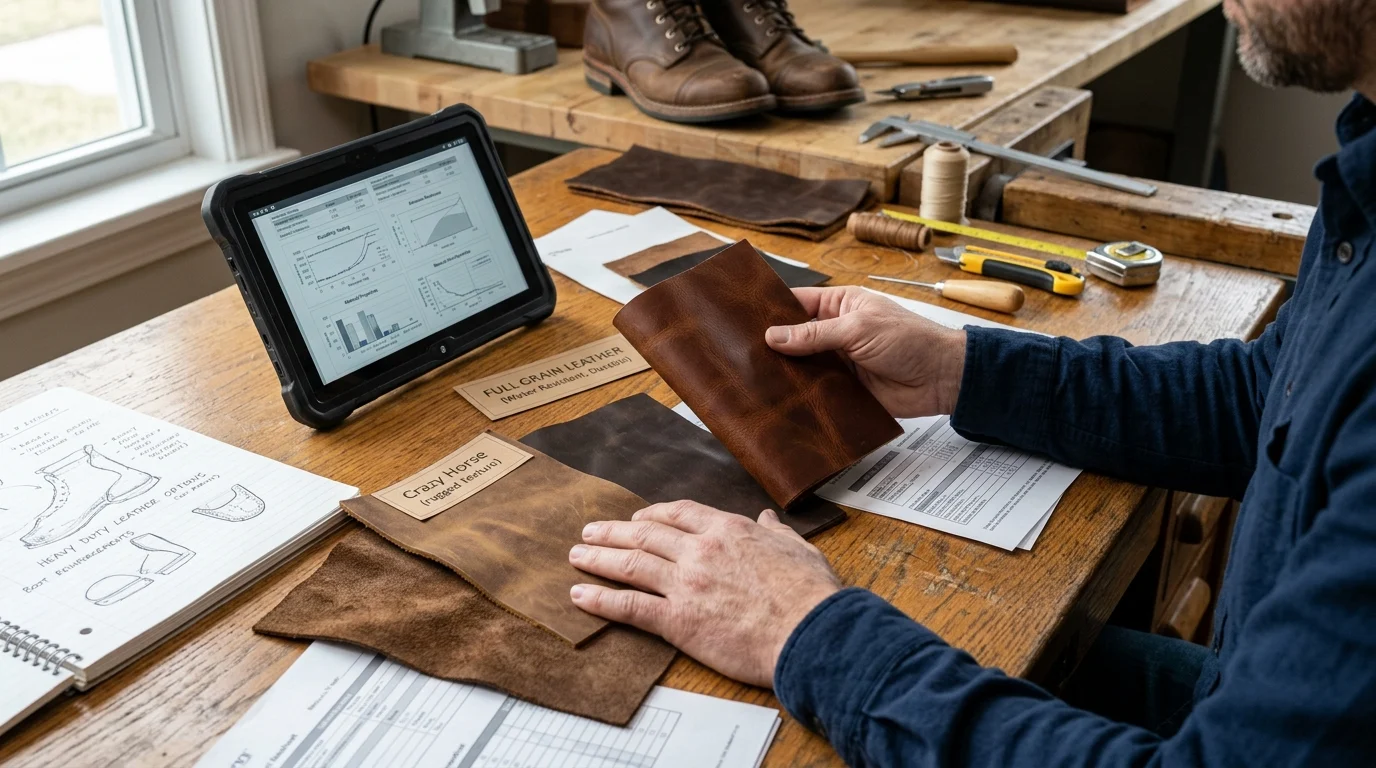
The footwear industry categorizes leather into several distinct grades and finishes, each offering a different baseline of performance for industrial applications. Understanding the structural differences between these options is essential for specifying the correct work boot leather material.
How do full-grain, top-grain, nubuck, suede, and split leather compare
The hierarchy of leather grades is determined by which layers of the animal hide are retained. Full-grain leather incorporates the entire natural grain, offering the highest density and moisture resistance. Top-grain leather is lightly sanded to remove surface imperfections, resulting in a more uniform appearance but a slight reduction in surface toughness. Nubuck is top-grain leather that has been buffed to create a slight nap, while suede and split leathers are derived from the lower, looser-fibered corium layer, making them highly flexible but vulnerable to tearing.
| Leather Grade | Relative Durability | Typical Thickness (mm) | Cost Index (1-5) | Primary Industrial Use |
|---|---|---|---|---|
| Full-Grain | Very High | 2.0 – 2.4+ | 5 | Heavy construction, logging, welding |
| Top-Grain | High | 1.8 – 2.2 | 4 | General trades, manufacturing |
| Nubuck | Moderate-High | 1.8 – 2.0 | 4 | Dry environments, logistics |
| Split/Suede | Low | 1.4 – 1.8 | 2 | Light duty, indoor warehousing |
How do tanning and finishing methods affect durability and flexibility
Tanning stabilizes the collagen proteins in the hide, and the chosen method drastically alters the leather’s physical properties. Chrome tanning is the industry standard for work boots, requiring only 1 to 3 days to process and yielding a leather that is highly flexible and heat-resistant (withstanding brief exposures up to 100°C/212°F). Vegetable tanning, while more environmentally traditional, produces a stiffer leather that requires a longer break-in period but offers exceptional structural memory. Subsequent finishing methods, such as hot-stuffing the leather with blends of oils and waxes, impregnate the fibers to create dynamic water resistance that shifts and recovers as the boot flexes.
What comparison criteria best evaluate work boot leather
Evaluating work boot leather requires standardized metallurgical-style testing applied to organic materials. Key criteria include tensile strength, which measures the force required to pull the leather apart, and tear resistance, which evaluates how easily a pre-existing puncture will expand under load. Additionally, water vapor permeability (breathability) is quantified in milligrams per square centimeter per hour (mg/cm²·h), providing a concrete metric to compare how well different leather grades dissipate internal sweat during high-exertion shifts.
Which specifications and compliance factors should buyers review
Procurement professionals and safety managers cannot rely solely on subjective assessments of leather quality. Rigorous industrial specifications and international safety compliance standards dictate the exact material thresholds required for heavy-duty footwear.
What material and construction specs matter most
For heavy-duty applications, material specifications must establish strict minimums. A premium work boot upper typically requires a minimum tear strength exceeding 120 Newtons (N) and a flex resistance capable of enduring 50,000 to 100,000 flex cycles in dry conditions without cracking. The thickness specification is equally critical; an upper falling below 1.8mm will generally fail to provide adequate ankle support or resist job-site lacerations.
Construction specifications also dictate how the leather interacts with other components. The leather must possess sufficient structural integrity to hold heavy-duty stitching, such as Kevlar or bonded nylon threads, without the stitch holes elongating under stress. Furthermore, the leather’s compatibility with sole-attachment methods—whether direct-injected polyurethane, cement construction, or traditional Goodyear welting—relies heavily on its tensile properties and oil content.
How do safety and compliance requirements affect leather selection
Global safety standards heavily influence leather selection. Under the EN ISO 20345 standard for safety footwear, boots rated S2 or S3 must meet stringent water penetration and absorption criteria. Specifically, the leather upper must demonstrate a water absorption rate of less than 30% after 60 minutes of continuous testing, and transmit no more than 2.0 grams of water during that period.
Similarly, ASTM F2413 compliance in the United States, while primarily focused on toe caps and metatarsal guards, indirectly requires robust upper materials to securely anchor these protective elements. Leathers destined for electrical hazard (EH) or electrostatic dissipative (ESD) footwear must also be finished without conductive metallic dyes or excessive moisture-retaining humectants that could compromise the boot’s dielectric properties.
How should sourcing, manufacturing quality, and total cost be assessed
Beyond physical performance, the commercial viability of work boot leather material depends on supply chain dynamics, manufacturing consistency, and the total cost of ownership over the product’s lifespan.
What sourcing and tannery factors affect consistency
Sourcing consistent leather at scale is a major challenge for footwear manufacturers. Tanneries grade hides (typically A, B, and C grades) based on the prevalence of natural defects like tick bites, scars, and brand marks. For high-volume production, manufacturers target a cutting loss defect rate of less than 5% to 8%. High variations in hide quality lead to excessive waste, directly inflating the per-unit cost of the finished boot.
Furthermore, environmental and ethical sourcing compliance is becoming mandatory. Tanneries certified by the Leather Working Group (LWG) at the Gold or Silver level demonstrate audited commitments to water conservation and chemical management. Minimum Order Quantities (MOQs) for custom-dyed or specialized heavy-duty leathers frequently range from 1,000 to 5,000 square feet per lot, requiring buyers to balance inventory holding costs against the benefits of proprietary material formulations.
How do lifecycle cost, repairability, and maintenance compare
Evaluating the lifecycle cost of work boots reveals that higher upfront material costs often yield substantial long-term savings. Boots constructed from premium full-grain leather typically carry a retail price premium of 40% to 60% over corrected-grain or synthetic alternatives. However, in aggressive environments like masonry or steel fabrication, full-grain boots routinely maintain structural integrity for 18 to 36 months, whereas lower-grade leathers may suffer catastrophic failure within 6 to 9 months.
Repairability further alters the cost equation. High-quality, thick leather uppers allow for multiple resoling operations if the boot utilizes a welted construction. The maintenance requirements of the leather—such as regular conditioning with mink oil or specialized waxes to prevent dry rot—must be factored into the total cost of ownership, as neglected leather will rapidly lose its tensile strength and hydrophobic properties.
How can buyers choose the right work boot leather
Matching the correct leather to the intended industrial application requires a systematic approach. By assessing environmental variables and mechanical risks, buyers can optimize their procurement strategy to maximize both safety and return on investment.
What step-by-step process helps match leather to job conditions
The first step in the selection process is conducting a job-site hazard analysis. Buyers must quantify the primary vectors of wear: mechanical abrasion, chemical exposure, or extreme moisture. For example, environments with high exposure to caustic chemicals or wet concrete require heavily oiled, non-porous leathers, whereas indoor manufacturing facilities may prioritize lighter, breathable top-grain options.
Next, establish the required material specifications based on these hazards, locking in parameters for thickness, tanning method, and compliance ratings. Finally, buyers should evaluate the boot’s overall construction, ensuring that the selected leather is paired with appropriate hardware, stitching, and outsole materials that match the leather’s projected lifespan.
Which decision guide simplifies work boot leather selection
To streamline procurement, buyers can utilize a standardized matrix that pairs industry profiles with optimal leather specifications. This ensures that purchasing decisions are driven by data rather than aesthetic preferences.
| Industry / Application | Recommended Leather Type | Minimum Thickness | Key Performance Requirement |
|---|---|---|---|
| Heavy Construction / Concrete | Oil-Tanned Full-Grain | 2.2mm – 2.4mm | High chemical and abrasion resistance |
| Welding / Metal Fabrication | Chrome-Tanned Full-Grain | 2.0mm – 2.2mm | Heat resistance, high tensile strength |
| Warehousing / Logistics | Top-Grain or Nubuck | 1.8mm – 2.0mm | Breathability, flexibility, lighter weight |
| Agriculture / Forestry | Waxed Full-Grain | 2.2mm+ | Maximum water resistance, puncture defense |
Key Takeaways
- The most important conclusions and rationale for work boot leather material
- Specs, compliance, and risk checks worth validating before you commit
- Practical next steps and caveats readers can apply immediately
Frequently Asked Questions
What is the best leather for heavy-duty work boots?
Full-grain leather is usually the best choice for heavy-duty use because it keeps the strongest grain layer and offers top abrasion resistance, durability, and weather protection.
How thick should work boot leather be for construction or industrial jobs?
For heavy-duty sites, aim for about 2.0mm to 2.4mm leather. This range balances abrasion resistance, structure, and long-term wear on rough surfaces.
Is top-grain leather good enough for demanding job sites?
Yes, for many general trades. Top-grain leather is durable and lighter than full-grain, but it gives up some surface toughness in harsher environments.
Are nubuck or suede work boots suitable for heavy-duty use?
Usually no. Nubuck can work in dry, lower-risk settings, but suede and split leather wear faster and resist tears and abrasion less effectively.
How can buyers choose the right work boot leather from hh-mf.com?
Match leather type to site hazards: full-grain for maximum durability, top-grain for balanced performance, and avoid split leather for harsh outdoor or industrial use.