
Introduction
Choosing the right car seat leather material affects far more than appearance. It influences comfort, wear resistance, cleaning effort, cabin temperature, and the overall cost and positioning of a vehicle interior. Modern buyers and manufacturers also weigh sustainability, consistency, and long-term performance alongside the traditional appeal of leather. This article explains the main leather material options used in today’s vehicles, how they differ in durability and finish, and where each fits across premium and mass-market interiors, so you can better evaluate which material delivers the best balance of quality, practicality, and value.
Why Car Seat Leather Material Selection Matters
The selection of car seat leather material is a critical procurement decision that directly influences a vehicle’s interior aesthetics, long-term performance, and overall bill of materials. Automotive interiors demand materials that can withstand rigorous daily use while maintaining structural and visual integrity over a lifespan that frequently exceeds a decade.
How cost, brand positioning, and durability affect selection
Interior upholstery can account for 15% to 20% of the total interior bill of materials. Premium brands leverage high-grade leather to justify higher manufacturer’s suggested retail prices (MSRPs), creating a tactile environment that aligns with luxury positioning. Conversely, mass-market manufacturers must balance perceived quality with stringent budget constraints, often utilizing a mix of genuine and engineered materials.
Durability remains a non-negotiable metric across all tiers. Automotive leather must typically endure upwards of 100,000 cycles on the Wyzenbeek abrasion test without exhibiting structural failure or severe surface degradation. The material must also resist color transfer and maintain its tensile strength under constant occupant ingress and egress.
Which market shifts are changing automotive leather expectations
Recent market shifts have introduced new expectations regarding environmental impact and corporate sustainability. Automakers are increasingly committing to reducing the carbon footprint of their supply chains, with several major original equipment manufacturers (OEMs) targeting a 30% to 40% reduction in carbon dioxide equivalent emissions per processed hide by 2030.
This shift is driving demand for both sustainably sourced genuine leathers and advanced synthetic alternatives. The rise of electric vehicles (EVs) has particularly accelerated the adoption of vegan interiors, pushing suppliers to engineer materials that offer the premium feel of traditional leather while aligning with the eco-conscious branding of modern EV platforms.
Types of Car Seat Leather Materials
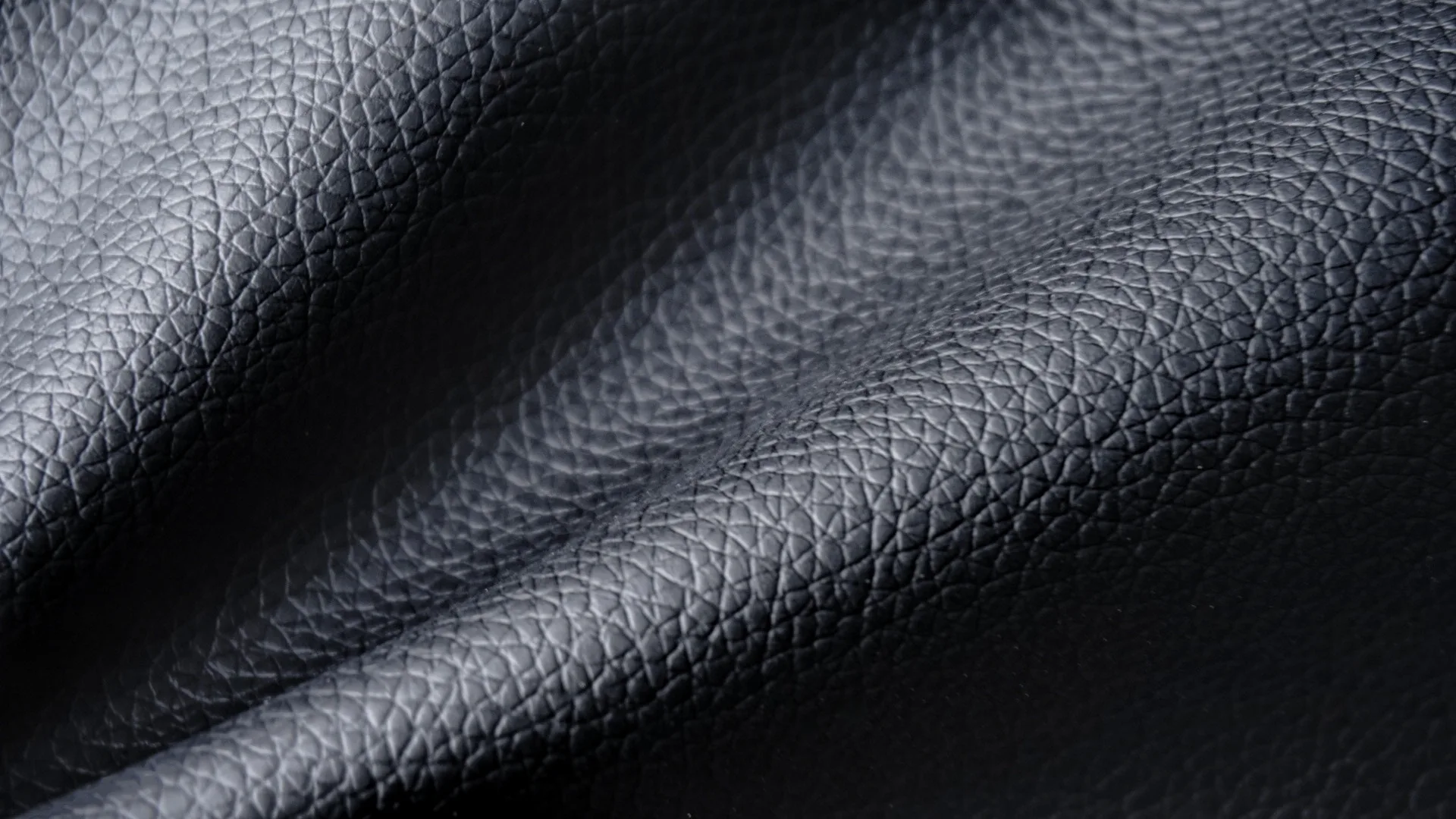
Automotive upholstery relies on a diverse spectrum of materials, ranging from traditional bovine hides to advanced engineered polymers. The categorization of these materials determines their physical properties, processing requirements, and ultimate application within the vehicle interior.
Full grain, top grain, and corrected grain leather
Genuine leather is classified by its grain structure and the extent of surface processing. Full-grain leather, representing less than 5% of the automotive market, retains the natural surface of the hide. It offers unmatched breathability and a premium tactile feel but requires virtually flawless raw hides, making it exclusively suited for ultra-luxury applications.
Top-grain leather undergoes slight sanding to remove minor surface imperfections, providing an optimal balance of luxury aesthetics and material consistency. Corrected-grain leather dominates the mass-market automotive sector. By extensively sanding the surface and embossing it with an artificial grain pattern, tanneries can maximize hide utilization, ensuring a uniform appearance and high durability for high-traffic cabins.
When to choose synthetic or coated alternatives
Synthetic and coated alternatives are specified when cost reduction, vegan mandates, or specific performance metrics take precedence over natural material characteristics. Polyurethane (PU) and Polyvinyl Chloride (PVC) are the traditional mainstays in this category, offering high roll-goods yield and consistent color matching.
Modern bio-based synthetics, incorporating materials like mushroom mycelium or recycled plastics, are rapidly gaining market share as sustainable drop-in replacements for traditional hides.
| Material Type | Typical Cost ($/sq. meter) | Breathability | Estimated Lifespan (Years) |
|---|---|---|---|
| Corrected Grain Leather | $35 – $50 | Moderate | 10 – 15 |
| Premium Top Grain | $60 – $90 | High | 15+ |
| Polyurethane (PU) | $15 – $25 | Low to Moderate | 7 – 10 |
| Polyvinyl Chloride (PVC) | $8 – $15 | Very Low | 5 – 8 |
Performance and Quality Criteria
Automotive cabins present one of the most demanding environments for upholstery materials. Car seat leather material must endure extreme temperature fluctuations, prolonged ultraviolet exposure, and continuous mechanical stress without degrading or compromising passenger comfort.
How to evaluate wear, comfort, and appearance
Evaluating wear involves rigorous laboratory testing to simulate years of real-world abuse. Materials are subjected to extreme temperature cycles ranging from -40°C to 85°C to simulate harsh winter and summer extremes, ensuring the material does not become brittle or excessively pliable.
Appearance retention is quantified using strict ultraviolet (UV) resistance protocols, such as the ISO 105-B06 standard. Under this protocol, materials must withstand hundreds of hours of artificial weathering and high irradiance without exhibiting fading, chalking, or cracking. Comfort is assessed through breathability (water vapor permeability) and thermal conductivity metrics, ensuring the seat does not become uncomfortably hot or cold to the touch during seasonal shifts.
Finishing, thickness, hide yield, and defect tolerance
Finishing techniques involve applying specialized protective topcoats that provide resistance to stains, liquid ingress, and dye transfer—particularly from indigo denim, which is a common failure point in light-colored interiors.
Automotive leather thickness is strictly controlled, typically specified between 1.0mm and 1.4mm. This precise bandwidth ensures adequate tensile strength while allowing for clean automated stitching, precise perforation for ventilated seats, and proper deployment of integrated side airbags.
Hide yield is a critical financial metric in leather procurement. Due to natural defects such as tick bites, stretch marks, or barbed wire scars, automotive manufacturers typically achieve a usable yield of 50% to 65% per hide. Strict defect tolerance standards dictate exactly which zones of the seat (A-zones vs. C-zones) can utilize lower-grade sections of the hide, ensuring that highly visible areas remain flawless while optimizing overall material usage.
Sourcing, Compliance, and Manufacturing Constraints
The procurement of car seat leather material involves navigating a complex global supply chain characterized by stringent regulatory environments, volatile raw material availability, and demanding logistics networks.
Sourcing risks, traceability, and regional supply factors
Sourcing risks are mitigated through geographic diversification, with major raw hide supplies originating from South America, North America, and Europe. Each region presents unique characteristics regarding animal husbandry, which directly impacts hide quality and size.
Traceability has transitioned from a preference to a mandatory requirement for Tier 1 suppliers, heavily driven by global deforestation concerns. Certifications from bodies like the Leather Working Group (LWG) provide essential supply chain assurance. Many major automotive OEMs now mandate that 100% of their leather must be sourced from LWG Gold or Silver-rated tanneries by 2025.
Compliance, emissions, and processing standards
Chemical compliance strictly dictates modern tannery operations. European REACH regulations severely limit the use of hazardous substances in leather processing. Furthermore, automotive interiors must adhere to strict Volatile Organic Compound (VOC) emission limits to prevent interior windshield fogging and mitigate passenger health risks.
Testing standards, such as VDA 278, require total VOC emissions to remain below 100 µg/g. Consequently, the automotive industry has largely transitioned away from traditional heavy-metal processing, adopting chrome-free tanning methods (such as synthetic or vegetable-based glutaraldehyde tanning) to meet strict end-of-life vehicle (ELV) recycling mandates.
Cutting efficiency, color consistency, and logistics impact
Manufacturing efficiency relies heavily on optimized cutting processes and streamlined logistics. Advanced Computer Numerical Control (CNC) nesting software and automated optical inspection systems are employed to maximize cutting efficiency, frequently improving hide utilization by 5% to 8% compared to traditional manual die-cutting methods.
Color consistency is equally critical across different production batches. Suppliers must maintain a strict color variance tolerance, typically requiring a Delta E (ΔE) of less than 1.0. This strict logistical control ensures that replacement parts or seats manufactured in different facilities months apart match perfectly when finally assembled on the vehicle production line.
How Buyers Should Choose the Best Material
Selecting the optimal car seat leather material requires procurement teams and interior engineers to balance upfront costs with long-term performance, manufacturing efficiency, and brand expectations. A systematic approach ensures that the chosen material aligns seamlessly with the specific requirements of the vehicle program.
A decision framework for matching material to application
The decision framework begins by segmenting the vehicle platform. Economy and fleet vehicles prioritize cost per square meter and high cutting yields, frequently defaulting to advanced PVC or lower-tier PU synthetics supplied in continuous rolls. This eliminates the yield loss associated with natural hides.
Mid-tier platforms often utilize a hybrid material strategy. Procurement teams specify genuine corrected-grain leather on the primary seating surfaces—the contact zones—while utilizing perfectly color-matched synthetic materials on the seat backs, side bolsters, and headrests. Luxury platforms demand top-grain or full-grain leathers throughout the entire cabin, accepting significantly lower hide yields in exchange for superior tactile qualities, natural aromas, and authentic aesthetics.
Comparison tables and specification checklists
Procurement engineers utilize detailed specification checklists to validate suppliers before awarding contracts. These checklists encompass physical tear strength parameters, strict emission limits, and visual quality standards mapped directly to the vehicle’s target demographic.
| Vehicle Segment | Preferred Material Strategy | Target Usable Yield | Max Acceptable Defect Rate (A-Zone) |
|---|---|---|---|
| Economy / Fleet | PVC or Basic PU Synthetic | > 95% (Roll goods) | 0% |
| Mid-Market | Corrected Grain / PU Hybrid | 65% – 75% | < 2% |
| Entry Luxury | Top Grain Leather | 55% – 65% | 0% |
| Ultra-Luxury | Full Grain Leather | 45% – 50% | 0% |
By systematically comparing these variables against the project’s bill of materials, automotive buyers can secure materials that deliver the necessary long-term durability, meet stringent global compliance standards, and satisfy modern consumer expectations for interior comfort and luxury.
Key Takeaways
- The most important conclusions and rationale for car seat leather material
- Specs, compliance, and risk checks worth validating before you commit
- Practical next steps and caveats readers can apply immediately
Frequently Asked Questions
What is the best car seat leather material for most modern vehicles?
Top-grain or corrected-grain leather is usually the best balance of cost, durability, and appearance. For mainstream models, corrected-grain is common; for premium interiors, top-grain offers better feel and longer service life.
How does PU compare with genuine leather for car seats?
PU costs less and gives consistent color and texture, but it is usually less breathable and may last fewer years. Genuine leather generally feels more premium and can outperform PU in long-term comfort and aging.
Which leather material is best for EV or vegan interior programs?
PU and newer bio-based synthetic leathers are practical choices for EV and vegan interiors. They support non-animal material targets while offering stable quality, scalable supply, and easier color matching across vehicle programs.
What durability standard should buyers check for car seat leather material?
Check abrasion, UV, and temperature-cycle performance. A practical benchmark is around 100,000 Wyzenbeek cycles, plus resistance to color transfer and stability from about -40°C to 85°C for automotive use.
How can suppliers help choose the right car seat leather material?
Suppliers like HH can compare leather and synthetic options by target cost, brand positioning, and required lifespan. Ask for test data, finish options, and sample matching to your vehicle interior program before final selection.