
Introduction
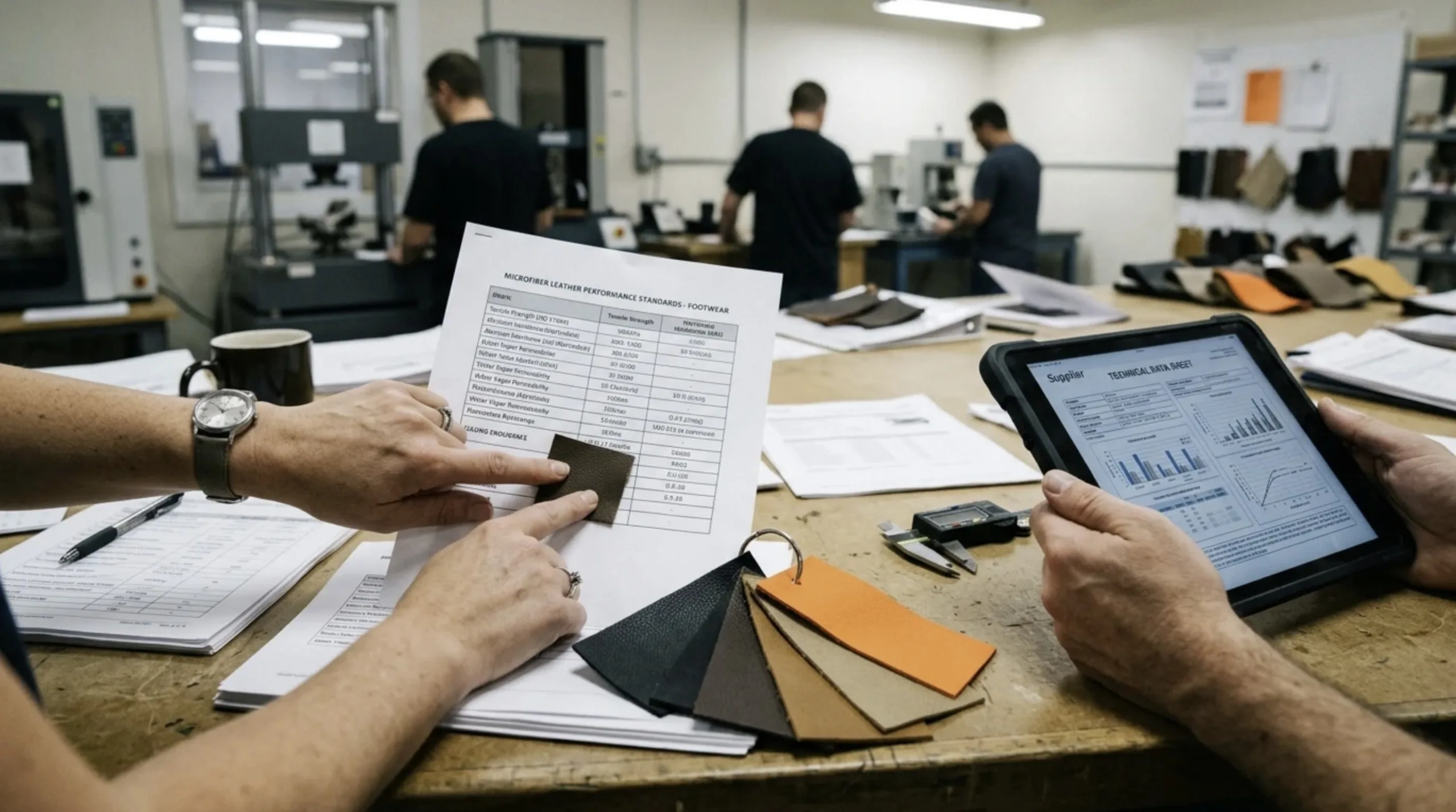
Choosing a microfiber leather manufacturer for footwear is more than a sourcing decision; it directly affects product durability, production consistency, compliance, and brand credibility. For safety shoes in particular, material performance must hold up under abrasion, stitching stress, shaping, and demanding end-use conditions. This article explains how to evaluate manufacturers beyond price by looking at technical capability, quality control, certification, customization, and supply reliability. By the end, you will have a practical framework for identifying suppliers that can support stable manufacturing, meet performance requirements, and reduce the risk of defects, delays, and costly quality issues.
Why the Right Microfiber Leather Manufacturer Matters
Selecting the right microfiber leather manufacturer is a critical strategic decision for footwear brands, particularly those specializing in safety shoes, athletic wear, and premium casual footwear. As the global market shifts toward sustainable and high-performance alternatives to genuine animal hides, microfiber synthetic leather has emerged as the premier choice, offering up to a 30% reduction in material weight while maintaining exceptional abrasion resistance. However, the manufacturing of this non-woven, three-dimensional structure is highly complex. It requires advanced sea-island spinning technology and precise polyurethane (PU) impregnation. Consequently, the capabilities of the chosen manufacturing partner directly dictate the final product’s performance, durability, and market acceptance.
Partnering with a top-tier supplier ensures that the material behaves predictably during the shoe assembly process, from die-cutting to high-tension stitching. Conversely, failing to thoroughly vet a supplier can introduce systemic flaws into the production line, jeopardizing both the brand’s reputation and bottom line. Procurement teams must approach supplier selection not merely as a transactional purchasing task, but as a deep integration of supply chain operations, technical validation, and quality assurance.
Impact on footwear quality and consistency
Microfiber leather serves as the structural foundation of the shoe, meaning any variance in material properties directly translates to manufacturing defects. A reliable manufacturer guarantees strict batch-to-batch consistency, particularly concerning thickness tolerances. In high-volume footwear production, a thickness variance exceeding +/- 0.05mm can cause misalignment in automated cutting machines and uneven tension during vamp stitching. This inconsistency inevitably leads to higher scrap rates and structural weak points in the finished shoe.
Furthermore, colorfastness and surface finish consistency are paramount. High-quality manufacturers utilize computer-controlled dyeing and finishing processes to ensure that a production run of 10,000 meters matches the master sample perfectly. Without this level of precision, footwear brands risk delivering mismatched pairs to retail shelves, immediately degrading the perceived value of the product.
Commercial risks of choosing the wrong supplier
Procurement professionals must recognize that the lowest bid often carries the highest hidden commercial risks. Choosing an unverified supplier can result in catastrophic supply chain disruptions. One of the primary risks is chemical non-compliance. If a supplier utilizes substandard polyurethane resins containing restricted volatile organic compounds (VOCs) or fails to keep dimethylformamide (DMF) levels below the strict 10 ppm threshold required by many European regulators, the entire shipment of finished footwear may be seized or recalled.
Additionally, poor quality control at the manufacturer level can lead to skyrocketing defect rates. While a standard Acceptable Quality Limit (AQL) for premium microfiber leather defects is typically between 2% and 3%, subpar suppliers may deliver rolls with delamination, pinholes, or uneven grain embossing that push defect rates above 10%. This not only halts the shoe assembly line but also destroys profit margins through material waste and missed delivery windows.
Technical Standards Buyers Should Evaluate
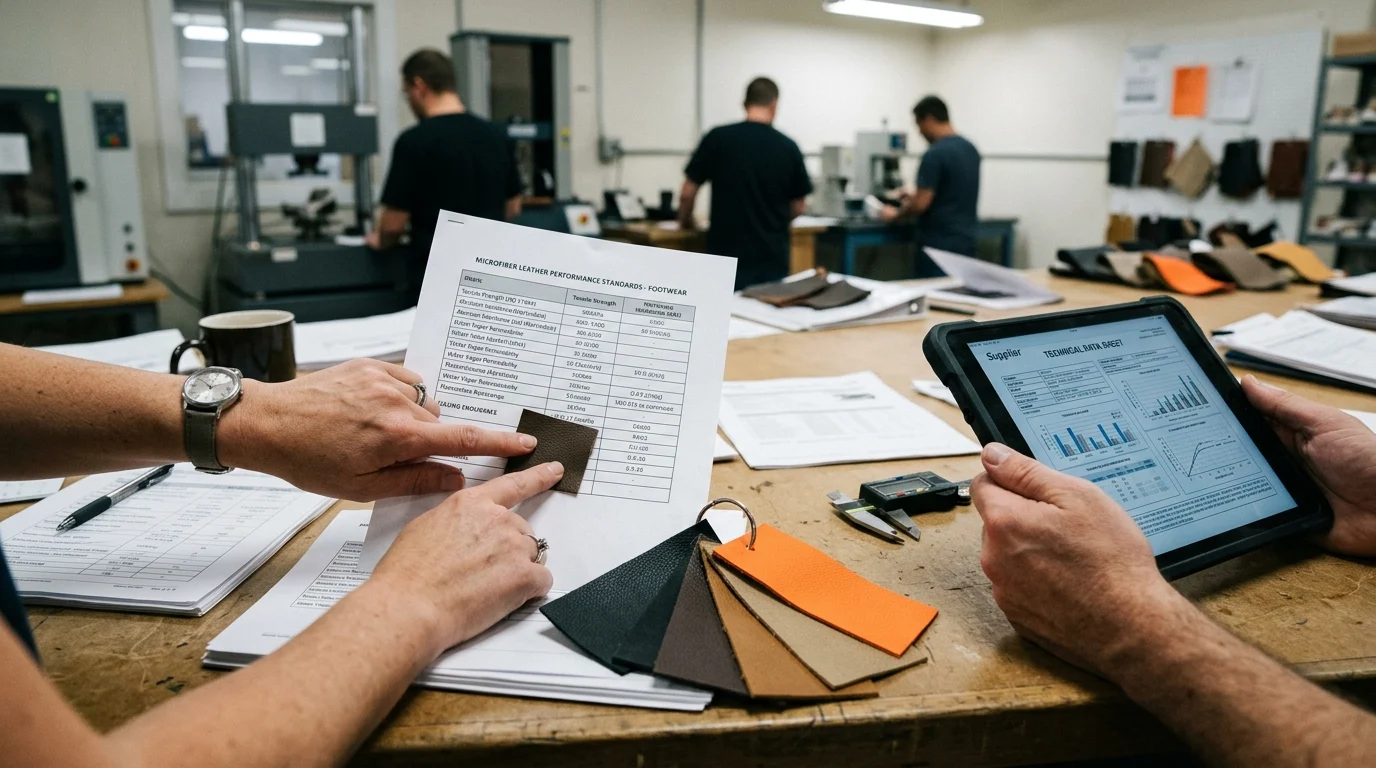
A rigorous technical evaluation is the most effective defense against substandard material procurement. Because microfiber leather is engineered to replicate the collagen fiber bundle structure of natural leather, its physical and chemical properties can be precisely tuned. Buyers must establish strict technical standards and demand comprehensive data sheets from potential manufacturers to ensure the material meets the specific demands of the intended footwear application.
Key material specifications to compare
Footwear applications demand precise material specifications that vary heavily based on the end product. For safety shoes, buyers must typically source microfiber leather with a thickness ranging from 1.6mm to 2.2mm to provide adequate puncture resistance and structural support around steel or composite toe caps. In contrast, athletic footwear may require a lighter gauge of 1.0mm to 1.2mm to prioritize flexibility and weight reduction.
Beyond thickness, procurement teams must evaluate tear strength and peeling strength. High-grade microfiber leather for demanding environments should exhibit a tear strength exceeding 40 N/mm and a peeling strength of at least 3.0 kg/3cm. These metrics ensure that the material will not separate or tear at high-stress junction points, such as the flex zone of the forefoot or the heel counter.
Microfiber leather vs PU synthetic leather
Understanding the distinction between true microfiber leather and standard PU synthetic leather is crucial, as some suppliers may attempt to pass off lower-grade PU as premium microfiber. True microfiber utilizes a complex non-woven matrix of ultra-fine sea-island fibers, whereas standard PU is typically coated over a basic woven or knitted polyester fabric. This structural difference fundamentally alters performance, durability, and price.
| Property | True Microfiber Leather | Standard PU Synthetic |
|---|---|---|
| Base Structure | Sea-island non-woven micro-fiber | Woven or knitted fabric |
| Tear Strength | > 40 N/mm | < 20 N/mm |
| Breathability | High (porous micro-structure) | Low to Medium |
| Flex Resistance | > 100,000 cycles | < 50,000 cycles |
| Typical Cost per Yard | $4.50 – $9.00 | $2.00 – $4.00 |
Performance testing and quality benchmarks
Lab testing provides empirical evidence of a manufacturer’s claims. Buyers should mandate that suppliers provide third-party testing reports from recognized laboratories such as SGS, Intertek, or TUV. For safety footwear, the material must often comply with EN ISO 20345 standards, which dictate specific performance benchmarks under extreme conditions.
Key performance tests include the Martindale abrasion resistance test, where safety-grade microfiber should withstand over 50,000 cycles without significant surface degradation. Flex resistance is equally critical; the material should endure at least 100,000 flexes at room temperature, and 30,000 flexes at -20°C without cracking, ensuring the footwear remains durable in freezing industrial environments. Hydrolysis resistance—the material’s ability to withstand degradation from moisture and heat—should also be rated for a minimum of 2 to 3 years.
How to Audit a Manufacturer Beyond Price
Moving beyond product specifications requires a comprehensive audit of the manufacturer’s operational infrastructure. A supplier may be capable of producing a perfect A4-sized sample, but scaling that quality to continuous bulk production of thousands of meters requires robust factory capabilities, stringent quality management systems, and verifiable compliance documentation.
Factory capabilities and production processes
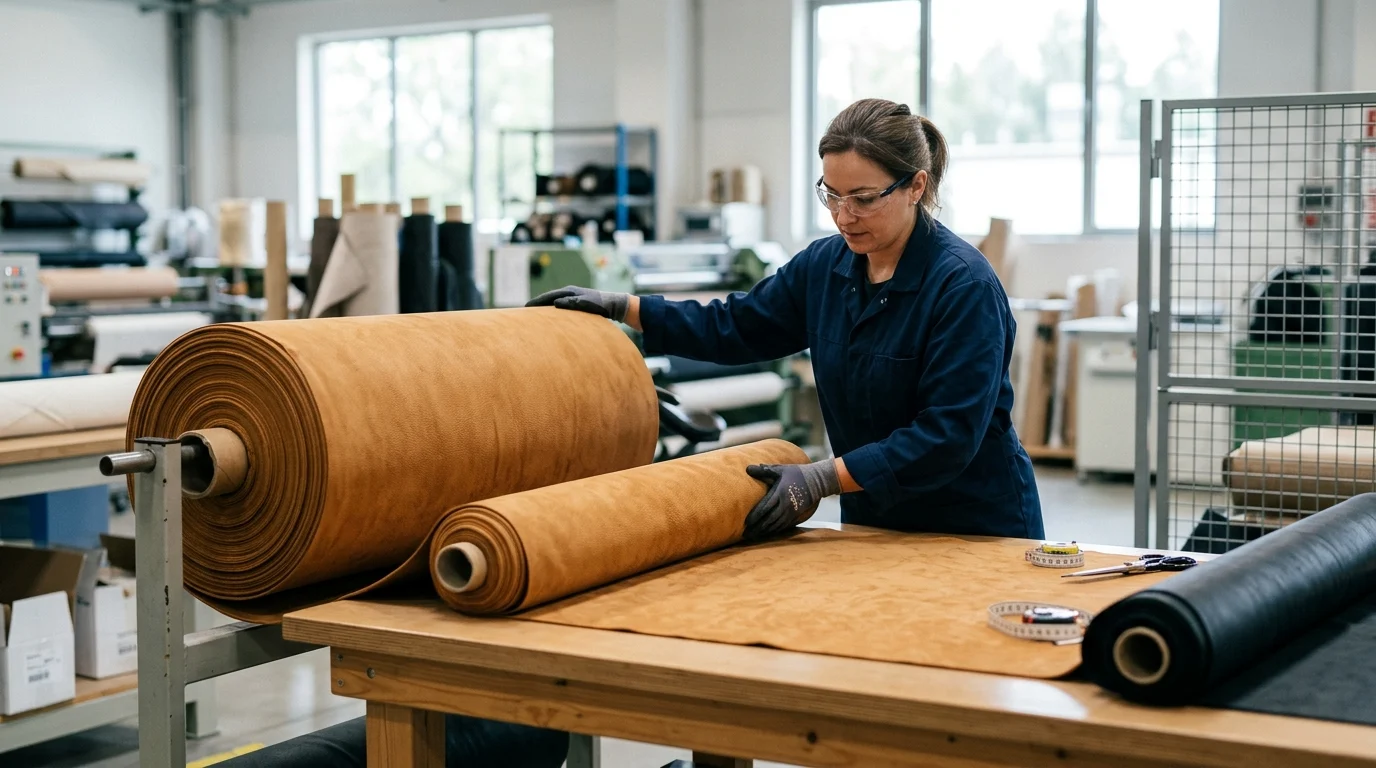
The complexity of the sea-island spinning and coagulation process dictates that only well-capitalized factories can produce premium microfiber leather consistently. During an audit, buyers should assess the facility’s production capacity and machinery. A modern, scalable facility should possess a monthly production capacity of at least 500,000 meters. This ensures they can absorb seasonal spikes in footwear production without unauthorized subcontracting, which often leads to quality degradation.
Auditors should also evaluate the factory’s inline quality control systems. Advanced manufacturers employ automated optical inspection (AOI) scanners on their production lines to detect surface blemishes, color inconsistencies, and thickness variations in real-time. The presence of a dedicated, on-site testing laboratory equipped with spectrophotometers and tensile testing machines is a strong indicator of a mature manufacturing process.
Compliance, testing, and traceability documents
Navigating global regulatory frameworks is non-negotiable for international footwear brands. A reliable manufacturer must maintain an active portfolio of compliance, testing, and traceability documents. At a minimum, the facility should hold ISO 9001 certification for quality management and ISO 14001 for environmental management, reflecting a commitment to sustainable and controlled operations.
Chemical traceability is particularly critical in synthetic leather production. Buyers must request REACH compliance certificates to ensure the material is free from Substances of Very High Concern (SVHC). Additionally, certifications like OEKO-TEX Standard 100 or the Global Recycled Standard (GRS) are increasingly vital as consumer demand for eco-friendly and non-toxic footwear grows. Manufacturers should be able to provide a clear chain of custody for their raw polyurethane and fiber inputs.
Practical supplier qualification steps
A structured qualification protocol prevents costly onboarding mistakes. The process should begin with a desktop review of the supplier’s business licenses, export records, and financial stability, ensuring they have a minimum of 5 years of operational history in the synthetic leather sector.
Following the desktop review, buyers should execute an on-site audit—either directly or via a trusted third-party inspection agency. This audit must verify the factory’s working conditions, machine maintenance logs, and raw material storage protocols. Finally, buyers should request “yardage samples” (typically 5 to 10 meters) from a standard production run, rather than custom lab dips, to independently verify the material’s performance in their own footwear assembly facilities.
Supply Chain and Cost Factors to Consider
Financial viability in footwear production depends on a holistic understanding of the supply chain and associated costs. The base price per meter or yard of microfiber leather is only one component of the Total Cost of Ownership (TCO). Buyers must deeply analyze the manufacturer’s pricing structures, minimum order thresholds, and logistical reliability to ensure the partnership aligns with the brand’s operational budget and inventory turnover models.
Pricing structure, MOQs, and development fees
Manufacturers typically establish Minimum Order Quantities (MOQs) to offset the setup costs of dyeing and embossing machinery. For standard colors and textures, MOQs generally range from 300 to 500 meters per specification. However, for custom pantone matching or proprietary grain embossing, MOQs can escalate to 1,000 meters or more. Procurement teams must negotiate these thresholds carefully, especially when developing new footwear lines that require smaller initial runs.
Development fees are another critical cost factor. If a footwear brand requires a unique surface texture, the manufacturer must mill a custom release paper or embossing roller. These development fees typically range from $500 to $1,500 per design. Understanding the price bands is also essential; standard footwear microfiber generally costs between $4.00 and $6.00 per yard, while high-performance variants with advanced hydrolysis or flame-retardant properties can push the cost to $7.00 – $10.00 per yard.
Logistics, lead times, and delivery reliability
Global supply chain volatility necessitates strict logistical evaluation. A supplier offering a lower price per yard may ultimately cost the buyer more if their delivery schedules are erratic, leading to halted shoe assembly lines and expedited air-freight penalties. Buyers must assess the manufacturer’s historical on-time delivery rate, which should ideally exceed 95%.
| Production Phase | Standard Lead Time | Expedited Lead Time |
|---|---|---|
| Initial Lab Dips / Swatches | 5 – 7 days | 3 – 5 days |
| Custom Roller/Embossing | 10 – 15 days | 7 – 10 days |
| Bulk Production (First Order) | 20 – 25 days | 15 – 18 days |
| Repeat Bulk Production | 12 – 18 days | 10 – 12 days |
Furthermore, understanding the manufacturer’s geographic location relative to major shipping ports is crucial for calculating transit times. Buyers should clarify shipping terms (e.g., FOB vs. CIF) upfront and ensure the manufacturer has robust packaging protocols—such as moisture-barrier wrapping and hard-tube rolling—to prevent the microfiber leather from crushing or degrading during ocean transit.
How to Make the Final Supplier Decision
The culmination of the auditing and evaluation process is the final supplier selection. This decision should not be driven by intuition or singular metrics, but rather by a data-driven synthesis of all technical, operational, and commercial findings. Establishing a formalized decision-making framework ensures that the chosen microfiber leather manufacturer can act as a long-term strategic partner rather than a short-term vendor.
Supplier scorecard and decision criteria
Implementing a weighted supplier scorecard is the most objective method for comparing multiple shortlisted manufacturers. Procurement teams should assign specific percentage weights to different operational categories based on the brand’s priorities. A standard footwear industry scorecard might allocate 40% to technical specifications and quality consistency, 30% to pricing and TCO, 20% to lead times and logistical reliability, and 10% to compliance and environmental certifications.
Manufacturers are scored on a scale of 1 to 5 within each category based on the audit data and sample testing results. Any supplier that scores below a predefined threshold (e.g., failing to meet the 10 ppm VOC limit or demonstrating a defect rate above 3% in sample runs) should be immediately disqualified, regardless of how competitive their pricing structure may be.
Pilot orders and pre-production validation
Before executing long-term contracts or placing annual volume orders that exceed 10,000 meters, buyers must insist on a pilot order.
Key Takeaways
- The most important conclusions and rationale for Microfiber Leather Manufacturer
- Specs, compliance, and risk checks worth validating before you commit
- Practical next steps and caveats readers can apply immediately
Frequently Asked Questions
What tests should a microfiber leather manufacturer provide for safety shoes?
Ask for thickness tolerance, tear strength, peeling strength, abrasion, colorfastness, and DMF/VOC compliance reports. For safety shoes, prioritize stable 1.6–2.2mm thickness and strong peel performance.
How can I verify batch consistency before placing a large footwear order?
Request sample cards, recent production data, and roll-to-roll thickness records. A reliable supplier should control variance around +/-0.05mm and match the approved color master across bulk orders.
Why is microfiber leather better than standard PU synthetic leather for footwear?
True microfiber leather is lighter, more durable, and better for repeated flexing and stitching. It usually offers stronger structure and abrasion resistance, which matters for safety shoes and premium footwear.
What compliance documents should I request from a supplier like hh-mf.com?
Request REACH-related chemical compliance, DMF test reports, VOC data, and relevant physical test reports. Also confirm the factory can provide traceable QC records for each production batch.
What are the warning signs of an unreliable microfiber leather manufacturer?
Be cautious if the supplier cannot share test reports, batch QC data, or clear lead times. Frequent color variation, delamination, pinholes, and unusually low prices are also common risk signals.