
Introduction
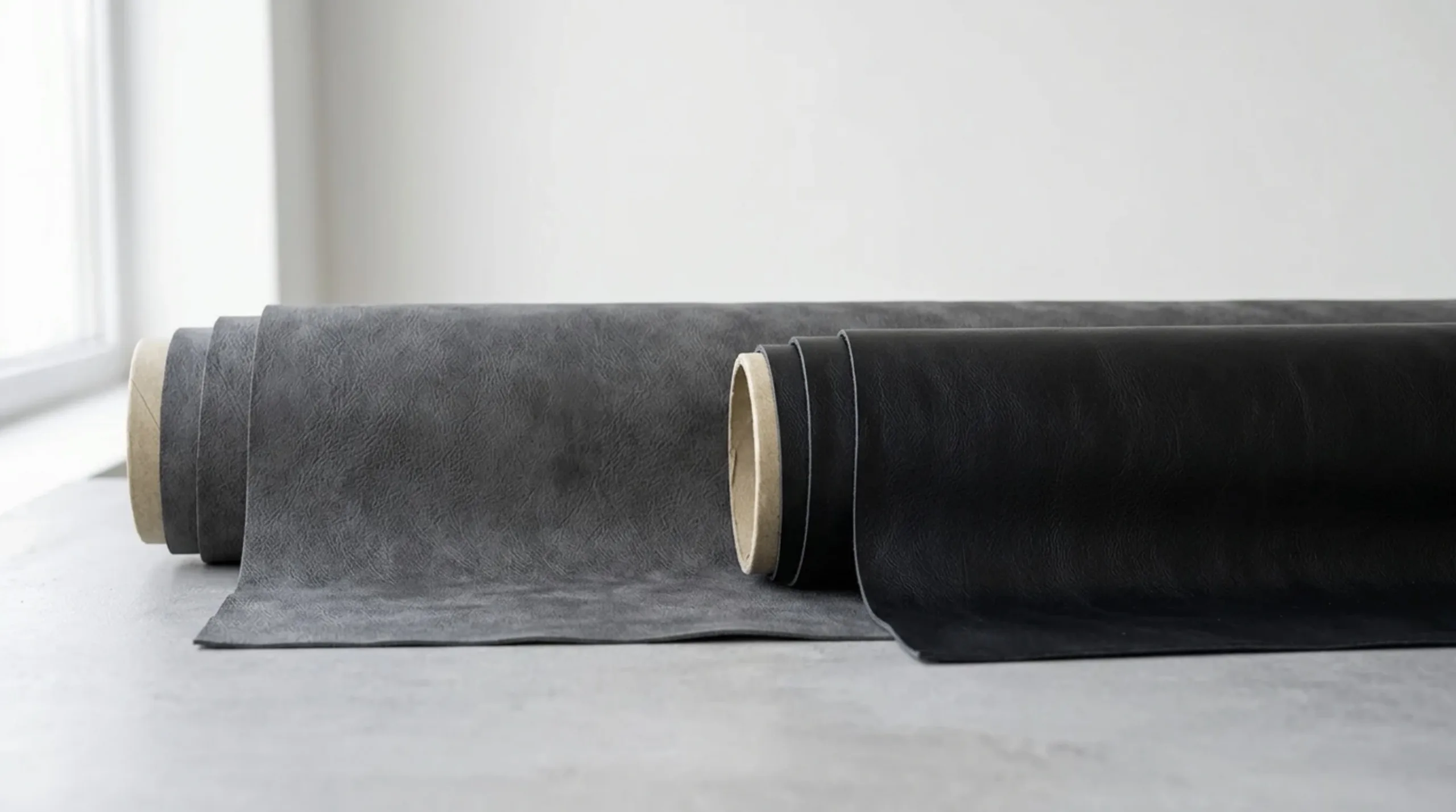
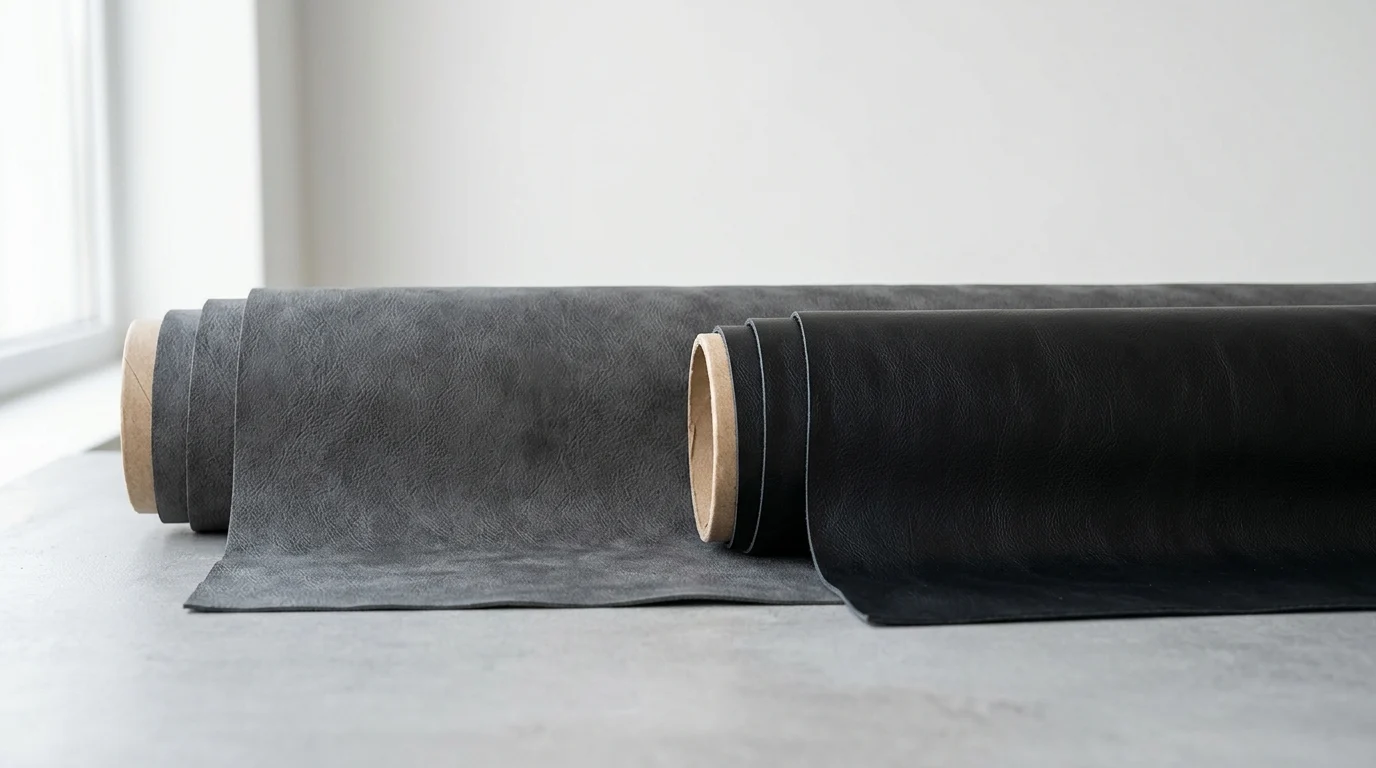
For footwear manufacturers, the choice between microfiber leather and PU leather affects far more than surface appearance. It shapes durability, production efficiency, cost control, and how a finished shoe performs in daily use. While PU leather remains popular for its lower price and broad design flexibility, microfiber leather is often favored for stronger structure, better wear resistance, and longer service life. This comparison explains the practical differences between the two materials, including performance, sourcing considerations, and sustainability trade-offs, so readers can better match material selection to product positioning, factory requirements, and long-term brand goals.
Why Microfiber Leather vs PU Leather Matters
The global footwear industry relies heavily on synthetic materials to balance production costs, design versatility, and consumer demand. As the synthetic leather market expands toward a projected $40 billion valuation, manufacturers face a critical choice between microfiber leather and traditional polyurethane (PU) leather.
Selecting the appropriate synthetic substrate directly influences manufacturing efficiency, product lifespan, and brand reputation. Understanding the technical distinctions between these two materials is essential for sourcing managers and footwear designers aiming to optimize their supply chains.
Cost, performance, and sustainability drivers
Cost, performance, and sustainability are the primary drivers prompting footwear brands to reevaluate their material specifications. Traditional PU leather typically offers a 30% to 50% cost reduction compared to microfiber alternatives, making it highly attractive for budget-conscious production lines. However, the performance gap is significant. Microfiber leather provides superior tensile strength and longevity, which offsets its higher initial procurement cost by reducing warranty claims and returns.
Sustainability mandates also play a critical role. Modern footwear production faces strict environmental scrutiny, pushing suppliers to develop solvent-free and water-borne versions of both materials. Microfiber leather, with its durable non-woven structure, often aligns better with circular economy goals by extending the usable life of the footwear, thereby reducing landfill waste over time.
Impact on footwear and product decisions
The decision between microfiber and PU leather fundamentally dictates footwear construction and product positioning. For high-performance athletic shoes or premium work boots, the structural integrity of the upper is non-negotiable. Using standard PU in high-stress applications often results in premature delamination or cracking, driving defect rates above the acceptable 2% threshold.
Conversely, for fast-fashion footwear where rapid trend cycles and retail price points take precedence over long-term durability, standard PU leather remains the most economically viable choice. The material selection impacts not only the bill of materials (BOM) but also the required adhesives, stitching techniques, and cutting machinery utilized on the factory floor.
What Microfiber Leather and PU Leather Are
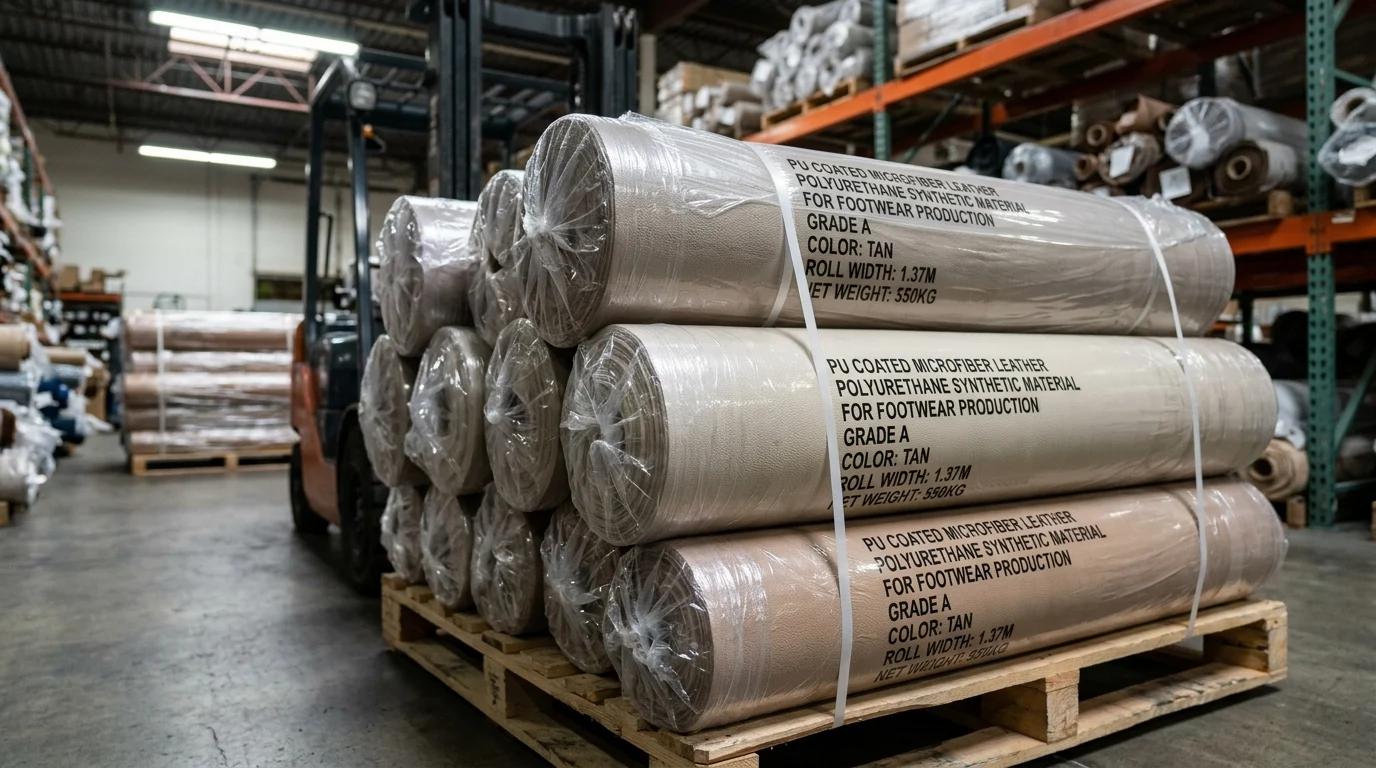
While both microfiber leather and PU leather fall under the umbrella of synthetic textiles, their internal architectures are fundamentally different. This structural divergence is the root cause of their differing physical properties, processing requirements, and price points.
How microfiber leather is made
Microfiber leather (microfiber polyurethane synthetic leather) is engineered to closely mimic the microscopic structure of natural animal hide. The manufacturing process begins with the creation of a three-dimensional non-woven fabric base made from ultra-fine microfibers—typically measuring between 0.1 and 0.001 denier. These synthetic fibers are densely entangled, creating a matrix that replicates the collagen bundles found in genuine leather.
Once the non-woven base is formed, it is impregnated with high-grade polyurethane resins. This impregnation process binds the microfibers together, resulting in a cohesive, highly durable substrate. The surface is then finished with a top layer that dictates the final color, texture, and gloss. The resulting material typically ranges in thickness from 0.6mm for lightweight apparel to 2.0mm for heavy-duty footwear.
How PU leather is made
Traditional PU leather, often referred to simply as PU synthetic leather, utilizes a much simpler construction. The base layer usually consists of a standard woven or knitted fabric made from polyester, cotton, or a blend of both. This base fabric lacks the three-dimensional interlocking structure of a non-woven microfiber base.
A solid or microporous polyurethane coating is applied directly onto this woven or knitted backing. Depending on the production method—either wet or dry processing—the PU layer adheres to the fabric to create a leather-like surface. Because the base fabric and the PU coating are distinct layers with different stretch characteristics, they are more susceptible to separation under continuous mechanical stress.
Key properties to compare
Comparing the key properties of these materials reveals stark contrasts in their suitability for specific footwear applications. The table below outlines the fundamental structural and physical differences between standard PU leather and microfiber leather.
| Property | Standard PU Leather | Microfiber Leather |
|---|---|---|
| Base Structure | Woven or knitted fabric | 3D non-woven ultra-fine fibers |
| Thickness Range | 0.4mm – 1.2mm | 0.6mm – 2.0mm |
| Tear Strength | Moderate (layer separation risk) | High (mimics natural leather) |
| Flexibility | Good, but prone to creasing | Excellent, natural crease recovery |
| Material Analogy | Coated textile | Synthetic genuine leather |
Performance Differences Between Microfiber Leather and PU Leather
Footwear applications subject materials to extreme mechanical stress, friction, and environmental exposure. Evaluating the performance differences between microfiber and PU leather requires a strict analysis of standardized physical testing metrics.
Durability and abrasion resistance
Durability and abrasion resistance are the most critical metrics for footwear uppers. In standard Martindale abrasion tests, premium microfiber leather routinely withstands in excess of 100,000 cycles without significant surface degradation or loss of structural integrity. Its non-woven matrix prevents the top coating from easily shearing off the base.
Standard PU leather, by contrast, typically begins to show signs of wear, surface peeling, or cracking between 30,000 and 50,000 cycles. The peel strength of PU leather is inherently lower because the coating sits on top of the woven fabric rather than being integrated into a three-dimensional fiber matrix. This makes PU leather less suitable for high-friction areas such as toe boxes and heel counters.
Breathability, weight, and feel
Thermal regulation and comfort are heavily influenced by a material’s breathability and weight. Microfiber leather features microscopic pores formed during the resin impregnation process, allowing for superior water vapor permeability (WVP). High-quality microfiber can achieve a WVP of 3 to 5 mg/cm²/hr, facilitating moisture dissipation from the foot.
Standard PU leather is generally impermeable unless mechanically perforated or manufactured using specialized microporous techniques. Its WVP rarely exceeds 1.5 mg/cm²/hr, often leading to heat retention and moisture buildup. Regarding weight, microfiber leather is slightly denser due to its compact fiber matrix, typically weighing between 400 and 600 grams per square meter, providing a substantial, premium feel. PU leather is generally lighter, which can be advantageous for specific lightweight casual styles but often feels less substantial.
Color retention and surface finish
Both materials offer excellent versatility regarding color retention and surface finish, but they age differently. Microfiber leather exhibits high UV resistance, often scoring a Grade 4 to 5 on standard grayscale fading tests. Its surface finish remains stable over time, and it develops a subtle, natural-looking crease pattern akin to real leather as it breaks in.
PU leather takes surface embossing exceptionally well, allowing manufacturers to replicate exotic animal prints or achieve high-gloss patent finishes easily. However, under prolonged UV exposure or fluctuating temperatures, the plasticizers in standard PU can migrate, causing the surface to become brittle, lose its original luster, and eventually crack rather than crease naturally.
Sourcing, Compliance, and Cost Considerations
Material selection heavily influences supply chain logistics, compliance management, and total manufacturing costs. Sourcing teams must balance initial material prices against production efficiency and regulatory requirements.
Supplier capability, MOQ, and lead time
Supplier capabilities dictate the minimum order quantities (MOQs) and lead times available to footwear brands. Because the spinning and entanglement of ultra-fine fibers is a complex, capital-intensive process, microfiber leather suppliers typically enforce higher MOQs, often ranging from 1,000 to 1,500 linear meters per colorway. Production lead times generally span 25 to 35 days.
Conversely, the production of standard PU leather is highly commoditized and faster to execute. Suppliers can frequently accommodate lower MOQs of 500 to 800 meters, with rapid lead times of 15 to 20 days. This makes PU leather highly advantageous for brands operating on just-in-time inventory models or reacting quickly to seasonal fashion trends.
Compliance and testing requirements
Chemical compliance is a non-negotiable aspect of global footwear distribution. Both materials must adhere to international standards such as REACH in the European Union and California Proposition 65 in the United States. A primary concern in synthetic leather production is the use of Dimethylformamide (DMF), a solvent historically used in polyurethane processing.
Modern eco-friendly grades of microfiber and PU leather are now manufactured using water-borne polyurethane (WBPU) to meet strict DMF limits, typically requiring residual levels to be below 30 ppm. Sourcing teams must ensure factories provide up-to-date testing reports from certified laboratories to verify compliance regarding restricted substances, heavy metals, and phthalates.
Total landed cost and production efficiency
While natural leather suffers from irregular shapes and defects resulting in cutting yields of 60% to 75%, both synthetic options are supplied in continuous rolls (standard width of 1.37 meters or 54 inches), allowing for cutting yields exceeding 95%. However, the total landed cost varies significantly.
Standard PU leather generally costs between $3 and $5 per linear meter, offering an aggressive price point for high-volume production. Microfiber leather represents a larger upfront investment, typically ranging from $8 to $15 per linear meter depending on thickness and finish. Despite the higher BOM cost, microfiber’s superior durability can lower the total landed cost when factoring in reduced defect rates, fewer factory-level rejects, and diminished post-sale warranty liabilities.
How to Choose the Right Material
Selecting the optimal material requires a systematic evaluation of the footwear’s intended use, target retail price, and expected lifespan. Aligning the material specification with the product’s strategic goals is crucial for commercial success.
Evaluation process for brands and factories
Brands and factories must implement a rigorous evaluation process before committing to a material. This begins with prototyping and physical testing. A critical evaluation step is the Bally flex test; premium footwear uppers should withstand over 100,000 flexes at temperatures as low as -20°C without cracking.
Factories must also assess the material’s compatibility with existing production equipment. Variables such as skiving behavior, adhesive absorption, and stitching tension must be calibrated. Procurement teams should request A4-sized swatches for preliminary lab testing, followed by 5-meter sample rolls for limited production trials to evaluate cutting efficiency and assembly behavior.
When microfiber leather is the better choice
Microfiber leather is the definitive choice for footwear that demands high physical endurance and a premium tactile experience. It is the preferred synthetic material for professional athletic footwear, tactical boots, and high-end vegan fashion shoes. When the retail price point allows for a higher BOM cost, microfiber leather delivers the necessary tensile strength, tear resistance, and breathability.
Furthermore, microfiber is the better choice for brands aiming to replicate the exact hand-feel and aging characteristics of genuine full-grain leather without utilizing animal products. Its ability to mold to the wearer’s foot over time provides an ergonomic advantage that standard synthetics cannot match.
When PU leather is the better choice
PU leather remains the superior choice for cost-sensitive projects and fast-fashion applications where product turnover is high. It is ideal for casual sneakers, seasonal fashion boots, and children’s footwear that will be outgrown before the material physically degrades. When the target retail price strictly limits the manufacturing budget, PU leather provides the aesthetic versatility required to execute complex designs at a fraction of the cost.
| Application / Criteria | Recommended Material | Typical Cost/Meter | Expected Lifespan |
|---|---|---|---|
| Pro Athletic / Outdoor | Microfiber Leather | $8.00 – $15.00 | 2 – 5 Years |
| Premium Vegan Fashion | Microfiber Leather | $9.00 – $14.00 | 3 – 5 Years |
| Fast Fashion / Trend | PU Leather | $3.00 – $5.00 | 1 – 2 Years |
| Budget Casual Wear | PU Leather | $3.00 – $6.00 | 1 – 2 Years |
Ultimately, the decision rests on matching the material’s mechanical thresholds and cost profile to the specific commercial realities of the footwear line.
Key Takeaways
- The most important conclusions and rationale for Microfiber Leather vs PU Leather
- Specs, compliance, and risk checks worth validating before you commit
- Practical next steps and caveats readers can apply immediately
Frequently Asked Questions
Which material is better for durable footwear uppers?
Microfiber leather is better for high-wear shoes, work boots, and athletic uppers because it offers higher tensile strength, better flex resistance, and lower risk of cracking or delamination.
When should manufacturers choose PU leather instead?
Choose PU leather for fast-fashion or entry-level footwear where low material cost, quick turnover, and acceptable short-term performance matter more than long service life.
Why does microfiber leather cost more than PU leather?
Its 3D non-woven microfiber base and more complex impregnation process raise production cost, but the material usually lasts longer and can reduce returns or warranty issues.
How does the base structure affect footwear performance?
Microfiber’s non-woven structure behaves more like natural leather, improving durability and shape retention. Standard PU uses layered fabric and coating, which can separate under repeated stress.
Can HH help source microfiber leather for footwear manufacturing?
Yes, hh-mf.com focuses on synthetic material solutions, including microfiber leather options suitable for footwear applications. Request specifications such as thickness, backing, finish, and performance needs before sampling.