

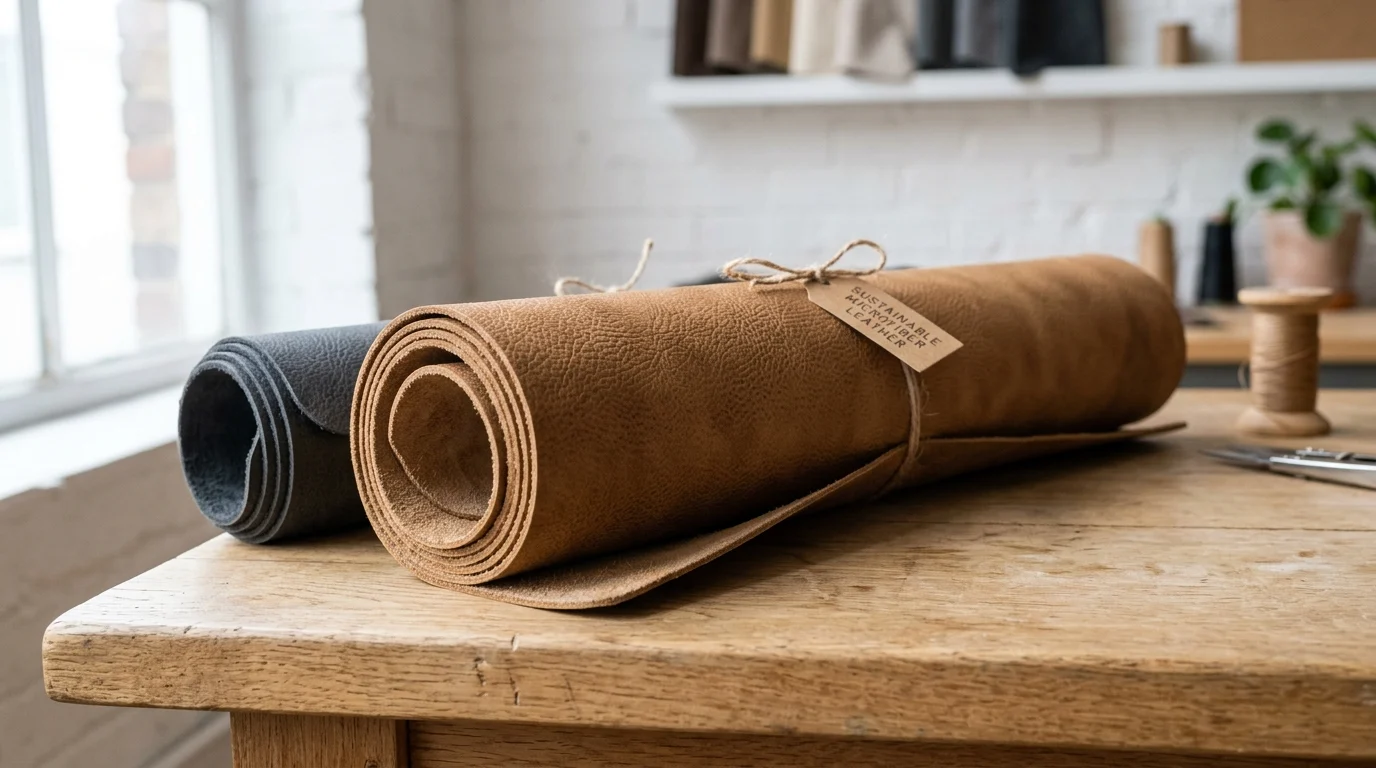
Footwear materials are being redefined by a mix of climate commitments, regulatory pressure, and the need for dependable high-volume performance. As brands work to lower Scope 3 emissions and prepare for tools such as the EU Digital Product Passport, sustainable microfiber leather is moving from experimental collections into mainstream product lines. The appeal is practical: recycled microfiber bases, water-borne PU systems, and engineered thickness options can help reduce environmental impact while preserving the tensile strength, flex resistance, and consistency footwear manufacturers require. This article examines the market signals, technical composition, measurable benefits, and current limitations shaping the rapid adoption of this next-generation material.
Why Sustainable Microfiber Leather Is Gaining Momentum
Footwear supply chains are undergoing a fundamental material transition. Driven by aggressive corporate sustainability targets and volatile raw material costs, procurement teams are actively diversifying away from conventional animal hides and virgin petroleum-based synthetics. Sustainable microfiber leather has emerged as a primary candidate for high-volume production, bridging the gap between ecological compliance and necessary mechanical performance.
Market signals from global footwear brands
Global footwear conglomerates are issuing clear market signals through their material procurement strategies. Over the past 36 months, several top-tier athletic and lifestyle brands have committed to replacing up to 50% of their conventional synthetic leather with recycled or bio-based alternatives by 2025. This shift is not limited to niche capsule collections; it is penetrating core, high-volume product lines. Procurement data indicates that demand for recycled polyethylene terephthalate (rPET) microfiber bases has grown by an estimated 22% annually, signaling a permanent structural shift in how footwear uppers are specified and sourced.
Shifts in consumer and regulatory expectations
Regulatory frameworks are accelerating this transition faster than consumer sentiment alone. The European Union’s impending Digital Product Passport (DPP) and stringent corporate sustainability reporting directives are forcing brands to quantify their Scope 3 supply chain emissions. Conventional animal leather tanning and virgin polyurethane (PU) production carry heavy carbon and chemical footprints. By switching to water-borne PU and recycled microfiber substrates, footwear manufacturers can reduce the carbon footprint of an upper material by 35% to 45% compared to traditional solvent-based synthetics, directly supporting corporate climate pledges and mitigating future regulatory penalties.
What Defines Sustainable Microfiber Leather for Footwear
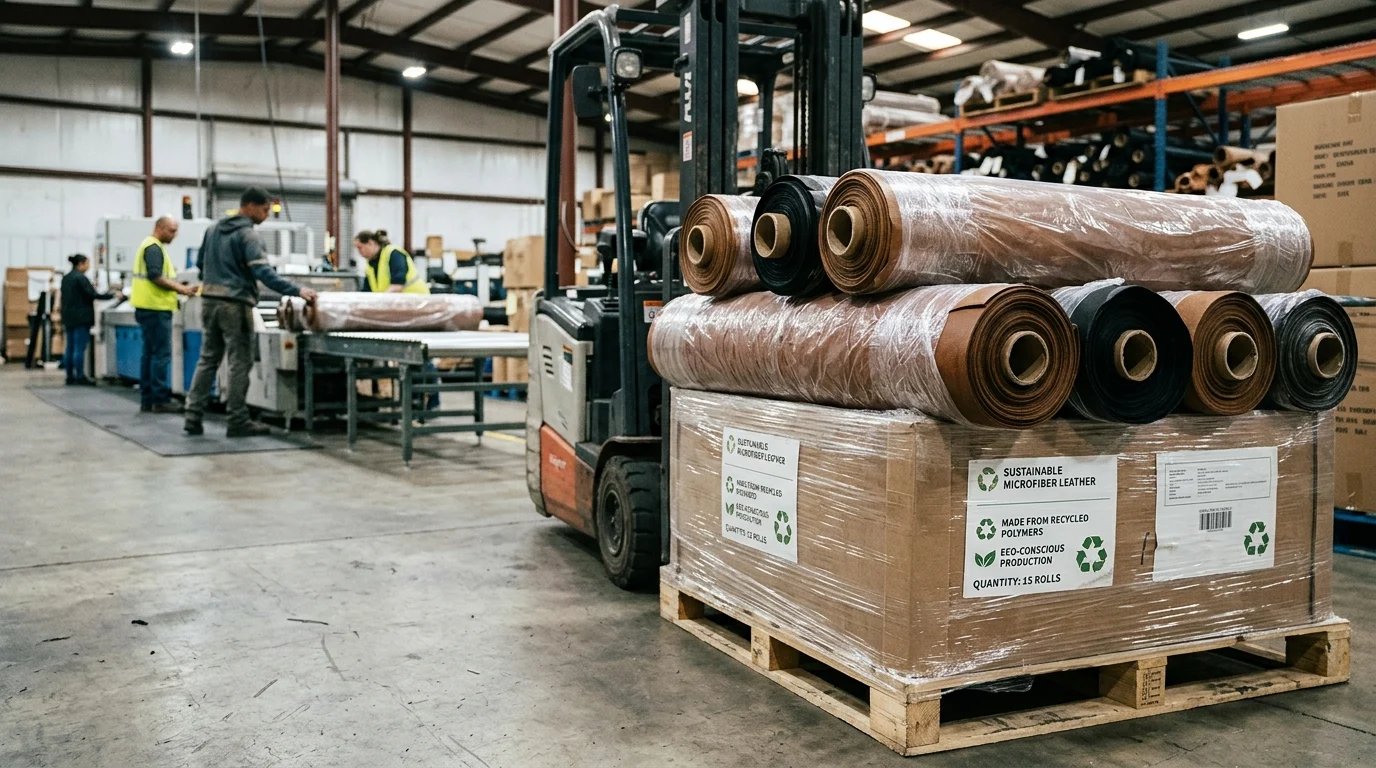
Not all microfiber synthetic leathers qualify as sustainable. Traditional microfiber relies heavily on virgin polyester, nylon, and solvent-heavy polyurethane coatings, specifically dimethylformamide (DMF), which poses significant environmental and occupational health risks. The new generation of sustainable microfiber leather re-engineers this composition from the substrate up, focusing on circular inputs and safer chemistry.
Material structure, fiber base, and coating systems
The architecture of sustainable microfiber leather consists of a non-woven matrix of ultra-fine fibers—often utilizing “sea-island” spinning technology—impregnated and coated with a flexible polymer. In sustainable variants, the fiber base is predominantly constructed from post-consumer recycled rPET or regenerated nylon, rather than virgin petrochemicals. The coating system replaces traditional DMF-based polyurethane with water-borne polyurethane (WB-PU) or bio-based PU derived from agricultural waste. For footwear applications, these materials are typically engineered to thicknesses ranging from 0.8mm for lightweight lifestyle sneakers to 1.8mm for structural work boots, maintaining the necessary tensile strength and tear resistance.
Key sustainability claims and limitations
While the environmental benefits are measurable, industry professionals must understand the technical limitations behind sustainability claims. Current bio-based PU coatings typically achieve only 30% to 45% certified bio-carbon content, with the remainder relying on traditional fossil-derived polymers to maintain necessary flex-fatigue resistance. Furthermore, while the inputs may be recycled or bio-derived, the final composite material—blending rPET fibers with a PU matrix—is notoriously difficult to recycle at its end-of-life. Therefore, the sustainability profile is currently heavily weighted toward impact reduction at the raw material and processing stages rather than true closed-loop circularity.
How It Compares With Animal Leather and Other Alternatives
Material specification in footwear requires balancing aesthetic expectations, mechanical durability, and unit economics. Sustainable microfiber leather must compete directly against high-grade bovine leather, conventional virgin synthetics, and emerging plant-based alternatives to secure its place in commercial production lines.
Performance metrics that matter in footwear
In rigorous footwear testing protocols, high-quality sustainable microfiber consistently meets or exceeds the mechanical baselines of genuine leather. A premium WB-PU recycled microfiber can withstand over 100,000 cycles on the Bally flex resistance test at ambient temperatures, and up to 30,000 cycles at -20°C without cracking, matching the performance of standard full-grain leather. Tear strength typically ranges between 30 N and 50 N, which is highly suitable for athletic and casual uppers. Furthermore, its weight-to-strength ratio is superior, often yielding a material that is 20% to 30% lighter than bovine leather of the same thickness.
Trade-offs in feel, durability, repairability, and cost
Despite excellent mechanical metrics, trade-offs exist. Animal leather naturally conforms to the wearer’s foot over time and boasts superior moisture vapor permeability (breathability), which is difficult for synthetic polymer matrices to fully replicate without mechanical perforation. In terms of repairability, scuffed animal leather can be polished and conditioned, whereas deep abrasions in a PU-coated microfiber are often permanent. However, sustainable microfiber offers superior yield consistency; animal hides suffer from a 20% to 30% cutting loss due to natural defects, whereas microfiber rolls provide nearly 100% usable area, significantly altering the cost-per-pair calculation.
Comparison table for material selection
The following table outlines a comparative baseline for material selection in footwear manufacturing, utilizing standard industry metrics.
| Material Type | Bally Flex (Ambient) | Cutting Yield | Moisture Permeability | Estimated Cost ($/sqm) | Carbon Footprint Impact |
|---|---|---|---|---|---|
| Full-Grain Bovine Leather | >100,000 cycles | 70% – 80% | High | $25 – $45 | High |
| Conventional Virgin PU | 50,000 – 80,000 cycles | >95% | Low | $8 – $15 | Medium (High VOCs) |
| Sustainable Microfiber (rPET/WB-PU) | >100,000 cycles | >95% | Medium | $14 – $22 | Low to Medium |
| Plant-Based Composites (e.g., Apple) | 30,000 – 50,000 cycles | >95% | Low | $30 – $60+ | Low |
Sourcing, Compliance, and Production Considerations
Transitioning to sustainable microfiber leather requires procurement teams to overhaul their supplier vetting processes. Unlike conventional synthetics, where price and color fastness are the primary drivers, sourcing sustainable alternatives demands rigorous validation of environmental claims and strict oversight of production chemistry.
Compliance documents buyers should verify
To mitigate greenwashing risks, buyers must mandate specific compliance documentation before onboarding a new material supplier. For recycled fiber content, the Global Recycled Standard (GRS) certification is non-negotiable, as it verifies the chain of custody from post-consumer waste to the finished textile. Chemical safety should be validated through OEKO-TEX Standard 100 (Class I or II) to ensure the absence of harmful substances. Additionally, facilities utilizing water-borne PU should ideally comply with the Zero Discharge of Hazardous Chemicals (ZDHC) guidelines, proving that wastewater management meets stringent global safety thresholds.
Batch consistency and roll-to-roll quality control
A major advantage of microfiber over animal leather is roll-to-roll consistency, but achieving this requires sophisticated quality control. Premium suppliers provide materials in standard roll widths of 1.37 meters (54 inches) with strict thickness tolerances of ±0.05mm. Sourcing teams must establish clear Service Level Agreements (SLAs) regarding color consistency. For high-volume footwear production, a color deviation tolerance of Delta E (ΔE) ≤ 1.0 between batches is critical to ensure that components cut from different rolls match perfectly during final assembly.
Cost drivers sourcing teams should model
Modeling the cost of sustainable microfiber involves variables distinct from traditional synthetics. The transition from solvent-based DMF to water-borne PU increases processing time and energy consumption, generally resulting in a 20% to 40% price premium over conventional equivalents. Minimum Order Quantities (MOQs) also drive costs; while traditional PU might require 300 meters per color, sustainable variants often demand MOQs of 500 to 1,000 meters due to the specialized nature of the bio-based or WB-PU resins. Sourcing teams must model these upfront material premiums against the operational savings generated by higher cutting yields and reduced waste disposal costs.
How Footwear Brands Should Evaluate Adoption
Implementing sustainable microfiber leather into existing footwear lines is not a plug-and-play process. Adhesives, cutting dies, and stitching tensions calibrated for animal leather or conventional PU often require adjustment. Brands must adopt a phased evaluation strategy to mitigate production risks and ensure the final product meets consumer expectations.
Practical testing steps from sample to production
The evaluation process must begin with rigorous laboratory testing on A4-sized samples to verify tear strength, peel strength, and colorfastness. If the material passes baseline specs, brands should move to a pilot production run of 50 to 100 pairs for field wear-testing. This phase, typically lasting 3 to 6 months, is crucial for assessing how the WB-PU coating handles dynamic creasing and environmental exposure. Production engineers must also use this phase to test primer and cement compatibility, as water-borne and bio-based synthetics often require specific surface treatments to achieve the industry-standard sole adhesion strength of 3.0 kg/cm.
Decision matrix by product category
A strategic decision matrix helps brands determine where to deploy sustainable microfiber first. Not all footwear categories benefit equally.
| Footwear Category | Performance Requirement | Adoption Viability | Recommended Microfiber Spec |
|---|---|---|---|
| Lifestyle / Casual Sneakers | Moderate flex, high aesthetic consistency | Very High | 1.0mm – 1.2mm rPET base with WB-PU |
| Performance Athletic | High tear strength, extreme flex, low weight | High | 0.8mm – 1.0mm high-density sea-island fiber |
| Heavy-Duty Work Boots | High abrasion, chemical resistance, puncture proof | Moderate | 1.6mm – 1.8mm with reinforced bio-PU coating |
| Luxury Dress Shoes | High breathability, patina development | Low | Not recommended; traditional leather preferred |
When sustainable microfiber leather is the right choice
Sustainable microfiber leather is the optimal choice when a brand needs to scale its environmental initiatives without sacrificing the mechanical integrity required for mass-market footwear. It is particularly effective for brands looking to phase out virgin plastics or transition away from animal products while maintaining a retail price point that experimental plant-based materials cannot yet support. By carefully matching material specifications to the appropriate footwear category, brands can successfully navigate the transition toward a lower-impact, high-performance supply chain.
Key Takeaways
- Footwear brands should evaluate sustainable microfiber leather as a scalable alternative because demand for rPET microfiber bases is growing by an estimated 22% annually.
- Procurement teams can reduce upper-material carbon impact by 35% to 45% by specifying recycled microfiber substrates with water-borne PU instead of solvent-based synthetics.
- Material buyers should verify sustainability claims because many bio-based PU coatings still contain only 30% to 45% certified bio-carbon content.
- Design teams should match material thickness to application, using around 0.8mm for lightweight sneakers and up to 1.8mm for structural footwear.
- Brands preparing for EU Digital Product Passport and Scope 3 reporting should prioritize traceable inputs, safer chemistry, and supplier documentation.
- Footwear companies should consider end-of-life limitations early because blended rPET and PU microfiber composites remain difficult to recycle.
Frequently Asked Questions
What makes microfiber leather sustainable for footwear?
Sustainable microfiber leather typically uses recycled rPET or regenerated nylon bases, water-borne PU coatings, and lower-solvent production methods to reduce carbon emissions, chemical risk, and reliance on virgin petrochemicals.
Why are global footwear brands switching to sustainable microfiber leather?
Brands are responding to climate targets, Scope 3 reporting requirements, raw material volatility, and consumer demand for lower-impact products while still needing durable, scalable upper materials.
How much can sustainable microfiber leather reduce carbon impact?
When made with recycled microfiber substrates and water-borne PU, it can reduce the carbon footprint of footwear upper materials by an estimated 35% to 45% versus traditional solvent-based synthetics.
Is bio-based PU fully plant-derived?
Not usually. Current bio-based PU coatings often contain about 30% to 45% certified bio-carbon, with fossil-derived polymers still used to maintain flex resistance and footwear durability.
What thickness is used for footwear microfiber leather?
Footwear grades commonly range from about 0.8mm for lightweight lifestyle sneakers to 1.8mm for more structural applications such as work boots.