

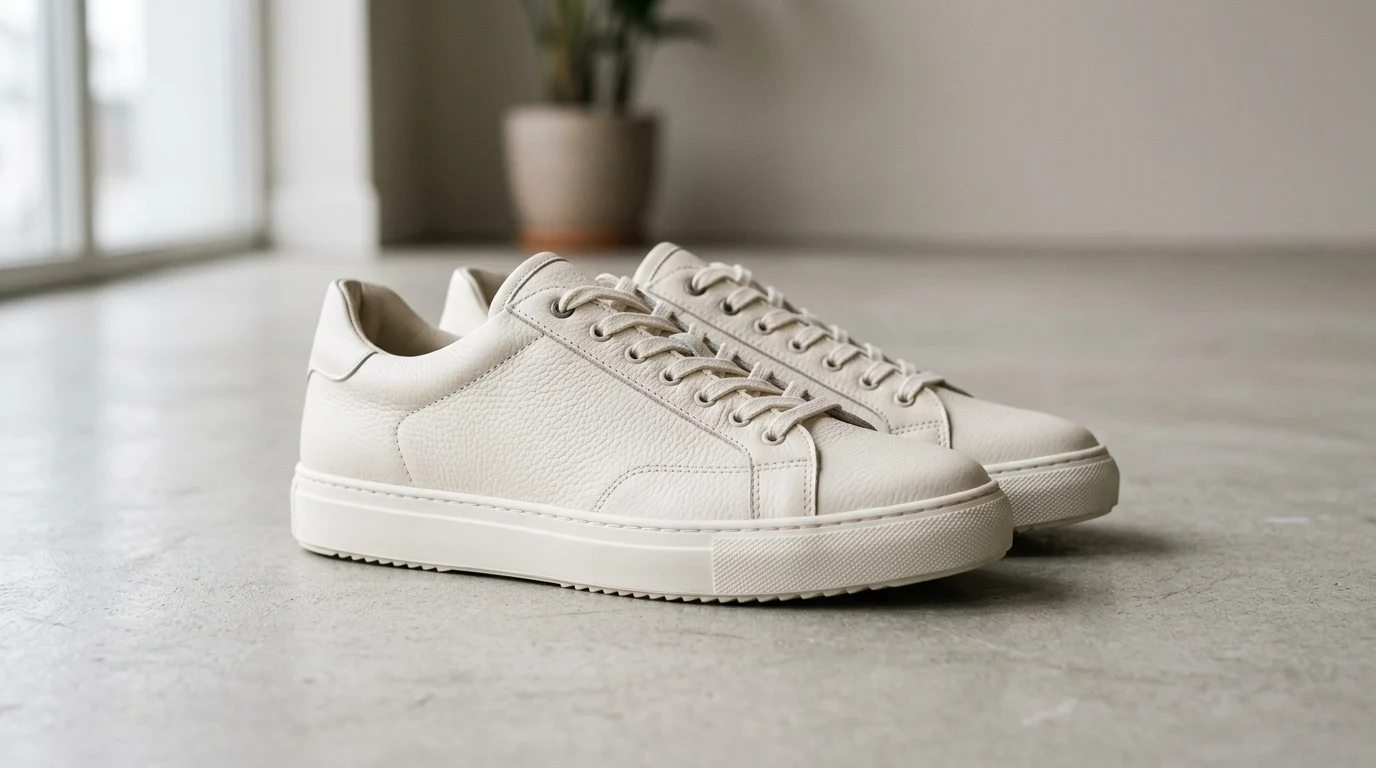
Sneaker materials are changing fast as brands look for uppers that can deliver style, durability, and lower-impact production without relying on animal hides. Vegan leather has moved beyond basic synthetics into a more sophisticated category that includes high-performance PU, solvent-free coatings, agricultural-waste composites, and emerging mycelium-based materials. For footwear manufacturers, the opportunity is not just ethical positioning; it is also supply chain consistency, carbon reduction, and access to a growing consumer segment that expects better material choices. This article examines the key vegan leather options for sneakers, how they perform in real production, and the market trends shaping sourcing decisions.
Why Vegan Leather Matters for Sneaker Brands
The global footwear industry is undergoing a profound materials transformation, driven by aggressive corporate sustainability targets and evolving consumer expectations. Vegan leather, once relegated to niche markets as a low-cost synthetic alternative, has matured into a highly engineered category capable of rivaling premium bovine hides.
Market Demand for Vegan Leather Sneakers
The commercial trajectory of vegan leather in footwear is accelerating rapidly. Industry forecasts project the broader global synthetic and vegan leather market to reach tens of billions of dollars by the late 2020s, with footwear applications accounting for a significant portion of total consumption. This surge is not solely driven by vegan consumers, but rather by a broader demographic demanding cruelty-free and environmentally conscious products without compromising on aesthetic appeal. Sneaker brands are responding to this macro-trend by integrating non-animal leathers into flagship silhouettes, transitioning from limited-edition capsules to core inline offerings.
Strategic Benefits for Footwear Brands
For footwear manufacturers, the adoption of vegan leather presents substantial strategic advantages beyond market positioning. Supply chain stabilization is a primary benefit; unlike bovine leather, which is subject to agricultural commodity fluctuations and variable hide quality, engineered vegan materials offer consistent pricing and predictable yield. Environmentally, transitioning to advanced vegan alternatives can reduce a sneaker’s upper material carbon footprint by 30% to 40% compared to conventional chrome-tanned leather, significantly aiding brands in achieving their Scope 3 emissions reduction targets under ESG mandates.
Types of Vegan Leather for Sneakers
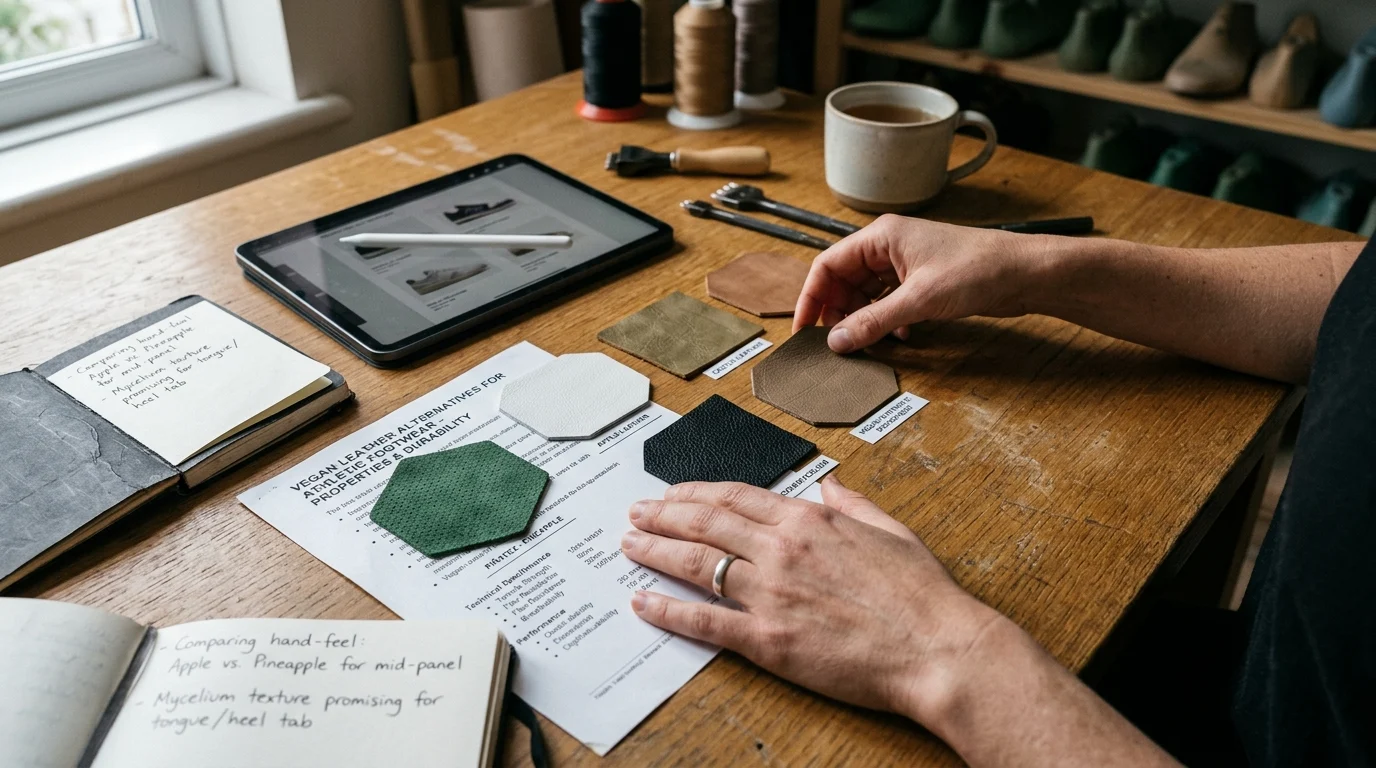
The term “vegan leather” serves as an umbrella classification for any leather-like material produced without animal derivatives. In the context of sneaker manufacturing, these materials are generally divided into traditional petroleum-based synthetics and emerging bio-based composites, each presenting distinct chemical profiles and manufacturing paradigms.
Synthetic Vegan Leather Materials
Synthetic vegan leathers, primarily Polyurethane (PU) and Polyvinyl Chloride (PVC), have historically dominated the footwear sector. Due to its superior flexibility and breathability, PU is the standard for sneaker uppers, whereas PVC is largely phased out of premium footwear due to its rigidity and environmental toxicity. Recent advancements have focused on mitigating the environmental impact of PU through the development of water-borne polyurethane (WBPU) and solvent-free PU. These next-generation synthetics eliminate the use of dimethylformamide (DMF), reducing volatile organic compound (VOC) emissions by up to 90% during the manufacturing process while maintaining the structural integrity required for athletic footwear. However, it is important to note that petroleum-based synthetics can shed microplastics during wear and at the end of their lifecycle, presenting an ongoing environmental challenge.
Bio-Based and Next-Generation Materials
Bio-based and next-generation materials represent the frontier of sustainable footwear innovation. This category includes agricultural waste composites—such as AppleSkin, Piñatex, and cactus-based Desserto—as well as lab-grown mycelium leathers. While these materials drastically reduce reliance on virgin petrochemicals, it is critical for sourcing teams to understand that most agricultural waste leathers are actually bio-composites. They typically utilize a bio-content base (ranging from 20% to 80%) blended with a PU binder to achieve the necessary tensile strength and abrasion resistance for footwear. Because they rely heavily on these synthetic binders, most current bio-composites are neither biodegradable nor easily recyclable at the end of their usable life. True 100% bio-based, plastic-free vegan leathers are currently in early commercialization phases, often carrying significant price premiums.
Material Composition Comparison
To navigate the diverse landscape of non-animal leathers, footwear developers must evaluate materials based on their chemical makeup and functional applications. The following table contrasts the primary categories utilized in contemporary sneaker production:
| Material Category | Primary Composition | Typical Bio-Content | Footwear Application Focus |
|---|---|---|---|
| Traditional PU | Petroleum-derived polyurethane | 0% | Mass-market uppers, linings |
| Water-Borne PU (WBPU) | Solvent-free polyurethane | 0% – 10% | Premium synthetics, eco-lines |
| Bio-Composites | Agri-waste (apple, cactus) + PU binder | 20% – 65% | Lifestyle sneakers, fashion footwear |
| Mycelium Leather | Fungal network (mycelium) | 85% – 100% | High-end luxury sneakers, prototypes |
Performance Compared with Conventional Leather
Replacing conventional leather in athletic and lifestyle footwear requires strict adherence to physical performance metrics. Sneaker uppers endure extreme biomechanical stress, necessitating materials that can withstand continuous flexion, abrasion, and environmental exposure without structural failure.
Key Sneaker Performance Requirements
The baseline performance requirements for sneaker uppers are governed by rigorous industry testing standards. Key metrics include tensile strength, tear resistance, and flexing endurance. A standard athletic sneaker requires an upper material capable of surviving 50,000 to 100,000 flex cycles (often tested via SATRA TM55 protocols) at room temperature without exhibiting surface cracking or delamination. Furthermore, the material must demonstrate superior adhesion properties; upper-to-midsole bonding typically demands a minimum peeling strength of 2.5 N/mm to prevent sole separation during rigorous use.
Comfort, Durability, and Hand Feel Trade-Offs
Trade-offs between comfort, durability, and hand feel are inherent when substituting bovine hides with vegan alternatives. Conventional calfskin is naturally highly breathable and possesses a unique grain that molds to the wearer’s foot over time. Standard synthetic leathers, conversely, are inherently impermeable unless engineered with micro-porous structures. Advanced WBPU and certain bio-composites can achieve water vapor permeability rates of 2.0 to 3.5 mg/cm²/hr, which provides adequate breathability for lifestyle sneakers but may fall short of the requirements for high-performance athletic applications. Additionally, achieving the luxurious “plump” hand feel of full-grain leather often requires complex lamination of vegan surface layers to non-woven microfiber backings.
Lab Testing and Wear Trial Validation
Validation of vegan leather performance mandates comprehensive lab testing paired with extensive real-world wear trials. Beyond flex and tear testing, materials must undergo Bally penetrometer tests for water resistance and SATRA TM25 evaluations for rub fastness to ensure color does not transfer onto socks or apparel. Because bio-based leathers utilize novel polymers, brands must conduct wear trials lasting a minimum of 90 to 120 days across diverse climates to identify latent failure modes, such as premature surface peeling or UV-induced discoloration, before authorizing mass production.
Sourcing, Compliance, and Manufacturing Risks
Integrating novel vegan materials into established footwear supply chains introduces a range of commercial and operational risks. Procurement teams must balance unit economics with stringent chemical compliance and distinct handling requirements.
Cost, MOQ, Yield, and Lamination Factors
The unit economics of vegan leather vary drastically by material classification. Standard synthetic PU is highly commoditized, typically costing between $3.00 and $5.00 per linear yard, while advanced water-borne PU (WBPU) ranges from $4.00 to $8.00. In contrast, advanced bio-composites and mycelium leathers can range from $15.00 to over $40.00 per yard, heavily impacting the final FOB price of the sneaker. However, vegan leathers offer a significant yield advantage. Because they are supplied in continuous rolls of uniform width (usually 54 inches), cutting yields routinely exceed 90% to 95%, compared to the 70% to 75% usable yield typical of irregular animal hides. Minimum Order Quantities (MOQs) for custom-colored bio-leathers remain a hurdle, frequently requiring 500 to 1,000 linear meters per colorway.
Compliance and Certification Requirements
Chemical compliance is a critical risk factor in vegan leather sourcing. Materials must adhere to global regulatory frameworks, including the EU’s REACH directive and California’s Proposition 65, which strictly limit restricted substances like phthalates and heavy metals. For brands marketing “plant-based” or “vegan” attributes, third-party certifications are essential to mitigate greenwashing accusations. Certifications such as PETA-Approved Vegan or the V-Label confirm the absence of animal derivatives, while the bio-based carbon content of the material should be analytically verified using ASTM D6866 (carbon-14 radiocarbon dating) standards. Furthermore, manufacturing facilities should align with Zero Discharge of Hazardous Chemicals (ZDHC) guidelines to ensure responsible wastewater management.
Logistics, Shelf Life, and Climate Exposure
The logistics and storage of vegan leathers, particularly PU-based and highly organic composites, require strict environmental controls to prevent degradation. Polyurethane is susceptible to hydrolysis—a chemical breakdown caused by prolonged exposure to moisture and heat. If bio-composite rolls are stored in non-climate-controlled warehouses where relative humidity (RH) exceeds 70% and temperatures surpass 30°C (86°F)—though these exact degradation thresholds vary by specific PU formulation and supplier—the material can suffer irreversible delamination or surface tackiness. Consequently, the shelf life of raw bio-leather rolls is often restricted to 12 to 24 months, dictating tighter inventory management and just-in-time (JIT) manufacturing schedules compared to stable crust leathers.
How Brands Should Choose Vegan Leather
The successful integration of vegan leather into a brand’s footwear portfolio requires a systematic approach to material selection, aligned with both current market capabilities and long-term sustainability trajectories.
Material Selection Decision Framework
Footwear developers should utilize a structured decision framework to evaluate vegan leather substrates against the specific requirements of the shoe’s end-use. The following matrix outlines key selection criteria for brands navigating this transition:
| Assessment Criteria | Conventional Synthetic (WBPU) | Bio-Composite (e.g., Apple/Cactus) | Next-Gen (Mycelium/Microbe) |
|---|---|---|---|
| Cost per Yard | $4 – $8 (Low) | $15 – $25 (Medium) | $35+ (High) |
| Scalability & Supply | High (Readily available) | Medium (Growing capacity) | Low (Pilot scale) |
| Sustainability Index | Moderate (Lower VOC, fossil-based) | High (Waste reduction, partial bio) | Very High (100% natural, circular) |
| Ideal Brand Tier | Mass-market, Fast Fashion | Premium Lifestyle, Bridge Brands | Luxury, Halo/Concept releases |
Vegan Leather Sneaker Market Trends
When making material decisions, brands must also account for broader market trends, which indicate a rapid evolution toward completely circular and plastic-free vegan footwear. While first-generation vegan sneakers relied heavily on virgin plastics, consumer scrutiny is driving demand for materials that offer viable end-of-life solutions. Brands are increasingly investing in monomaterial sneaker constructions, where the upper, lining, and sole are derived from a single polymer family (such as 100% TPU), allowing the entire shoe to be ground and recycled. Additionally, the phase-out of DMF in synthetic leather production is transitioning from a premium feature to a baseline industry standard across major Asian manufacturing hubs.
Practical Recommendations for Brands
For brands embarking on a vegan material transition, a phased implementation strategy is highly recommended. Rather than overhauling entire core product lines, brands should initiate the shift through limited capsule collections to gauge consumer reception and validate factory-level execution. It is imperative to collaborate closely with Tier 1 assembly factories to adjust chemical primers and adhesives; bio-based substrates often possess different surface tensions than bovine leather, requiring specific water-based cement formulations to achieve the requisite industry-standard bond strength previously noted. By prioritizing rigorous testing and transparent marketing regarding material composition, brands can successfully capitalize on the rising demand for ethical footwear.
Key Takeaways
- Prioritize PU, water-borne PU, or solvent-free PU over PVC when developing vegan leather sneakers because they offer better flexibility, breathability, and premium hand feel.
- Use vegan leather strategically to support ESG goals, as advanced alternatives can reduce upper-material carbon impact by about 30% to 40% versus conventional chrome-tanned leather.
- Validate every vegan leather through flex, abrasion, colorfastness, bonding, and hydrolysis testing before moving from sample development to bulk sneaker production.
- Treat many plant-based leathers as bio-composites rather than fully natural materials, and verify their bio-based content, backing layers, coatings, and end-of-life profile.
- Consider water-borne and solvent-free PU for scalable sneaker programs because they can cut VOC emissions by up to 90% while maintaining consistent yield and pricing.
- Align vegan leather sourcing with consumer expectations for cruelty-free products, but balance sustainability claims with transparent data and reliable manufacturing performance.
Frequently Asked Questions
What is vegan leather in sneakers?
Vegan leather is any leather-like sneaker upper material made without animal hides. It includes PU-based synthetics, water-borne or solvent-free PU, and newer bio-based composites made with inputs such as apple waste, pineapple fiber, cactus, or mycelium.
Is vegan leather durable enough for sneakers?
Yes, when specified correctly. Premium PU and advanced bio-composite materials can meet sneaker requirements for flex resistance, abrasion, colorfastness, and bonding, but brands should validate each material through performance testing before production.
Is PU vegan leather better than PVC for footwear?
For most sneaker applications, PU is preferred because it is more flexible, breathable, and premium-feeling than PVC. PVC is increasingly avoided in higher-end footwear due to rigidity and environmental concerns.
How can vegan leather reduce a sneaker brand’s carbon footprint?
Advanced vegan alternatives can reduce upper-material carbon impact by roughly 30% to 40% compared with conventional chrome-tanned leather, helping footwear brands progress toward Scope 3 and ESG reduction targets.
What should footwear manufacturers check before sourcing bio-based vegan leather?
Manufacturers should confirm the actual bio-based content, backing material, coating chemistry, durability data, minimum order quantities, scalability, and compliance documentation before selecting a material for commercial sneaker production.