

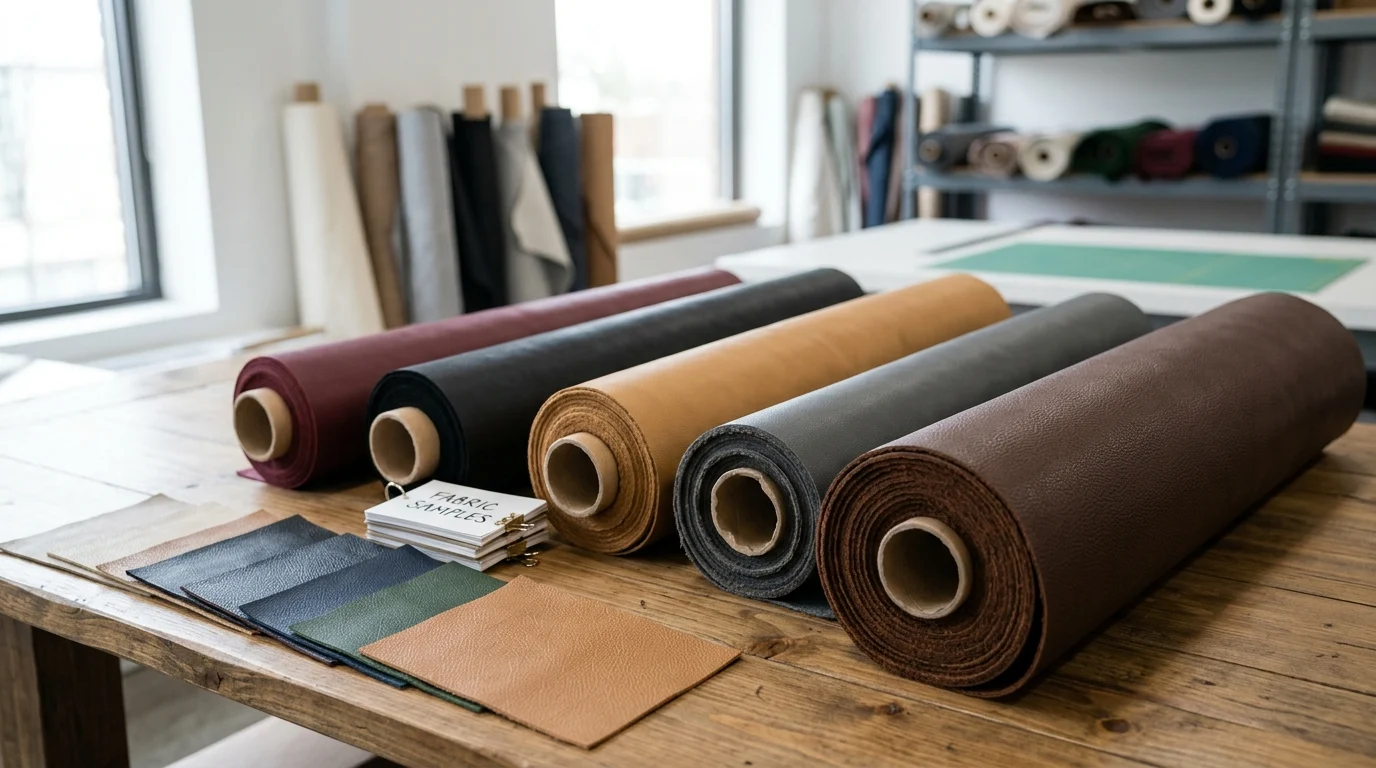
Bulk sourcing synthetic leather is no longer a simple price-per-meter negotiation. With demand rising across automotive interiors, footwear, furniture, and vegan material markets, procurement teams must balance cost, durability, compliance, and supply continuity. A weak RFQ, an unverified supplier, or an overlooked chemical restriction can turn a low-cost order into delayed production, rejected shipments, or margin erosion. Industry estimates suggest sourcing errors can add 12% to 15% to acquisition costs, making disciplined supplier selection essential. This guide breaks down the most common procurement pitfalls and shows how leading manufacturers reduce risk through tighter specifications, deeper verification, smarter landed-cost analysis, and resilient logistics planning.
Synthetic Leather Bulk Sourcing Overview
Securing a reliable supply chain for synthetic leather requires more than simply negotiating the lowest price per meter. As global demand for vegan and synthetic alternatives surges across the automotive, footwear, and upholstery sectors, procurement teams face increasingly complex supply networks. Missteps in material specification or supplier vetting can lead to catastrophic production delays, product recalls, and severe financial losses.
Industry estimates suggest that procurement errors, such as unverified supplier capabilities or vague material specifications, can inflate total acquisition costs by 12% to 15% in some markets. To mitigate these risks, procurement professionals must transition from transactional purchasing to a strategic sourcing model that rigorously evaluates technical capabilities, compliance frameworks, and logistical resilience.
How to Frame Synthetic Leather Procurement
Strategic synthetic leather procurement requires framing the purchasing process around total value rather than initial unit cost. Buyers must align their material requirements with the end-product’s lifecycle, regulatory environment, and target profit margins (typically ranging from 20% to 35% depending on the sector). This requires close collaboration between design, engineering, and procurement departments to ensure that the chosen material meets both aesthetic goals and mechanical durability standards.
Furthermore, establishing a robust procurement framework involves mapping the entire supply chain, from raw chemical suppliers (such as polyurethane resin producers) to the final coating and calendering facilities. Understanding these upstream dependencies allows buyers to anticipate market fluctuations, such as raw material shortages or sudden 5% to 10% spikes in petrochemical costs, and adjust their purchasing strategies accordingly.
Five Sourcing Pitfalls to Avoid
Even experienced procurement teams can fall victim to systemic errors when sourcing synthetic leather in bulk. The first major pitfall is relying on incomplete technical specifications, which allow suppliers to substitute inferior backing fabrics or lower-grade resins. The second is failing to conduct deep supplier verification, often resulting in contracts awarded to unverified middlemen rather than actual manufacturers.
The third pitfall involves ignoring hidden landed costs, where attractive FOB prices are negated by high import duties, unexpected freight charges, or excessive defect rates (often exceeding the standard 2% to 3% acceptable quality limit). Fourth, inadequate compliance controls can lead to shipments being seized at customs for containing restricted substances like phthalates (strictly capped below 1,000 ppm in many jurisdictions) or heavy metals. Finally, poor logistics planning and a lack of buffer stock strategies frequently result in production line stoppages when container shipments face inevitable 7- to 14-day maritime delays.
Specification Gaps and Material Selection
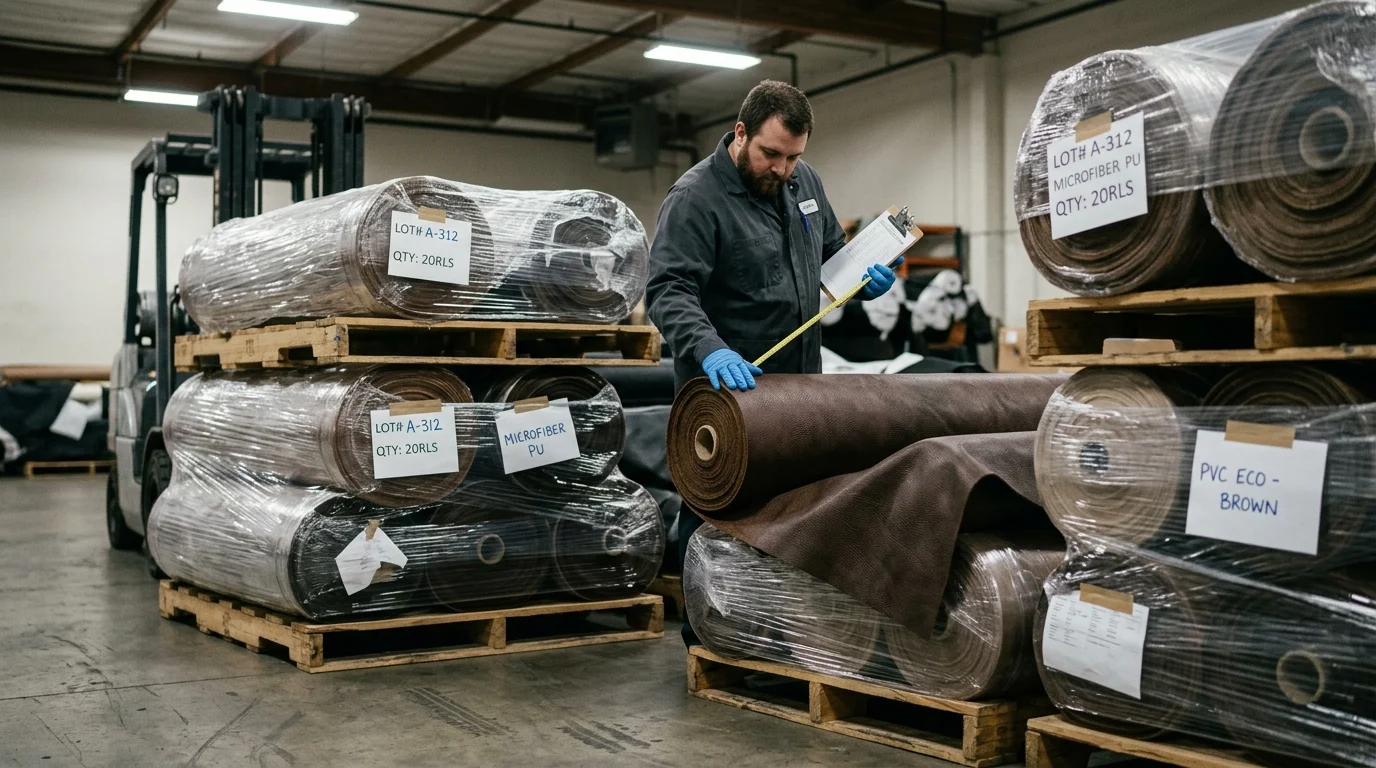
Addressing the first major pitfall—incomplete technical specifications—requires an airtight foundation. Ambiguity in the request for quotation (RFQ) phase is the primary cause of batch-to-batch inconsistency. When buyers request “black PU leather” without detailing the backing fabric composition, coating thickness, or performance metrics, suppliers are incentivized to use the cheapest available inputs to maximize their margins.
A comprehensive material specification must detail the exact chemical composition of the surface layer, the structural integrity of the base fabric (measured in Grams per Square Meter, or GSM), and the specific physical properties required for the end application. Establishing these parameters early prevents costly disputes and ensures that the delivered bulk material matches the approved pre-production samples.
Key Synthetic Leather Types and Structures
Synthetic leather is typically a composite material consisting of a base fabric and one or more polymer coating layers. The base fabric, which dictates the material’s tear strength and stretchability, can be woven, non-woven, or knitted.
| Base Fabric Type | Typical Weight (GSM)* | Tear Strength (N) | Stretch/Elongation | Primary Applications |
|---|---|---|---|---|
| Woven | 100 – 250 | High (>40N) | Low (<5%) | Luggage, Footwear, Belts |
| Knitted | 80 – 200 | Medium (20-30N) | High (15-30%) | Apparel, Complex Upholstery |
| Non-Woven | 150 – 300 | Very High (>50N) | Moderate (5-10%) | Automotive, Heavy-Duty Seating |
*Note: GSM ranges are illustrative and vary based on specific engineering requirements.
Woven bases offer high tensile strength suitable for luggage, while knitted bases provide the multi-directional stretch required for apparel and complex upholstery. The surface layer determines the material’s abrasion resistance, water repellency, and tactile feel. Advanced manufacturing techniques now allow for multi-layered structures, including a skin layer for texture, a foam layer for softness, and an adhesive layer bonding the polymer to the substrate. Understanding this architecture is critical for specifying the correct material for high-stress applications.
How to Compare PU, PVC, Microfiber, and Solvent-Free Options
Selecting the right polymer type is the most consequential decision in synthetic leather sourcing. Polyurethane (PU), Polyvinyl Chloride (PVC), Microfiber, and newer solvent-free options each offer distinct advantages and limitations regarding cost, performance, and environmental impact.
| Material Type | Illustrative Cost Band ($/m)* | Durability / Lifespan | Breathability | Environmental Profile |
|---|---|---|---|---|
| PVC | $1.50 – $3.50 | High (Prone to cracking over time) | Very Low | Poor (Contains plasticizers/phthalates) |
| Standard PU | $2.50 – $6.00 | Medium to High | Moderate | Fair (Solvent-based manufacturing) |
| Microfiber | $6.00 – $15.00 | Extremely High (Mimics genuine leather) | High | Good (Durable, often uses recycled base) |
| Solvent-Free PU | $5.00 – $12.00 | High (Excellent hydrolysis resistance) | High | Excellent (Zero VOC emissions, <30 ppm) |
*Note: Cost bands are illustrative estimates subject to market volatility and raw material pricing.
Procurement teams must weigh these factors against their product’s market positioning. While PVC remains the most economical choice for budget seating, stringent environmental regulations are driving a massive industry shift toward solvent-free PU and microfiber alternatives. Beyond initial manufacturing impacts, procurement teams must increasingly consider end-of-life sustainability. While solvent-free PU and microfiber boast better production footprints, true biodegradability remains limited, and recycling composite materials is notoriously difficult. Buyers should be wary of greenwashing and demand verifiable lifecycle assessments when sourcing “eco-friendly” options.
Specification Checklist for Thickness, Finish, and Performance
To eliminate ambiguity, buyers must utilize a standardized specification checklist that includes strict numerical tolerances. Thickness is a critical parameter; a standard upholstery PU might require a thickness of 1.2mm with a strict tolerance of ±0.05mm. Deviations beyond this threshold can disrupt automated cutting machinery and alter the product’s final appearance.
Performance metrics must be quantified using recognized testing standards (e.g., ASTM or ISO). A robust specification sheet should mandate a minimum peel strength of >2.5 kg/3cm to prevent delamination. While a Taber abrasion resistance exceeding 50,000 cycles might be required for extremely high-end or heavy-duty commercial applications, standard consumer applications may only require 10,000 to 20,000 cycles. Color fastness to light should be rated at Grade 4-5. Additionally, the finish—whether matte, high-gloss, or embossed—must be verified against a physical master sample using a spectrophotometer to ensure color consistency within a ΔE < 1.0 margin, and inspected under an Acceptable Quality Limit (AQL) of 1.5 for major defects.
Supplier Verification and Compliance Controls
To avoid the second pitfall—failing to conduct deep supplier verification—implementing stringent protocols is non-negotiable. In the synthetic leather industry, the distinction between a tier-one manufacturer and a heavily leveraged trading company is not always apparent from a glossy catalog or a well-designed website. Engaging with unverified suppliers introduces immense risk, from unauthorized subcontracting to the use of toxic, non-compliant chemicals that violate international safety standards.
Procurement teams must audit potential partners not only for their financial stability (e.g., verifying an annual turnover exceeding $5M to $10M) and production capacity but also for their commitment to quality management systems and environmental stewardship. A rigorous vetting process acts as the primary defense against supply chain disruptions and brand-damaging compliance failures.
How to Qualify Synthetic Leather Suppliers
Qualifying a synthetic leather supplier requires a multi-staged auditing approach. Initial screenings should verify basic legal registrations and export licenses. However, true qualification demands a thorough assessment of the supplier’s Quality Management System (QMS). Buyers should mandate that suppliers hold current ISO 9001 certifications as a baseline.
For specialized industries, the qualification threshold is higher. Automotive buyers, for instance, must restrict their sourcing to facilities certified under IATF 16949, which ensures continuous improvement and targets defect rates below 500 Parts Per Million (PPM) in the automotive supply chain. The audit should also evaluate the supplier’s raw material inspection protocols, in-line quality checks, and final outgoing quality control (OQC) procedures.
Required Compliance Documents and Test Reports
Addressing the fourth pitfall—inadequate compliance controls—requires strict documentation. Synthetic leather production involves complex chemical processes, making regulatory compliance a high-risk area. Buyers importing into the European Union must demand comprehensive REACH compliance declarations, specifically proving that Substances of Very High Concern (SVHC) are present at concentrations below 0.1% weight by weight (w/w).
Depending on the target market and product category, other mandatory test reports may include RoHS for electronic accessories (ensuring lead < 90 ppm), California Proposition 65 for the US market, and OEKO-TEX Standard 100 for apparel and footwear. Crucially, buyers should never accept internally generated test reports; compliance must be validated through recent certificates issued by accredited third-party laboratories such as SGS, TÜV, or Intertek.
How to Verify Real Factory Capability
To bypass unverified middlemen posing as factories, procurement teams must verify actual manufacturing capability through physical or live-video audits. A legitimate mid-to-large scale synthetic leather factory should operate at least 3 to 5 continuous wet/dry production lines, translating to a minimum production capacity of 100,000 to 300,000 meters per month.
Auditors should inspect the facility’s environmental control infrastructure, such as Volatile Organic Compound (VOC) recovery towers (targeting 95%+ recovery efficiency), which are mandatory for solvent-based PU production. Furthermore, examining the raw material warehouse provides valuable insight; a facility holding significant stock of base fabrics and branded polymer resins demonstrates financial health and true manufacturing readiness.
It is worth noting that direct factory relationships are not the only viable path. For buyers needing lower MOQs, consolidated shipments of multiple material types, or a broader portfolio of readily available stock, a reputable, transparent trading company might offer more value than a direct factory with rigid minimums. The key is transparency; buyers must know exactly who is manufacturing their goods and ensure the trading partner is not masking a substandard facility.
Cost, MOQ, Lead Time, and Logistics Risks
Avoiding the third pitfall—ignoring hidden landed costs—requires looking past the factory-gate price. Synthetic leather is a heavy, voluminous commodity (a standard 20-foot container, or TEU, typically holds 15,000 to 18,000 meters of 1.2mm material), and the journey from a manufacturing hub in Asia to a final assembly plant in Europe or North America is fraught with hidden costs and logistical hurdles. Failure to account for these variables can quickly erode projected profit margins.
Effective risk management in this phase requires a holistic view of the supply chain. Buyers must accurately calculate the total landed cost, negotiate viable Minimum Order Quantities (MOQs) that balance economies of scale with inventory holding costs, and build contingencies for inevitable transit delays.
How to Compare Landed Cost Beyond Unit Price
To understand the true cost of bulk synthetic leather, buyers must calculate the total landed cost rather than relying on Free On Board (FOB) quotes. Landed cost models must incorporate ocean or rail freight (historically fluctuating between $1,500 and $4,500 per TEU depending on market conditions), insurance, port handling fees, and inland transportation to the final destination.
Customs duties play a critical role in this calculation. Synthetic leather is typically classified under HS codes such as 3921.13 (Polyurethanes). Depending on the country of origin and the destination market, import tariffs can range from a negligible 2% up to punitive rates exceeding 15% or 25% if subject to specific trade tariffs. Accurately classifying the material and calculating these duties upfront is essential for accurate budget forecasting.
How to Assess Lead-Time Reliability
Lead-time reliability is just as critical as cost. Standard production lead times for conventional PU or PVC leather typically range from 15 to 25 days, assuming the supplier has the required base fabric in stock.
Decision Framework for Bulk Sourcing
Developing a structured approach is the cornerstone of any effective Synthetic Leather Bulk Sourcing Guide. Procurement professionals often face supply chain bottlenecks because they treat synthetic leather purchasing as a purely transactional event rather than a strategic operational function. Implementing a rigorous framework prevents substandard material quality and costly production delays.
Step-by-Step Sourcing Process
To build supply chain resilience, procurement teams must follow a systematic progression:
- Define Technical Specifications: Clearly outline requirements for backing fabrics, polymer types (PU, PVC, or bio-based), abrasion resistance, and peeling strength.
- Conduct Supplier Vetting: Thorough vetting is non-negotiable. Industry data shows that neglecting this stage frequently leads to substandard quality—such as unacceptable chemical impurities—or severe shipping delays extending 8 to 12 weeks.
- Mandate Standardized Testing: Require samples to pass recognized physical and chemical tests, such as ISO 1421 for tensile strength or ISO 105 for colorfastness.
- Execute a Pilot Run: Before committing to full-scale bulk production, order a trial batch to evaluate manufacturing consistency and material behavior during cutting and stitching.
Decision Matrix for Price, Performance, and Risk
Balancing cost against operational variables requires a quantifiable matrix. Buyers should evaluate suppliers based on the following critical dimensions to ensure long-term viability:
| Evaluation Criteria | Primary Focus (Weight: 40%) | Secondary Focus (Weight: 35%) | Risk Mitigation (Weight: 25%) |
|---|---|---|---|
| Financials | Unit cost per linear yard/meter | Volume discount structures | Currency fluctuation absorption |
| Performance | Peel strength & flex resistance | Aesthetic consistency (grain/color) | REACH or RoHS compliance |
| Supply Risk | Historical on-time delivery rate | Facility production capacity | Raw material sourcing redundancy |
Final Checklist for Synthetic Leather Bulk Procurement
Before finalizing purchase orders, use this definitive checklist to ensure all variables align with overarching procurement goals:
- Compliance Documentation: Verify third-party audit reports (e.g., SGS, Intertek) confirming adherence to environmental regulations and restricted substance lists.
- Quality Control (QC) Protocols: Establish an Acceptable Quality Limit (AQL) for defect rates prior to shipment (commonly AQL 1.5 for major defects in premium synthetics).
- Logistics and Incoterms: Clearly define shipping responsibilities (e.g., FOB, CIF) to prevent hidden freight costs or liability disputes at the port of origin.
- Lead Time Guarantees: Secure contractual agreements on production timelines, complete with defined contingency plans for supply chain disruptions.
By adhering to this framework, manufacturers can transition from reactive purchasing to strategic, resilient global sourcing.
Key Takeaways
- Define technical specifications in the RFQ, including backing fabric, GSM, coating thickness, resin type, finish, and performance tests to prevent batch inconsistency.
- Evaluate total landed cost instead of FOB price because freight, duties, defects, and delays can increase total acquisition costs by 12% to 15%.
- Verify suppliers beyond sales claims by confirming factory capabilities, quality controls, certifications, export experience, and sample consistency before awarding contracts.
- Require compliance documentation for restricted substances such as phthalates and heavy metals, especially where limits may be capped below 1,000 ppm.
- Plan logistics around realistic maritime delays of 7 to 14 days and use buffer stock or backup suppliers to avoid production line stoppages.
- Align synthetic leather selection with the end product’s lifecycle, regulatory market, and target margins, which may range from 20% to 35% depending on the sector.
Frequently Asked Questions
What is the biggest mistake buyers make when sourcing synthetic leather in bulk?
The most common mistake is using vague specifications, such as only requesting “black PU leather.” Buyers should define backing fabric, GSM, coating thickness, finish, color tolerance, abrasion resistance, and compliance requirements before requesting quotes.
How can procurement teams verify a synthetic leather supplier?
Buyers should confirm whether the supplier is an actual manufacturer, review production capabilities, request certifications, audit quality systems, check export history, and test samples from real production batches before placing bulk orders.
Why is the lowest FOB price not always the best option?
A low FOB price can hide higher landed costs, including freight, duties, defect rates, rework, delays, and compliance failures. Total acquisition cost is a better measure than unit price alone.
What compliance risks matter most in synthetic leather procurement?
Key risks include restricted phthalates, heavy metals, VOC emissions, and market-specific chemical limits. Many jurisdictions cap certain phthalates below 1,000 ppm, so buyers should require test reports and batch-level documentation.
How much defect rate is acceptable for bulk synthetic leather orders?
Many buyers use an acceptable quality limit of about 2% to 3%, depending on application and contract terms. Higher defect rates can quickly erase savings from a cheaper supplier.