

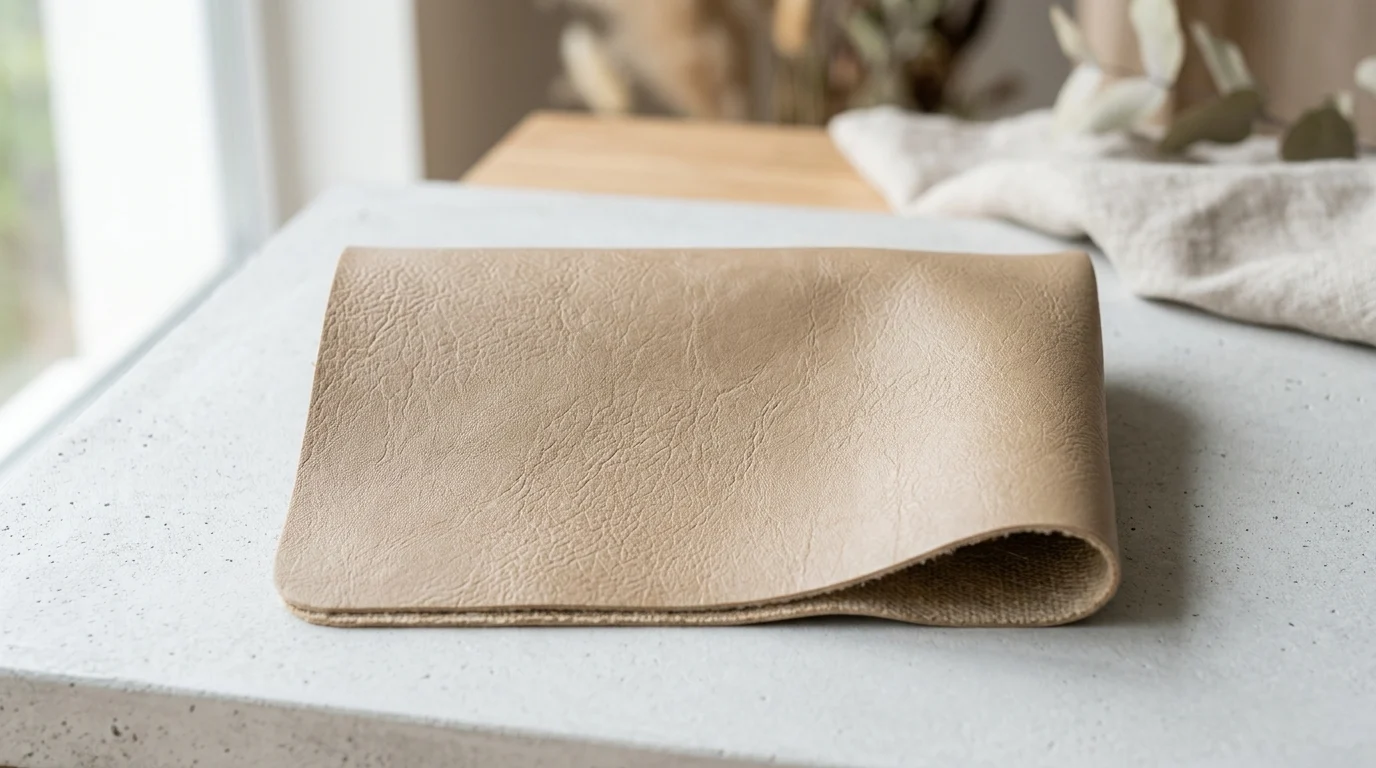
Premium vehicle cabins are being redesigned around cleaner chemistry, lighter materials, and stricter in-cabin air quality expectations. As OEMs push toward carbon neutrality and EV platforms demand efficient, minimalist interiors, traditional leather, PVC, and solvent-based PU are facing growing pressure. Water-based PU synthetic leather and silicone leather are emerging as practical alternatives because they combine lower VOC potential, strong durability, consistent roll quality, and design flexibility. This article examines why these materials are gaining ground, how they compare in sustainability and performance, and what automotive buyers should evaluate before specifying them for seats, door panels, dashboards, and other high-touch interior applications.
Why Water-Based PU and Silicone Leather Are Gaining Adoption
The automotive industry is undergoing a shift in interior material selection, moving away from traditional genuine leather, polyvinyl chloride (PVC), and solvent-based polyurethane. As electric vehicles (EVs) and autonomous platforms evolve, the demand for high-performance, sustainable alternatives has accelerated. Water-based PU synthetic leather and silicone leather have emerged as primary candidates to replace older materials, offering chemical profiles that align with current manufacturing requirements.
This transition is not merely an aesthetic evolution but a strategic mandate driven by environmental compliance, the need to protect occupant health, and rigorous engineering specifications. Understanding the catalysts behind this adoption is essential for specifying interior trims.
OEM sustainability targets
Original Equipment Manufacturers (OEMs) are pursuing carbon neutrality across their supply chains, necessitating a critical evaluation of interior materials. Traditional livestock-derived leather carries a significant carbon and water footprint, while PVC heavily relies on petrochemicals. Water-based PU and silicone leather offer substantial environmental advantages.
While the water-based resin itself eliminates toxic solvents, pairing it with recycled polyethylene terephthalate (rPET) backing substrates is a separate design choice that can further improve its ecological profile. Combined, industry estimates suggest this cradle-to-gate approach can achieve up to an approximate 40% reduction in CO2 emissions compared to conventional solvent-based alternatives. Furthermore, these synthetics require significantly less water during processing, directly supporting the ESG (Environmental, Social, and Governance) targets mandated by top-tier automotive brands. However, both materials still face end-of-life recyclability challenges, as separating the polymer coatings from their textile backings remains difficult in cradle-to-grave assessments.
VOC and regulatory pressures
Stricter global regulations on Volatile Organic Compounds (VOCs) are forcing the elimination of materials that compromise in-cabin air quality. The notorious “new car smell” is a complex mixture, and solvent-based PU contributes to it by relying on Dimethylformamide (DMF), a solvent that can leave trace residues and lead to off-gassing.
Standards such as China’s GB/T 27630-2011 and Europe’s REACH directive impose severe limitations on interior emissions. Water-based PU and silicone leather help address this issue. High-quality water-based PU utilizes polyurethane dispersions (PUDs) with water as the primary carrier, reliably achieving VOC emissions below stringent industry thresholds. Silicone leather, being naturally solvent-free and requiring no plasticizers, exhibits near-zero off-gassing, making it a highly effective choice for closed-cabin environments.
Interior design and durability needs
Beyond sustainability and compliance, the physical demands placed on automotive interiors require materials that do not degrade under constant use. EV aesthetics favor minimalist, light-colored interiors, which amplify the need for stain resistance and structural integrity. Both water-based PU and silicone leather deliver on these fronts while contributing to vehicle lightweighting initiatives.
Compared to genuine leather, synthetic alternatives offer a weight reduction of 20% to 30%, a critical factor for maximizing the battery range and efficiency of electric vehicles. Furthermore, the engineered nature of these materials ensures consistent roll-to-roll quality. This manufacturing advantage eliminates the natural defects found in animal hides and maximizes cutting yields for complex interior geometries.
Material Differences Between Water-Based PU and Silicone Leather
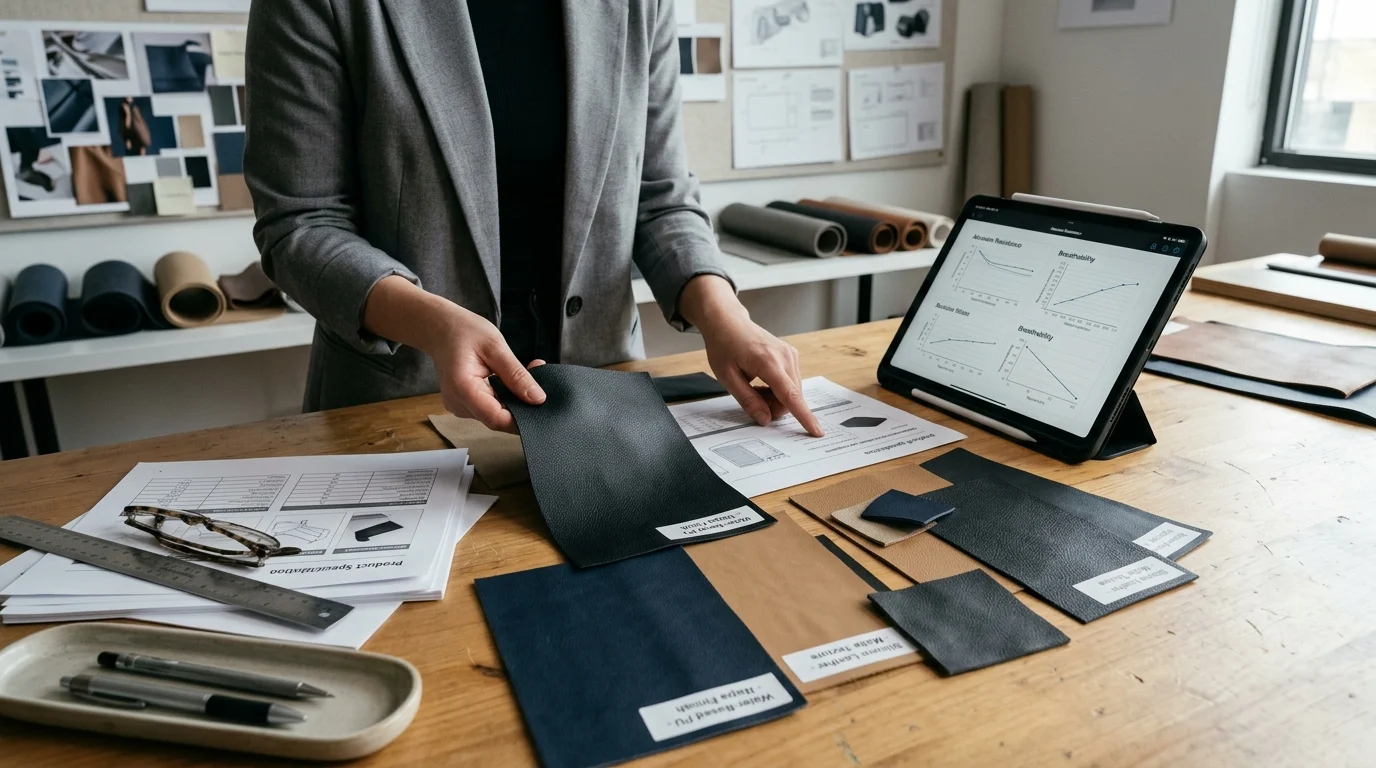
While both water-based PU and silicone leather represent sustainable approaches to automotive trims, they rely on fundamentally different polymer chemistries and structural compositions. Understanding these differences is critical, as they directly dictate the material’s behavior during fabrication, its compatibility with automotive adhesives, and its long-term performance in various climates.
Selecting between the two requires an evaluation of their respective coating architectures, surface properties, and the thermal parameters required during their manufacture.
Water-based PU coating structure
Water-based PU leather utilizes a multi-layered construction typically consisting of a surface skin layer, a compressible foam layer, and a textile substrate. The defining characteristic is the substitution of organic solvents with water during the polyurethane dispersion process. The resin is mechanically frothed or chemically expanded to create a micro-porous structure.
This micro-porous architecture is crucial for moisture vapor transmission (breathability) and achieving a soft hand-feel that closely mimics genuine leather. Because the coating relies on water evaporation to form the polymer film, the resulting PU structure is highly flexible and demonstrates excellent elongation properties, making it adaptable for wrapping complex automotive components. However, despite significant improvements in hydrolysis resistance, some water-based PU formulations can still exhibit vulnerability to prolonged, extreme humidity over the vehicle’s lifespan, potentially leading to warranty claims in tropical climates if not properly stabilized.
Silicone surface chemistry
Silicone leather relies on a fundamentally different chemical foundation, utilizing 100% silicone polymers applied directly to a microfiber or polyester blend substrate. Unlike PU or PVC, silicone does not require plasticizers to achieve flexibility; its silicon-oxygen (Si-O) backbone is inherently highly flexible and chemically inert.
Because silicone is heavily cross-linked and lacks the micro-pores found in PU, it acts as a non-permeable barrier. This unique surface chemistry provides inherent resistance to UV radiation, extreme temperatures, and chemical degradation. The low surface tension of the silicone polymer also means that most contaminants, from denim dye to ink, cannot easily bond with the material, granting it strong natural stain resistance without the need for additional topcoat treatments. A notable trade-off, however, is that this same low surface energy can create adhesion challenges with standard polyurethane or acrylic-based automotive adhesives during assembly, often requiring specialized primers or mechanical fastening.
Key manufacturing differences
The manufacturing processes for these two materials dictate different facility requirements and energy inputs.
| Feature | Water-Based PU Leather | Silicone Leather |
|---|---|---|
| Primary Polymer | Polyurethane Dispersion (PUD) | 100% Silicone Elastomer |
| Solvent/Carrier | Water | Solvent-free (100% Solid) |
| Curing Temperature | 120°C to 150°C | 180°C to 200°C |
| Plasticizer Content | Zero | Zero |
| Coating Method | Transfer coating or direct coating | Calendering or direct coating |
Water-based PU cures through the evaporation of water, requiring precise humidity and temperature control, typically curing at lower temperatures between 120°C and 150°C. In contrast, silicone leather requires high-temperature vulcanization to cross-link the polymers, demanding curing temperatures often reaching 180°C to 200°C. This higher thermal requirement for silicone impacts the choice of backing materials, as the textile substrate must withstand vulcanization temperatures without shrinking or degrading.
Performance Metrics Buyers Should Compare
Automotive interiors are subjected to extreme environmental and physical stressors, from sub-zero winter temperatures to intensive UV exposure and daily friction. Evaluating water-based PU and silicone leather requires a quantitative comparison against stringent OEM specifications.
This involves analyzing a matrix of performance metrics, balancing physical durability and sensory feedback with the economic realities of large-scale automotive production.
Abrasion, hydrolysis, and UV resistance
Durability is paramount in automotive seating and high-contact areas. Both materials undergo rigorous Martindale or Wyzenbeek abrasion testing, with premium automotive grades expected to surpass industry benchmarks of approximately 100,000 cycles without significant wear or color loss. Silicone leather generally exhibits a slight edge in raw scuff resistance due to its tough, rubber-like surface.
Hydrolysis resistance—the material’s ability to withstand breakdown from heat and humidity—is critical. In the industry-standard “Jungle Test” (exposure to 70°C and 95% relative humidity), high-grade water-based PU is engineered to survive 7 to 10 weeks without cracking or peeling, though it may eventually degrade under continuous extreme moisture. Silicone leather, owing to its inorganic backbone, is virtually immune to hydrolysis, making it highly attractive for vehicles deployed in tropical or high-humidity climates.
Cleanability, touch, and appearance
The sensory experience and maintainability of an interior significantly influence consumer perception. Silicone leather is widely recognized for its cleanability; its ultra-low surface energy allows even stubborn stains like ballpoint pen ink or coffee to be wiped away with mild soap and water. This makes silicone a practical choice for ultra-white or light-colored EV interiors.
Conversely, water-based PU typically offers a broader range of haptic customization. Manufacturers can manipulate the PU formulation to achieve a warmer, softer touch that replicates the friction and grain of Nappa leather. While silicone can feel slightly more rubbery or grippy, recent advancements in surface texturing have narrowed this gap, though PU still retains a slight advantage in mimicking traditional haptics.
Cost, yield, and embossing precision
Balancing performance with economic realities is a key part of the selection process.
| Metric | Water-Based PU Leather | Silicone Leather |
|---|---|---|
| Estimated Cost Band | $8.00 – $14.00 per linear meter (est.) | $12.00 – $18.00 per linear meter (est.) |
| Cutting Yield | > 95% | > 95% |
| Embossing Precision | Extremely High | Moderate to High |
| Breathability | Good (Micro-porous) | Low (Non-porous) |
Silicone leather generally commands a premium, with industry estimates suggesting ranges of $12 to $18 per linear meter, reflecting the high cost of raw silicone polymers and the energy-intensive vulcanization process. Water-based PU offers a more cost-effective solution, often estimated at $8 to $14 per linear meter. Both synthetic options provide excellent cutting yields exceeding 95%, vastly outperforming genuine leather hides which typically yield only 50% to 60% usable material due to natural defects. Furthermore, PU excels in embossing precision, holding intricate, micro-fine grain patterns slightly better than highly elastic silicone.
Sourcing and Validation for Automotive Applications
Transitioning to water-based PU or silicone leather requires a rigorous validation protocol to ensure the chosen material meets the safety and quality standards of the automotive sector.
This involves navigating a complex landscape of supplier audits, laboratory certifications, and production trials before a material can be approved for mass production.
Supplier qualification steps
The first step in securing a reliable supply chain involves strict supplier qualification. Manufacturers of automotive-grade synthetics must hold IATF 16949 certification, demonstrating a robust quality management system specific to the automotive industry. Auditing the supplier’s raw material traceability ensures that the polyurethane dispersions or silicone elastomers are sourced from reputable chemical conglomerates.
It is also important to note the limited supplier base for automotive-grade silicone leather compared to the highly established, global networks available for PU. Many automotive silicone leather suppliers are heavily concentrated in specific regions, such as China, which can introduce lead time risks and higher shipping costs for North American or European assembly plants. A comprehensive audit will assess the supplier’s capacity to maintain consistent color-matching (Delta E < 1.0) across multiple production batches, as well as their environmental compliance regarding wastewater treatment and energy usage.
Lab testing and prototype validation
Material candidates must undergo exhaustive laboratory testing to meet safety and performance standards. Flammability is a critical pass/fail metric; materials must comply with FMVSS 302 or equivalent standards, demonstrating a burn rate of less than 100 mm/min. Both water-based PU and silicone leather can be formulated with flame retardants to meet this requirement safely.
Fogging tests (such as DIN 75201) are mandatory to ensure that the material does not release volatile compounds that condense on the windshield, impairing visibility. Silicone leather inherently excels here, often showing near-zero condensable constituents. Prototypes are also subjected to deep-freeze impact testing (e.g., at -30°C) to verify that the material will not shatter or crack during winter operation, though silicone generally maintains better flexibility in extreme cold.
Logistics and production readiness
Once a material passes technical validation, logistics and production readiness must be addressed. Minimum Order Quantities (MOQs) for custom-colored automotive synthetics are often estimated to range from 500 to 1,000 linear meters per colorway, depending on the supplier. Failing to meet these MOQs can result in significant pricing penalties. Production lead times generally span 4 to 6 weeks for established formulations, but can extend to 10 weeks for entirely new grain and color developments.
Production readiness also involves assessing the material’s compatibility with the Tier 1 seating manufacturer’s existing equipment. Engineers must verify that the chosen synthetic leather bonds effectively with automotive adhesives—a step particularly crucial for silicone—and can be sewn without tearing at the seams, ensuring a smooth transition from prototype to high-volume assembly.
Choosing the Right Material for Each Application
Optimizing an automotive interior requires a strategic approach to material placement.
Key Takeaways
- Specify water-based PU synthetic leather when low odor, reduced VOC emissions, and solvent-free processing are priorities for automotive interiors.
- Pairing water-based PU with rPET backing can improve sustainability and may cut cradle-to-gate CO2 emissions by up to about 40% versus solvent-based alternatives.
- Consider silicone leather for closed-cabin applications that require near-zero off-gassing, strong stain resistance, and consistent performance on light-colored surfaces.
- Use engineered synthetic leather to reduce interior trim weight by roughly 20% to 30% compared with genuine leather, especially in EV programs.
- Validate every selected material against relevant VOC and chemical standards, including GB/T 27630-2011 and REACH, before production approval.
- Plan for end-of-life challenges early because separating polymer coatings from textile backings remains a key recyclability barrier.
Frequently Asked Questions
What makes water-based PU synthetic leather different from solvent-based PU?
Water-based PU uses polyurethane dispersions with water as the main carrier instead of solvents such as DMF, helping reduce solvent residues, VOC emissions, and odor in vehicle cabins.
Is silicone leather better than water-based PU for automotive interiors?
It depends on the application. Silicone leather offers near-zero off-gassing and strong stain resistance, while water-based PU is versatile, cost-effective, and widely suitable for premium automotive trim.
How can water-based PU support OEM sustainability targets?
It eliminates many toxic solvents and can use less water in processing. When combined with rPET backing, it may help reduce cradle-to-gate CO2 emissions by up to about 40% versus solvent-based alternatives.
Are water-based PU and silicone leather suitable for EV interiors?
Yes. Both materials support lightweight interior design, with synthetic alternatives often reducing weight by 20% to 30% compared with genuine leather, which can help improve EV efficiency.
Do these materials help meet low-VOC regulations?
High-quality water-based PU and silicone leather are designed to support stricter VOC requirements, including standards such as GB/T 27630-2011 and REACH, but final compliance should always be verified by material testing.