

Can Microfiber Leather Artificial Composite Material Replace Natural Leather?
Microfiber leather is one of the most discussed microfiber leather alternative materials in today’s leather market. For brands, manufacturers, and procurement teams, the key question is not whether it looks similar to natural leather, but whether it can meet performance, cost, sustainability, and supply-chain requirements in real applications.
In many use cases, microfiber leather composite materials can replace natural leather in a practical and commercially viable way. But the answer depends on the end product, target market, and technical requirements. In this article, we’ll break down what microfiber leather is, where it performs well, where natural leather still has advantages, and how buyers can choose the right material for shoes, furniture, automotive interiors, bags, and other products.
What Is Microfiber Leather?
Microfiber leather is a synthetic leather material designed to mimic the structure, appearance, and hand feel of natural leather. It is typically built from a microfiber nonwoven base and a functional surface layer, which together create a material that offers leather-like aesthetics with improved consistency and manufacturing control.
Compared with traditional PU leather or PVC leather, microfiber leather is often positioned as a higher-performance synthetic option. It is widely used in projects that require better abrasion resistance, dimensional stability, and a more premium surface effect.
Typical Structure of Microfiber Leather Composite
- Base layer: microfiber nonwoven substrate for strength and stability
- Coating layer: PU or functional surface coating for appearance and touch
- Finish layer: texture, embossing, color, and protective treatment
This layered structure is why microfiber leather composite material can be engineered for different industries and usage conditions.
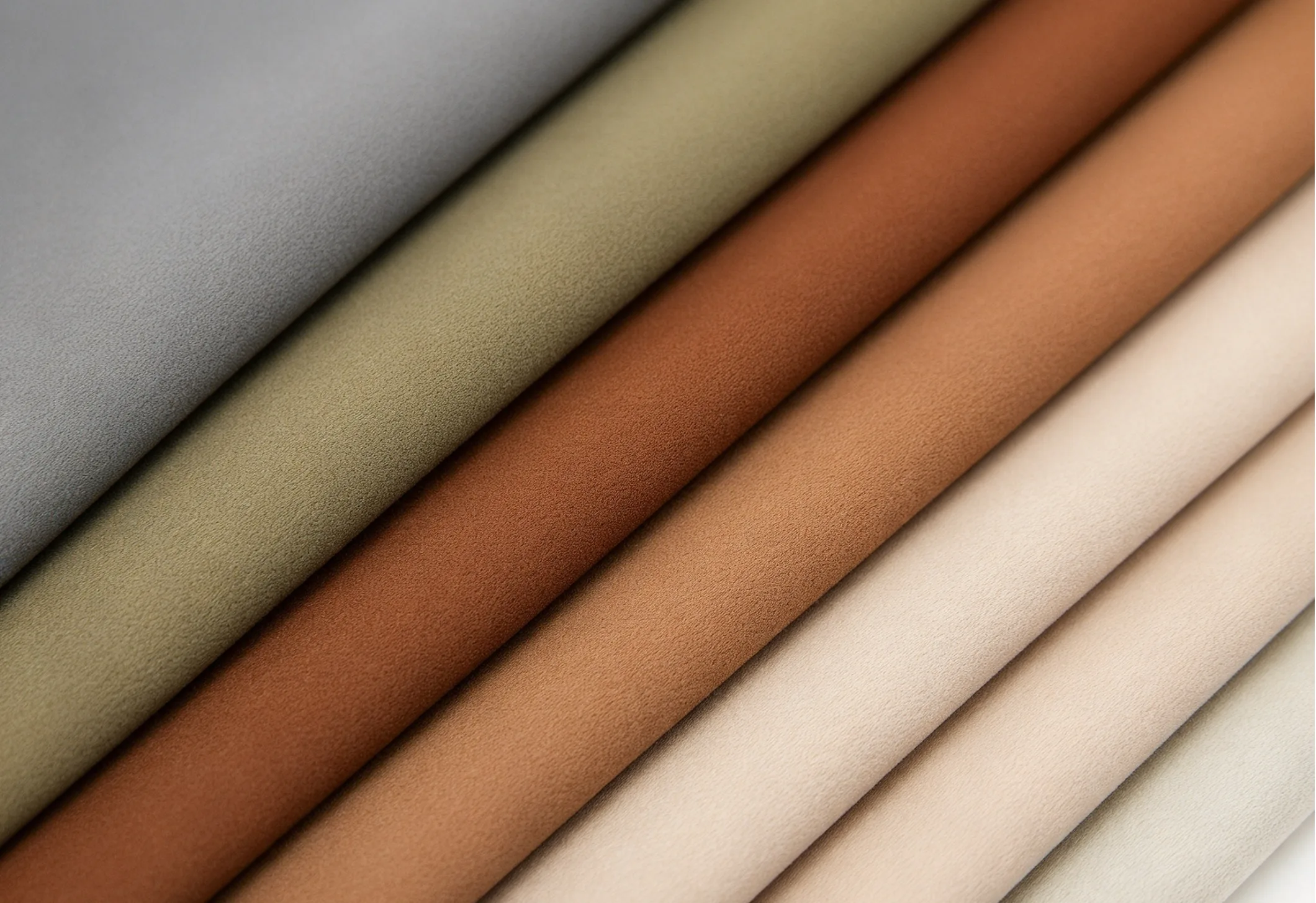
Can Microfiber Leather Replace Natural Leather?
The short answer is: yes, in many applications. In particular, microfiber leather can replace natural leather when the priority is stable quality, scalable supply, easier customization, and lower maintenance.
However, natural leather still has a place in ultra-premium products where natural grain variation, aging patina, and traditional material identity are essential to the brand story.
Where Microfiber Leather Can Fully Compete
- Shoes: uppers, linings, safety footwear parts
- Furniture: sofa covers, chair surfaces, soft upholstery
- Automotive interiors: seats, door panels, armrests
- Bags and accessories: fashion bags, straps, trims
- Gloves and apparel: flexible components requiring comfort and fit
Where Natural Leather May Still Be Preferred
- Luxury products emphasizing genuine hide identity
- Heritage brands relying on natural aging and patina
- Applications where consumers specifically request animal-derived material
Microfiber Leather vs Natural Leather: Key Differences
When evaluating a microfiber leather alternative, procurement teams usually compare appearance, performance, cost, and supply consistency. Here is a practical comparison.
1. Appearance and Texture
Natural leather has unique grain patterns that vary from hide to hide. Microfiber leather can be made with highly consistent embossing, color control, and surface finish. For brands that need uniformity across large orders, this is a major advantage.
2. Performance Stability
Microfiber leather composite materials are typically designed for stronger batch consistency in color, thickness, and physical performance. This helps reduce production risk in industrial and B2B supply chains.
3. Wear Resistance
Microfiber leather often performs well in abrasion resistance and daily-use durability, especially in footwear, upholstery, and automotive applications. This makes it attractive for products that need long service life.
4. Maintenance and Cleaning
Synthetic leather surfaces are generally easier to clean and maintain than natural leather. This is especially useful for furniture, commercial seating, and automotive interiors.
5. Cost and Supply Chain
Natural leather supply can fluctuate based on raw hide availability, processing quality, and market conditions. Microfiber leather offers better scalability and predictable sourcing, which is important for brands with large and repeated orders.
6. Environmental Positioning
For buyers focused on low odor, low VOC, and sustainability messaging, water-based PU and vegan-oriented materials are often preferred. Microfiber leather can support these goals depending on the exact material system and finishing process.
Why Buyers Choose Microfiber Leather
From a procurement perspective, the appeal of microfiber leather is not just “looks like leather.” It is the combination of design flexibility, process control, and commercial reliability.
Major Buyer Advantages
- Consistent color matching: important for multi-part products and large orders
- Stable batch performance: reduces quality issues during mass production
- Customizable specifications: thickness, embossing, finish, and backing can be adjusted
- Cross-industry adaptability: suitable for shoes, furniture, automotive, bags, and accessories
- Efficient supply support: easier to align with B2B project timelines
Microfiber Leather Applications by Industry
HAOHAO, a synthetic leather manufacturer based in Ningbo, China, focuses on PU leather, microfiber leather, and water-based PU. With more than 20 years of manufacturing experience, 3 factories, around 50 million meters of annual capacity, and a 60+ service team, the company is structured to support multi-category and multi-order B2B supply.
Shoe Materials
Microfiber leather is widely used in footwear because it balances durability, flexibility, and appearance. Common applications include:
- Shoe uppers
- Inner lining materials
- Safety shoes
- Fashion and casual footwear components
For shoe brands, the most important factors are wear resistance, bend resistance, and color stability.
Furniture and Soft Upholstery
In furniture, microfiber leather is valued for its easy-clean surface, premium look, and stable supply. It is commonly used for:
- Sofa upholstery
- Chair surfaces
- Commercial seating
- Decorative soft-surface panels
Furniture buyers often prioritize texture uniformity, touch feel, and long-term durability.
Automotive Interiors
Automotive applications demand high consistency and a refined surface. Microfiber leather can be used in seats, door panels, and armrests where aesthetics and performance must work together.
Key requirements usually include:
- Color consistency
- Low odor
- Heat resistance
- Wear and scratch resistance
Handbags and Accessories
For bags and accessories, microfiber leather provides strong visual appeal and structural support. Brands often choose it for:
- Handbags
- Wallets
- Straps
- Fashion trim parts
Apparel and Gloves
Because microfiber leather can be engineered for softness and flexibility, it is also suitable for certain garment and glove applications. These products usually need comfort, fit, and manageable thickness.

How Microfiber Leather Compares with Other Synthetic Leather Materials
Microfiber leather is only one part of the broader synthetic leather family. Buyers often compare it with PU leather, water-based PU, TPU, PVC leather, and silicone-based materials depending on the project.
PU Leather
PU leather is a common choice for large-volume projects where cost and appearance need to be balanced. It is widely used when the target is practical mass production.
Water-Based PU
Water-based PU leather is suitable for buyers focused on environmental direction, low odor, and reduced VOC concerns. It is often selected for sustainable procurement strategies.
TPU Materials
TPU usually emphasizes elasticity, wear resistance, and functional performance. It is suitable for parts that need flexibility and resilience.
PVC Leather
PVC leather is often used in cost-sensitive projects. It can still provide useful appearance and processing adaptability, depending on the application.
Silicone-Based Materials
Silicone materials are more associated with premium touch, weather resistance, and anti-fouling performance. They are often used in higher-value applications.
What B2B Buyers Should Check Before Choosing Microfiber Leather
For procurement teams, selecting the right microfiber leather composite material means looking beyond the sample surface. The following factors are especially important.
1. Color Consistency
Check whether the supplier can maintain stable shades across different batches, especially for large-scale orders and repeated production runs.
2. Abrasion and Bend Resistance
These are critical for shoes, seating, and accessories that undergo frequent use.
3. Thickness and Feel
Different applications require different thickness levels, softness, and surface texture. Ask for technical specifications and sample comparison.
4. Delivery Time and Capacity
A supplier with multiple factories and strong annual output is better positioned to handle parallel orders and tight timelines.
5. Technical Support
B2B buyers often need assistance with product matching, testing, and customized development. A service-oriented team can reduce communication risk during project execution.
Why HAOHAO Is a Relevant Supplier for Microfiber Leather Projects
HAOHAO’s manufacturing setup in Ningbo is designed for buyers who need a dependable microfiber leather composite supplier. With more than 20 years in the synthetic leather industry, the company has accumulated experience across multiple material systems and application categories.
- 3 factories: supports diversified production and larger order volumes
- About 50 million meters annual capacity: suitable for mid- to large-scale B2B demand
- 60+ service team: supports communication, sampling, and project follow-up
- Broad application coverage: shoes, furniture, automotive, bags, apparel, gloves, and more
For buyers comparing suppliers, this kind of industrial capability matters because it helps ensure consistent quality, stable delivery, and better customization support.
FAQ: Microfiber Leather Alternative Questions
Is microfiber leather real leather?
No. Microfiber leather is a synthetic material. It is designed to imitate the look and feel of natural leather while offering consistent performance and easier manufacturing control.
Can microfiber leather replace natural leather in shoes?
Yes, in many shoe applications it can. It is especially suitable for uppers, lining, and safety footwear where durability, flexibility, and stable quality matter.
Is microfiber leather better than PU leather?
It depends on the application. Microfiber leather is often positioned as a higher-performance option with better stability and wear resistance, while PU leather is a common choice for cost-effective mass production.
Does microfiber leather support sustainable procurement?
It can, especially when combined with water-based PU or vegan material positioning. Buyers should confirm the exact material composition, emissions requirements, and compliance needs.
What industries use microfiber leather most often?
The main industries include footwear, furniture, automotive interiors, bags, accessories, apparel, and gloves.
What should I ask a microfiber leather supplier for?
Ask for samples, technical data sheets, color matching support, abrasion and bend test data, minimum order quantity, and lead time. For B2B projects, these details are essential for evaluation.
Conclusion
So, can microfiber leather artificial composite material replace natural leather? In many cases, yes. It can be a strong microfiber leather alternative for products that require consistent quality, scalable supply, customizable appearance, and practical performance.
For buyers in shoes, furniture, automotive interiors, bags, and accessories, microfiber leather offers a balanced solution between aesthetics and manufacturability. The best choice depends on your product goals, technical standards, and brand positioning. If you need stable B2B supply, sample support, and industry-specific recommendations, a supplier with broad material experience and production capability can make the selection process much easier.