
Introduction
Choosing between artificial leather and real leather affects more than appearance. It shapes product cost, manufacturing methods, durability targets, maintenance expectations, and even how a brand is positioned in the market. This article focuses on artificial leather while comparing it directly with genuine leather across the factors buyers and manufacturers care about most, including performance, consistency, sustainability, and application fit. You will learn where synthetic materials offer clear advantages, where real leather still leads, and how to evaluate the better option for footwear, upholstery, and other high-use products before moving into the detailed comparison.
Why does the artificial leather vs real leather choice matter
The decision to specify artificial leather versus real leather fundamentally shapes a product’s cost structure, market positioning, and manufacturing workflow. With the global synthetic leather market expanding at an annual growth rate of approximately 7%, driven largely by the automotive and footwear sectors, procurement teams must weigh traditional material prestige against modern manufacturing efficiency. This choice dictates not only the bill of materials but also the required machinery, labor skill levels, and supply chain logistics.
How do material selection goals differ across footwear and upholstery
Material selection goals diverge sharply depending on the end application. In footwear manufacturing, materials must endure extreme dynamic stress; upper materials are typically tested to withstand 50,000 to 100,000 flex cycles at room temperature without cracking. Breathability and moisture vapor transmission rates (MVTR) are also critical for user comfort. Conversely, upholstery applications prioritize static durability and surface wear. Automotive and contract furniture leathers must achieve high abrasion resistance, often requiring a minimum of 100,000 Wyzenbeek double rubs, alongside strict UV fading resistance and flame retardancy standards.
Which purchasing criteria most often determine the choice
Beyond physical performance, quantitative purchasing criteria dominate the material selection process. The most significant factor is usable yield. Real leather hides inherently feature irregular shapes, scars, and brand marks, resulting in a typical cutting yield of 65% to 75%. In contrast, artificial leather is supplied on continuous rolls, usually 54 inches (137 cm) wide, allowing automated CNC cutting machines to achieve yields exceeding 90% to 95%. This 20% to 30% yield differential heavily influences the total cost of goods sold (COGS), often making synthetic alternatives more attractive for mid-tier consumer goods despite narrowing per-square-foot price gaps in some premium synthetic categories.
What is artificial leather and how does it differ from

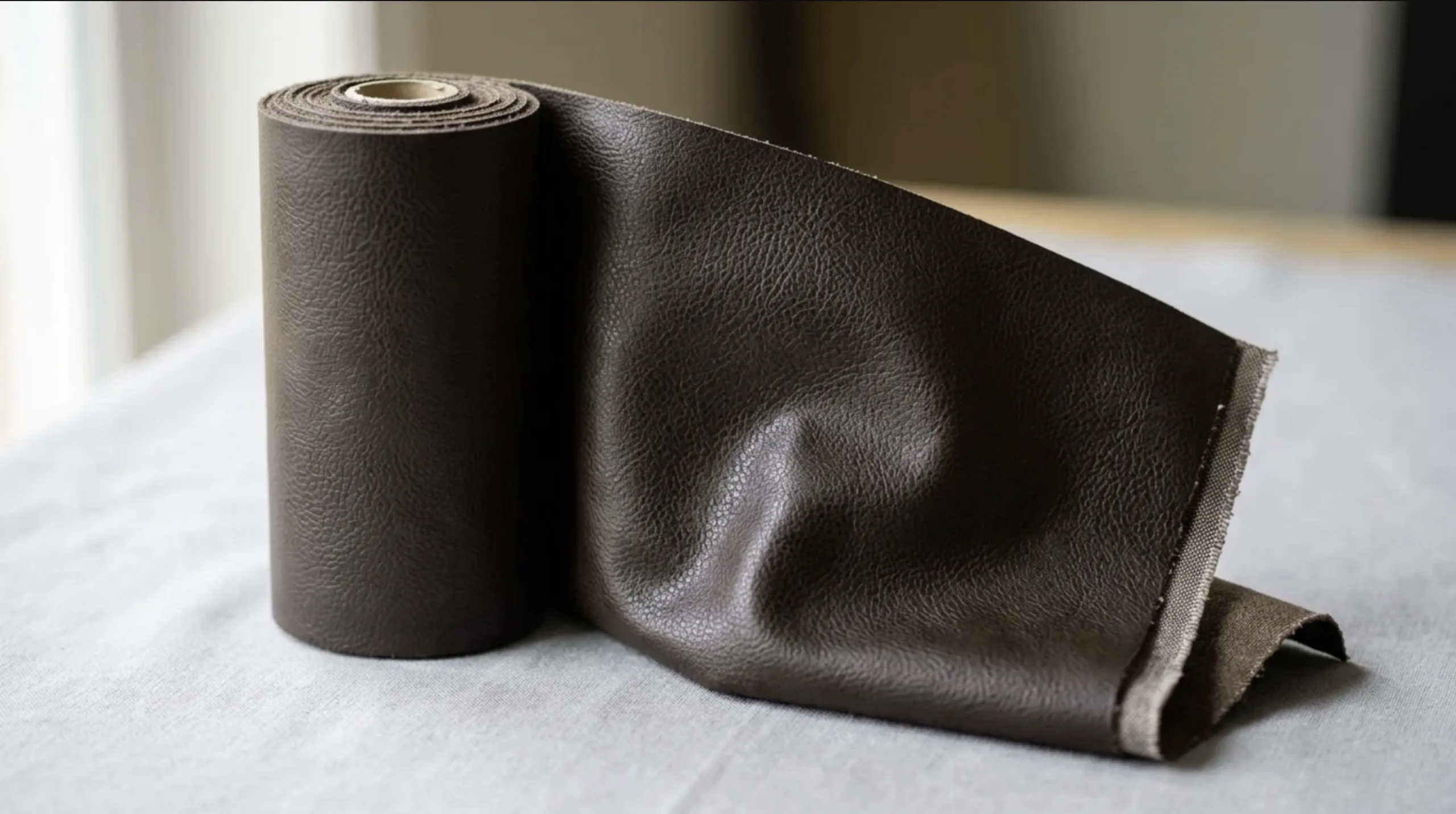
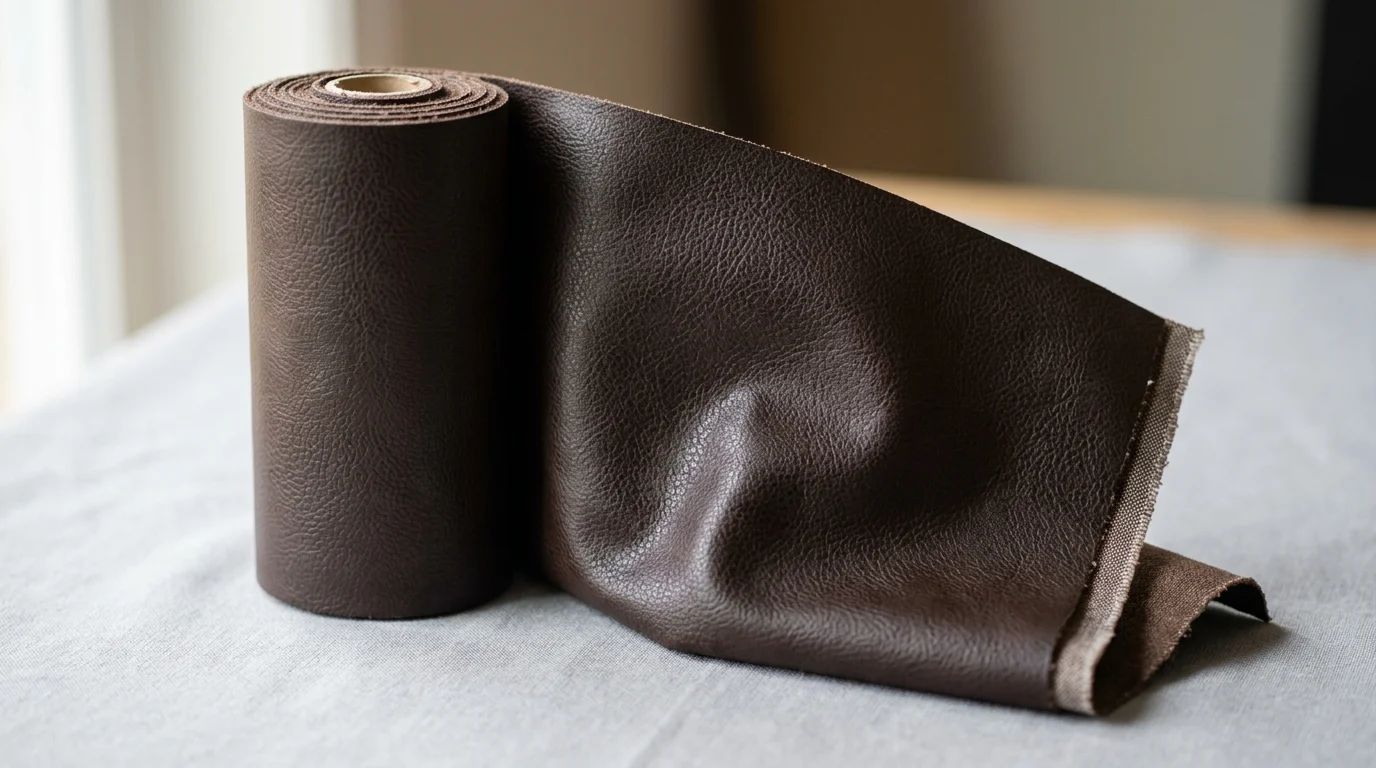
Real leather is a natural product derived from animal hides—primarily bovine—that undergo tanning to stabilize the collagen proteins, preventing decay and ensuring flexibility. Artificial leather, conversely, is an engineered composite designed to mimic the aesthetic and tactile properties of natural hides through layers of textiles and polymers.
How are PU, PVC, microfiber, and bio-based artificial leathers made
The manufacturing of artificial leather varies significantly by polymer type. Polyvinyl chloride (PVC) leather involves coating a woven or knit fabric backing with a plasticized PVC resin, creating a highly durable, water-resistant, but non-breathable surface. Polyurethane (PU) leather utilizes a flexible PU resin, often applied via a wet or dry coagulation process, resulting in a softer hand-feel and better microporosity. Microfiber leather represents the highest tier of synthetics; it uses a non-woven matrix of ultra-fine sea-island fibers (measuring between 0.001 and 0.01 denier) impregnated with polyurethane, closely replicating the 3D collagen structure of real leather. Recently, bio-based alternatives have emerged, substituting 30% to 70% of petroleum-derived polymers with agricultural byproducts like apple pomace, cactus, or mycelium.
How do grain structure, backing, coatings, and finishes compare
The structural differences between natural and engineered leathers manifest distinctly in their cross-sections and surface treatments. Real leather possesses a natural corium layer for strength and a tighter grain layer on the surface. Its finish is often achieved through aniline dyes or thin pigment coats that highlight natural variations. Artificial leather relies on a textile backing (woven, knit, or non-woven) for tensile strength, topped with a polymer skin. The distinct grain structure of synthetic variants is artificially applied using embossed release papers under high heat and pressure.
| Feature | Real Leather | Microfiber Leather | Standard PU Leather |
|---|---|---|---|
| Base Structure | Natural collagen fibers | Non-woven sea-island fibers | Woven/knit textile |
| Coating | Dyes, pigments, waxes | Polyurethane resin | Polyurethane resin |
| Thickness Tolerance | ± 0.2 mm to 0.4 mm | ± 0.05 mm | ± 0.1 mm |
| Breathability (MVTR) | High | Medium to High | Low to Medium |
How do artificial leather and real leather compare
Comparing natural hides to synthetic alternatives requires evaluating both long-term physical performance and the immediate economic impact on the manufacturing floor. While high-end synthetics have closed the performance gap, distinct differences in lifecycle and processing costs remain.
How do durability, comfort, appearance, and maintenance differ
Real leather is renowned for its longevity; with proper conditioning to maintain a moisture content of 10% to 14%, a high-quality top-grain leather product can last 15 to 20 years, developing a desirable patina over time. However, it requires routine maintenance to prevent drying and cracking. Artificial leather, particularly standard PU, is virtually maintenance-free and can simply be wiped clean, making it ideal for high-spill environments like healthcare or dining. However, traditional PU is susceptible to hydrolysis—a chemical breakdown caused by humidity and heat—which typically limits its lifespan to 3 to 7 years before peeling or delamination occurs, though advanced anti-hydrolysis PU formulations can extend this to 10 years or more.
How do pricing, yield, and defect rates affect total cost
The economic comparison extends beyond the base material price. Standard automotive-grade real leather typically costs between $4.00 and $8.00 per square foot, whereas premium microfiber artificial leather ranges from $12.00 to $25.00 per linear yard (roughly $0.80 to $1.60 per square foot).
| Cost & Efficiency Metric | Real Leather | Artificial Leather (Rolls) |
|---|---|---|
| Unit of Measurement | Square Foot / Square Meter | Linear Yard / Linear Meter |
| Cutting Yield | 65% – 75% | 90% – 98% |
| Defect Rate (Inherent) | High (scars, bites, loose grain) | Very Low (continuous surface) |
| Nesting Efficiency | Requires manual inspection/nesting | High (automated multi-ply cutting) |
The combination of lower base costs, near-perfect continuous yield, and the ability to stack and cut multiple plies simultaneously drastically reduces the labor and material waste associated with artificial leather production.
What sourcing and compliance factors should buyers evaluate
As global supply chains face increasing scrutiny regarding environmental impact and chemical safety, buyers must navigate a complex landscape of compliance standards that differ entirely between animal agriculture byproducts and petrochemical-derived textiles.
Which certifications and restricted substance standards matter
Chemical compliance is a strict barrier to entry in global markets. For real leather, buyers should mandate Leather Working Group (LWG) certification, which audits tanneries for water usage, effluent treatment, and energy consumption. Furthermore, leather must comply with limits on restricted substances, specifically Chromium VI, which must test below 3.0 mg/kg under REACH regulations. For artificial leather, the focus shifts to volatile organic compounds (VOCs), plasticizers, and solvents. High-quality synthetic suppliers should provide OEKO-TEX Standard 100 certification and prove compliance with the ZDHC (Zero Discharge of Hazardous Chemicals) MRSL, ensuring that DMF (dimethylformamide)—a toxic solvent traditionally used in PU production—is either captured or replaced with water-borne PU technologies, maintaining residual DMF levels below 10 ppm.
How do lead times, MOQs, color matching, and batch consistency compare
Logistical parameters also diverge significantly. Real leather sourcing often involves longer lead times of 6 to 10 weeks due to the complex wet-blue tanning and finishing processes. Minimum Order Quantities (MOQs) for custom leather colors typically start around 1,000 to 2,000 square feet. Color matching across different dye lots of natural hides is challenging, with an acceptable color variance (ΔE) often pushed to 1.5 or 2.0. Artificial leather offers more agile supply chain metrics. Lead times generally range from 3 to 5 weeks, with MOQs commonly set at 500 to 1,000 linear meters. Because the polymer formulation and colorants are precisely controlled, batch-to-batch consistency is superior, routinely achieving a ΔE of less than 1.0, which is critical for large-scale automotive and furniture manufacturing.
Which material is better for different applications
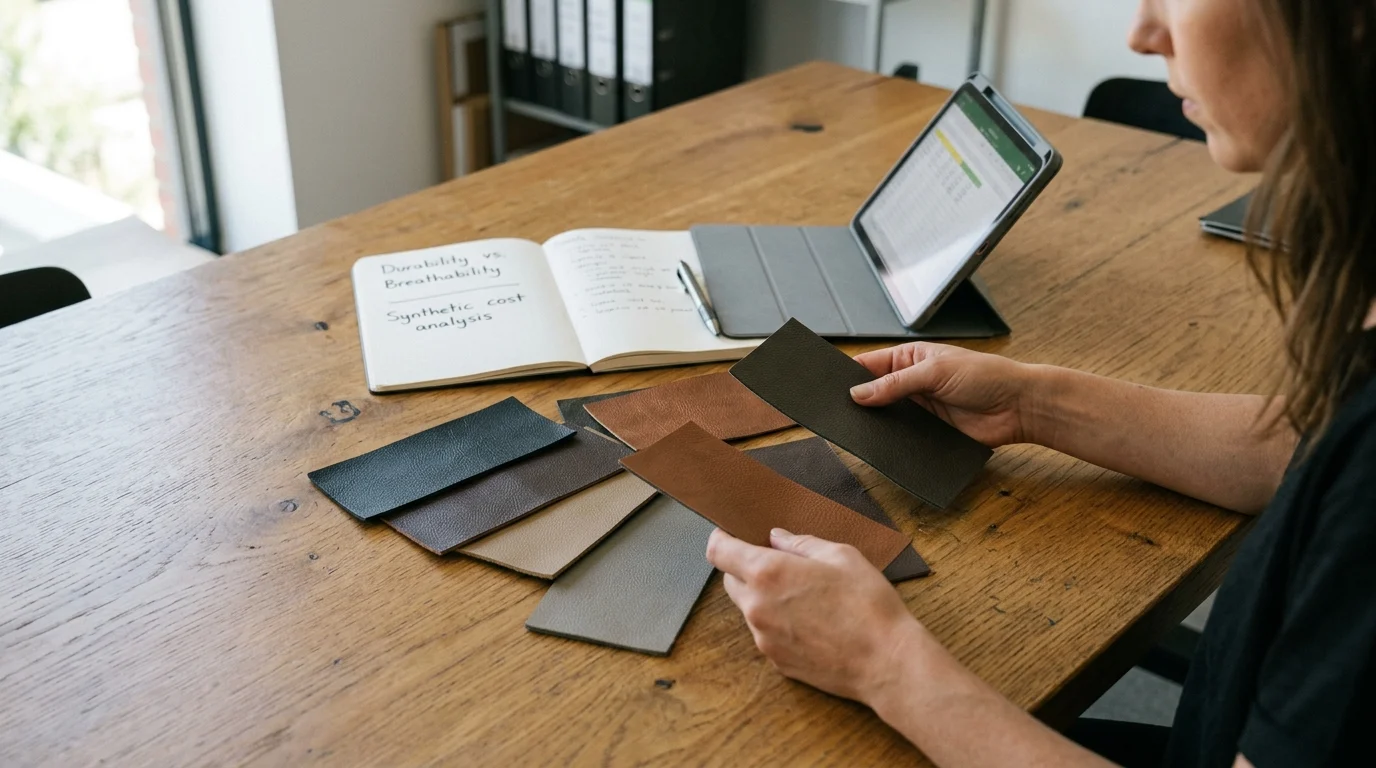
Determining whether artificial leather or real leather is the superior choice requires abandoning a one-size-fits-all approach. Procurement and design teams must align the material’s physical and economic profile with the specific demands of the target consumer and the product’s intended lifecycle.
What decision process helps match material to use case
A robust decision process utilizes a matrix of technical, commercial, and brand-alignment criteria. Engineers must first define the non-negotiable physical specifications, such as a target weight limit (e.g., keeping aviation seating materials below 450 grams per square meter to reduce fuel consumption) or specific fire retardancy ratings (like CAL 117 or FMVSS 302). Next, commercial teams evaluate the target retail price and calculate the maximum allowable material cost per unit, factoring in the 20% to 30% yield advantage of synthetic rolls. Finally, brand managers must assess consumer expectations regarding sustainability narratives—whether the target demographic values the biodegradability and natural origin of real leather or prefers the cruelty-free, vegan positioning of synthetic alternatives.
When is artificial leather the better choice and when is real leather better
Real leather remains the undisputed better choice for heritage luxury goods, premium footwear, and executive furniture where a retail price point exceeding $1,000 easily absorbs the higher material and labor costs. In these applications, the material’s ability to develop a unique patina and its unmatched tactile richness justify the investment. Conversely, artificial leather is the superior choice for high-volume consumer goods, performance athletic wear, and marine or healthcare upholstery. In environments subjected to constant moisture, harsh hospital-grade disinfectants (such as 10% bleach solutions), or where strict weight reductions are mandated, the engineered uniformity, continuous yield, and targeted chemical resistance of modern synthetic leathers provide a distinct operational advantage.
Key Takeaways
- The most important conclusions and rationale for artificial leather
- Specs, compliance, and risk checks worth validating before you commit
- Practical next steps and caveats readers can apply immediately
Frequently Asked Questions
What is the main advantage of artificial leather over real leather?
Artificial leather offers more consistent quality, lower waste, and easier automated cutting from rolls, which usually reduces total production cost.
Is PU leather better than PVC leather?
For most products, yes. PU is softer and more breathable, while PVC is tougher and more water-resistant but usually less comfortable.
Which artificial leather is closest to real leather?
Microfiber leather is generally the closest. Its fine fiber structure and PU impregnation better mimic leather’s feel, strength, and appearance.
How does artificial leather affect cutting yield in manufacturing?
Roll-based artificial leather typically achieves over 90% cutting yield, while real leather often stays around 65%–75% because hides are irregular.
When should buyers choose artificial leather for upholstery or footwear?
Choose it when you need stable thickness, consistent color, high yield, and scalable production for shoes, furniture, or automotive upholstery.