


Introduction
As synthetic leather moves beyond conventional PU and PVC, environmental claims are becoming harder to separate from measurable performance. Eco-certifications give brands, converters, and procurement teams a common language for assessing emissions, restricted substances, recycled or bio-based content, and responsible production practices. This article explains how international green standards apply to synthetic leather, why they matter for compliance and sourcing decisions, and what buyers should look for when evaluating certified materials in a rapidly changing global market.
How Eco-Certifications Are Reshaping Synthetic Leather Procurement
The global synthetic leather market is undergoing a structural transformation driven by stringent environmental regulations and shifting consumer expectations. Historically reliant on petroleum-derived polyurethanes (PU) and polyvinyl chloride (PVC), the industry is pivoting toward sustainable alternatives. Eco-certifications have emerged as the primary mechanism for validating these transitions, moving procurement from a cost-first model to a compliance-first paradigm.
For procurement professionals, specifying certified synthetic leather is no longer merely a marketing advantage; it is a fundamental requirement for market access. With regulatory bodies scrutinizing supply chains, manufacturers are aiming to reduce the carbon footprint of synthetic substrates by 30% to 40% compared to conventional fossil-based materials. Eco-certifications provide the standardized frameworks necessary to quantify and verify these reductions.
Why certified synthetic leather matters for brands and converters
Procuring certified synthetic leather directly mitigates supply chain risks while enabling brands to capture premium market segments. Consumer data indicates that products backed by verified sustainability credentials can command retail premiums of 15% to 25%. For converters and tier-one suppliers, utilizing certified materials is essential for passing increasingly rigorous brand audits and maintaining approved-vendor status.
Furthermore, certified materials streamline the manufacturing process by ensuring consistent chemical compliance. When converters utilize synthetic leather pre-certified for restricted substances, they significantly reduce the need for localized batch testing, thereby accelerating production timelines and lowering secondary compliance costs.
Which sustainability claims need verification before commercialization
The commercialization of sustainable synthetic leather requires rigorous validation of specific claims, particularly those related to “vegan,” “recycled,” and “bio-based” attributes. Without third-party verification, brands face substantial legal and reputational risks. The European Union’s Green Claims Directive, for example, proposes penalties of up to 4% of a company’s annual turnover for unsubstantiated environmental marketing.
Before a product reaches the market, procurement teams must verify the exact composition of the substrate. Claims of “recycled content” must be backed by mass-balance calculations, while “bio-based” claims require precise carbon-14 dating to differentiate plant-derived polymers from petrochemicals. Certifications act as the definitive proof required to shield commercialized products from greenwashing accusations.
Which International Green Standards Apply to Synthetic Leather
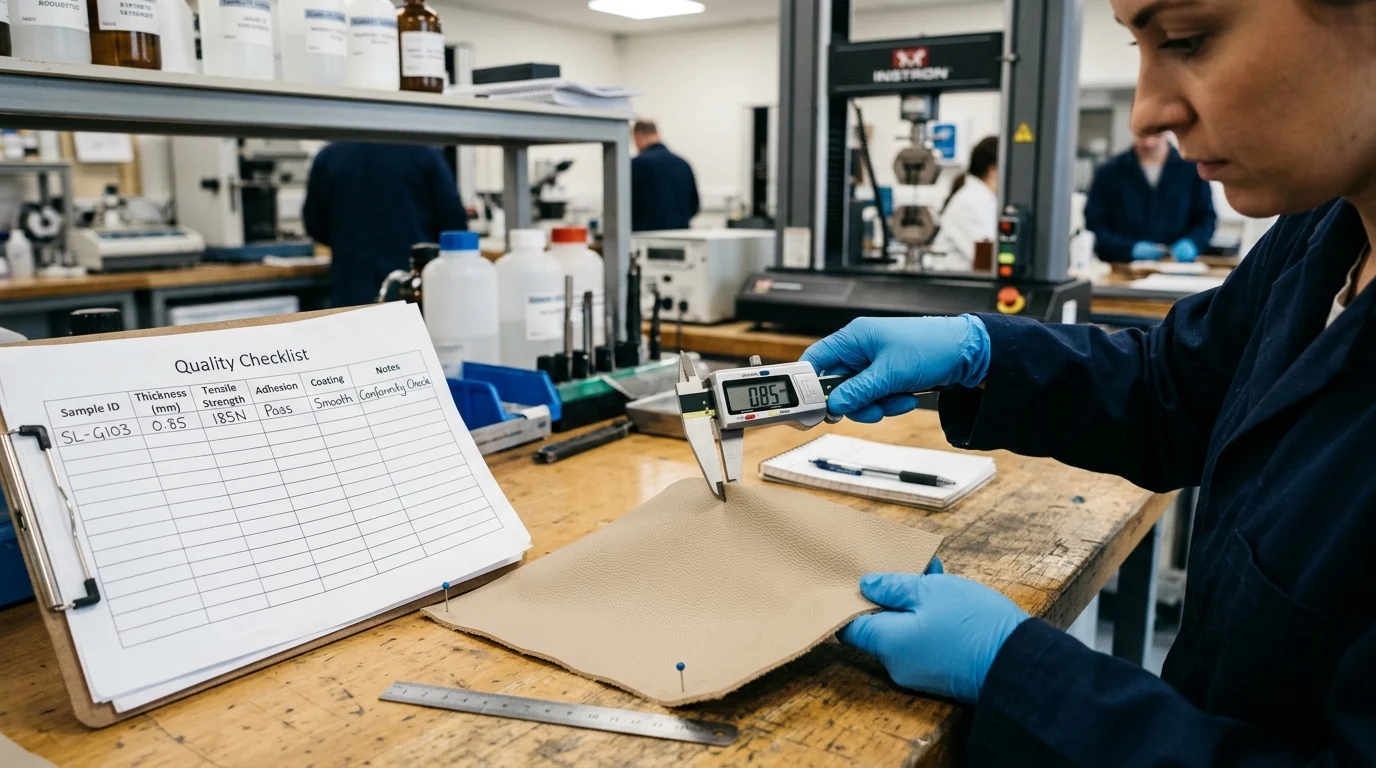
Navigating the landscape of international green standards requires a clear understanding of the distinct objectives of various certifications. Standards applicable to synthetic leather generally fall into two categories: those governing chemical management and material safety, and those tracking raw material origins and lifecycle impacts. Compliance across both categories ensures that the material is both safe for end-users and environmentally responsible in its sourcing.
How material safety, chemical management, and emissions standards apply
Chemical management standards dictate the permissible limits of hazardous substances in synthetic leather production. OEKO-TEX Standard 100 remains a critical benchmark, setting strict thresholds for heavy metals, phthalates, and formaldehyde. For instance, OEKO-TEX limits extractable lead to less than 0.2 mg/kg for materials in direct skin contact.
Additionally, the Zero Discharge of Hazardous Chemicals (ZDHC) framework focuses on the manufacturing process, ensuring that restricted substances are eliminated from wastewater. For automotive and interior applications, certifications also mandate stringent Volatile Organic Compound (VOC) testing, often requiring emissions to remain below 10 parts per million (ppm) to ensure indoor air quality.
Which lifecycle, recycled-content, and bio-based certifications matter
Lifecycle and content certifications validate the origin of the polymers and backing fabrics used in synthetic leather. The Global Recycled Standard (GRS) is the industry benchmark for post-consumer content. To achieve GRS certification, a material must contain a minimum of 20% recycled content, though 50% is required to display the GRS logo on end products.
For the emerging class of plant-based polyurethanes, the USDA Certified Biobased Product label and the TÜV AUSTRIA OK biobased certifications are paramount. These standards utilize ASTM D6866 testing to measure the exact percentage of renewable bio-carbon in the material. A high-quality bio-based synthetic leather typically demonstrates a bio-carbon content ranging from 25% to 45%, providing a verifiable metric for reducing fossil fuel dependence.
| Certification Standard | Primary Focus Area | Key Metric / Threshold Requirement |
|---|---|---|
| OEKO-TEX Standard 100 | Chemical Safety | Extractable heavy metals < 0.2 mg/kg |
| Global Recycled Standard (GRS) | Recycled Content | Minimum 20% for certification; 50% for logo |
| USDA Certified Biobased | Renewable Content | Verified % of bio-carbon via ASTM D6866 |
| ZDHC | Wastewater / Manufacturing | Zero discharge of MRSL-listed chemicals |
How Buyers Should Compare Eco-Certifications for Synthetic Leather
Comparing eco-certifications requires buyers to look beyond the labels and evaluate the underlying rigor of the auditing processes. A robust certification comparison framework allows procurement teams to align material specifications with corporate sustainability goals and regional legal requirements. The financial implications are notable, as maintaining comprehensive facility audits and product certifications can cost suppliers between $2,000 and $10,000 annually per standard, a cost inevitably factored into material pricing.
What criteria to use in a certification comparison framework
When evaluating certifications, buyers must assess the scope, traceability, and testing frequency of the standard. Scope determines whether the certification applies to a specific product batch or the entire manufacturing facility. Traceability evaluates how materials are tracked; physical segregation of sustainable inputs provides higher confidence than mass-balance accounting, though the latter is more common in complex polymer supply chains.
Renewal frequency and lab accreditation are equally critical criteria. Certifications that require annual re-auditing by independent bodies offer higher reliability than self-declared biannual assessments. Buyers should prioritize frameworks that mandate testing by ISO 17025 accredited laboratories to ensure data integrity.
How regional requirements in Europe and North America affect decisions
Geographic target markets heavily influence which certifications carry the most weight. In Europe, the REACH regulation dictates strict chemical compliance, with a current intense focus on phasing out per- and polyfluoroalkyl substances (PFAS) and dimethylformamide (DMFa). European buyers frequently require certifications that guarantee PFAS limits down to 25 parts per billion (ppb).
Conversely, North American procurement is heavily influenced by the US Toxic Substances Control Act (TSCA) and California’s Proposition 65. Prop 65 places a strong emphasis on phthalate restrictions, requiring synthetic leather to contain less than 0.1% (1,000 ppm) of specific plasticizers like DEHP and DBP to avoid mandatory consumer warning labels. Buyers must map their chosen eco-certifications against these regional legal thresholds to prevent border rejections.
| Region | Primary Regulation | High-Priority Target Chemicals | Strict Compliance Limit |
|---|---|---|---|
| Europe | EU REACH | PFAS, DMFa | PFAS < 25 ppb |
| North America | CA Prop 65 / TSCA | Phthalates (DEHP, DBP), Lead | Phthalates < 0.1% (1,000 ppm) |
| Global | ZDHC MRSL | Solvents, Heavy Metals | Wastewater compliance based on MRSL |
How Companies Can Verify Certified Synthetic Leather
Possessing an eco-certification logo does not inherently guarantee compliance at the batch level. Companies must implement rigorous verification protocols to ensure that the synthetic leather arriving at their facilities matches the certified specifications. Effective verification reduces the risk of greenwashing, prevents the integration of non-compliant materials, and protects the brand from costly recalls.
How to review documentation, test reports, and chain-of-custody evidence
The foundation of verification lies in cross-referencing Scope Certificates (SCs) and Transaction Certificates (TCs). An SC proves a supplier is authorized to produce certified goods, while a TC proves that a specific shipment contains certified material. Procurement teams must ensure TCs are issued by the certifying body, not generated internally by the supplier.
Test reports must also be scrutinized. Buyers should reject chemical testing reports that are older than 12 months. Furthermore, utilizing digital traceability databases, such as the Textile Exchange’s public registry, allows buyers to input certificate numbers and instantly verify their validity, drastically reducing the risk of document forgery.
Which supplier questions reduce greenwashing and compliance risk
To further mitigate compliance risks, buyers must ask pointed questions during supplier onboarding. Inquiring about the specific solvent recovery systems used in production is highly revealing; top-tier suppliers of waterborne or solvent-free PU leather should demonstrate DMFa recovery rates exceeding 99% or prove entirely solvent-free processes.
Additionally, buyers should question the origin of the backing textiles. If a supplier claims a GRS-certified synthetic leather, the buyer must ask whether the 50% recycled content applies to the entire composite material or only the polyester backing. Clarifying these technical details upfront eliminates ambiguities that often lead to greenwashing accusations post-production.
How to Choose the Right Eco-Certification Strategy
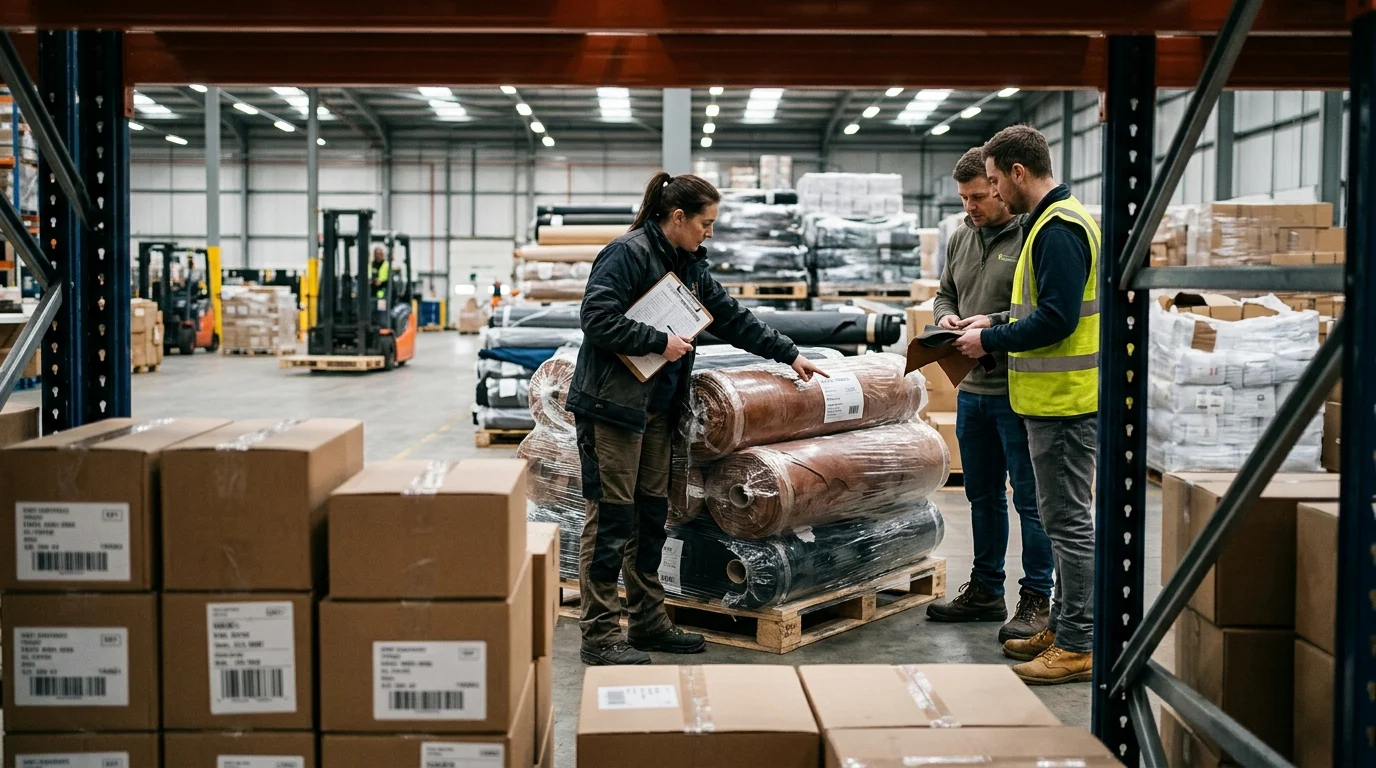
Developing an eco-certification strategy for synthetic leather is not a one-size-fits-all endeavor. Procurement leaders must tailor their approach based on the specific demands of the end product, balancing the strict technical requirements of different industries with the realities of supply chain economics. Certified materials often introduce new constraints, such as higher Minimum Order Quantities (MOQs) ranging from 1,000 to 3,000 meters, compared to the standard 500 meters for conventional PU.
Which certification strategy fits footwear, automotive, and furniture applications
In the footwear sector, durability and consumer-facing sustainability are paramount. Strategies here typically prioritize GRS and Vegan certifications, alongside performance testing ensuring the material can withstand over 50,000 Martindale abrasion cycles. For automotive applications, the strategy shifts entirely toward chemical safety and emissions; certifications like ISO 14001 and compliance with VDA 278 for low VOCs take precedence over recycled content.
The furniture and upholstery industry requires a hybrid approach. Eco-certifications in this space must align with stringent flame retardant standards without relying on hazardous polybrominated diphenyl ethers (PBDEs). OEKO-TEX Standard 100 is often the baseline strategy for furniture, ensuring both chemical safety for prolonged human contact and structural integrity.
How to balance cost, performance, market access, and brand risk
Adopting certified synthetic leather inherently impacts profit margins, typically introducing a cost premium of 10% to 30% over conventional alternatives. Procurement teams must balance this upfront cost against the long-term value of guaranteed market access and the mitigation of brand risk. Failing to secure the right certifications can result in shipment impoundments or millions of dollars in regulatory fines.
Ultimately, the right strategy treats eco-certifications not as an added expense, but as a proactive risk management tool. By aligning the chosen certifications with regional regulations, end-use performance metrics, and target consumer values, companies can build a resilient, future-proof supply chain that meets the highest international green standards.
Key Takeaways
- The most important conclusions and rationale for Synthetic Leather
- Specs, compliance, and risk checks worth validating before you commit
- Practical next steps and caveats readers can apply immediately
Frequently Asked Questions
Which eco-certifications matter most for synthetic leather procurement?
Focus on OEKO-TEX Standard 100 for chemical safety, ZDHC for process control, GRS for recycled content, and USDA or TÜV OK biobased for bio-based claims.
How can buyers verify recycled or bio-based synthetic leather claims?
Ask for valid certificates, scope documents, and recent test reports such as ASTM D6866 for bio-based content or GRS chain-of-custody records for recycled inputs.
Why are certifications important for footwear, automotive, and furniture applications?
They reduce compliance risk, support brand audits, and help meet chemical and VOC requirements that are critical for skin-contact, interior, and high-volume consumer products.
Can HAOHAO support certified synthetic leather development at scale?
Yes. With 3 specialized factories, 50 million meters annual capacity, and a 60+ member service team, HAOHAO supports scalable R&D-to-production programs.
What should B2B buyers request before approving a certified material supplier?
Request certification copies, test reports, restricted-substance compliance data, production traceability, and sample validation to confirm the material matches your target application.