
Why Suede Microfiber Matters in B2B Sourcing
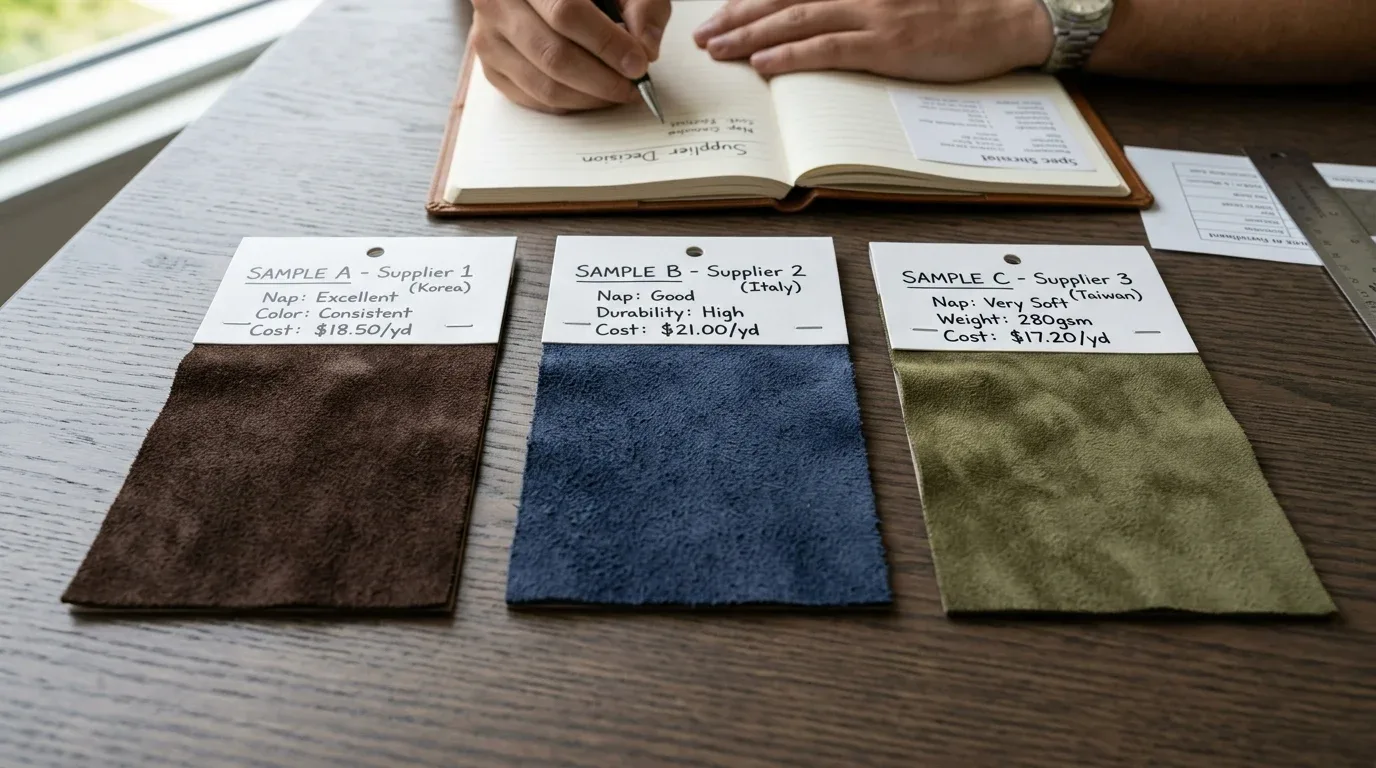
Suede microfiber has transformed B2B material sourcing, offering a synthetic alternative that replicates the tactile luxury of natural suede without the associated supply chain volatility. Procurement teams increasingly rely on this advanced textile to balance premium product positioning with predictable manufacturing economics.
As global demand for sustainable and high-performance materials accelerates, understanding the engineering behind suede microfiber enables buyers to make strategic sourcing decisions that directly impact product durability and profitability.
Impact on margin and product differentiation
Transitioning to suede microfiber dramatically shifts margin structures for high-volume manufacturers. Natural suede suffers from irregular hide shapes, scarring, and natural defects, resulting in a cutting yield of roughly 70% to 80%. In contrast, suede microfiber is supplied in continuous rolls—typically 1.37 meters (54 inches) wide—enabling a 99% to 100% cutting yield.
This geometric efficiency, combined with raw material costs that are often 30% to 50% lower than top-grain animal suede, provides a substantial margin buffer. Manufacturers can scale production rapidly while maintaining a premium retail price point, leveraging the material’s uniform consistency to eliminate the manual sorting and grading labor required for genuine leather.
Key end-use industries and applications
The material’s versatility drives adoption across highly regulated and performance-heavy sectors. In automotive interiors, it is heavily specified for seating, door panels, and headliners due to its superior UV resistance and high abrasion tolerance, frequently exceeding 50,000 Martindale rubs without pilling or degradation.
The footwear and upholstery industries utilize it for its breathability and lightweight nature, allowing for complex stitching and lasting. Additionally, luxury packaging buyers frequently select ultra-thin 0.4mm to 0.6mm variants to line premium presentation boxes, ensuring scratch-free protection for high-end electronics, jewelry, and cosmetics.
How Suede Microfiber Is Made
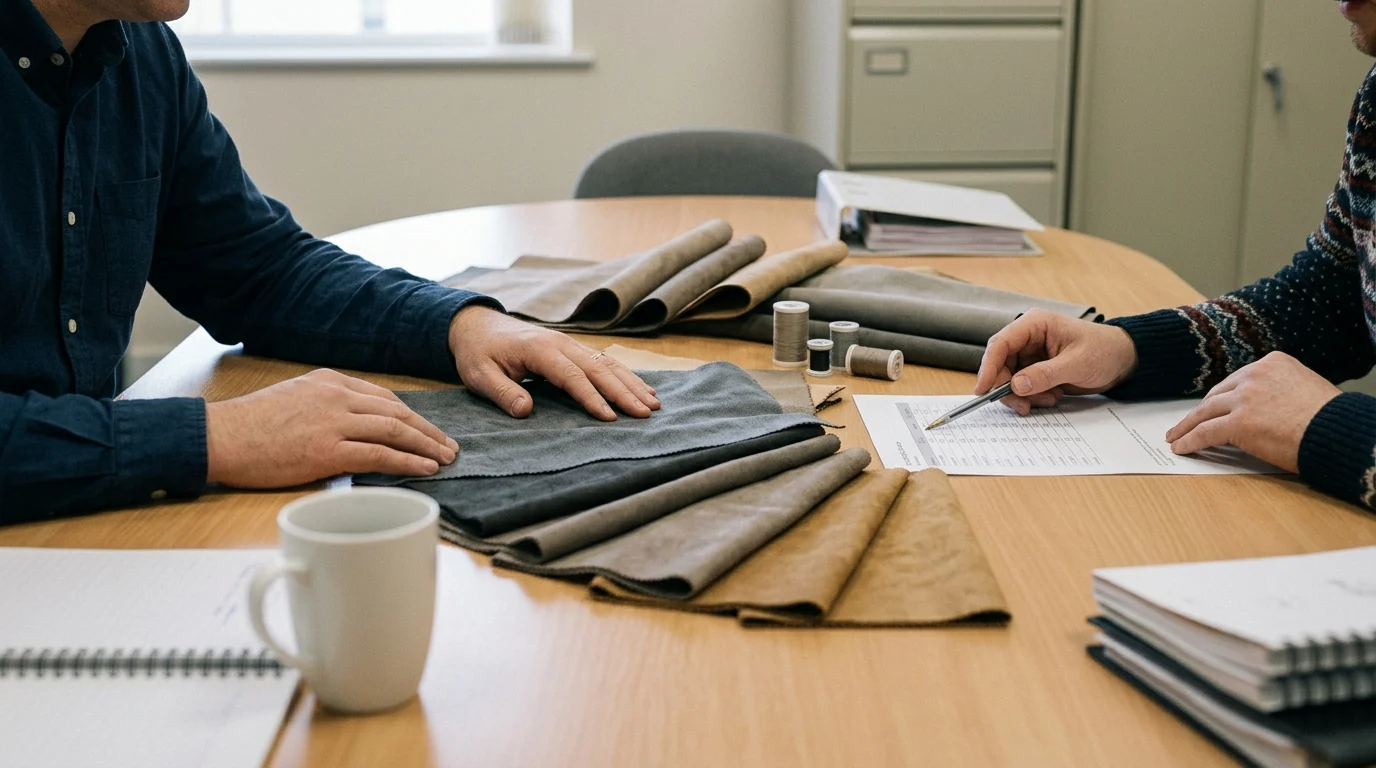
Achieving the signature plush nap and structural integrity of suede microfiber requires a sophisticated, multi-stage manufacturing process. Unlike basic extruded synthetics, this material undergoes complex chemical and mechanical transformations to mimic the three-dimensional collagen fiber bundle structure of natural leather.
Raw materials and base construction
Production begins with the extrusion of “sea-island” conjugate fibers. Manufacturers spin two distinct polymers together—typically 65% polyester (the “islands”) and 35% polystyrene or polyethylene (the “sea”). Once these fibers are formed into a non-woven 3D web via extensive needle-punching, the fabric undergoes a highly controlled solvent extraction process.
The “sea” polymer is dissolved away, leaving behind a matrix of ultra-fine polyester filaments that often measure between 0.001 and 0.0001 denier. This microscopic fineness is the fundamental secret behind the material’s exceptionally soft, luxurious hand feel, creating a surface area exponentially larger than standard synthetic fibers.
Finishing steps that affect performance
Following fiber extraction, the porous non-woven base is impregnated with high-grade polyurethane (PU) resin. This critical step acts as a binding matrix, locking the microfibers together to provide exceptional tear strength and dimensional stability. The material is then processed through a sanding or buffing machine.
High-speed abrasive rollers carefully break the surface loops of the fibers, raising a uniform, dense nap. Finally, the fabric undergoes high-temperature dyeing—often at 130°C for polyester-based microfibers—ensuring deep color penetration, excellent colorfastness, and resistance to fading under UV exposure.
Production variables buyers should review
Sourcing professionals must evaluate several production variables that dictate final quality and application suitability. Needle-punching density is a critical metric; a density of 3,000 to 4,000 needles per square centimeter ensures a tightly interlocked base, preventing delamination under stress.
Resin quality and formulation also play a major role; the ratio of PU to microfiber (typically ranging from 30:70 to 40:60) directly impacts the material’s breathability, drape, and stiffness. Buyers specifying for heavy-duty applications should verify these ratios and request thickness tolerances within ±0.05mm of their target specification, which usually ranges from a lightweight 0.5mm for apparel to a robust 1.8mm for safety footwear.
How Suede Microfiber Compares with Alternatives
Selecting the correct substrate requires a clinical comparison of physical properties, lifecycle costs, and production efficiencies. Suede microfiber competes directly with genuine animal suede, traditional woven synthetics, and standard PU-coated fabrics, but offers a distinct set of physical advantages.
Comparison with genuine suede, PU, and other synthetics
Suede microfiber bridges the gap between the premium feel of natural hides and the mass-production efficiency of synthetics. Standard PU leather relies on a surface coating over a woven or knitted backing, which can peel, flake, or crack over time. Suede microfiber, however, features a homogeneous 3D structure that inherently resists delamination.
| Material Type | Tear Strength (Avg) | Breathability | Cutting Yield | Typical Cost Index |
|---|---|---|---|---|
| Genuine Suede | High (40N+) | Excellent | 70% – 80% | High ($$$) |
| Standard PU Suede | Low (15N – 20N) | Poor | 99% | Low ($) |
| Suede Microfiber | High (35N – 50N) | Good | 99% | Medium ($$) |
When to choose suede microfiber over alternatives
Procurement teams should choose suede microfiber over alternatives when consistent quality, high-volume scalability, and precise engineering are non-negotiable. It is the optimal choice for vegan footwear and automotive sectors where brands require cruelty-free marketing claims without sacrificing durability or tactile luxury.
Furthermore, in applications requiring strict weight controls—such as aviation interiors, performance athletic shoes, or lightweight luggage—microfiber offers a weight reduction of up to 30% compared to genuine leather of the exact same thickness. This provides a significant performance advantage while maintaining the structural integrity required for heavy-duty stitching and lasting.
What Buyers Should Check When Sourcing
Successfully sourcing suede microfiber demands rigorous vetting of technical specifications and factory capabilities. Buyers must establish clear communication regarding performance standards and commercial terms to prevent costly supply chain disruptions and ensure end-product compliance.
Technical specs, test standards, and compliance
Technical specifications must be formalized in the purchase contract to avoid ambiguity. Crucial metrics include colorfastness to rubbing, which typically demands Grade 4 to 5 on the standard grey scale for both wet and dry tests, and tear strength exceeding 30N for upholstery and footwear grades.
Additionally, compliance with international chemical standards is mandatory for global distribution. Buyers must ensure the material passes REACH and RoHS testing protocols, guaranteeing the absence of restricted substances such as azo dyes, heavy metals, and harmful phthalates, which are strictly monitored at customs borders.
MOQ, customization, and color consistency
Commercial terms such as Minimum Order Quantities (MOQs) and color consistency thresholds dictate a buyer’s inventory agility. Industry-standard MOQs for custom-dyed suede microfiber generally range from 500 to 1,000 meters per color, though some specialized suppliers may require higher minimums for unique resin formulations.
For custom shades, buyers should expect a lab-dip lead time of 5 to 7 days. To maintain brand integrity across multiple production runs over several years, procurement teams must enforce strict color consistency tolerances in their vendor agreements, typically stipulating a Delta E (ΔE) value of less than 1.0 under standard D65 illumination.
Factory audits, sampling, and quality control
Thorough factory audits mitigate systemic quality risks. Evaluating a supplier’s Quality Control (QC) infrastructure ensures they can meet technical demands consistently over long-term contracts.
| Audit Category | Key Verification Points | Acceptable Standard |
|---|---|---|
| Certifications | Quality and Environmental management | ISO 9001, GRS (for recycled variants) |
| Incoming QC | Testing of raw PU resins and base fibers | 100% batch testing logged |
| In-line Inspection | Thickness monitoring, defect flagging | Automated laser measurement, ±0.05mm tolerance |
| Outgoing QA | Roll-by-roll visual and physical testing | 4-Point inspection system utilized |
How to Make the Final Supplier Decision
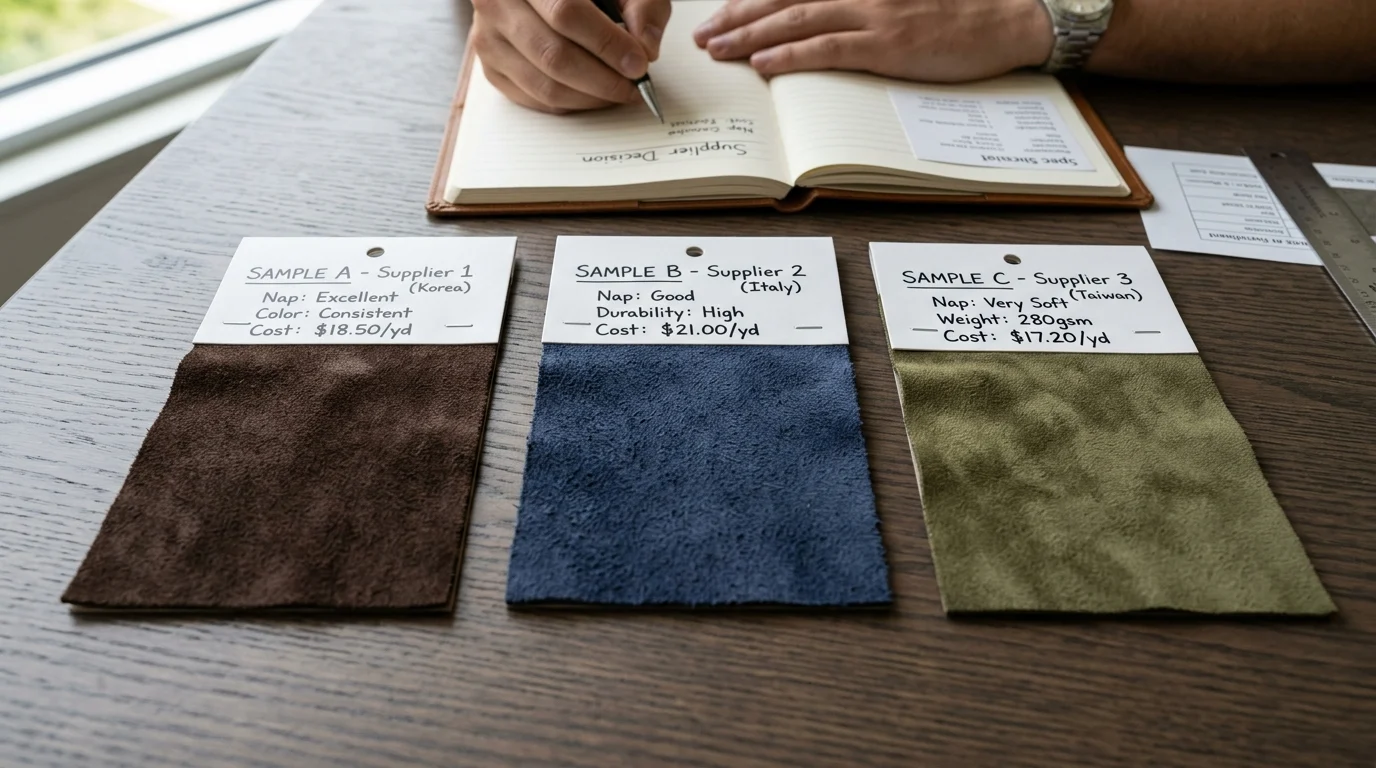
The final supplier decision hinges on balancing technical capability with long-term commercial reliability. Partnering with established synthetic leather manufacturers ensures access to advanced R&D, stable pricing matrices, and consistent lead times required to support global manufacturing footprints.
Supplier selection criteria
Primary selection criteria should focus on production capacity, technological innovation, and financial stability. Suppliers with over 20 years of expertise, such as Ningbo HaoHao Microfiber Co., Ltd., demonstrate the resilience and process mastery required for complex global B2B supply chains.
Buyers should prioritize partners offering comprehensive solutions from concept to delivery, verifying their ability to scale production while maintaining standard bulk lead times of 15 to 25 days. Responsiveness to custom development—such as applying specialized water-repellent (DWR), anti-microbial, or flame-retardant treatments—is also a critical differentiator when selecting a primary supply partner.
Approval framework for sourcing decisions
To mitigate risk, procurement teams must implement a structured, multi-stage approval framework before committing to high-volume bulk orders. This protocol begins with reviewing A4-sized swatches for initial tactile, visual, and thickness assessment, followed by lab dips to confirm precise color accuracy.
Next, a pilot run of 50 to 100 meters should be commissioned to validate the material’s performance on the buyer’s actual cutting, skiving, and stitching machinery. Only after the pilot run meets all mechanical, aesthetic, and yield benchmarks should the final bulk purchase order be released, ensuring a seamless transition into mass production and safeguarding the brand’s reputation.
Key Takeaways
- Wholesale sourcing and supply-chain implications for Suede Microfiber
- Specifications, compliance, and commercial terms buyers should validate
- Actionable recommendations for distributors and procurement teams
Frequently Asked Questions
What gives suede microfiber its soft, luxurious feel?
Its feel comes from ultra-fine “sea-island” fibers. After the removable polymer is extracted, dense microfilaments remain and are buffed to raise a uniform nap.
How is suede microfiber different from natural suede for B2B sourcing?
It offers roll-based consistency, higher cutting yield, and fewer defects than animal hides. That helps manufacturers control cost, quality, and production planning.
What specifications should buyers check before ordering suede microfiber?
Review thickness tolerance, abrasion performance, PU-to-fiber ratio, colorfastness, and backing structure. Match these to the end use, such as footwear, upholstery, or packaging.
Can HAOHAO support custom suede microfiber development at scale?
Yes. With 3 specialized factories, 20+ years of experience, and 50 million meters annual capacity, HAOHAO supports R&D, sampling, and mass production for B2B programs.
Which industries commonly use suede microfiber?
It is widely used in footwear, garments, gloves, sofas, automotive interiors, luggage, sports goods, and premium packaging where softness, durability, and consistent supply matter.