
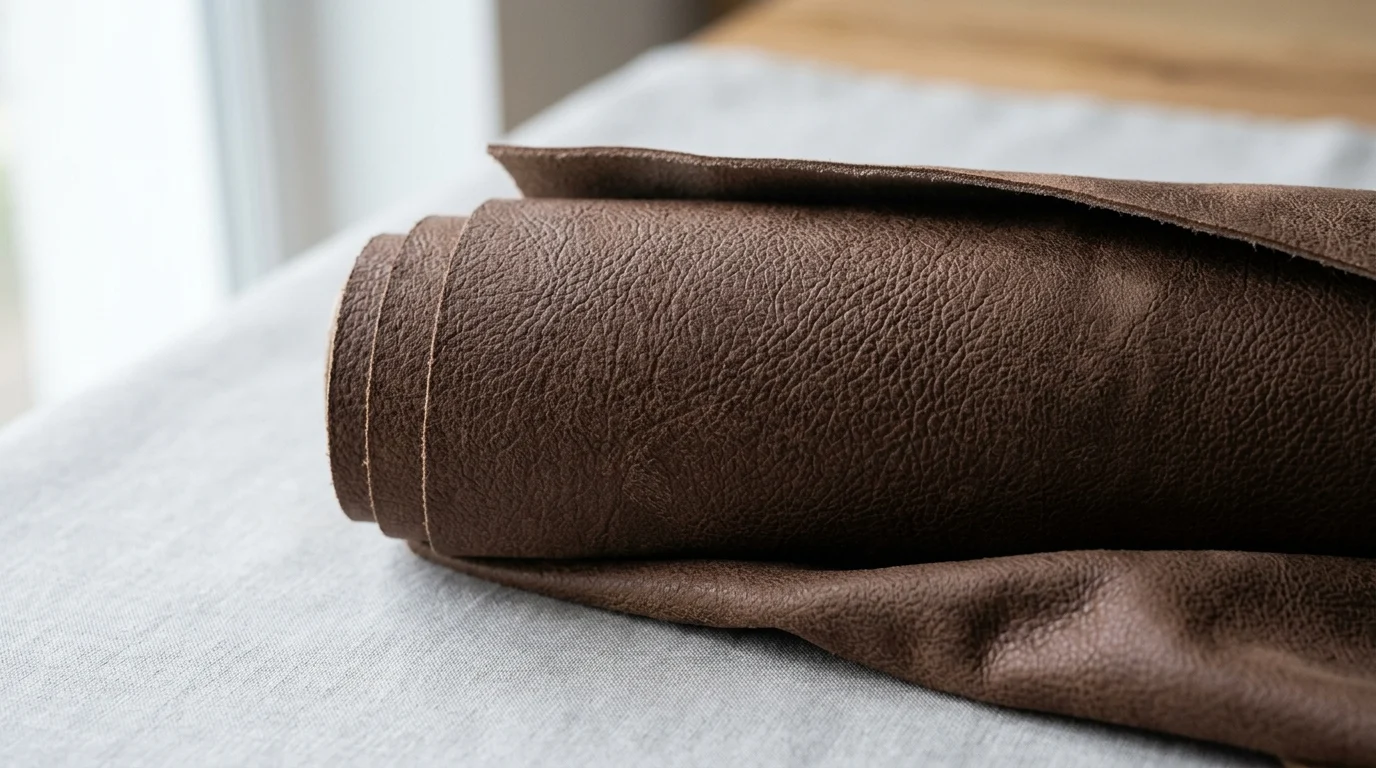
Introduction
In safety footwear, comfort is no longer a secondary feature; heat buildup, trapped moisture, and excess weight directly affect worker endurance and compliance on the job. Microfiber leather has gained attention because it addresses these issues at the material level, combining a lighter structure with better moisture management than many traditional uppers. This article explains how microfiber leather supports breathability, reduces fatigue, and helps manufacturers balance protection with day-long wearability. It also outlines why these performance benefits matter in modern safety standards, giving you a clear basis for understanding its role in current safety shoe design.
Why Microfiber Leather Is Strategic for Safety Footwear
The safety footwear industry is undergoing a structural shift in material sourcing, driven by the dual mandates of worker ergonomics and stringent occupational safety regulations. For decades, manufacturers relied heavily on traditional split leather or basic polyurethane (PU) synthetics to construct shoe uppers. However, microfiber leather has emerged as a strategic alternative that bridges the performance gap between premium full-grain leather and entry-level synthetics.
By replicating the complex bundle structure of natural collagen fibers using ultra-fine synthetic filaments, microfiber leather offers a unique combination of structural integrity and breathability. This engineered substrate allows footwear designers to reduce overall boot weight by 15% to 20% compared to traditional bovine leather, directly addressing worker fatigue without compromising the protective barrier required in industrial environments.
How comfort and compliance needs are changing material choices
Occupational safety footwear is no longer evaluated solely on impact resistance or puncture protection. Ergonomics and physiological comfort have become critical compliance factors, particularly under updated frameworks like EN ISO 20345:2022. Modern safety standards place increased emphasis on water vapor permeability (WVP) and thermal regulation, recognizing that excessive heat and moisture accumulation lead to blisters, dermal infections, and decreased worker focus.
Microfiber leather addresses these exact physiological requirements. Unlike standard PVC or basic PU synthetics, which feature closed-cell structures that trap heat, microfiber substrates possess a micro-porous network. This allows manufacturers to meet and exceed the WVP threshold of 0.8 mg/(cm²·h) mandated by international safety standards, ensuring that sweat vapor can escape the microclimate of the shoe even during high-intensity labor.
Where microfiber leather fits across premium and mid-market products
In the footwear market hierarchy, microfiber leather strategically occupies the space between premium full-grain leather and budget-oriented split leather or standard synthetics. For mid-market safety shoes, it offers an immediate upgrade in perceived value and durability without the highly volatile pricing associated with the global hide market.
Economically, high-grade safety shoe microfiber typically costs between $4.50 and $7.50 per linear meter, depending on thickness (usually ranging from 1.4mm to 2.0mm) and specific surface treatments. While the per-meter cost may appear higher than lower-tier split leathers, manufacturers offset this through manufacturing efficiency. Microfiber leather provides a 100% cutting yield, eliminating the 25% to 30% waste typically generated by the irregular shapes and natural defects of genuine animal hides.
Performance Benefits of Microfiber Leather
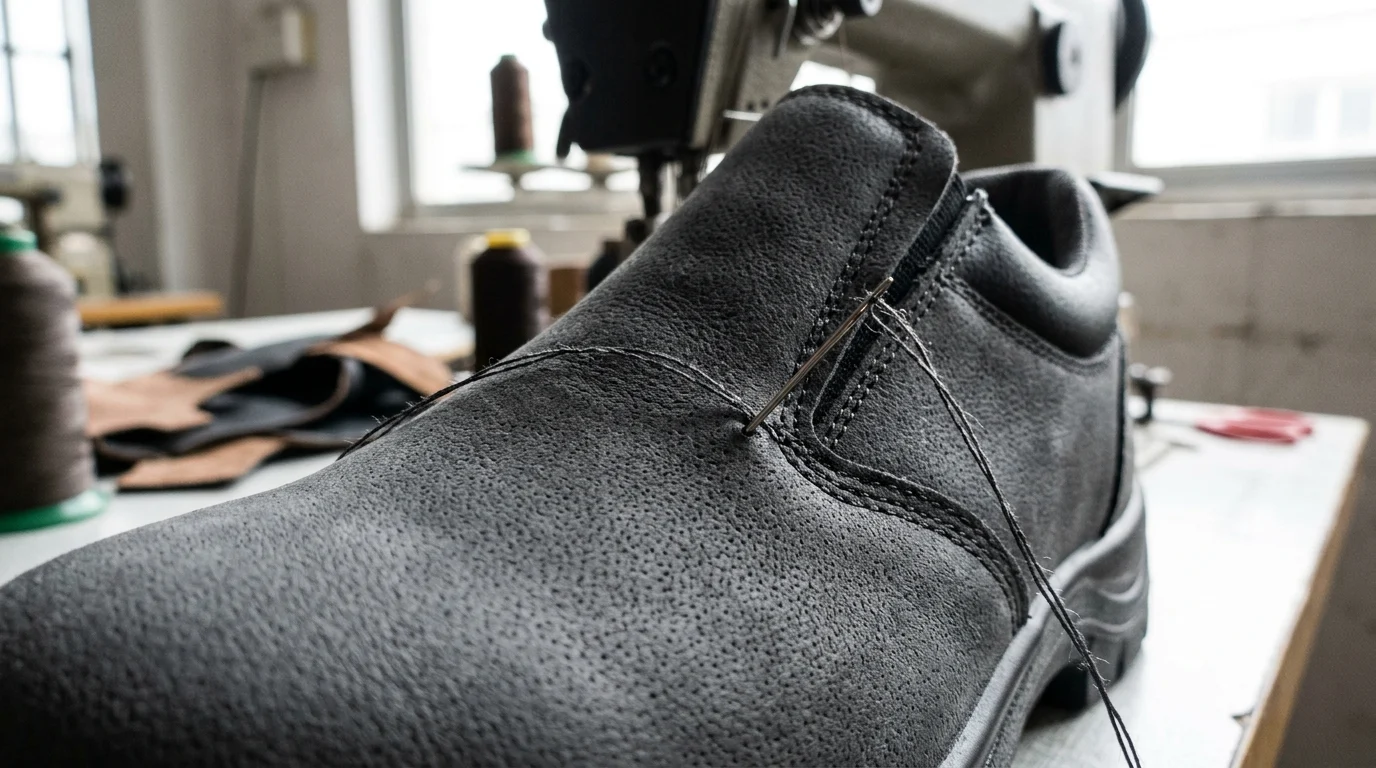
The exceptional performance of microfiber leather in safety footwear is rooted in its bionic architecture. The material is manufactured by densely packing “sea-island” microfibers—often measuring less than 0.01 denier—and impregnating them with high-performance polyurethane resins. This three-dimensional matrix mimics the dermal layer of natural leather but allows for precise engineering of physical properties.
How fiber structure and moisture management improve wear comfort
Wear comfort in safety boots is largely dictated by moisture management. The human foot can produce up to 200 milliliters of sweat during an active eight-hour shift. If the upper material cannot facilitate the transmission of this moisture, the internal temperature of the shoe rises, leading to severe discomfort and compromised skin integrity.
The needle-punched nonwoven structure of microfiber leather creates millions of microscopic ventilation channels. When engineered correctly, the polyurethane coating applied to the surface is also micro-porous. This dual-layer breathability ensures that liquid water from the outside is repelled (crucial for S2 and S3 safety ratings), while water vapor from the inside is efficiently expelled. Advanced microfiber grades routinely achieve WVP rates between 2.0 and 3.5 mg/(cm²·h), significantly outperforming standard synthetics.
Why softness, flex resistance, and low weight matter in use
Industrial workers require footwear that flexes seamlessly with the biomechanics of the foot, particularly in roles requiring frequent kneeling or climbing. Microfiber leather offers superior softness and requires virtually zero “break-in” period compared to heavy-duty bovine leather.
Flex resistance is a paramount durability metric. The material’s engineered matrix prevents the micro-cracking often seen in lower-grade PU after repeated bending. Furthermore, the low specific gravity of microfiber leather (typically 0.5 to 0.6 g/cm³ compared to genuine leather’s 0.8 to 1.0 g/cm³) contributes to a lighter shoe. Reducing the weight of a safety boot by just 100 grams per foot can save a worker from lifting hundreds of cumulative kilograms over a single shift, drastically reducing lower limb fatigue.
Which specifications and test results prove performance
Procurement teams rely on standardized laboratory testing to validate the performance claims of microfiber leather. Key metrics include tear strength, flexing endurance, and abrasion resistance, all of which are critical for footwear that will be subjected to harsh industrial environments.
Under the Bally flex test (ISO 5402), high-quality microfiber leather is engineered to withstand over 150,000 continuous flexing cycles at room temperature without showing any signs of surface cracking. Even under extreme cold-weather testing (-20°C), premium grades maintain their structural integrity past 30,000 cycles, outperforming many natural leathers that can become brittle.
| Specification | Standard Requirement (EN ISO 20345) | Typical Microfiber Leather Performance |
|---|---|---|
| Tear Strength | ≥ 60 N | 120 N – 160 N |
| Water Vapor Permeability | ≥ 0.8 mg/(cm²·h) | 2.0 – 3.5 mg/(cm²·h) |
| Flexing Endurance (Dry) | 100,000 cycles | > 150,000 cycles (no cracking) |
| Abrasion Resistance | No holes before 25,600 cycles | > 50,000 cycles (Martindale) |
Microfiber Leather vs Genuine Leather and Synthetics
Selecting the optimal material for safety footwear requires an objective analysis of microfiber leather against its primary competitors: genuine animal leather and traditional synthetic alternatives (like PVC and standard PU). Each material category presents distinct advantages and limitations depending on the end-use environment.
Which criteria matter most in a material comparison
When comparing upper materials, footwear engineers prioritize dimensional stability, weight, breathability, and chemical resistance. Genuine leather is historically favored for its natural flame retardance and robust puncture resistance. However, it suffers from inconsistencies in thickness, variable grain quality, and susceptibility to moisture absorption.
Standard synthetics excel in cost reduction and absolute water resistance but fail drastically in breathability and long-term durability. Microfiber leather serves as the engineered middle ground, offering the dimensional uniformity and water resistance of synthetics alongside the breathability and tear strength of natural leather.
What trade-offs exist in durability, hydrolysis resistance, and climate performance
The most significant trade-off involves extreme temperature and chemical exposure. Genuine full-grain leather remains superior for foundry workers or welders, as it can withstand direct sparks and extreme heat without melting. Microfiber leather, being polyurethane-based, has a lower melting point and is generally unsuitable for heavy metallurgy applications.
However, in environments requiring hydrolysis resistance and chemical stability—such as petrochemical plants, food processing facilities, or agriculture—microfiber leather frequently outperforms natural leather. Premium microfiber treated for hydrolysis resistance can pass the rigorous 4-to-5-week “jungle test” (high heat and 95% humidity) without the PU layer degrading. Natural leather in these same conditions is prone to rot, mold, and severe degradation.
How material needs vary by shoe component
Safety shoe construction utilizes different material thicknesses and properties depending on the specific component. For the main upper, manufacturers typically specify microfiber leather with a thickness of 1.8mm to 2.2mm to ensure adequate physical protection and structural support for the steel or composite toe cap.
For shoe linings and collars, comfort and moisture wicking are prioritized over absolute tear strength. Here, a thinner, highly porous microfiber (0.8mm to 1.2mm) is utilized. This thinner profile provides a soft, cushioned feel against the ankle and heel, significantly reducing the friction that causes blisters during long shifts.
| Material Type | Cutting Yield | Breathability (WVP) | Hydrolysis Resistance | Flame / Spark Resistance |
|---|---|---|---|---|
| Genuine Leather | 70% – 75% | High | Low to Moderate | Excellent |
| Standard PU Synthetic | 100% | Very Low | Low | Poor |
| Microfiber Leather | 100% | High | High (if engineered) | Moderate to Poor |
Sourcing, Manufacturing, and Compliance Factors
Transitioning a footwear supply chain to microfiber leather requires careful vetting of manufacturing processes and compliance standards. Because “microfiber” is a broad category, the specific chemistry, backing construction, and surface treatments applied by the supplier dictate whether the material is suitable for heavy-duty safety applications or merely cosmetic fashion footwear.
How coating, backing, and thickness affect quality
The foundational quality of microfiber leather depends heavily on its base matrix. High-end safety shoe microfiber utilizes a densely entangled nylon (polyamide) nonwoven base, which provides superior tensile strength compared to cheaper polyester alternatives. The thickness of this base must be precisely calibrated; a 2.0mm thickness is the industry standard for S3-rated safety boots.
Coating technology also plays a crucial role. Coagulation processing creates a more breathable and leather-like cellular structure within the PU layer, whereas simple transfer coating can result in a rigid, less breathable surface. Buyers must specify the required surface finish—such as smooth, embossed, or nubuck—ensuring that the topcoat maintains high abrasion resistance without sealing off the micro-pores necessary for moisture management.
Which certifications and restricted substance standards matter
Compliance with global restricted substance lists (RSL) is a major advantage of microfiber leather over traditional tanned hides. Genuine leather processing often relies on chromium tanning, posing the risk of hexavalent chromium (Cr VI) formation—a known carcinogen strictly regulated under REACH and EN ISO standards (limit < 3 mg/kg).
Microfiber leather is inherently free of chromium, eliminating this compliance risk entirely. Furthermore, reputable suppliers ensure their materials comply with the Oeko-Tex Standard 100 and REACH regulations, guaranteeing the absence of harmful phthalates, azo dyes, and heavy metals. This chemical safety profile is increasingly mandated by corporate procurement policies and government tenders.
What evaluation steps help buyers validate suppliers
Validating a microfiber leather supplier requires a systematic approach to quality assurance. Buyers should demand comprehensive technical data sheets (TDS) and independent laboratory test reports (such as from SATRA or SGS) confirming tear strength, WVP, and flexing endurance under ISO methodologies.
Logistical evaluation is equally important. Industrial buyers should assess the supplier’s Minimum Order Quantity (MOQ), which typically ranges from 300 to 500 meters per color or finish for custom safety grades. Furthermore, standard lead times of 15 to 25 days must be factored into production schedules. Conducting a pilot run of 50 to 100 pairs allows manufacturers to verify the material’s behavior during cutting, stitching, and lasting before committing to bulk volumes.
How to Decide When Microfiber Leather Is the Right Choice
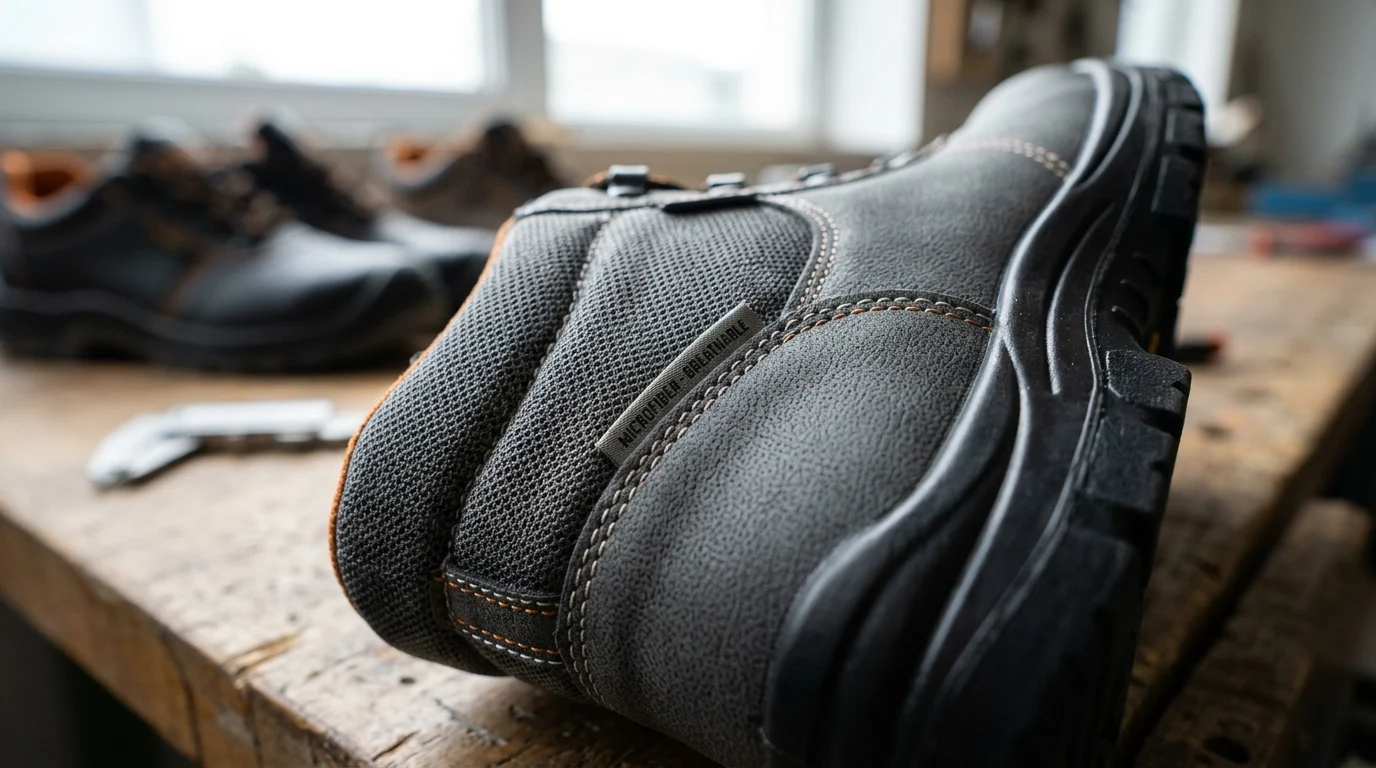
Determining whether microfiber leather is the optimal material for a specific safety footwear line requires analyzing the target end-user, the expected environmental hazards, and the overarching financial goals of the manufacturing program. It is not a universal replacement for all materials, but rather a highly specialized solution for specific market segments.
Which users, work conditions, and price points are the best fit
Microfiber leather is exceptionally well-suited for indoor industrial environments, logistics, warehousing, and light manufacturing. It is also the material of choice for cleanrooms, laboratories, and electronics manufacturing, where electrostatic discharge (ESD) properties and low-particulate shedding are required. In these environments, the lightweight nature and high breathability of microfiber directly enhance worker productivity.
From a price-point perspective, microfiber aligns best with mid-tier to premium safety footwear. While it cannot compete with the ultra-low costs of basic PVC rain boots or entry-level PU shoes, it offers a highly competitive total cost of ownership for brands looking to upgrade from split leather. It is not recommended, however, for heavy construction, welding, or foundry work where the risk of molten metal splash necessitates the thermal properties of specialized full-grain leather.
How to balance comfort, durability, compliance, and cost
The final decision rests on balancing performance requirements against production economics. Footwear brands must weigh the initial per-meter cost of microfiber leather against the operational savings generated on the factory floor. With a defect rate typically falling below 1% and a 100% cutting yield, the material waste associated with microfiber is negligible.
Ultimately, integrating microfiber leather allows brands to engineer safety shoes that meet rigorous ISO impact and durability
Key Takeaways
- The most important conclusions and rationale for microfiber leather
- Specs, compliance, and risk checks worth validating before you commit
- Practical next steps and caveats readers can apply immediately
Frequently Asked Questions
Why is microfiber leather more comfortable in safety shoes?
Its micro-porous fiber structure lets sweat vapor escape while staying soft and lightweight, reducing heat buildup, pressure, and break-in discomfort during long shifts.
How breathable is microfiber leather compared with standard PU or PVC uppers?
High-grade microfiber can reach about 2.0–3.5 mg/(cm²·h) water vapor permeability, typically much higher than closed-cell PU or PVC materials that trap heat and moisture.
Can microfiber leather help safety shoes meet EN ISO 20345 breathability needs?
Yes. Properly engineered microfiber uppers can exceed the 0.8 mg/(cm²·h) WVP benchmark while also supporting water resistance needed for many S2 and S3 designs.
Does microfiber leather reduce manufacturing waste for safety shoe brands?
Yes. Unlike natural hides with defects and irregular shapes, microfiber offers consistent rolls and near-100% cutting yield, improving material use and production planning.
Can HAOHAO support bulk microfiber leather development for safety footwear projects?
Yes. HAOHAO offers scalable R&D-to-production support with 3 specialized factories, 20+ years of expertise, and large annual capacity for reliable B2B supply.