
Introduction
Comfort in safety shoes depends as much on the upper material as on the sole or toe cap, and microfiber leather has become a practical solution for both wearability and protection. Unlike traditional leather, it is engineered to balance softness, moisture movement, and structural stability in demanding work environments. This article explains how microfiber leather improves airflow, reduces heat and sweat buildup, and supports a lighter, more flexible fit without compromising durability. It also provides the material context needed to understand why many manufacturers are shifting toward microfiber in modern safety footwear.
What Is Microfiber Leather in Safety Shoes
Microfiber leather has emerged as a cornerstone material in modern safety footwear, offering a highly engineered alternative to traditional animal hides. As the occupational footwear industry faces increasing demands for performance consistency, weight reduction, and regulatory compliance, manufacturers are heavily transitioning toward advanced synthetic substrates. Microfiber leather, structurally known as microfiber polyurethane synthetic leather, replicates the complex internal architecture of biological leather while eliminating the inconsistencies inherent to natural hides.
In the context of occupational safety, the upper material must withstand severe mechanical stress, chemical exposure, and environmental degradation. Microfiber substrates provide a uniform, defect-free canvas that meets stringent international safety standards, including the rigorous requirements of EN ISO 20345. By leveraging highly controlled manufacturing environments, material scientists can tailor the physical properties of microfiber to meet exact industrial specifications, fundamentally changing how safety shoes are constructed and evaluated.
How It Is Made
The production of microfiber leather relies on a sophisticated sea-island spinning technique. During this process, ultra-fine fibers—typically composed of polyamide (nylon) or polyester—are extruded to create microscopic filaments ranging from 0.001 to 0.01 denier. For context, these fibers are exponentially finer than a human hair.
These microfibers are needle-punched into a three-dimensional non-woven matrix, which acts as the structural foundation, mimicking the collagen fiber bundles found in bovine leather. This matrix is subsequently impregnated with high-grade polyurethane (PU) resin. The PU acts as a binder, filling the interstitial spaces while maintaining the material’s inherent flexibility. The surface can then be buffed, coated, or embossed to achieve specific textures, ranging from smooth full-grain aesthetics to rugged nubuck finishes.
Key Properties and Test Metrics
To qualify for heavy-duty safety footwear, microfiber leather must pass rigorous mechanical testing. Key performance metrics include tear strength, tensile strength, and material density. High-quality microfiber grades engineered for safety shoes typically exhibit a tear strength exceeding 120 N and a tensile strength above 1000 N, ensuring the upper will not catastrophically fail upon puncture or snagging.
Weight reduction is another critical metric. A standard microfiber sheet with a thickness of 1.6 mm to 2.0 mm weighs approximately 30% less than a comparable piece of bovine leather. This reduction in specific gravity directly translates to lower fatigue for industrial workers who spend 8 to 12 hours a day on their feet, making the material highly favorable in ergonomic assessments.
Why It Is Used in Safety Footwear
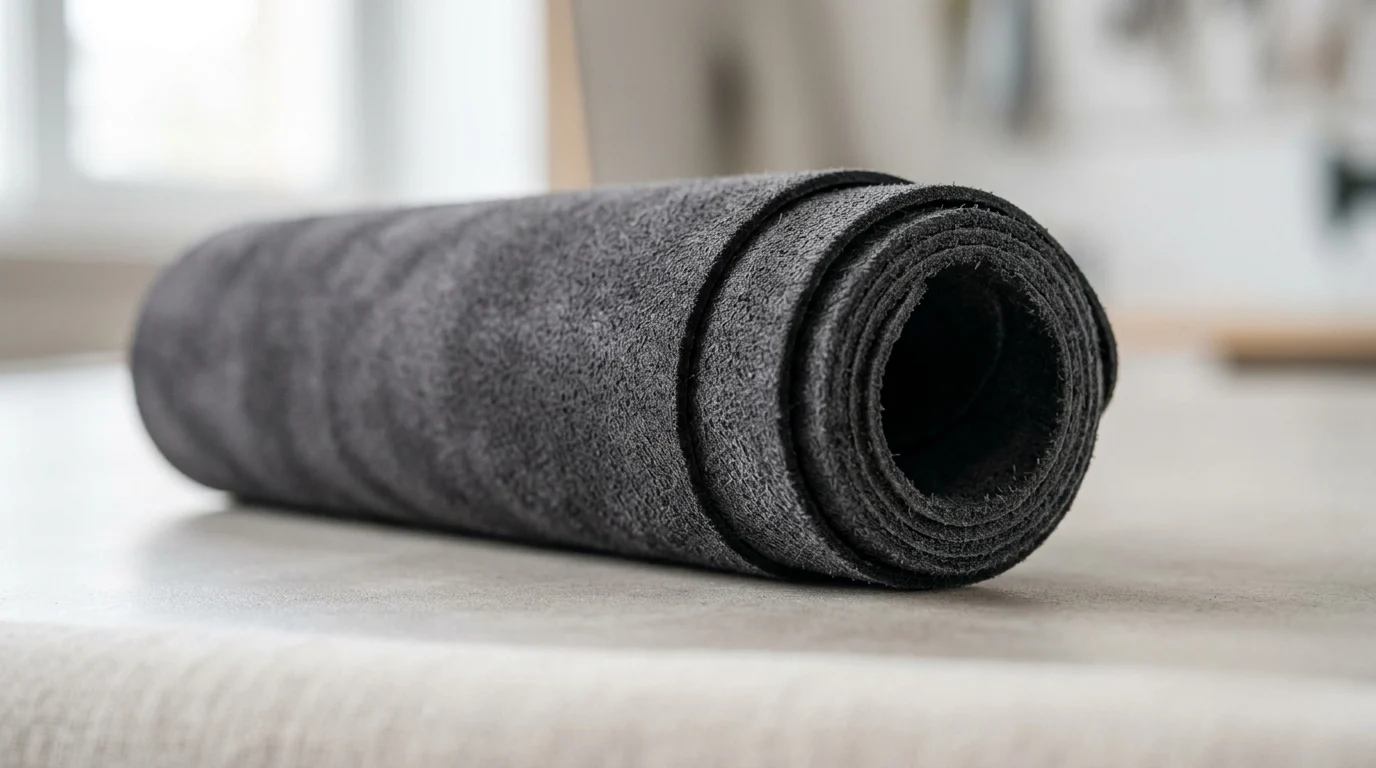
Safety footwear manufacturers favor microfiber primarily due to its predictable supply chain and dimensional stability. Unlike natural leather, which varies in thickness, contains natural defects (scars, tick marks), and requires manual sorting, microfiber leather is delivered in continuous rolls, typically standardized at 1.37 meters (54 inches) wide.
This dimensional uniformity allows factories to utilize automated CNC cutting machines with extreme precision, yielding a 15% to 20% higher cutting efficiency compared to natural hides. Furthermore, the material’s innate resistance to harsh chemicals, combined with its ability to integrate seamlessly with direct-injection polyurethane outsoles, makes it an optimal choice for mass-producing reliable, high-performance safety shoes.
How Microfiber Leather Improves Comfort and Breathability
The physiological comfort of a safety shoe is largely dictated by the upper material’s ability to manage internal microclimates and conform to the wearer’s foot dynamics. Historically, synthetic materials were notorious for trapping heat and moisture, leading to severe discomfort, blistering, and fungal conditions. However, the advanced three-dimensional matrix of microfiber leather fundamentally solves these issues, bridging the gap between synthetic durability and natural breathability.
By engineering the density of the non-woven base and precisely controlling the polyurethane coagulation process, manufacturers can create a semi-permeable membrane. This structure actively supports thermoregulation and biomechanical movement, proving crucial for workers operating in high-temperature industrial environments or performing highly active logistical tasks.
Moisture Management and Airflow
Effective moisture management relies on high water vapor permeability (WVP). Microfiber leather achieves this through its porous microscopic structure. The spaces between the ultra-fine fibers and the coagulated PU allow vaporized sweat molecules to escape, while the external surface tension prevents larger liquid water droplets from penetrating inward.
In laboratory testing per EN ISO 20345 standards, premium microfiber leathers consistently achieve WVP values exceeding 2.0 mg/(cm²·h), with advanced aerated variants pushing past 3.5 mg/(cm²·h). When combined with moisture-wicking inner linings, this airflow dynamic prevents the accumulation of sweat, significantly reducing the internal temperature of the shoe and mitigating the risk of dermatological issues over extended shifts.
Fit, Flexibility, and Wear Comfort
Wear comfort extends beyond temperature regulation; the shoe must flex naturally with the metatarsal joints without causing pressure points. Microfiber leather exhibits exceptional softness and isotropic stretch, meaning it reacts uniformly to mechanical stress regardless of the direction of the pull. This uniform flexibility drastically reduces the break-in period typically associated with heavy leather work boots.
During Bally flex testing—a standard method for evaluating material fatigue—high-grade microfiber routinely endures over 100,000 flex cycles at 20°C without demonstrating surface cracking or delamination. This sustained flexibility ensures that the shoe remains comfortable and anatomically compliant, even after months of rigorous crouching, kneeling, and walking.
Durability in Daily Use
Durability and comfort are deeply intertwined; a shoe that degrades quickly will soon lose its structural support, leading to foot fatigue. Microfiber leather excels in maintaining its structural integrity against daily occupational hazards. Its surface is highly resistant to abrasions, scratches, and scuffs.
Under Martindale abrasion testing, safety-grade microfiber frequently surpasses 50,000 dry cycles with negligible surface degradation. Additionally, because the material does not contain natural oils that dry out over time, it will not become stiff, brittle, or prone to cracking when exposed to concrete dust, alkalis, or repeated wet-dry cycles. This sustained suppleness guarantees that the comfort experienced on day one persists throughout the lifespan of the footwear.
How Microfiber Leather Compares With Other Upper Materials
Selecting the optimal upper material requires a pragmatic evaluation of performance data, manufacturing constraints, and end-user environments. While traditional genuine leather has long been the industry benchmark, engineered synthetics have aggressively captured market share. Understanding the specific structural advantages and limitations of microfiber leather relative to alternative materials is essential for product developers and procurement teams.
Microfiber Leather vs Genuine Leather
When compared to genuine bovine leather, microfiber offers superior consistency and specific resistance properties, though leather retains an edge in extreme thermal applications. The table below outlines a comparative baseline between standard 1.8mm safety-grade microfiber and 1.8mm corrected-grain bovine leather.
| Metric | Microfiber Leather (1.8mm) | Genuine Leather (1.8mm) |
|---|---|---|
| Cutting Yield | > 90% (Continuous Roll) | 70% – 75% (Irregular Hide) |
| Weight per m² | ~ 800g – 900g | ~ 1100g – 1300g |
| Water Vapor Permeability | 2.0 – 3.5 mg/(cm²·h) | 1.5 – 4.0 mg/(cm²·h) |
| Washability | Excellent (Machine washable) | Poor (Shrinks/Hardens) |
| Batch Consistency | 99% Uniformity | Variable by hide and region |
While genuine leather requires extensive chemical tanning processes and manual defect avoidance, microfiber arrives ready for automated processing. However, genuine leather’s natural collagen structure allows it to char rather than melt under high heat, giving it a distinct advantage in specific heavy-industry environments.
Microfiber Leather vs Synthetic Alternatives
It is critical to distinguish microfiber from lower-tier synthetic alternatives, such as standard PVC (polyvinyl chloride) or basic PU coated fabrics. PVC is entirely impermeable, offering a WVP of 0.0 mg/(cm²·h), effectively acting as a vapor barrier that causes immediate heat buildup and severe discomfort in footwear.
Standard PU leather, which utilizes a woven or knitted fabric backing rather than a 3D non-woven microfiber matrix, suffers from poor tear strength and delamination issues. Under heavy mechanical stress, the PU coating easily separates from the knitted backing. Microfiber’s integrated sea-island structure prevents this delamination, offering tear strengths (e.g., >120 N) that standard PU synthetics (often failing around 40-60 N) cannot achieve.
Best Use Cases and Limitations
Microfiber leather is the premier choice for S1P, S2, and S3 safety shoes, particularly in the logistics, electronics, food processing, and automotive manufacturing sectors. Its lint-free nature and chemical resistance make it highly suited for cleanroom environments and laboratory footwear. Furthermore, it is the mandatory material for brands developing certified vegan safety footwear lines.
Despite its versatility, microfiber has strict limitations regarding thermal exposure. Because it is composed of polyurethane and polyamide/polyester, the material will begin to melt at temperatures exceeding 200°C. Therefore, it is generally contraindicated for foundries, heavy welding applications, or any environment where the footwear may be subjected to direct flame or high-mass molten metal splashes.
How to Specify and Source Microfiber Leather for Safety Shoes
Procurement professionals and footwear engineers must establish rigorous technical specifications when sourcing microfiber leather to ensure compliance with occupational safety standards. The global market features a vast spectrum of microfiber grades, ranging from lightweight upholstery fabrics to heavy-duty industrial substrates. Navigating this supply chain requires a deep understanding of structural parameters, standardized testing, and supplier vetting.
Specification Priorities for Buyers
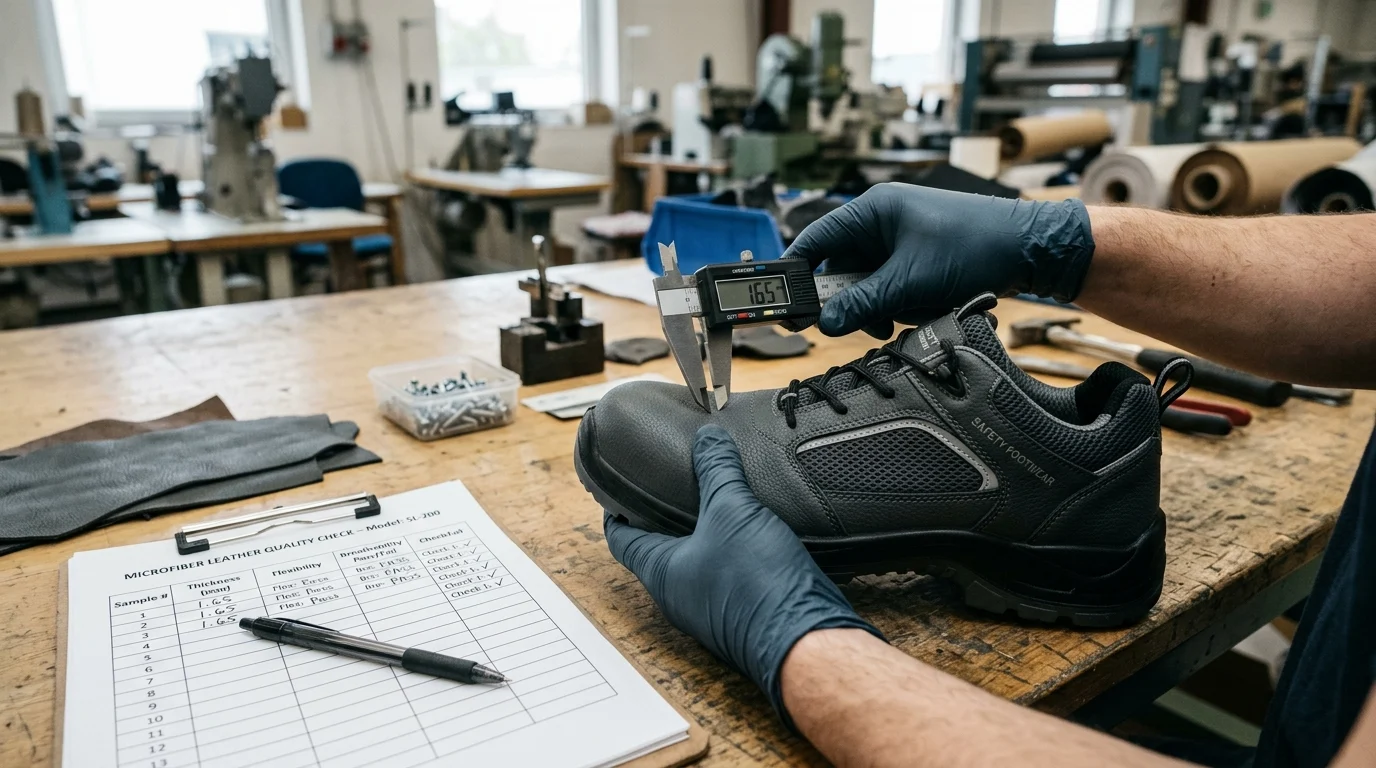
The foremost specification priority is material thickness and base architecture. For safety footwear, buyers must specify a thickness between 1.4 mm and 2.0 mm, depending on the required flexibility and abrasion resistance of the shoe model. A 1.4 mm thickness is typically reserved for lightweight athletic-style safety shoes, while 1.8 mm to 2.0 mm is required for heavy-duty S3-rated boots.
Additionally, buyers must dictate the surface finish and chemical treatments at the specification stage. If the shoe requires water resistance (WRU/WPA designations), the microfiber must be specified with a hydrophobic treatment applied during the coagulation phase, rather than a mere topical spray, ensuring the water repellency survives prolonged flexing.
Factory and Laboratory Testing
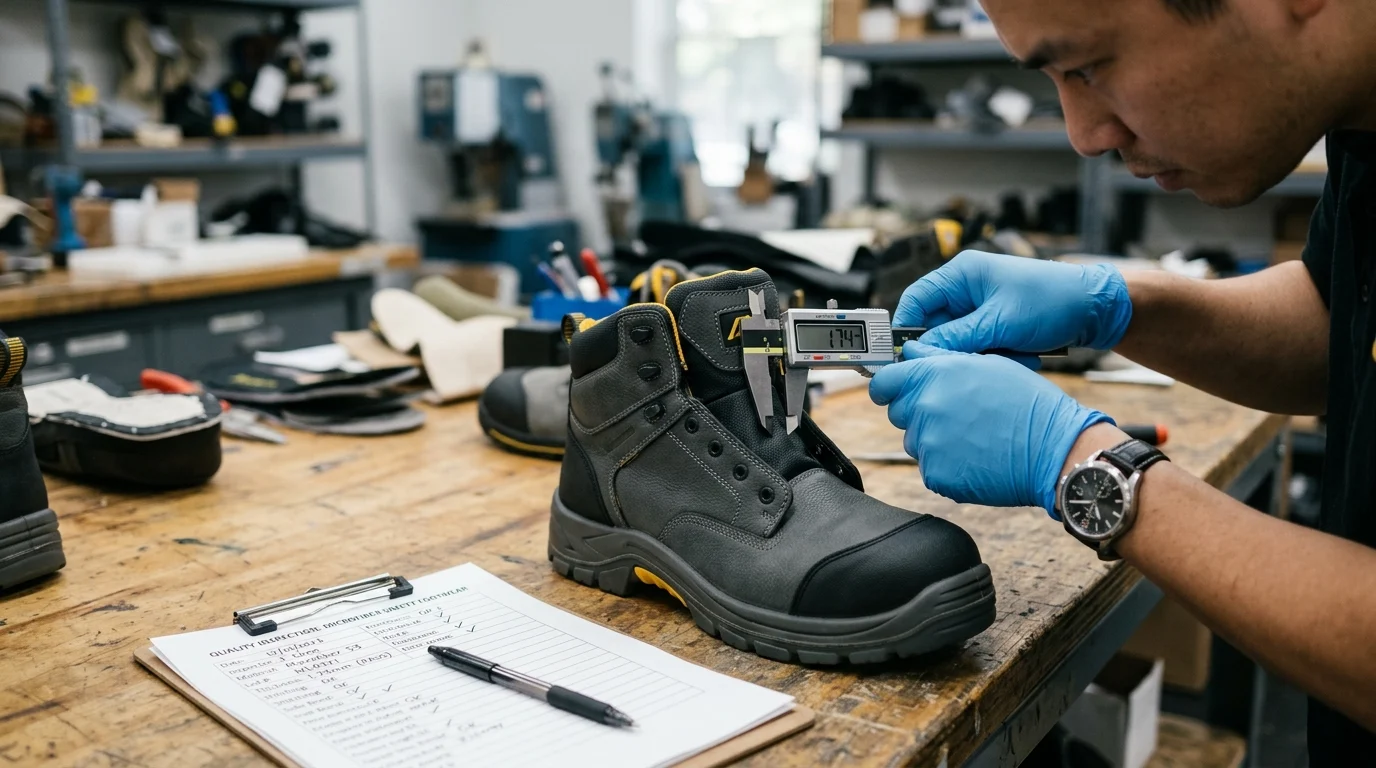
To guarantee compliance, sourced materials must undergo strict laboratory testing before mass production. Buyers should mandate batch testing reports from accredited third-party laboratories (e.g., SATRA, SGS, or TÜV) validating the material against EN ISO 20345 or ASTM F2413 requirements.
| Test Parameter | Relevant Standard | Recommended Target for Safety Shoes |
|---|---|---|
| Tear Strength | ISO 3377-2 | ≥ 120 N |
| Flex Resistance | ISO 5402-1 | ≥ 100,000 cycles (dry at 20°C) |
| Colorfastness (Rubbing) | ISO 105-X12 | Grade 4-5 (Dry and Wet) |
| Chemical Compliance | REACH / RoHS | SVHC < 0.1% w/w, Zero restricted Azo dyes |
Failure to enforce these laboratory metrics can result in catastrophic product failures in the field, leading to costly recalls and damage to brand reputation.
Supplier Selection and Quality Consistency
Selecting a capable supplier is paramount for maintaining quality consistency. Industrial buyers should prioritize manufacturers operating under ISO 9001 quality management systems and ISO 14001 environmental standards. When negotiating contracts, buyers must account for Minimum Order Quantities (MOQs), which typically range from 300 to 500 linear meters per color and finish.
Lead times are another critical sourcing factor. Due to the complex, multi-stage production process of high-grade microfiber—encompassing spinning, needle-punching, impregnation, and finishing—standard lead times range from 15 to 25 days. Establishing a reliable forecasting model with a vetted supplier ensures a stable pipeline of uniform material, eliminating the bottleneck risks associated with raw material shortages.
Why Microfiber Leather Is a Strategic Choice for Safety Footwear
The transition toward engineered synthetics represents a fundamental shift in occupational footwear manufacturing. Brands that adopt microfiber leather are not merely reacting to material trends; they are strategically positioning themselves to meet evolving regulatory landscapes, environmental mandates, and modern consumer expectations. As the industrial workforce demographics shift, the demand for lightweight, high-performance, and ethically sourced protective gear has accelerated.
Commercial Drivers and Market Demand
A primary commercial driver is the explosive growth of the vegan and eco-conscious safety footwear market.
Key Takeaways
- The most important conclusions and rationale for microfiber leather
- Specs, compliance, and risk checks worth validating before you commit
- Practical next steps and caveats readers can apply immediately
Frequently Asked Questions
How does microfiber leather improve comfort in safety shoes?
Its lightweight, flexible structure reduces foot fatigue and conforms better during long shifts. It also helps limit stiffness compared with many traditional upper materials.
Is microfiber leather breathable enough for hot work environments?
Yes. Quality microfiber uses a porous structure that lets sweat vapor escape while helping block liquid water, improving in-shoe airflow and dryness.
Why do safety shoe manufacturers choose microfiber leather over natural leather?
Microfiber offers uniform thickness, fewer defects, lighter weight, and more stable performance. It also supports efficient roll-based cutting for large-scale production.
Can HAOHAO supply microfiber leather for large safety footwear orders?
Yes. HAOHAO supports scalable B2B production with 3 specialized factories, 50 million meters annual capacity, and service from development to delivery.
What should buyers check when sourcing microfiber leather for safety shoes?
Confirm breathability, tear strength, tensile strength, thickness consistency, and chemical resistance. Ask suppliers like HAOHAO for test data and application-specific recommendations.