

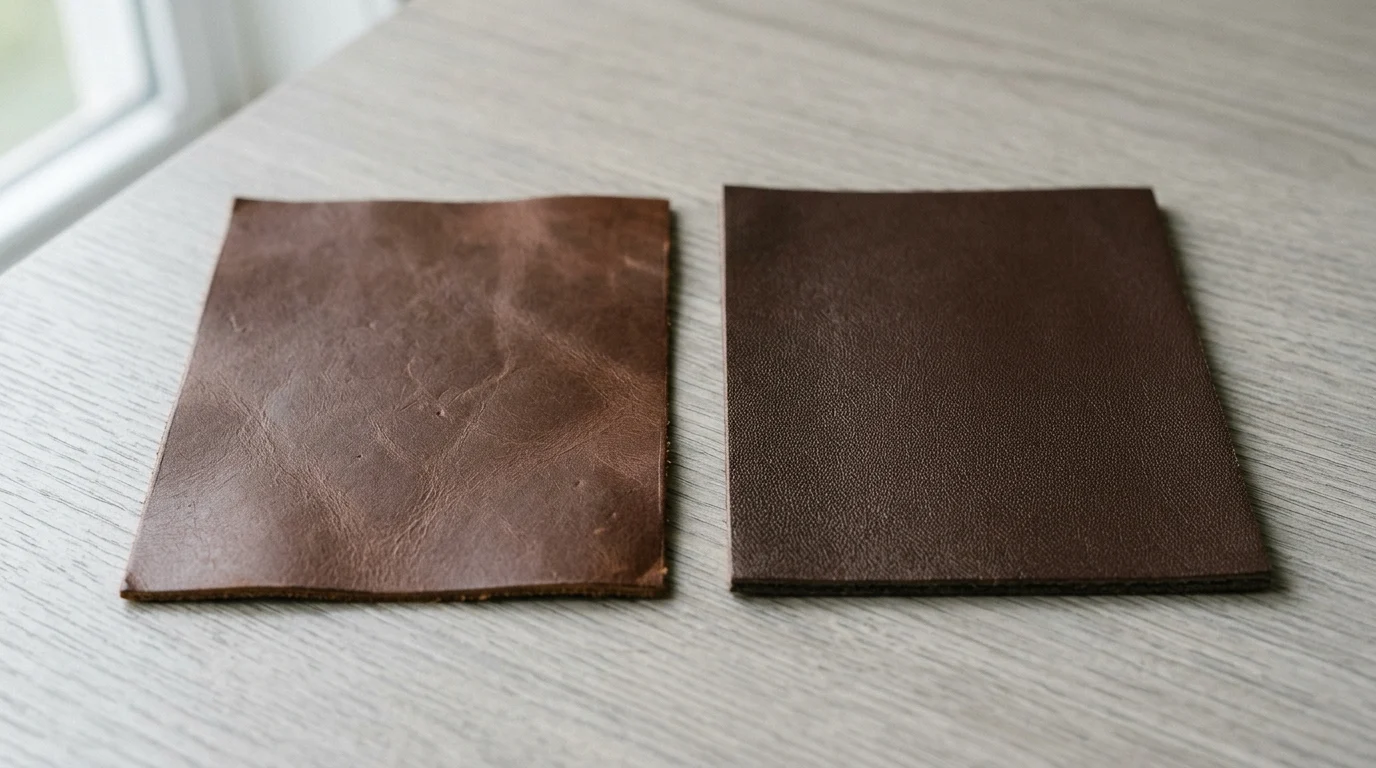
For footwear and furniture brands, the choice between engineered microfiber and natural hide is no longer just a question of look and feel—it is a margin decision. Material yield, MOQ flexibility, price stability, durability, and consumer positioning all influence whether a product line can scale profitably. Microfiber leather offers consistency, lower waste, and predictable procurement, while premium full-grain leather still carries advantages in repairability, aging, and luxury perception. This analysis compares the commercial and technical trade-offs that matter most to sourcing, product development, and brand teams making high-volume material decisions.
Why Microfiber Leather vs Real Leather Matters for Footwear
The strategic selection between microfiber leather and genuine leather represents a critical juncture for footwear and furniture manufacturers. As global supply chains face increasing pressure to optimize costs while maintaining premium quality, the debate over raw materials has shifted from simple aesthetic preference to rigorous financial analysis. Understanding the precise commercial trade-offs between engineered synthetics and natural hides is essential for protecting profit margins without compromising the end-user experience.
How Material Choice Affects Margin
Material choice directly dictates gross margins across production runs. Genuine leather typically yields a significantly lower usable area per hide due to natural defects like scars, tick marks, and irregular perimeters. This inherent waste forces manufacturers to purchase substantially more square footage than the final product requires.
In contrast, microfiber leather is manufactured in continuous, uniform rolls, offering a highly predictable and maximized cutting yield (detailed in the Yield section below). For a footwear brand producing 100,000 pairs annually, shifting from a natural hide with a high scrap rate to microfiber leather fundamentally transforms the bill of materials (BOM), effectively reducing raw material expenditure by up to 25% depending on the specific grade chosen.
Key Commercial Variables to Compare
Commercial scalability relies heavily on Minimum Order Quantities (MOQs) and cost predictability. Genuine leather tanneries often require MOQs exceeding 1,000 square feet per custom colorway to justify the vat dyeing process. This ties up working capital and limits a brand’s ability to test new seasonal palettes.
Microfiber leather production lines offer far greater agility, often accommodating production runs as low as 300 to 500 linear meters per color. Furthermore, the pricing of genuine leather fluctuates based on agricultural cycles and global meat consumption, whereas microfiber leather pricing remains highly stable. This stability allows procurement teams to lock in long-term contracts with predictable unit economics.
Technical Definitions and Material Types
Establishing a baseline understanding of material architecture is essential before evaluating performance. While both categories serve similar end uses, their structural compositions dictate how they behave under manufacturing stress and daily consumer use.
Microfiber Leather, Genuine Leather, and Full-Grain Leather
Microfiber leather is a high-grade synthetic composed of a three-dimensional, non-woven matrix of ultra-fine synthetic filaments (technically referred to as “sea-island” microfibers) impregnated with high-performance polyurethane (PU) resins. This engineered structure was specifically designed to mimic the interlocking collagen fiber bundles found in natural hides.
Genuine leather is a broad term referring to animal hides that have been chemically tanned to prevent decay. Full-grain leather represents the pinnacle of this category, utilizing the uncorrected top layer of the hide. It retains natural breathability, exceptional flexibility in extreme cold, and the ability to be burnished or repaired, often resulting in a decades-long heirloom lifespan. Lower tiers, such as split leather or genuine leather with heavy polymer coatings, lack the durability of full-grain and often perform worse than premium microfiber leather.
Key Specifications for Footwear and Furniture
Footwear and furniture applications demand distinct physical specifications. For footwear uppers, material thickness must balance structural integrity with flexibility, typically requiring profiles between 1.2mm and 1.6mm. Furniture upholstery leans toward slightly thinner, more pliable specs—usually 0.8mm to 1.2mm—to facilitate complex folding, stitching, and foam adhesion compatibility around internal substrates.
| Feature | Premium Microfiber Leather | Full-Grain Leather | Standard Coated Genuine Leather |
|---|---|---|---|
| Thickness Consistency | ±0.05mm variance | Highly Variable | Variable |
| Breathability | Good (Porous PU matrix) | Excellent | Moderate to Poor |
| Weight (per sq meter) | ~500g – 700g | ~800g – 1200g | ~700g – 1000g |
| Surface Uniformity | 100% Uniform | Natural Grain Variations | Corrected / Embossed |
Performance Comparison
Objective physical testing separates premium materials from substandard alternatives. Sourcing agents and product engineers rely on standardized laboratory metrics to guarantee that a chosen material will withstand the specific physical and environmental stresses of its intended application.
Abrasion, Hydrolysis, Flexing, and Tear Strength
In rigorous laboratory environments, industry leaders report that premium microfiber leather frequently exceeds 50,000 cycles on the Martindale abrasion test, matching or surpassing standard genuine leather. During Bally flex testing, high-grade microfiber leather can often withstand up to 100,000 continuous flexes at room temperature without micro-cracking, a crucial threshold for preventing crease failures in shoes.
Hydrolysis resistance is a critical metric for synthetics, measuring how well the material withstands high humidity and heat. Standard PU leathers may degrade in 2 to 3 years, but advanced microfiber variants achieve 5 to 8 years of hydrolysis resistance. Tear strength is equally vital; premium microfiber leather routinely delivers >40 N/mm, ensuring stitch lines hold under tension just as securely as natural hides.
Performance Priorities for Footwear Uppers and Furniture
Different product categories prioritize different performance vectors. Footwear uppers demand superior breathability and flexibility across the vamp (the top front of the shoe) to endure the repetitive physical stress of walking while managing moisture. A shoe upper that fails to breathe or flexes poorly will immediately result in consumer returns.
Furniture applications, however, prioritize UV resistance, fire-retardancy compliance, stain repellency, and continuous surface abrasion (often measured by the Wyzenbeek test for contract furniture). Furniture manufacturers demand a Grade 4 to 5 rating on the grayscale for colorfastness to prevent fading when sofas are exposed to direct sunlight. Microfiber leather naturally excels in colorfastness and consistency, whereas dyed real leather is significantly more susceptible to UV degradation.
However, microfiber leather does have limitations that must be factored into product planning: it can be sensitive to extreme heat (with some PU coatings becoming tacky in hot environments like car interiors), lacks the repairability of full-grain leather when deeply scratched, and does not develop a natural, desirable patina over time.
Cost, Sourcing, and Supply Chain ROI
The total cost of ownership extends far beyond the per-square-foot purchasing price. True ROI calculations must encompass manufacturing efficiency, automated processing capabilities, and the velocity of the supply chain.
Yield, Cutting Waste, and Defect Rates
Scrap rates heavily influence the final assembly costs. Because genuine leather hides feature irregular perimeters, varying thicknesses, and belly areas with loose fibers, cutting waste routinely hits 30% to 40%. This requires skilled manual labor to inspect and mark defects before cutting.
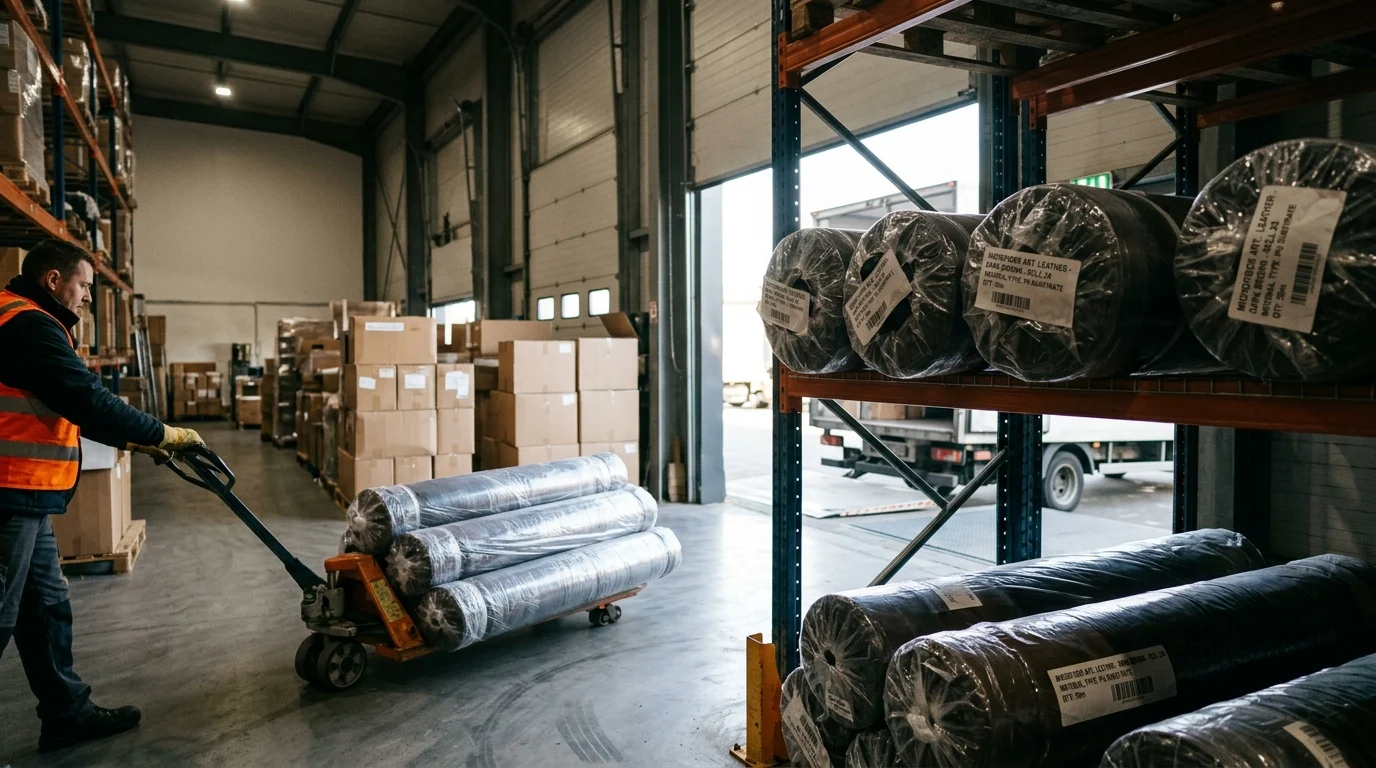
Microfiber leather is supplied in standard widths (typically 1.37 meters or 54 inches), allowing automated CNC cutting machines to nest patterns perfectly. This uninterrupted nesting reduces cutting waste to under 10% and significantly lowers labor costs.
| Efficiency Metric | Genuine Leather | Microfiber Leather |
|---|---|---|
| Standard Format | Irregular Hides (approx. 20-50 sq ft) | Continuous Rolls (1.37m width) |
| Average Cutting Yield | 60% – 70% | 90% – 95% |
| Automated Cutting Speed | Slow (Manual defect marking needed) | Fast (Uninterrupted CNC nesting) |
| Raw Material Defect Rate | 5% – 15% (Scars, insect bites) | < 1% (Manufactured consistency) |
Scalability, Consistency, and Lead Times
Supply chain velocity strongly favors engineered materials. The traditional tanning process for genuine leather is highly resource-intensive, often requiring lead times of 4 to 6 weeks from raw hide procurement to the finished crust. This sluggish pace hinders rapid restocking of bestselling items.
Microfiber leather production is highly scalable, with roll-to-roll manufacturing compressing lead times to just 2 to 3 weeks. Furthermore, batch-to-batch color consistency in microfiber leather routinely achieves a strict Delta E color variance often reported below 1.0. This eliminates the costly and time-consuming shade-matching bottlenecks that plague natural leather production, ensuring that a sofa or shoe produced in January perfectly matches one manufactured in November.
Decision Framework for Brands
Selecting between these materials requires brands to weigh technical performance against target demographics, retail pricing structures, and increasingly stringent global regulatory landscapes.
Compliance and Sustainability Factors
Chemical compliance is non-negotiable in modern international markets. Brands sourcing genuine leather must rigorously audit tanneries for Chromium VI restrictions and ideally secure Leather Working Group (LWG) Gold or Silver certifications to satisfy ESG (Environmental, Social, and Governance) mandates.
Conversely, microfiber leather supply chains must comply with European REACH standards and ZDHC (Zero Discharge of Hazardous Chemicals) guidelines. Sourcing teams must ensure that their microfiber partners maintain Volatile Organic Compound (VOC) emissions below strict industry thresholds (often targeting under 30 ppm), utilizing water-borne PU technologies rather than toxic solvent-based processes. While microfiber leather avoids animal agriculture impacts, brands must also acknowledge that end-of-life recyclability remains a challenge for many composite synthetics.
How to Match Material Choice to Product Use
To operationalize this decision and maximize ROI, procurement teams should apply the following actionable criteria:
- Price Point Thresholds: Heritage footwear brands commanding price points above the $250 threshold often rely on the aging patina, rich aroma, and premium consumer perception of full-grain leather to justify their margins. For commercial furniture priced under the $1,000 threshold or lifestyle footwear under $150, microfiber leather provides an unbeatable financial return.
- Volume and Agility Thresholds: Brands requiring rapid seasonal pivots, low MOQs (under 500 meters), and automated CNC cutting at scale should default to microfiber leather to maintain supply chain velocity.
- Aesthetic and Lifespan Priorities: If the product use-case demands a decades-long heirloom lifespan, extreme cold-weather flexibility, or repairability (e.g., premium work boots or luxury lounge chairs), full-grain genuine leather remains superior. If the priority is flawless aesthetic consistency, high yield, and vegan-friendly positioning, microfiber leather is the optimal choice.
By systematically evaluating these criteria, brands can protect their margins while delivering a high-performance product that aligns with modern consumer expectations and specific use-case demands.
Key Takeaways
- Use microfiber leather when predictable cost, uniform cutting yield, and scalable color development are priorities for footwear or furniture production.
- Factor natural hide defects into genuine leather costing, because scars, tick marks, and irregular edges can significantly reduce usable area.
- Consider microfiber leather for high-volume programs, as improved yield can reduce raw material expenditure by up to 25% depending on grade.
- Choose full-grain leather only when repairability, natural aging, and premium positioning justify higher waste, MOQ, and price volatility.
- Compare supplier MOQs before launching seasonal colors, since genuine leather may require over 1,000 square feet while microfiber leather can support smaller custom runs.
Frequently Asked Questions
Is microfiber leather cheaper than genuine leather for footwear production?
Often yes. Because microfiber leather comes in uniform rolls with fewer defects, brands can improve cutting yield and reduce raw material waste, potentially lowering BOM costs by up to 25% depending on grade and application.
Does genuine leather always perform better than microfiber leather?
No. Full-grain leather can offer exceptional longevity and repairability, but lower-grade genuine or split leather may underperform compared with premium microfiber leather in consistency, abrasion resistance, and production efficiency.
Why is cutting yield better with microfiber leather?
Microfiber leather is produced in continuous, uniform rolls without scars, tick marks, or irregular hide shapes. This allows factories to plan patterns more efficiently and reduce scrap during footwear and furniture manufacturing.
How do MOQs differ between microfiber leather and genuine leather?
Custom genuine leather colors often require MOQs above 1,000 square feet, while microfiber leather suppliers may support runs around 300 to 500 linear meters per color, improving flexibility for seasonal launches.
Is microfiber leather suitable for furniture upholstery?
Yes, premium microfiber leather is commonly used in furniture because it offers consistent texture, scalable color matching, predictable pricing, and strong resistance to wear when specified correctly.