

Why Suede Microfiber vs. Genuine Suede Matters for B2B Buyers
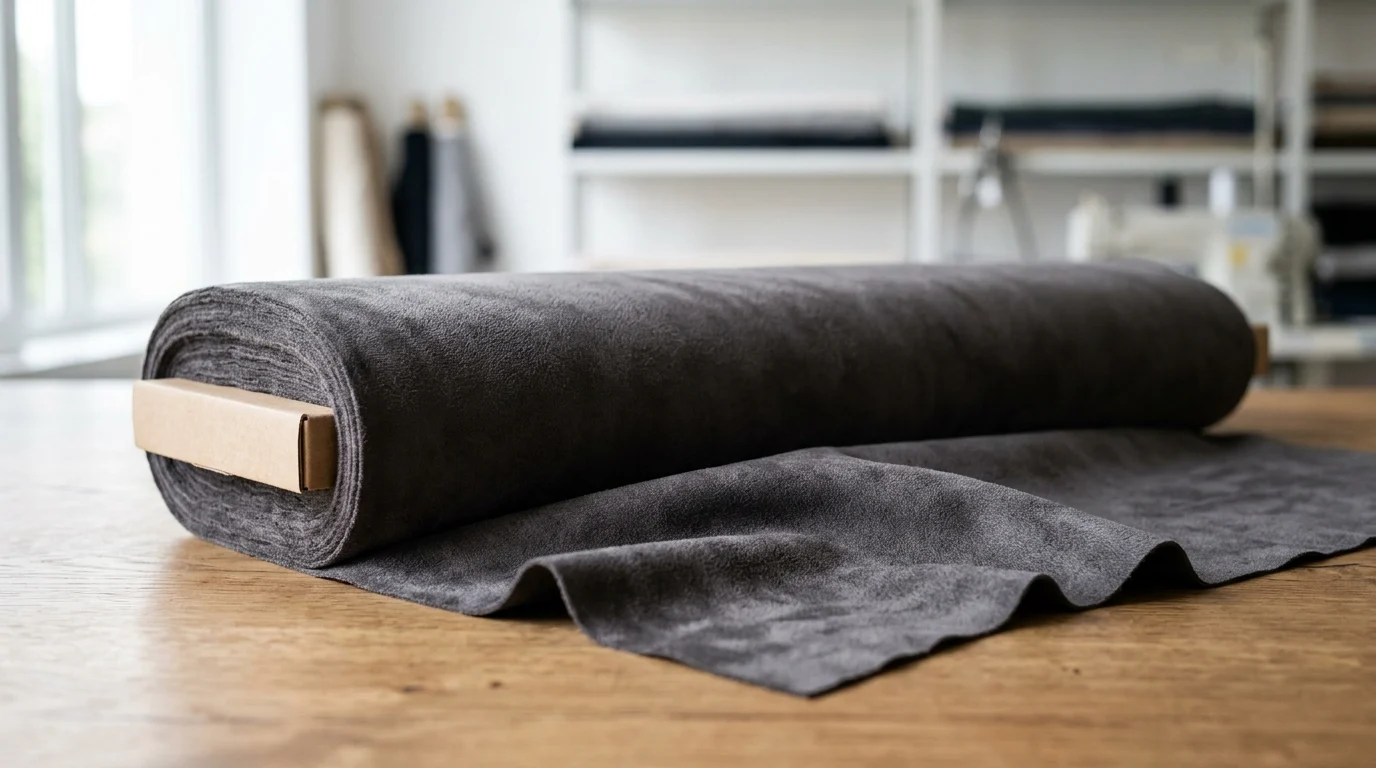
Sourcing the right suede material directly impacts profit margins, production scalability, and brand positioning. For procurement teams navigating the textiles and footwear markets, the decision between suede microfiber and genuine animal suede is no longer just about aesthetics; it is a strategic supply chain choice. Suede microfiber has evolved into a high-performance engineered material, offering distinct commercial advantages over traditional leather hides.
Cost structure, supply stability, and channel positioning
Genuine suede is subject to agricultural commodity fluctuations, resulting in volatile pricing and inconsistent yield rates. Irregular hide shapes typically cause cutting waste of 15% to 25%. In contrast, suede microfiber is manufactured in continuous rolls, guaranteeing near 100% usable yield. From a cost structure perspective, premium suede microfiber often lands at $4.00 to $8.00 per linear meter, significantly reducing the raw material cost by 30% to 50% compared to high-grade genuine suede, while completely eliminating the supply instability associated with seasonal livestock availability.
Best-fit product categories and private-label programs
Channel positioning dictates material selection. Genuine suede remains a staple in ultra-luxury footwear and bespoke leather goods where organic authenticity commands a premium. However, suede microfiber dominates scalable private-label programs across automotive interiors, commercial upholstery, athletic footwear, and consumer electronics accessories. Its uniform structure allows for automated, high-speed cutting processes, making it the superior choice for high-volume manufacturing where batch-to-batch consistency is non-negotiable.
Technical Differences Between Suede Microfiber and Genuine Suede

Understanding the structural differences between these two materials is critical for accurate specification and quality control. While they may share a similar nap and tactile experience, their underlying architectures are fundamentally different.
Composition, thickness, backing, handfeel, and color consistency
Genuine suede is the split inner layer of animal hide, composed of natural collagen fibers. It is inherently porous and susceptible to moisture damage. Suede microfiber, conversely, is an engineered non-woven matrix of ultra-fine synthetic fibers (typically polyester and polyamide) impregnated with polyurethane (PU) resins. Manufacturers can precisely calibrate the thickness of suede microfiber, generally ranging from 0.4mm for delicate apparel up to 2.0mm for heavy-duty footwear and industrial applications. This results in a material that mimics the 3D structure of natural leather but offers superior tensile strength and absolute color consistency across dye lots.
Comparison criteria for procurement teams
Procurement teams must evaluate materials based on dimensional stability, tear resistance, and breathability.
| Specification | Suede Microfiber | Genuine Suede |
|---|---|---|
| Cutting Yield | 95% – 99% (Continuous Rolls) | 75% – 85% (Irregular Hides) |
| Thickness Variance | ± 0.05 mm | ± 0.20 mm – 0.50 mm |
| Color Consistency | Excellent (Delta E < 1.0) | Variable by hide and dye lot |
| Moisture Resistance | High (Can be engineered hydrophobic) | Low (Prone to spotting/staining) |
| Weight (per sq meter) | 200g – 600g (Customizable) | 400g – 800g (Varies by animal) |
How buyers can identify the material
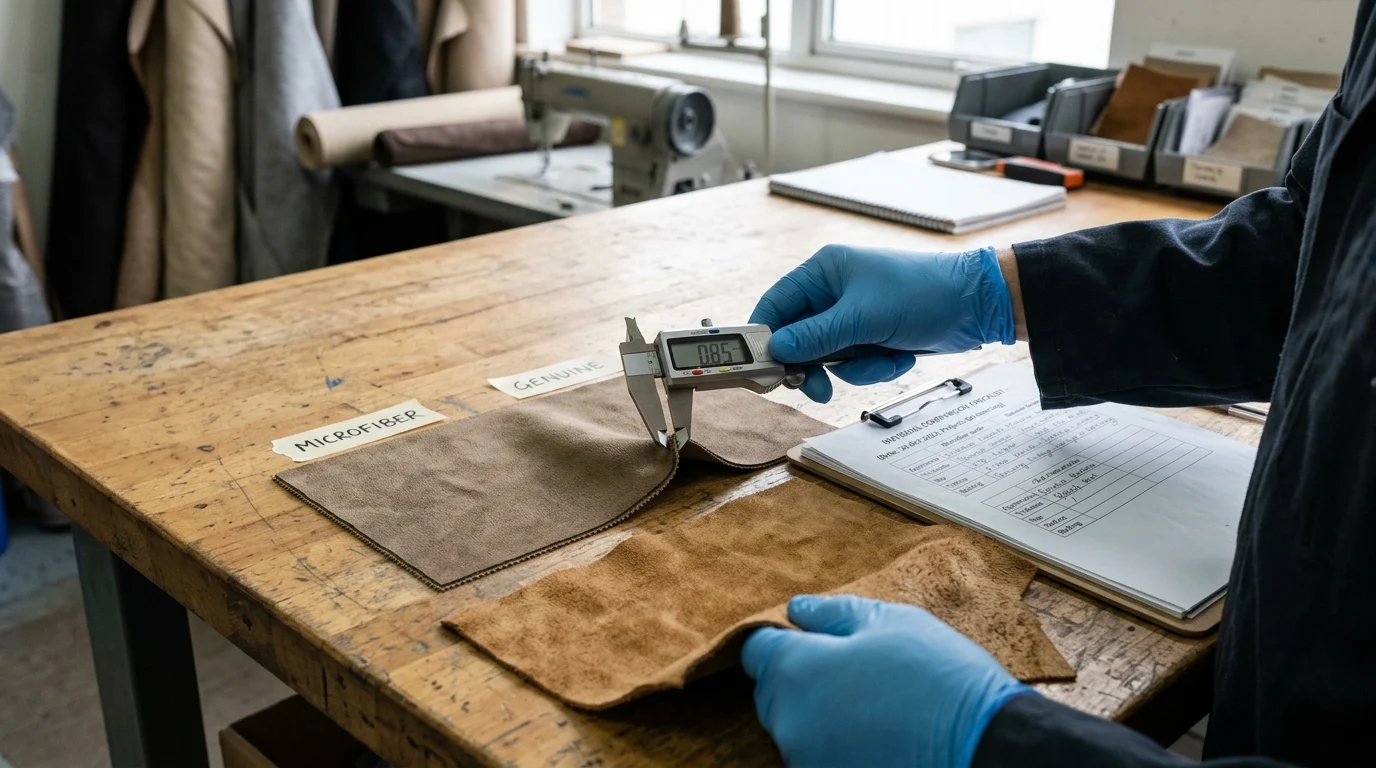
Quality assurance teams can differentiate the materials through several non-destructive and destructive tests. Under 40x magnification, genuine suede reveals an erratic, organic fiber bundle arrangement with visible pores. Suede microfiber displays a highly uniform, densely packed synthetic fiber matrix. Additionally, a simple water drop test will show genuine suede absorbing moisture rapidly and darkening, whereas microfiber can be engineered to bead water on the surface. The burn test further differentiates them: genuine suede smells like burnt hair and leaves a powdery ash, while microfiber melts, emitting a sweet, plastic-like chemical odor and leaving a hard bead.
How to Evaluate Price, MOQ, and Supply Chain Risk
Effective sourcing requires looking beyond the unit price to understand the total landed cost and the operational risks associated with each material type.
Landed cost drivers for suede microfiber
The landed cost of suede microfiber is heavily influenced by petroleum-based raw material indexes, exchange rates, and freight efficiency. Because microfiber is shipped in standard rolls (typically 30 to 50 meters per roll), container space utilization is maximized. A standard 20-foot container can hold approximately 15,000 to 18,000 meters of microfiber, optimizing freight costs per unit. Genuine hides, packed on pallets or in bundles, offer significantly lower packing density, increasing the freight burden by up to 20% per square meter.
How to compare MOQ, lead time, and customization options
Minimum Order Quantities (MOQs) for custom-dyed suede microfiber generally start between 300 and 500 meters per color, with lead times of 15 to 25 days depending on the manufacturer’s capacity. Genuine suede tanneries often require MOQs based on square footage or hide counts, which can equate to higher upfront capital commitments and longer lead times of 30 to 45 days due to the complex tanning and dyeing processes. Microfiber suppliers also offer rapid customization for embossing, perforation, and digital printing, which are harder to execute uniformly on natural hides.
Supplier qualification checks to reduce sourcing risk
To mitigate supply chain risk, buyers should audit manufacturers for vertical integration. A reliable synthetic leather supplier should control both the non-woven base production and the PU impregnation process. Key qualification checks include verifying ISO 9001 certification, requesting third-party lab test reports for physical properties (such as a Wyzenbeek abrasion test exceeding 50,000 double rubs), and confirming the supplier’s capacity to handle sudden volume surges for peak seasonal production.
Compliance and Sustainability Requirements for Sourcing
Regulatory scrutiny and consumer demand for sustainable products have fundamentally shifted the compliance landscape for both synthetic and natural leathers. B2B buyers must navigate strict chemical restrictions and environmental standards to ensure market access.
Chemical compliance and market-entry requirements
Entering the European and North American markets requires strict adherence to REACH regulations and California Proposition 65. For genuine suede, the primary compliance risks involve hexavalent chromium (Cr VI) residues from the tanning process, restricted azo dyes, and formaldehyde. For suede microfiber, procurement teams must monitor Dimethylformamide (DMF) levels. Advanced manufacturers now utilize water-based PU technologies or solvent-free processes to produce suede microfiber with DMF levels well below the stringent 30 ppm (parts per million) threshold, and in many cases, achieve entirely DMF-free status.
Traceability, sustainability claims, and water-based PU options
Genuine suede faces increasing scrutiny regarding animal welfare, deforestation linked to cattle ranching, and the heavy water pollution associated with traditional tanneries. Suede microfiber offers a compelling alternative for brands pivoting toward vegan and cruelty-free claims. Furthermore, leading synthetic leather manufacturers are now incorporating Global Recycled Standard (GRS) certified recycled polyester (rPET) into the microfiber base. High-end water-based PU suede microfiber not only eliminates toxic solvents but also reduces energy consumption during manufacturing by up to 40%, providing a highly traceable and sustainable material profile for corporate ESG reporting.
How Procurement Teams Should Choose Between the Two Materials
The final decision between suede microfiber and genuine suede rests on aligning the material’s technical capabilities with the end-product’s commercial objectives, target demographic, and manufacturing ecosystem.
Decision matrix by application and buyer priorities
Procurement managers should utilize a strategic decision matrix to evaluate trade-offs between cost, performance, and brand perception.
| Application / Priority | Recommended Material | Primary Justification |
|---|---|---|
| High-Volume Footwear | Suede Microfiber | 99% cutting yield, batch-to-batch color consistency, lower defect rate. |
| Luxury Bespoke Goods | Genuine Suede | Heritage brand positioning, organic handfeel, high retail price tolerance. |
| Automotive Interiors | Suede Microfiber | High UV resistance, flame retardant capabilities, standardized roll widths. |
| Vegan/Eco-Conscious Lines | Suede Microfiber | Cruelty-free, availability of GRS-certified recycled content and water-based PU. |
| Industrial/Safety Gear | Suede Microfiber | Engineered tear strength, customizable thickness (up to 2.0mm), chemical resistance. |
Final supplier selection criteria
When selecting a suede microfiber partner, buyers should prioritize manufacturers with a proven track record, ideally those with 20+ years of expertise in synthetic leather innovation. The ideal supplier will maintain a defect rate of less than 1%, offer comprehensive in-house R&D for custom formulations, and demonstrate a commitment to long-term partnerships. By thoroughly evaluating physical prototypes, conducting facility audits, and negotiating clear Service Level Agreements (SLAs) regarding color tolerance (Delta E < 1.0) and delivery schedules, B2B buyers can secure a robust, scalable, and profitable material supply chain.
Key Takeaways
- Wholesale sourcing and supply-chain implications for Suede Microfiber
- Specifications, compliance, and commercial terms buyers should validate
- Actionable recommendations for distributors and procurement teams
Frequently Asked Questions
How can buyers quickly tell suede microfiber from genuine suede?
Check magnified fiber structure, try a water-drop test, and review consistency. Microfiber looks uniform, can bead water, and comes in stable roll widths; genuine suede shows irregular pores and absorbs water fast.
Which option is better for high-volume manufacturing?
Suede microfiber is usually better for scale. Continuous rolls improve cutting yield, automate more easily, and reduce batch variation in footwear, upholstery, and automotive programs.
Is suede microfiber more cost-effective than genuine suede?
Often yes. Premium microfiber commonly lowers raw material cost by about 30% to 50% and cuts waste because roll goods deliver far higher usable yield than irregular hides.
What specifications should B2B buyers compare before ordering?
Focus on thickness tolerance, weight, color consistency, tear strength, moisture resistance, and backing type. Ask suppliers for test data and sample yardage matched to your end-use.
Can HAOHAO support custom suede microfiber development at scale?
Yes. HAOHAO offers R&D-to-production support across 3 factories, with 20+ years of experience and large annual capacity for consistent bulk supply and tailored material programs.