
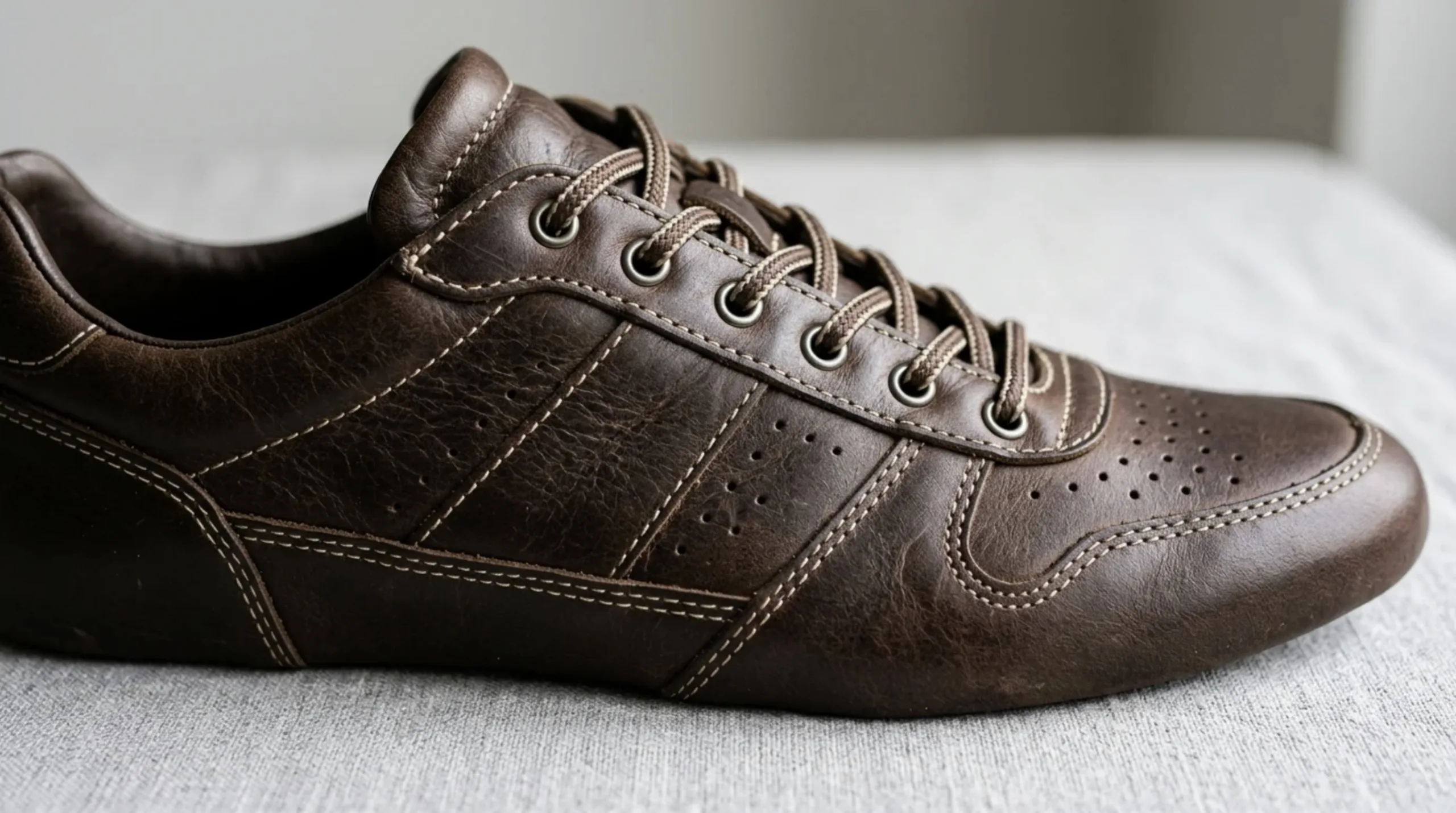
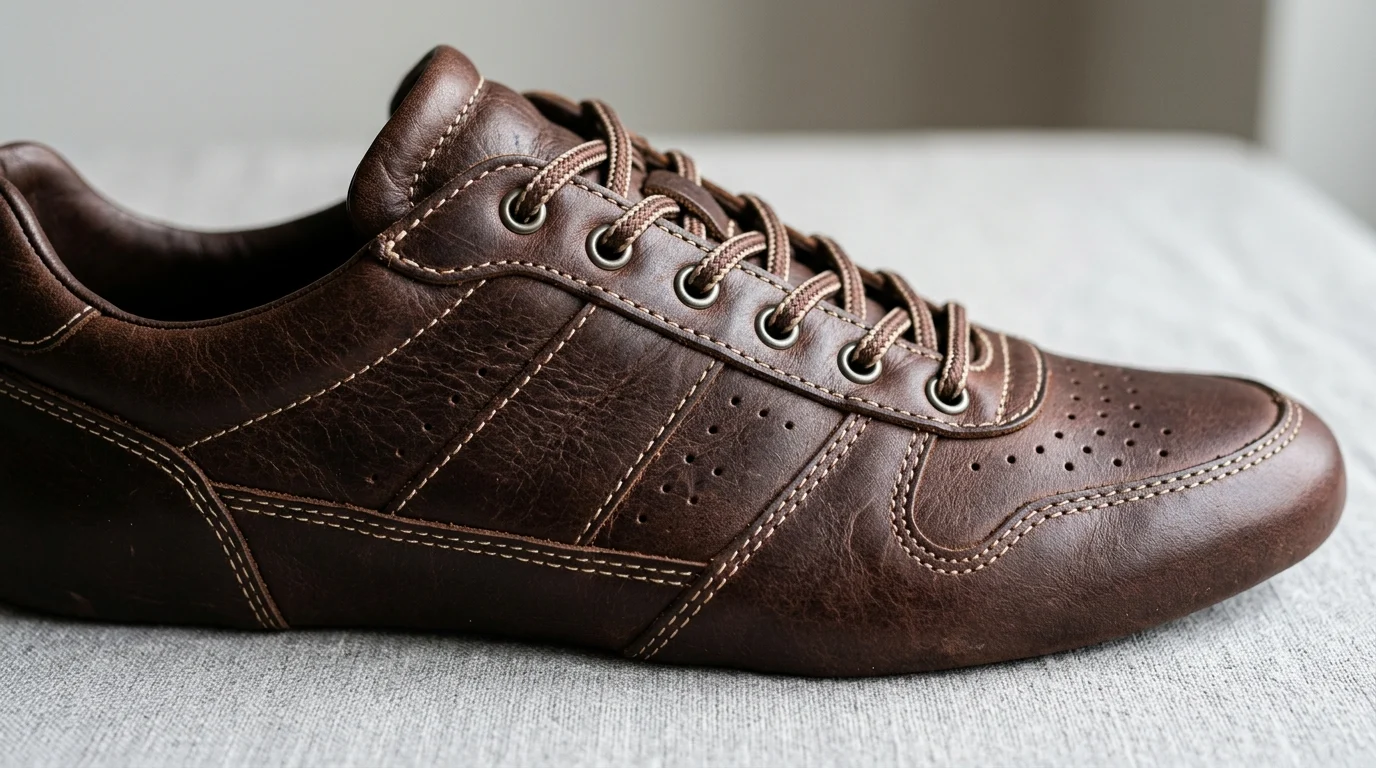
Introduction
Selecting a shoe upper material shapes far more than appearance: it affects comfort, durability, weight, breathability, manufacturing cost, and even how a shoe is positioned in the market. Different options, from leather and knit to mesh and synthetics, perform differently under daily wear, athletic use, and large-scale production. Understanding these trade-offs helps brands, buyers, and product developers avoid costly mismatches between design intent and real-world performance. This article explains the main factors to evaluate, how common upper materials compare, and what to prioritize when balancing function, price, and production needs.
How Shoe Upper Material Affects Performance and Positioning
The upper is the critical structural envelope of footwear, dictating not only the aesthetic identity but also the functional parameters of the finished product. Brands rely on strategic material selection to position footwear across distinct market tiers, balancing raw material costs with end-user expectations. Because the upper comprises the majority of the visible surface area, its material properties heavily influence consumer purchasing decisions. From a supply chain perspective, procuring these materials dictates lead times, factory tooling requirements, and the ultimate scalability of a footwear line.
Defining Shoe Upper Materials
The upper encompasses all components above the sole unit, including the vamp, quarter, tongue, heel counter, and collar lining. From a manufacturing perspective, the upper dictates cutting yields and stitching complexity on the assembly line. The choice of shoe upper material determines the overall weight, breathability, and structural integrity of the shoe, directly influencing the Bill of Materials (BOM). In typical athletic footwear manufacturing, the upper assembly represents approximately 40% to 50% of total production time on the stitching lines and accounts for up to 35% of the overall manufacturing cost.
Impact on Comfort and Durability
Material selection establishes the foundational durability and comfort metrics of a shoe. Tensile strength, abrasion resistance, and flexural endurance are primary indicators of a material’s lifespan. For example, a high-performance trail running shoe requires an upper capable of withstanding at least 50,000 to 100,000 flex cycles on a Bally flexometer without exhibiting micro-cracking or structural failure.
Furthermore, the moisture vapor transmission rate (MVTR) of the upper material governs thermal regulation. An upper with an MVTR below 1,500 g/m²/24h may cause excessive moisture buildup, directly impacting wearer comfort and increasing the risk of blistering during prolonged athletic use. Achieving the right balance between durability and breathability remains a core challenge in material engineering.
Main Types of Shoe Upper Materials
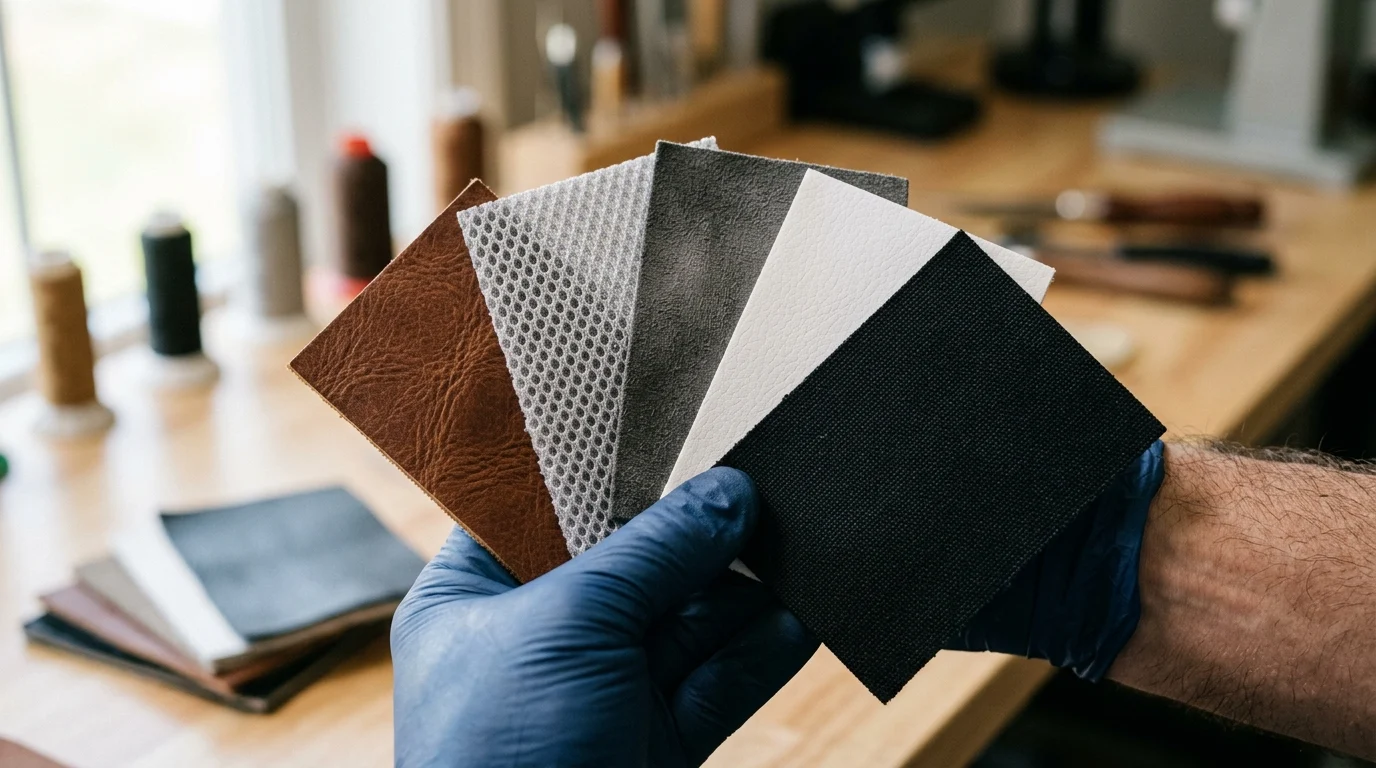
The footwear industry utilizes a vast spectrum of materials, broadly categorized into natural hides, synthetic polymers, and engineered textiles. Each category possesses distinct physical properties, processing requirements, and supply chain dynamics that dictate its suitability for mass production.
Leather and Coated Leather
Full-grain leather remains the benchmark for premium footwear. It is prized for its natural breathability, molding capabilities, and high tear strength, which often exceeds 40 N/mm. However, natural hides introduce significant cutting waste, with yields typically hovering between 60% and 75% due to natural defects like scars and uneven grain.
To mitigate costs and standardize appearance, factories often utilize PU-coated split leathers, commonly known as action leather. These coated alternatives provide a uniform surface and higher cutting yields exceeding 85%, though they sacrifice a degree of the natural vapor permeability found in top-grain hides.
Synthetic Materials
Polyurethane (PU) and Polyvinyl Chloride (PVC) form the core of synthetic shoe upper materials. PU synthetics simulate the cellular structure of natural leather, offering superior flex resistance and lower weight compared to PVC. Advanced microfiber PU can achieve a tensile strength comparable to genuine leather while maintaining a standardized roll width of 1.37 meters. This standard width enables automated CNC knife cutting with highly optimized yields reaching up to 95%.
PVC, while highly cost-effective and inherently water-resistant, is increasingly being phased out of premium footwear lines due to environmental compliance concerns and lower cold-flex performance, as it is prone to cracking at temperatures below -10°C.
Mesh, Woven, Knit, and Laminated Textiles
Engineered textiles have revolutionized athletic and athleisure footwear by offering unprecedented breathability and weight reduction. Spacer meshes, nylon wovens, and jacquard knits provide targeted zones of support without requiring multiple stitched overlays. Modern footwear often employs TPU (Thermoplastic Polyurethane) laminates applied via heat pressing to reinforce high-wear areas on mesh uppers without adding stitching bulk.
| Material Type | Typical Cutting Yield | Est. Cost Parameter | Primary Application |
|---|---|---|---|
| Full-Grain Leather | 60% – 75% | $3.50 – $6.00 / sq ft | Premium Dress, Heritage Casual |
| Microfiber PU | 90% – 95% | $8.00 – $15.00 / yard | Performance Athletic, Vegan Lines |
| Engineered Knit | 95%+ (Net Shape) | $5.00 – $12.00 / pair | Running, Modern Lifestyle |
Key Criteria for Selecting Shoe Upper Materials
Procurement teams and footwear developers must evaluate upper materials through a rigorous matrix of technical, financial, and regulatory criteria. A singular focus on aesthetics during the design phase often leads to manufacturing bottlenecks or elevated defect rates during mass production.
Performance Specifications
Factory technicians evaluate materials against standardized physical testing protocols before approving them for production. Key metrics include tear strength (ISO 3377), abrasion resistance (using the Martindale test, typically targeting >25,600 cycles for daily wear), and colorfastness (requiring grade 4 or higher on the grey scale to prevent dye bleeding).
For waterproof footwear, upper materials must be laminated with ePTFE or PU membranes capable of withstanding hydrostatic pressures exceeding 10,000 mm. Material elongation must also be strictly controlled; excessive stretch—defined as greater than 15% elongation under 50N of force—can cause the upper to lose its lasted shape over time, resulting in a poor fit for the end user.
Cost Drivers and Price Comparison
The financial viability of a shoe upper material depends on both the raw material cost and the associated labor required for processing. While engineered knits may carry a higher initial development cost—often requiring $2,000 to $5,000 in machine programming and sampling per style—they drastically reduce assembly line labor by eliminating multi-piece stitching operations.
Conversely, a multi-panel synthetic leather upper might utilize cheaper rolled goods costing $3.00 to $5.00 per yard, but it incurs significantly higher labor costs due to complex skiving, edge folding, and stitching operations. Minimum Order Quantities (MOQs) also dictate sourcing viability, with custom-dyed synthetic rolls typically requiring 500 to 1,000 meters per colorway.
Compliance, Sustainability, and Sourcing
Regulatory frameworks and corporate governance heavily influence material selection. European markets require strict adherence to REACH regulations, mandating that upper materials remain free from restricted substances such as hexavalent chromium (where the Cr VI limit is strictly < 3 mg/kg), phthalates, and specific azo dyes.
Concurrently, corporate sustainability targets are accelerating the adoption of Global Recycled Standard (GRS) certified PET meshes and Leather Working Group (LWG) Gold-rated hides. Sourcing these certified and compliant materials often extends procurement lead times by 15 to 30 days, requiring highly synchronized supply chain planning between Tier 2 material suppliers and Tier 1 assembly factories.
How Brands and Factories Choose the Right Upper Material
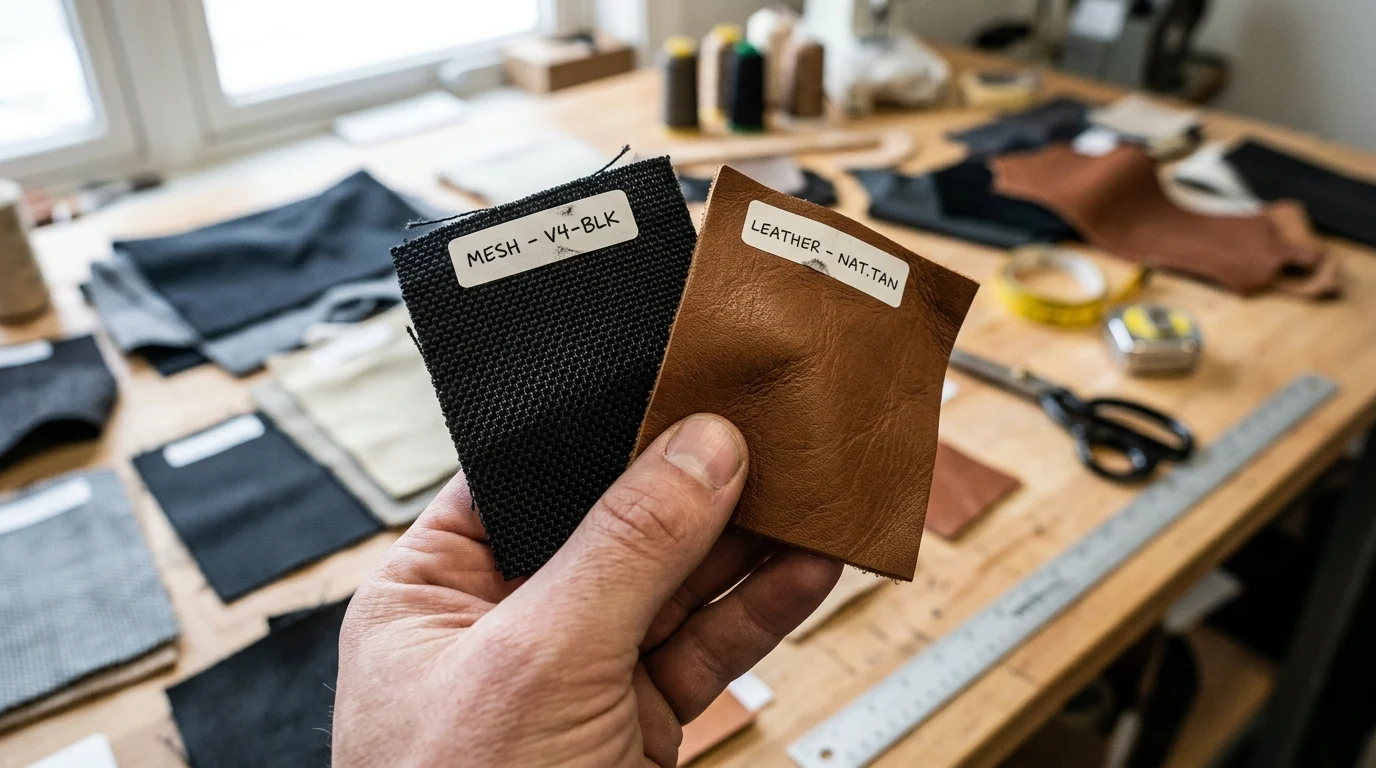
The transition from conceptual design to mass production requires a systematic approach to material validation. Factories and brands must collaborate extensively to ensure the chosen shoe upper material aligns perfectly with the intended end-use, target retail price point, and the factory’s specific production capabilities.
Best Materials for Different Shoe Types
Material specifications vary drastically across different footwear categories, requiring developers to match the physical properties of the upper to the biomechanical demands of the wearer.
| Footwear Category | Optimal Upper Material | Key Performance Requirement | Typical Thickness |
|---|---|---|---|
| Heavy-Duty Work Boots | Full-Grain Leather, TPU Overlays | Puncture & Abrasion Resistance | 1.8mm – 2.2mm |
| Marathon Running | Single-layer Monomesh, Knit | Ultra-lightweight, High MVTR | 0.4mm – 0.8mm |
| Fashion Sneakers | Suede, Premium PU Synthetic | Aesthetic texture, Color saturation | 1.2mm – 1.6mm |
| Outdoor Hiking | Nubuck, DWR-treated Nylon | Water resistance, Structural support | 1.4mm – 1.8mm |
Testing, Sampling, and Validation Process
The validation phase involves producing multiple iterative sample rounds, moving from initial pullovers to fit samples and full size runs. During this critical stage, factories assess the material’s behavior during the lasting process. Materials that are too rigid may tear at the heel curve or toe box when subjected to the extreme tension of the lasting machine, which often pulls the upper over the last at forces up to 60 kgf.
Conversely, materials with insufficient dimensional stability may require the addition of non-woven backing layers or tricot interlinings. Adding these structural reinforcements introduces approximately $0.15 to $0.30 per pair in hidden material and lamination costs. Brands often require a minimum of 200 hours of active wear-testing to ensure the upper does not delaminate or crease uncomfortably under real-world conditions.
Final Trade-Offs and Decision Making
Ultimately, selecting the ideal shoe upper material requires balancing aesthetic vision with commercial reality. A brand may initially desire the premium hand-feel of full-grain calfskin but must pivot to a high-grade microfiber PU to successfully meet a $120 retail price point while maintaining a sub-3% factory defect rate.
Decision-makers must continuously weigh the implications of material yields, MOQ constraints, and labor complexities. By analyzing these trade-offs early in the development calendar, footwear brands can finalize a Bill of Materials that supports both robust profitability margins and uncompromising product integrity in a highly competitive global market.
Key Takeaways
- The most important conclusions and rationale for shoe upper material
- Specs, compliance, and risk checks worth validating before you commit
- Practical next steps and caveats readers can apply immediately
Frequently Asked Questions
What is the best shoe upper material for breathability?
Engineered mesh or knit is usually best. Look for materials with good airflow and an MVTR above about 1,500 g/m²/24h for better moisture control.
Which shoe upper material is most durable?
Full-grain leather and high-quality microfiber PU are strong options. For sports shoes, choose materials with high abrasion resistance and proven flex-cycle performance.
Is PU better than PVC for shoe uppers?
In most cases, yes. PU is lighter, flexes better, and performs better in cold conditions, while PVC is cheaper and more water-resistant but can crack more easily.
How does upper material affect shoe manufacturing cost?
It changes material price, cutting yield, stitching complexity, and lead time. Materials like microfiber PU and knit often improve yield and help factories scale production more efficiently.
Can HH-MF help source the right shoe upper material?
Yes. HH-MF can help evaluate upper materials based on performance, cost targets, production efficiency, and the positioning of your footwear line.