
Introduction
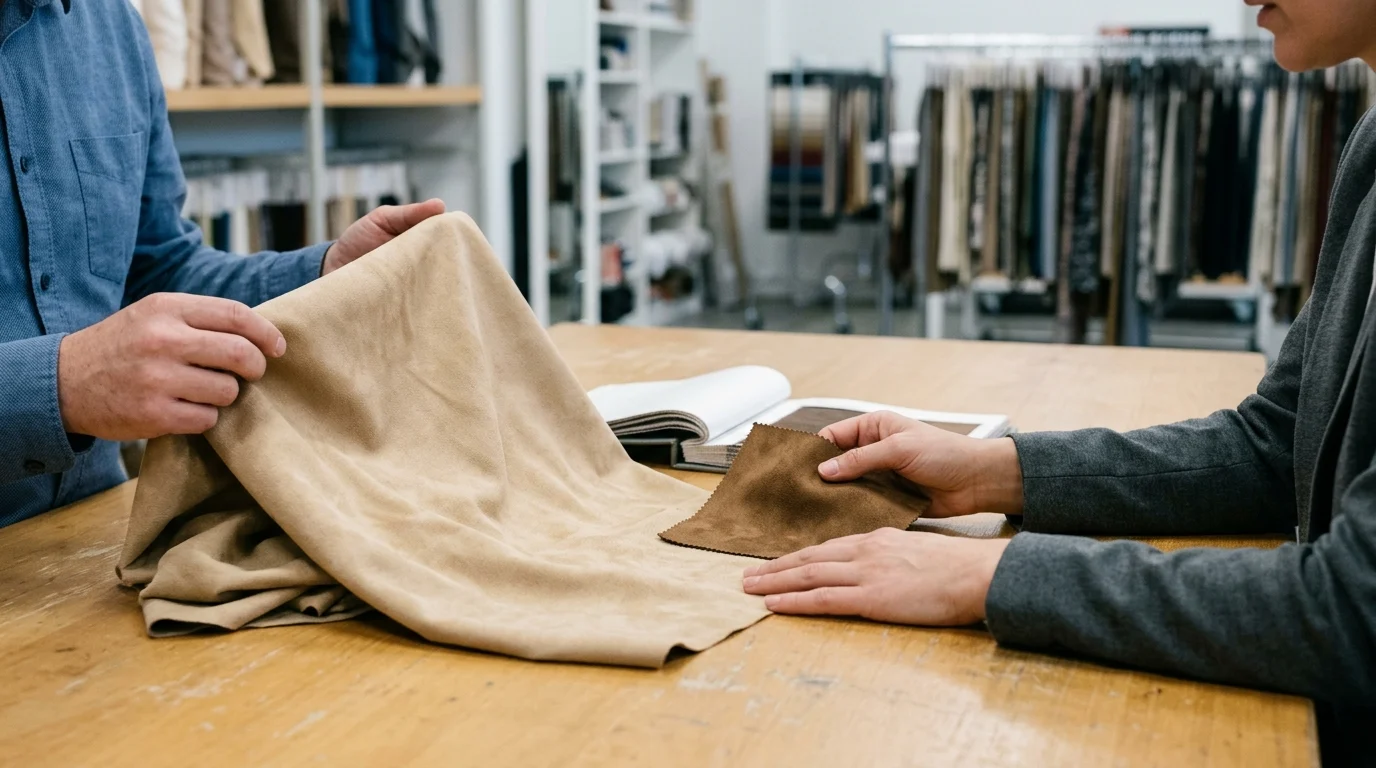
The labels sound interchangeable, but in textile sourcing they can point to very different materials. One may refer to a PU-based microfiber engineered to imitate natural suede, while the other is often used for brushed polyester fabrics with a suede-like surface. That difference affects durability, breathability, structure, price, and end-use suitability across footwear, upholstery, and accessories. This article clarifies where the terms overlap, where they do not, and how to tell what a supplier is actually offering so you can compare specifications accurately and avoid costly material mismatches.
Why the distinction between suede microfiber and microsuede matters
In the global textile and synthetic leather markets, the terms “suede microfiber” and “microsuede” are frequently used interchangeably by marketing departments and consumers. However, treating these terms as synonyms in a manufacturing and procurement context can lead to catastrophic supply chain failures.
The distinction between a true non-woven polyurethane (PU) microfiber and a brushed polyester knit is profound. These materials differ fundamentally in their chemical composition, manufacturing processes, physical performance, and cost structure. Misunderstanding these differences exposes buyers to significant operational and financial risks.
Terminology risks in upholstery, footwear, and accessories
The upholstery, footwear, and accessories sectors demand vastly different material performance thresholds. When a footwear brand specifies “microsuede” for a high-wear shoe upper, they typically require a non-woven PU microfiber engineered to mimic the collagen fiber structure of natural leather. If a supplier interprets “microsuede” as a basic brushed polyester fabric—a material common in low-cost decorative pillows—the resulting footwear will fail at the flex points and lack the necessary structural integrity.
This terminology gap routinely causes friction during the sampling phase. Procurement teams may face a 15% to 20% increase in prototype failure rates simply because the foundational material structure was misunderstood by the tier-two supplier. In upholstery, utilizing a basic woven microsuede rather than a high-density suede microfiber can reduce the lifespan of a commercial sofa from a targeted 10 years to less than 3 years, leading to costly warranty claims.
How naming confusion affects sourcing and product claims
Naming confusion directly impacts financial forecasting and product positioning. True suede microfiber requires a complex, multi-stage manufacturing process involving sea-island fiber spinning, non-woven needle punching, and polyurethane impregnation, justifying a cost of $8.00 to $15.00 per yard. Conversely, commercial microsuede is a straightforward woven or knitted textile, typically costing between $2.50 and $5.00 per yard.
When sourcing agents are tasked with finding “microsuede” without strict technical specifications, they naturally gravitate toward the $3.00 per yard option. This creates a severe misalignment between the brand’s marketing claims regarding durability and the actual physical capabilities of the sourced material. Ultimately, vague terminology prevents accurate cost-benefit analyses and exposes brands to accusations of misleading marketing if the product fails to perform like genuine suede.
What suede microfiber and microsuede mean in manufacturing
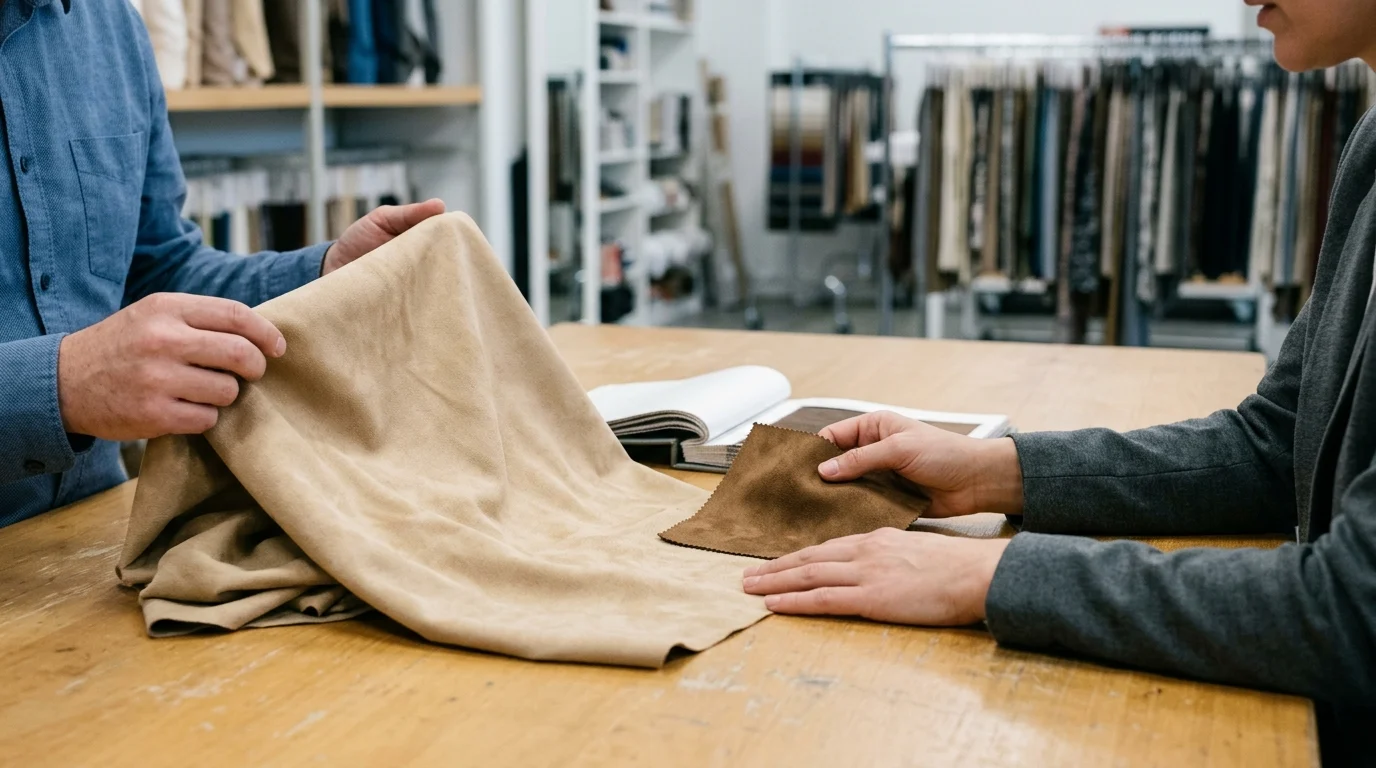
To establish a reliable supply chain, procurement professionals must define materials based on their physical architecture rather than their commercial trade names. Understanding the exact manufacturing mechanisms behind suede microfiber and microsuede is the first step in aligning material sourcing with product requirements.
How suede microfiber is defined by fiber, base, and finish
True suede microfiber is a highly engineered synthetic leather. It is defined by the use of ultra-fine “sea-island” fibers, which are typically composed of polyester or polyamide and measure between 0.01 and 0.05 denier. These microscopic fibers are needle-punched to create a complex, three-dimensional non-woven network that closely replicates the corium structure of natural animal hide.
After the non-woven base is formed, it is impregnated with a polyurethane (PU) resin. The “sea” component of the fiber is then dissolved using chemical solvents (like toluene) or alkaline solutions, leaving behind the ultra-fine “island” fibers suspended within the PU matrix. The surface is then buffed to raise a fine, consistent nap. This combination of a 3D fiber network and PU impregnation gives suede microfiber its distinct structural stability, weight (often ranging from 250 to over 500 GSM), and leather-like hand feel.
Whether microsuede is a technical category or commercial term
Unlike suede microfiber, “microsuede” is generally not recognized as a distinct technical category in polymer science; rather, it is a commercial textile term. In manufacturing, it almost exclusively refers to a standard woven or knitted fabric made from 100% polyester (PET) microfiber yarns. The fibers used are fine—typically 0.1 to 0.5 denier—but they do not undergo the complex sea-island dissolution or PU impregnation process.
To achieve a suede-like texture, the surface of the woven or knitted polyester is heavily sanded or brushed. This raises the fibers to create a soft nap. Because it lacks a polyurethane matrix and a 3D non-woven structure, commercial microsuede behaves entirely like a traditional fabric. It drapes easily, possesses directional stretch based on its weave, and relies entirely on the density of its yarns for strength.
Specification details buyers should clarify
Buyers must move beyond names and demand comprehensive technical data sheets (TDS) to clarify what they are purchasing. Critical specifications include the base construction method (non-woven vs. knitted/woven), the presence and percentage of polyurethane, and the exact fiber denier.
| Feature | True Suede Microfiber | Commercial Microsuede |
|---|---|---|
| Structure | Non-woven 3D network + PU | Woven or knitted PET |
| Fiber Fineness | 0.01 – 0.05 denier | 0.1 – 0.5 denier |
| Typical Weight | 250 – 500+ GSM | 120 – 300 GSM |
| Manufacturing Steps | Spinning, needle-punching, PU coating, dissolution | Weaving/knitting, dyeing, surface brushing |
Clarifying these specifications immediately filters out unqualified suppliers. A supplier offering “suede microfiber” at 150 GSM with zero polyurethane content is actually selling a brushed knit microsuede, regardless of the invoice description.
Key technical differences between suede microfiber and microsuede
The structural differences between these two materials result in drastically different physical properties. Engineers and designers must evaluate these technical metrics to ensure the material can withstand the stresses of the end-use environment.
Fiber structure, hand feel, durability, and appearance
The 3D non-woven structure of suede microfiber provides exceptional isotropic strength, meaning it resists tearing equally well in all directions. It offers a dense, “meaty” hand feel with a characteristic bite that closely mimics premium split suede. High-quality suede microfibers routinely exceed 50,000 Martindale abrasion rubs, with automotive-grade variants pushing past 150,000 rubs without significant pilling or degradation.
Commercial microsuede, lacking the PU matrix, generally feels softer and more textile-like. Its durability is significantly lower, typically scoring between 15,000 and 30,000 Martindale rubs. Furthermore, its tear strength is directional; a knitted microsuede will deform and tear much faster along the bias than a non-woven microfiber. Visually, microsuede often exhibits a deeper nap that changes color dramatically when brushed by hand, whereas suede microfiber maintains a tighter, more uniform surface.
Backing systems, coatings, and finishing methods
Because suede microfiber is structurally self-supporting, it rarely requires a secondary backing fabric. Its thickness—often ranging from 0.6 mm to 1.8 mm—is achieved purely through the density of the fiber-PU matrix. Finishing methods usually involve precision buffing, dyeing, and the application of topical water- or stain-repellent treatments.
Commercial microsuede, on the other hand, is inherently thin and lightweight. To make it suitable for applications like upholstery, it frequently requires a laminated backing system. Manufacturers will bond a Terylene/Cotton (TC) or fleece backing to the microsuede to artificially increase its thickness to 0.8 mm or 1.2 mm and to prevent the fabric from stretching out of shape. Over time, these laminated layers are susceptible to delamination if the adhesive fails.
Cost drivers and performance trade-offs
The performance trade-offs directly correlate with the cost drivers. The chemical intensity, specialized machinery, and multi-day processing required for suede microfiber justify its premium price point. It offers superior longevity, puncture resistance, and shape retention. Microsuede offers massive cost savings and high production speeds, but sacrifices structural integrity.
| Metric | Suede Microfiber (Non-woven PU) | Microsuede (Woven/Knit) |
|---|---|---|
| Abrasion (Martindale) | 50,000 – 150,000+ rubs | 15,000 – 30,000 rubs |
| Tear Strength | > 40 N | 15 – 25 N |
| Peel Strength | > 3.0 kg/3cm | N/A or < 1.5 kg/3cm (if backed) |
| Breathability | Moderate to High | High (unless heavily backed) |
How buyers should evaluate materials for sourcing
Sourcing these materials requires a rigorous, data-driven evaluation process. Procurement teams cannot rely on visual inspection alone, as advanced finishing techniques can make a $3.00 microsuede look temporarily identical to a $12.00 suede microfiber.
Step-by-step specification review process
The evaluation process must begin with a review of the material’s cross-section. Buyers should request microscopic cross-section imaging from the supplier. A true suede microfiber will display a solid, integrated matrix of fibers and resin, whereas a backed microsuede will clearly show distinct layers of face fabric, adhesive, and backing.
Next, buyers must conduct independent laboratory testing. Require physical samples and submit them for tear strength (ISO 9073-4 for non-wovens), abrasion resistance (ISO 12947-2), and peel strength testing. If the supplier claims the material is a non-woven PU microfiber but the peel strength is below 2.5 kg/3cm, it indicates a weak internal structure or a mischaracterized laminated textile.
Compliance and documentation requirements
Chemical compliance is a major hurdle, particularly for true suede microfiber due to its polyurethane and solvent usage. Buyers targeting the European market must ensure strict compliance with REACH regulations. A primary concern is Dimethylformamide (DMF), a solvent historically used in PU coagulation.
Stringent environmental standards now require DMF levels to be below 30 ppm, and many premium buyers demand completely water-borne PU systems (DMF-free). For commercial microsuede, the primary compliance risks revolve around azo dyes and formaldehyde used in the finishing process. Certification via OEKO-TEX Standard 100 provides a baseline assurance that the material is free from harmful chemical residues.
Lead times, tolerances, shade variation, and packaging
Logistical parameters also differ significantly. Because suede microfiber production is highly complex, lead times generally run between 20 and 35 days for custom colors, with Minimum Order Quantities (MOQs) typically set at 500 to 1,000 meters per color. The rigid nature of the material requires it to be shipped on sturdy paper tubes to prevent permanent creasing.
Commercial microsuede offers faster turnaround times. Standard colors can often be sourced from stock, and custom dye lots may only require 15 to 20 days. However, buyers must establish strict tolerances for shade variation (delta E < 1.0) and color fastness. Ensure the supplier guarantees a color fastness to rubbing of at least Grade 4 (dry) and Grade 3-4 (wet) to prevent dye transfer onto consumers’ clothing.
When to choose suede microfiber or microsuede

Ultimately, the choice between suede microfiber and commercial microsuede is not about one material being universally superior; it is about aligning material capabilities with the commercial realities of the final product.
Use cases that favor performance-led suede microfiber
Suede microfiber is the mandatory choice for applications demanding high structural integrity and longevity. In automotive interiors, seating materials must endure extreme temperature fluctuations, UV exposure, and constant friction while maintaining a lifespan expectation of 10 to 15 years. Only a non-woven PU microfiber can meet these rigorous OEM specifications.
Similarly, in premium footwear, luxury handbags, and high-end contract furniture, the material must hold a stitch under tension and resist puncturing. The leather-like drape and edge-finishing capabilities of suede microfiber allow designers to use it exactly as they would top-grain or split leather, justifying the higher raw material expenditure.
Use cases where commercial microsuede is sufficient
Commercial microsuede excels in applications where tactile softness is prioritized over structural durability, and where price sensitivity is high. Fast fashion apparel, lightweight jackets, and decorative home accessories (like throw pillows and drapery) are ideal use cases. In these applications, the product’s expected lifecycle is often 1 to 3 years.
Using a $10.00 per yard suede microfiber for a fast-fashion garment would over-engineer the product and destroy the profit margin. A 150 GSM brushed polyester microsuede provides the necessary aesthetic appeal and drape at a fraction of the cost, perfectly serving the consumer’s expectations for that specific product category.
How to make a defensible purchasing decision
To make a defensible purchasing decision, procurement teams must calculate the Total Cost of Ownership (TCO) rather than just the per-yard price.
Key Takeaways
- The most important conclusions and rationale for Suede Microfiber vs. Microsuede: Are They Actually the Same?
- Specs, compliance, and risk checks worth validating before you commit
- Practical next steps and caveats readers can apply immediately
Frequently Asked Questions
Are suede microfiber and microsuede the same material?
Not always. Suede microfiber usually means PU-impregnated non-woven synthetic leather, while microsuede often means brushed polyester fabric. Buyers should confirm structure, composition, GSM, and test data before sourcing.
Which material is better for footwear or high-wear products?
Suede microfiber is usually better for footwear, gloves, luggage, and automotive interiors because its non-woven PU structure offers stronger flex resistance, durability, and leather-like stability than basic brushed microsuede.
What specifications should B2B buyers request before ordering?
Request fiber type, base construction, PU content, GSM, thickness, abrasion resistance, colorfastness, flex test results, and application recommendations. Clear specs help avoid sampling errors and wrong material substitutions.
Why is suede microfiber usually more expensive than microsuede?
It requires sea-island microfiber technology, needle punching, PU impregnation, fiber splitting, and surface buffing. This more complex process creates higher performance and a more leather-like feel than standard brushed polyester.
Can HAOHAO support custom suede microfiber development?
Yes. HAOHAO offers R&D-to-production support with 3 specialized factories, 20+ years of experience, 50 million meters annual capacity, and a 60+ member service team for scalable synthetic leather solutions.