

There’s an interesting analogy: synthetic leather is the “face of industry” — the face of footwear, the face of sofas, the face of automotive interiors. But for a long time, behind that face, there was an environmental cost.
Solvents. DMF. High energy consumption. Slow degradation.
Traditional synthetic leather added color to our lives — but it also left a debt to nature.
Today, I want to share some real changes I’ve witnessed in our industry. Not from HAOHAO’s perspective alone, but from the perspective of someone who has been in this field for years.
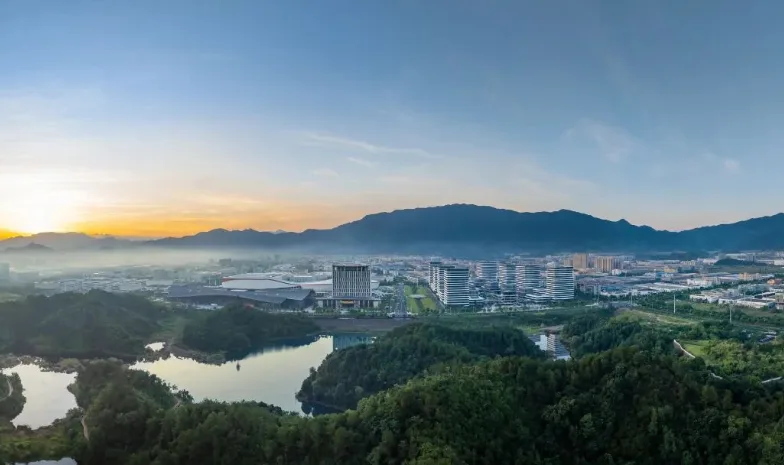
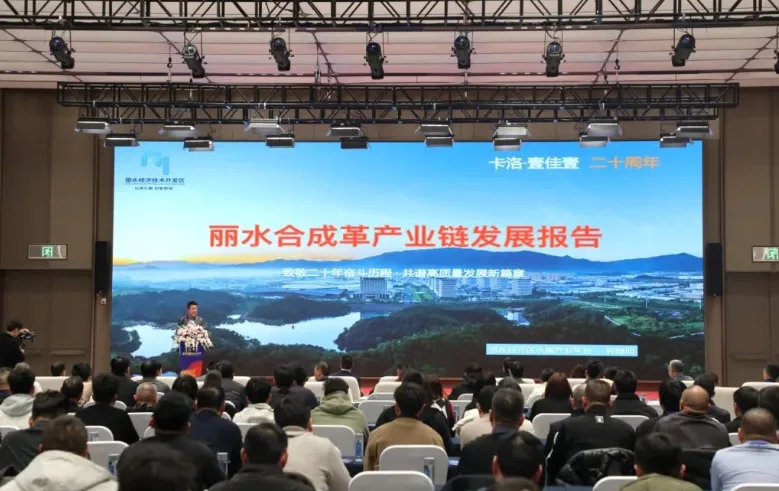
In Lishui, China, a group of my peers spent ten years transitioning from “semi-water-based” to fully water-based production. During the toughest times, the hand feel was too stiff, and the market didn’t embrace it. But they didn’t look back.
They invested nearly 7 million RMB in a wastewater recovery system on day one. Two decades later, their annual output exceeds 2 billion RMB. They acquired upstream and downstream operations — integrating resin, base fabric, and finished leather — with every production line driven by data.
Today, their products are recognized by global clients. They also participated in setting China’s first environmental grading certification standard for synthetic leather.
Others have turned coffee grounds and coconut shells into a new material, debuting on international fashion runways. Some have advanced water-based resin to the forefront of their market segment. AI-powered visual inspection systems now replace manual quality checks, reducing labor needs. An online trading platform has served 2,578 companies.
Every company has its own path — but the direction is the same: toward higher quality, toward environmental responsibility.
None of these peers are HAOHAO’s competitors. They are our mirrors.
We have always believed that environmental protection is not a cost — it is a capability. The ability to do what others are afraid to try.
At HAOHAO, we are doing three things:
First, we learn from our peers. We follow every company that is pioneering water-based PU, solvent-free processes, bio-based materials, and silicone leather. We study how they solve hand-feel challenges, improve yield, and make the market accept “green premiums.”
Second, we collaborate with our peers. Industry progress never comes from a single company alone. We participate in setting industry standards and drive supply chain sustainability — so that everyone along the value chain reduces carbon emissions together.
Third, we keep developing and innovating. From waterborne base to Haptex 4.0 closed-loop recyclable PU, we use technology to answer the question: “Will eco-friendly materials compromise performance?”
Sustainability is not optional. It is a must.
And HAOHAO’s answer has always been clear.
We believe the future of synthetic leather lies not in being “cheaper,” but in being “worth more.”