
Introduction
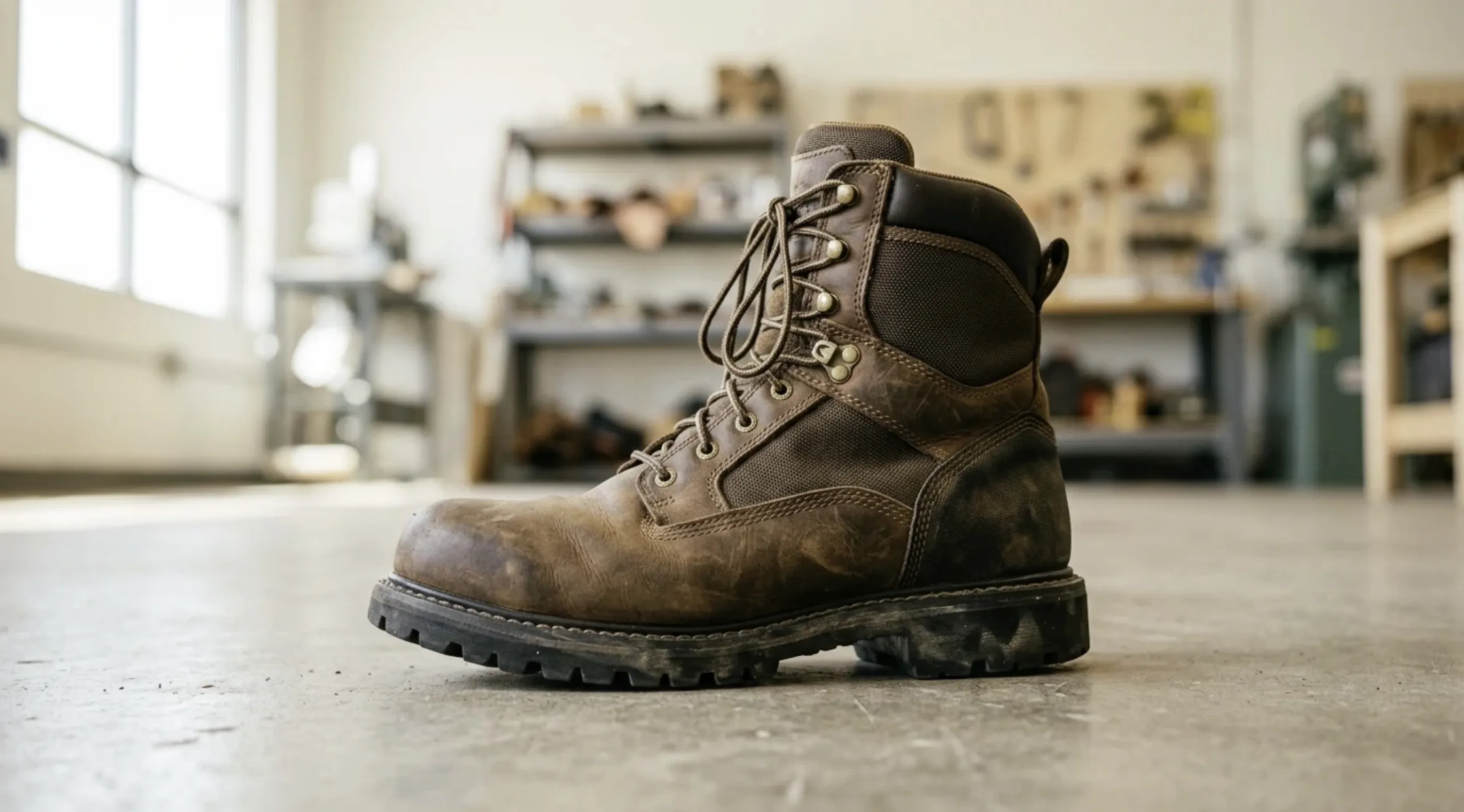
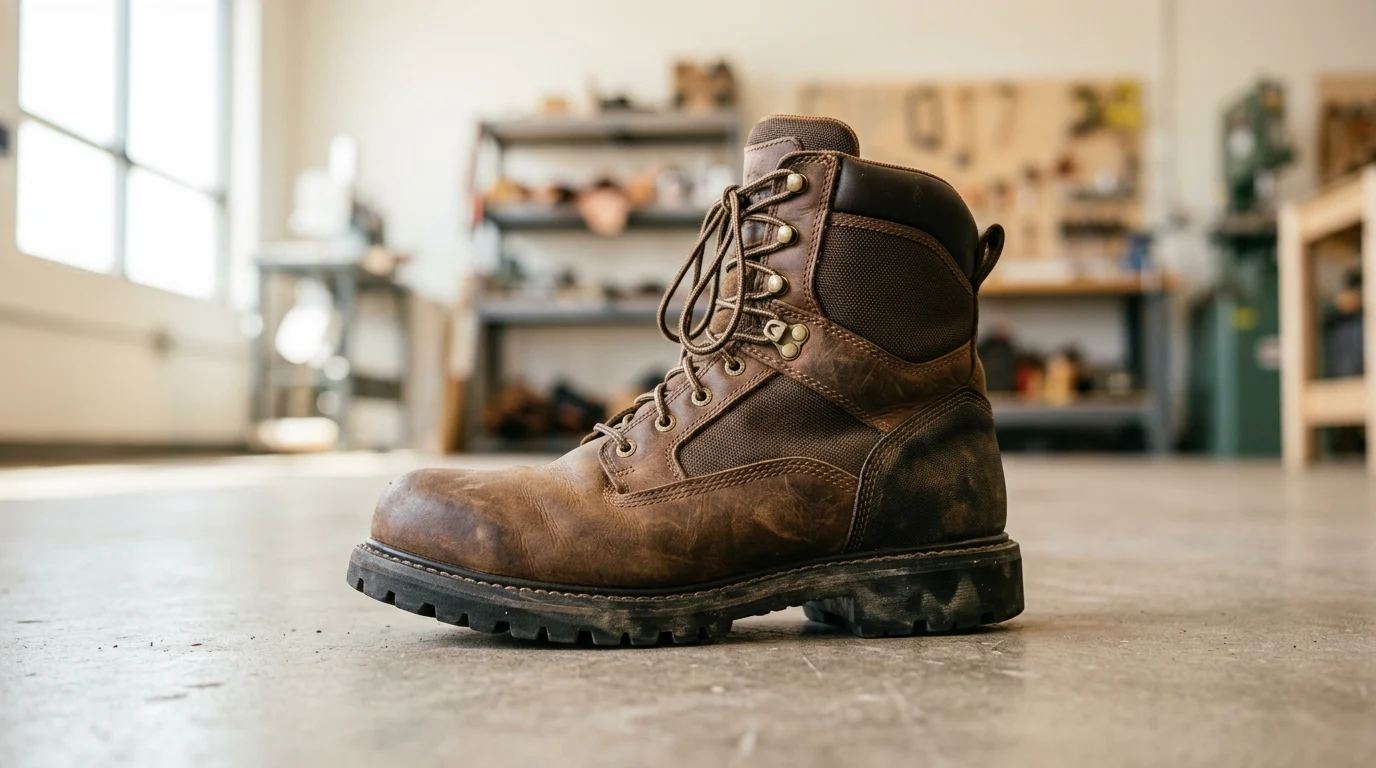
The performance of a safety shoe depends less on its appearance than on the materials engineered into each layer. Uppers, linings, toe caps, midsoles, and outsoles all contribute differently to impact resistance, puncture protection, chemical durability, slip control, and all-day comfort. This article examines the most common industrial footwear materials used in safety shoes, including leather, rubber, polyurethane, thermoplastics, and protective composites, with a focus on how each performs under demanding work conditions. By understanding these material choices, readers can better evaluate product quality, match footwear to specific hazards, and make more informed purchasing or specification decisions.
Why material selection determines safety shoe performance
Industrial footwear material selection is the foundational element that dictates occupational safety, wearer comfort, and product longevity. Designing protective footwear is a complex engineering task, as a single industrial boot typically integrates 15 to 20 distinct materials, each serving a highly specialized function.
The interaction between these materials determines whether a boot will survive harsh chemical exposure, insulate against electrical hazards, or fail within weeks of deployment. Understanding the science behind these textiles, polymers, and alloys is critical for procurement teams and safety managers aiming to optimize workplace protection.
Key shoe components and their material roles
The structural architecture of a safety shoe relies heavily on the synergy between its components. The upper material dictates environmental protection and structural support, while the internal lining manages moisture and thermal regulation. In the lower assembly, the toe cap provides critical crush resistance, the midsole offers puncture protection and shock absorption, and the outsole delivers traction and chemical defense.
To meet global safety mandates, the protective toe cap material—whether steel, aluminum, or composite—must reliably withstand at least 200 Joules of impact energy and 15 kilo-Newtons of compression without compromising the internal cavity space. The failure of any single material layer compromises the entire safety profile of the footwear.
Critical performance criteria for selection
Procurement and design teams must evaluate materials against stringent performance criteria. Mechanical durability, including abrasion resistance and tear strength, is paramount for heavy-duty applications. Environmental resistance factors, such as water penetration and chemical repellency, dictate the shoe’s viability in petrochemical or continually wet environments.
Ergonomic criteria, particularly weight and breathability, directly impact worker fatigue and compliance. A critical quantitative threshold for premium upper materials is a water vapor permeability rate exceeding 0.8 mg/(cm²·h). Falling below this threshold often results in excessive heat retention, leading to blistering, discomfort, and decreased productivity during extended shifts.
Best materials for safety shoe construction
The modern industrial footwear market offers a diverse spectrum of materials, ranging from traditional organic hides to advanced synthetic polymers. Selecting the optimal material requires balancing protective capabilities, weight, and manufacturing costs.
Upper material options
Upper materials form the primary defensive barrier against workplace hazards. Full-grain leather remains the industry gold standard for heavy construction and welding, offering unmatched durability and natural heat resistance when processed to an optimal thickness of 1.8mm to 2.2mm. Split leather provides a cost-effective alternative for general-purpose footwear, though it typically requires a polyurethane (PU) coating for basic water resistance.
Microfiber has emerged as a high-performance synthetic alternative, offering consistent thickness, lighter weight, and superior chemical resistance compared to natural leather. For light industry, warehousing, and logistics, high-tenacity nylon and woven mesh uppers provide maximum breathability and flexibility, though they sacrifice heavy abrasion resistance.
Toe cap, midsole, and outsole material choices
The protective and foundational components rely on specialized alloys and advanced polymers. Steel toe caps are inexpensive and feature a low internal profile, but they are thermally conductive and add significant weight to the shoe. Composite toe caps, typically engineered from fiberglass or carbon fiber, are non-metallic, lightweight, and thermally insulating, making them ideal for extreme temperatures and high-security environments.
For midsoles, woven Kevlar or aramid fibers offer flexible, lightweight puncture protection, rapidly replacing rigid steel plates in modern designs. Outsole selection is equally critical: dual-density Polyurethane (PU/PU) offers excellent shock absorption and slip resistance for indoor use. Conversely, nitrile rubber is essential for extreme environments, capable of withstanding contact heat up to 300°C (meeting the HRO standard) and resisting aggressive petrochemical degradation.
Material comparison framework
To systematically evaluate these options, manufacturers and buyers utilize comparison matrices that weigh physical properties against production economics.
| Material | Primary Application | Durability | Heat Resistance | Relative Cost |
|---|---|---|---|---|
| Full-Grain Leather (1.8-2.2mm) | Heavy Industry, Welding | Very High | Excellent | High |
| Microfiber Synthetic | Food Processing, Tech | High | Moderate | Medium |
| Dual-Density PU Outsole | Logistics, Indoor Manufacturing | Moderate | Low (up to 130°C) | Low |
| Nitrile Rubber Outsole | Petrochemical, Foundry | Very High | Excellent (up to 300°C) | High |
How to evaluate material quality and compliance
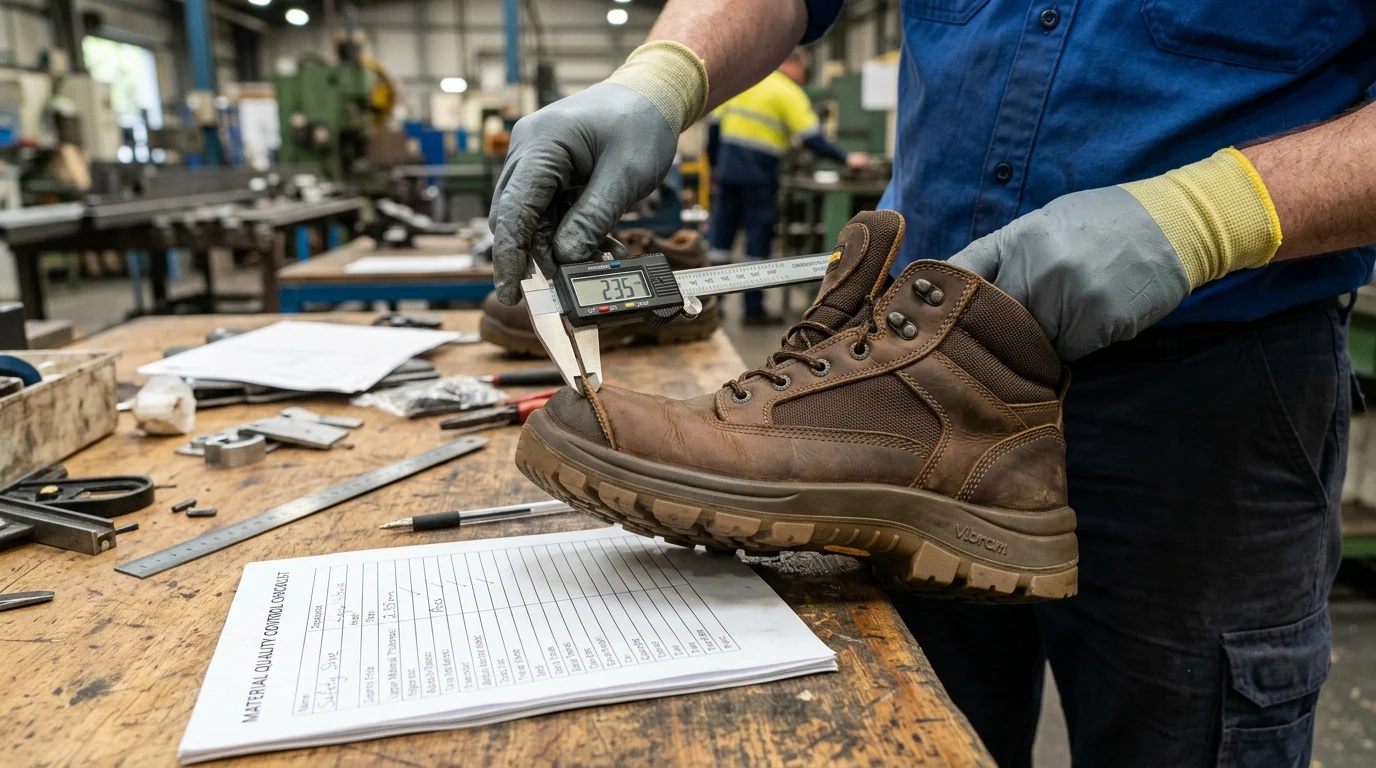
Ensuring that industrial footwear material meets rigorous safety specifications requires robust quality control protocols and a deep understanding of global testing standards. Material failures in the field not only lead to rapid product degradation but also expose workers to severe injury risks and organizations to liability.
Relevant standards and test methods
Compliance with international safety frameworks, such as EN ISO 20345:2022 in Europe or ASTM F2413-18 in North America, dictates the baseline testing for all materials. Laboratories subject materials to rigorous stress tests, including flex cracking, tear strength, and abrasion resistance.
Slip resistance testing is particularly demanding; under the updated EN ISO standards, an outsole material must achieve a dynamic friction coefficient of greater than 0.31 on specific lubricated surfaces to pass the baseline SR requirement. Moisture management materials are also rigorously tested for desorption rates to ensure internal linings dry adequately between shifts, preventing fungal growth.
Supplier capability and material consistency
A manufacturer’s ability to deliver consistent safety footwear hinges heavily on its supply chain integrity. Evaluating supplier capability involves auditing its ISO 9001 compliance, batch traceability, and in-house laboratory testing capacity. Material consistency is critical; a variance of just 0.2mm in leather thickness can compromise the lasting process during manufacturing, leading to structural weaknesses.
Furthermore, buyers must navigate Minimum Order Quantities (MOQs) when specifying materials. Custom synthetic textiles, such as specialized flame-retardant microfiber or custom-dyed meshes, often require MOQs ranging from 1,000 to 3,000 square meters per production run, heavily impacting inventory planning and capital allocation for custom footwear programs.
Common material failures and risks
Understanding material limitations helps prevent premature footwear failure and safety breaches. One of the most common risks is the hydrolysis of polyurethane (PU) outsoles. In high-humidity environments, improper chemical formulation or prolonged storage can cause PU to break down and crumble; standard PU outsoles typically have a maximum shelf life of 3 to 5 years before hydrolysis risks become critical.
Natural leathers present their own risks, being highly susceptible to cracking and dry rot if exposed to highly alkaline materials like wet concrete without proper topical conditioning. Identifying these failure modes early allows safety managers to specify alternative materials, such as TPU or rubber, for incompatible environments.
How to match materials to application and budget
Strategic procurement of safety footwear requires aligning material specifications with the specific hazards of the work environment while adhering to corporate budgetary constraints. A misaligned specification can lead to over-engineering, which wastes capital, or under-engineering, which directly compromises worker safety.
Step-by-step material selection process
The selection process begins with a comprehensive workplace hazard assessment. Safety managers must identify primary risks—such as sharp debris, electrical hazards, or caustic chemicals—and define the necessary regulatory standards required for the facility.
Next, environmental factors—such as ambient temperature, moisture levels, and flooring types—are evaluated to narrow down the material options. Finally, these technical requirements are mapped against the target unit cost, allowing procurement teams to request accurate prototypes and material swatches from footwear manufacturers.
Balancing cost, durability, and replacement cycles
Evaluating footwear budgets strictly on the initial purchase price is a common procurement error. Organizations must calculate the Total Cost of Ownership (TCO) based on material durability, comfort-driven productivity, and replacement cycles.
For example, purchasing an entry-level safety shoe for $30 that utilizes low-grade split leather and a single-density PU outsole may require replacement every 3 to 4 months in a heavy industrial setting due to rapid sole wear or upper tearing. In contrast, investing in a $90 premium boot featuring full-grain leather, a nitrile rubber outsole, and Kevlar stitching might extend the replacement cycle to 12 or 18 months, ultimately reducing the annual spend per worker while significantly improving ergonomic comfort.
Practical material combinations by product tier
Footwear manufacturers typically structure their product lines into distinct tiers, utilizing specific material combinations to hit target Free On Board (FOB) price bands. Understanding these tiers helps buyers set realistic expectations for material quality.
| Product Tier | Target FOB Price | Upper Material | Toe Cap / Midsole | Outsole Material |
|---|---|---|---|---|
| Entry-Level | $10 – $18 | Split Leather or Basic Mesh | Steel / Steel Plate | Single or Dual-Density PU |
| Mid-Range | $19 – $28 | Action Leather or Microfiber | Composite / Kevlar | PU / TPU or Basic Rubber |
| Premium | $29 – $45+ | Premium Full-Grain Leather | Carbon Fiber / Kevlar | Vibram or Nitrile Rubber |
Key Takeaways
- The most important conclusions and rationale for industrial footwear material
- Specs, compliance, and risk checks worth validating before you commit
- Practical next steps and caveats readers can apply immediately
Frequently Asked Questions
Which upper material is best for heavy-duty safety shoes?
Full-grain leather is usually best for construction, welding, and rough industrial use because it offers strong abrasion resistance, structure, and natural heat resistance.
When should I choose microfiber instead of leather?
Choose microfiber when you need lighter weight, more consistent quality, and better chemical resistance, especially for logistics, food processing, or light industrial environments.
What toe cap material works best for temperature-sensitive workplaces?
Composite toe caps are a practical choice because they are lightweight, non-metallic, and thermally insulating, making them better for hot, cold, or security-screened areas.
Why is nitrile rubber recommended for some safety shoe outsoles?
Nitrile rubber is ideal for high-heat and petrochemical settings because it can handle contact heat up to 300°C and resists oil and chemical degradation better than standard PU soles.
How can buyers compare industrial footwear materials on hh-mf.com?
Focus on the work environment, then compare upper, toe cap, midsole, and outsole materials by heat resistance, chemical exposure, weight, breathability, and durability requirements.