
Introduction
Across the automotive sector, interior material choices are being reshaped by cost targets, EV design priorities, and changing consumer expectations. Automotive synthetic leather is no longer a budget substitute for genuine leather; it has become a performance-driven material engineered for consistency, lower weight, easier processing, and scalable quality across vehicle programs. This article explains why manufacturers are making the switch, from bill-of-materials savings and production efficiency to durability, aesthetics, and sustainability considerations. It also clarifies how synthetic leather fits the needs of modern cabins, helping readers understand the practical and commercial reasons it is becoming the preferred option in both mass-market and premium vehicles.
Why Automotive Synthetic Leather Is Replacing Genuine Leather
The automotive industry is undergoing a fundamental shift in interior material selection, moving decisively away from genuine bovine leather toward advanced synthetic alternatives. This transition is driven by a confluence of cost optimization mandates, evolving consumer ethics, and the unique engineering requirements of modern vehicle architectures.
Historically reserved for economy trims, synthetic leather has evolved into a highly engineered substrate capable of meeting the rigorous demands of premium and luxury cabins. By eliminating the natural inconsistencies of animal hides, automotive manufacturers are achieving unprecedented levels of standardization and performance.
OEM cost pressures and EV interior strategies
Original Equipment Manufacturers (OEMs) face intense pressure to manage bill-of-materials (BOM) costs while simultaneously improving vehicle efficiency. In the electric vehicle (EV) sector, weight reduction is paramount for maximizing battery range. Advanced automotive synthetic leather typically weighs between 450 and 700 grams per square meter, representing a weight savings of up to 30% compared to traditional genuine leather.
Furthermore, adopting synthetics can yield a direct material cost reduction of 20% to 40% per square meter. This substantial margin improvement allows OEMs to reallocate budgets toward advanced driver-assistance systems (ADAS), larger infotainment displays, and next-generation battery technologies without raising the vehicle’s base MSRP.
Commercial advantages in automotive applications
Beyond direct cost savings, synthetic leather offers substantial commercial advantages through supply chain predictability. Genuine leather pricing is notoriously volatile, tied heavily to agricultural cycles, weather patterns, and global meat consumption trends. Synthetic leather, manufactured via controlled chemical processes, provides stable pricing and highly scalable production.
This stability allows Tier 1 seating and trim suppliers to lock in long-term contracts with predictable margins, avoiding the 10% to 15% year-over-year price fluctuations historically seen in the natural hide market. Additionally, the synthetic supply chain can quickly pivot to produce new colors, grains, and perforation patterns to match rapid mid-cycle vehicle refreshes.
What Automotive Synthetic Leather Is and How It Compares

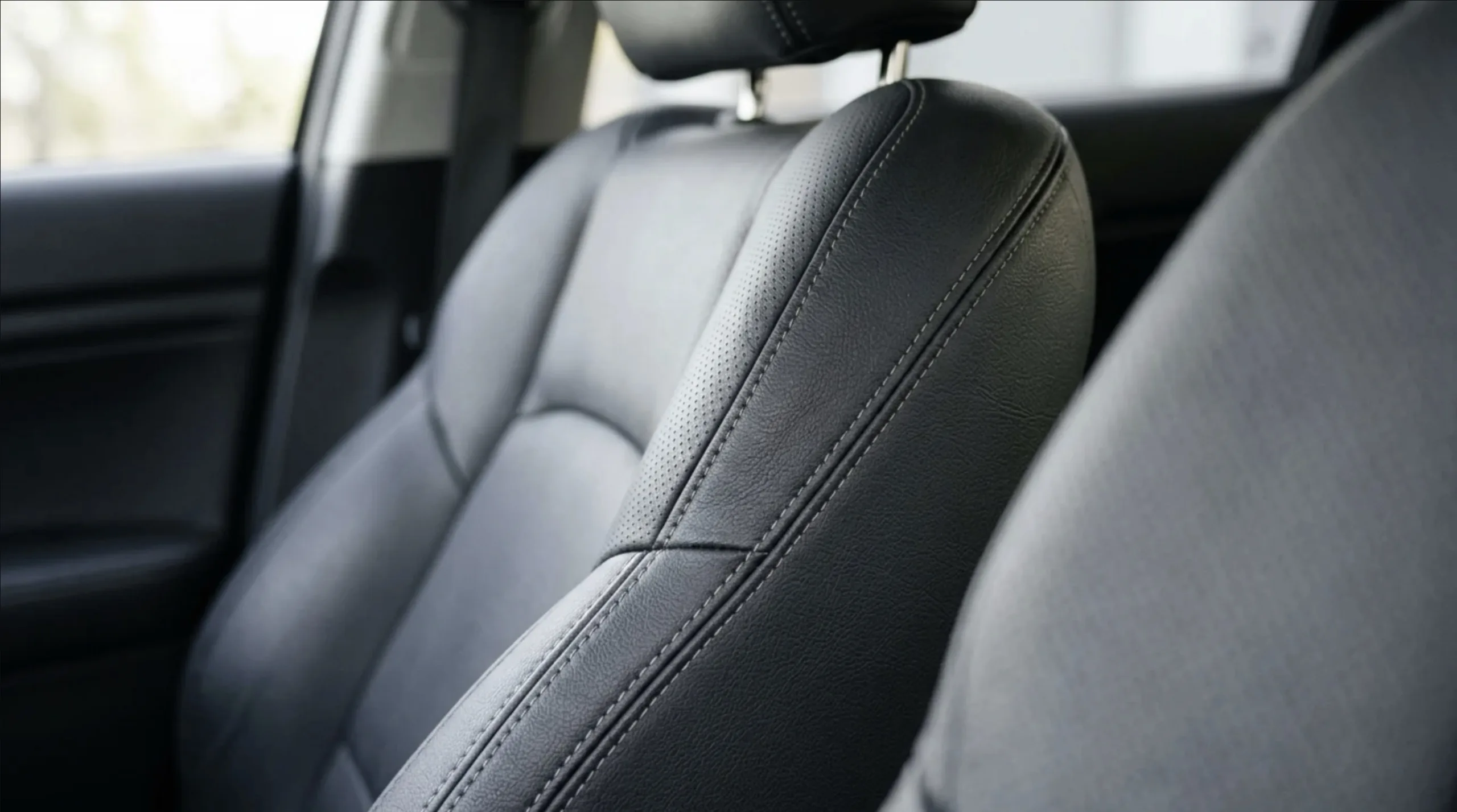
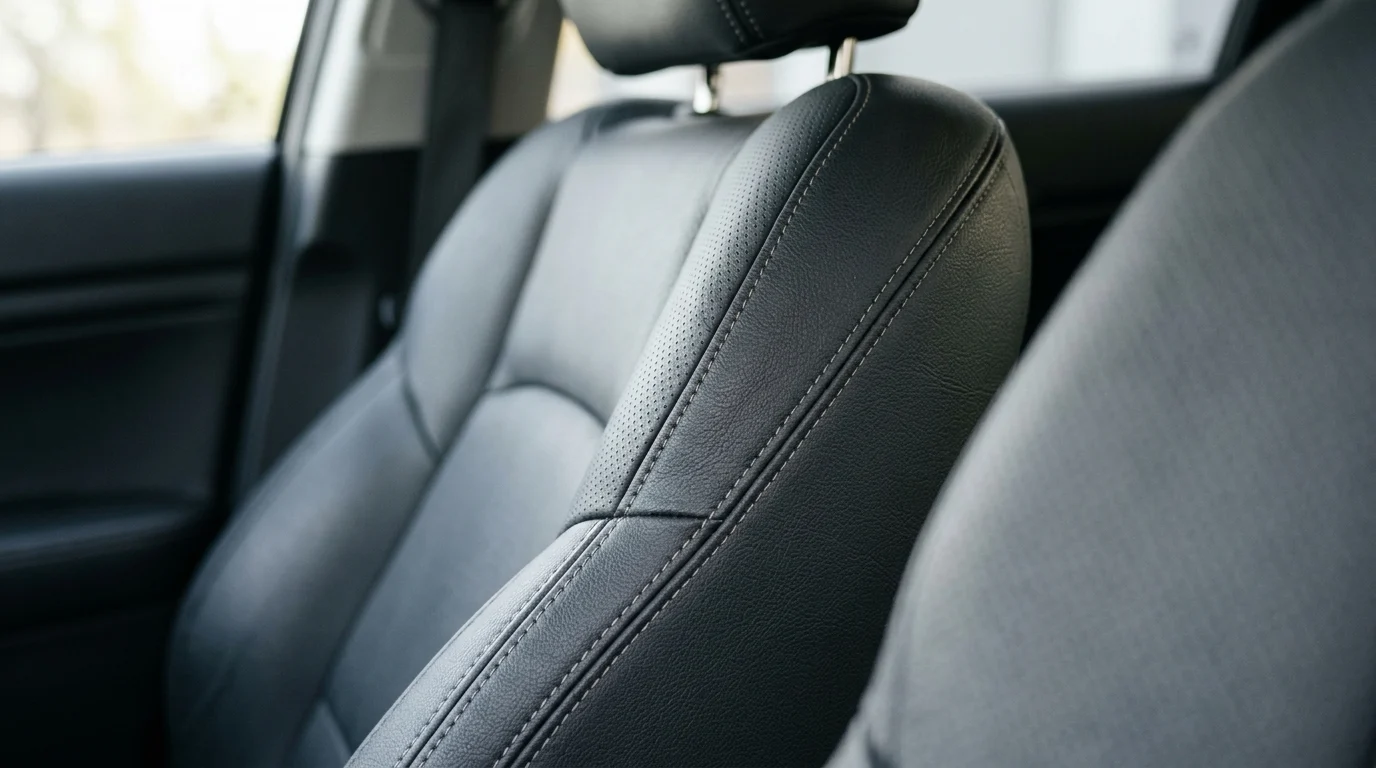
Automotive synthetic leather is a highly engineered composite material designed to replicate the aesthetic and tactile properties of natural leather while exceeding its physical performance in harsh environmental conditions. The architecture of these materials typically consists of a textile backing—woven, knitted, or non-woven—coated with specialized polymer layers.
For automotive seating and dashboard applications, strict performance specifications dictate a total material thickness ranging from 1.0mm to 1.4mm. The topcoat is formulated to resist UV degradation, chemical spills, and mechanical wear, while the intermediate foam layer provides the necessary haptic feedback and compression recovery required for passenger comfort.
Material types and performance specifications
Unlike natural hides, which vary in thickness and density from the belly to the spine, synthetic leather is manufactured to exact tolerances. Tensile strength, elongation at break, and tear resistance are mathematically controlled during the extrusion and coating processes.
Premium synthetic materials are engineered to maintain a tear strength exceeding 30 N/mm, ensuring they can withstand the stress of tight automated sewing and continuous passenger ingress and egress over a vehicle’s lifespan.
Cost and durability comparison
When comparing synthetic options against genuine leather, procurement teams must evaluate both upfront costs and long-term durability metrics.
| Material Type | Est. Cost ($/sqm) | Weight (g/sqm) | Lifespan Expectancy |
|---|---|---|---|
| Genuine Leather | $30 – $55 | 800 – 1100 | 10 – 15 Years |
| Microfiber PU | $15 – $25 | 500 – 700 | 10 – 15 Years |
| Standard PU | $8 – $15 | 450 – 650 | 7 – 10 Years |
| Automotive PVC | $5 – $10 | 500 – 800 | 5 – 8 Years |
While genuine leather commands a significant premium, microfiber polyurethane (PU) closely matches its lifespan and tactile quality at a fraction of the cost. PVC remains the most economical option, though it compromises on breathability and tactile luxury compared to PU alternatives.
PU, PVC, microfiber, and bio-based options
The market is segmented into several distinct chemical options. Polyvinyl chloride (PVC) is the legacy choice, valued for its extreme durability and low cost, primarily used in commercial vehicles, door panels, and lower-tier trims. Polyurethane (PU) dominates the mid-market due to its softer hand-feel and superior temperature regulation.
Microfiber leather, which utilizes a high-density matrix of ultra-fine polyamide fibers coated in high-grade PU, represents the premium tier and is virtually indistinguishable from real leather. Recently, bio-based synthetics have gained traction, incorporating 20% to 45% plant-derived polymers—such as corn or soy derivatives—to reduce fossil fuel reliance and significantly lower the material’s overall carbon footprint.
Why Performance, Compliance, and Sustainability Favor It
The automotive cabin is a punishing environment, subjecting materials to extreme temperature fluctuations, direct ultraviolet radiation, and constant physical friction. Synthetic leather has captured market share largely because polymer chemistry can be precisely tuned to survive these conditions better than organic materials.
Abrasion, hydrolysis, and wear performance
Automotive synthetics must pass rigorous OEM testing protocols before approval. Taber abrasion resistance is a critical metric; high-quality PU and microfiber synthetics routinely withstand over 100,000 cycles without significant topcoat degradation or color transfer.
Hydrolysis resistance—the ability to withstand breakdown from moisture and heat—is another vital parameter. Advanced automotive PU is engineered to survive accelerated aging tests, often enduring 7 to 14 weeks in environmental chambers set at 70°C and 95% relative humidity without peeling or cracking, outperforming many naturally tanned leathers.
Regulatory and OEM compliance drivers
Regulatory compliance heavily influences material selection. Global standards regarding Volatile Organic Compounds (VOCs) and vehicle interior air quality (VIAQ) have become increasingly stringent. Modern water-borne PU synthetics minimize off-gassing, keeping interior formaldehyde levels strictly below the 10 mg/kg threshold required by many European and Asian regulators.
Furthermore, synthetic leathers must meet strict flammability standards, such as the FMVSS 302 regulation in the United States, which requires a burn rate of less than 101.6 mm/min. Flame retardants are integrated directly into the polymer matrix of synthetics, ensuring consistent compliance without the need for post-production topical treatments.
Key trade-offs in feel, heat, and longevity
Despite their advantages, synthetic leathers present specific engineering trade-offs. Standard PVC and traditional PU lack the natural breathability of genuine leather. As a result, synthetic seats can run 2°C to 5°C hotter in direct summer sunlight, potentially causing passenger discomfort.
To mitigate this, Tier 1 suppliers are increasingly utilizing micro-perforation techniques and integrating infrared-reflective (IR) pigments into the topcoat. Additionally, while synthetic materials offer excellent initial longevity, deep scratches or punctures in PU cannot be easily repaired or conditioned like organic leather, meaning catastrophic surface damage usually requires complete panel replacement.
How Sourcing, Manufacturing, and Logistics Support Adoption
The shift toward synthetic leather is not solely an engineering decision; it is heavily driven by manufacturing efficiencies. The transition from handling irregular organic hides to standardized synthetic rolls fundamentally streamlines Tier 1 cutting and sewing operations.
Yield, defects, and lead-time control
Synthetic leather is delivered in continuous rolls, typically measuring 30 to 50 meters in length and 1.37 meters in width. This uniformity drastically simplifies inventory management and quality control. Defect rates in high-quality synthetic rolls are routinely kept below 1%, whereas natural hides often feature unpredictable scars, tick bites, and stretch marks.
Furthermore, synthetic manufacturing offers vastly superior lead-time control. Producing a custom-colored, uniquely grained synthetic roll takes approximately 3 to 4 weeks from order to delivery. In contrast, sourcing, tanning, and dyeing genuine automotive leather can require lead times of 8 to 12 weeks, complicating just-in-time (JIT) manufacturing schedules.
Cutting efficiency, waste, and sewing performance
The most dramatic manufacturing advantage of synthetic leather lies in cutting efficiency. Because genuine hides are irregular and require defect-avoidance scanning, the cutting yield for natural leather typically hovers between 55% and 65%. A significant portion of the hide is discarded as scrap.
Synthetic leather, conversely, allows for highly optimized CNC nesting. Automated cutting machines can achieve material yields of 85% to 92%. This near-total utilization drastically reduces industrial waste and directly translates to lower per-seat manufacturing costs. Additionally, the uniform thickness of synthetics reduces needle breakage and thread tension issues during high-speed robotic sewing operations.
Selection process for OEMs and Tier suppliers
When OEMs and Tier 1 suppliers select synthetic leather partners, the auditing process is rigorous. Suppliers must hold IATF 16949 certification, ensuring automotive-grade quality management.
Procurement teams also evaluate Minimum Order Quantities (MOQs), which typically range from 500 to 1,000 meters per custom color or grain. Suppliers with agile roll-to-roll coating lines that can accommodate lower MOQs without extreme price penalties are highly favored, as they allow OEMs to offer diverse interior color palettes and limited-edition trims without holding excessive inventory.
How OEMs and Suppliers Should Decide When to Use It
Determining whether to specify PVC, standard PU, microfiber, or bio-based synthetic leather requires a strategic framework. OEMs and Tier suppliers must balance brand positioning, total cost of ownership (TCO), and specific vehicle use cases to make the optimal material choice.
Decision criteria by vehicle class and use case
Material selection is heavily dictated by vehicle class and the intended consumer demographic.
| Vehicle Class | Primary Use Case | Recommended Synthetic Material | Key Driver |
|---|---|---|---|
| Economy / Fleet | High traffic, ride-share | Automotive PVC | Maximum durability, lowest cost |
| Mid-Range Passenger | Daily commuting, families | Standard PU | Balance of comfort, cost, and VOCs |
| EV / Eco-Focused | Green positioning, range | Bio-based PU | Sustainability, weight reduction |
| Luxury / Premium | Executive transport | Microfiber PU | Premium haptics, genuine leather alternative |
For fleet and ride-share vehicles, where interior components endure maximum abuse, heavy-duty PVC remains the logical choice. However, for luxury EVs targeting environmentally conscious buyers, OEMs are increasingly standardizing microfiber and bio-based PU to deliver a premium feel without compromising on sustainability narratives.
Procurement and engineering guidance
From a procurement perspective, conducting a comprehensive Total Cost of Ownership (TCO) analysis is essential. While PVC offers the lowest baseline cost per meter, its heavier weight can incur hidden costs in EV battery efficiency and shipping logistics. Procurement teams must also factor in the 20% to 30% yield advantage synthetics hold over genuine leather when calculating the final BOM.
Engineering teams should work closely with styling studios to ensure that the chosen synthetic substrate can accommodate required complex geometries, such as deep draws on dashboard panels or tight radii on steering wheels. By aligning material specifications with a targeted 10-to-15-year lifecycle, OEMs can successfully phase out genuine leather while elevating the overall quality and consistency of the vehicle interior.
Key Takeaways
- The most important conclusions and rationale for automotive synthetic leather
- Specs, compliance, and risk checks worth validating before you commit
- Practical next steps and caveats readers can apply immediately
Frequently Asked Questions
What should buyers compare first when sourcing automotive synthetic leather?
Start with airflow/spec range, compliance requirements, installation constraints, and after-sales spare-part policy. These four factors usually determine total risk and margin quality.
How can readers control landed cost for automotive synthetic leather?
Break down unit FOB, packaging volume, container utilization, duty/tax, and expected return rate. A simple landed-cost model by SKU tier helps avoid margin surprises.
Which certifications are commonly required for automotive synthetic leather in key markets?
Requirements vary by destination market; verify applicable electrical/safety and material compliance standards before PO confirmation, and keep lab reports tied to exact SKU versions.
How should distributors set MOQ and inventory targets for automotive synthetic leather?
Use channel demand split and lead time to set tiered MOQ. Keep fast-moving SKUs deeper in stock while limiting long-tail variants with slower turns and higher holding costs.
What is a practical quality-control checklist for automotive synthetic leather orders?
Define AQL, critical defect list, function tests, and packaging drop checks. Run pre-shipment inspection and keep a traceable defect feedback loop with the factory.