
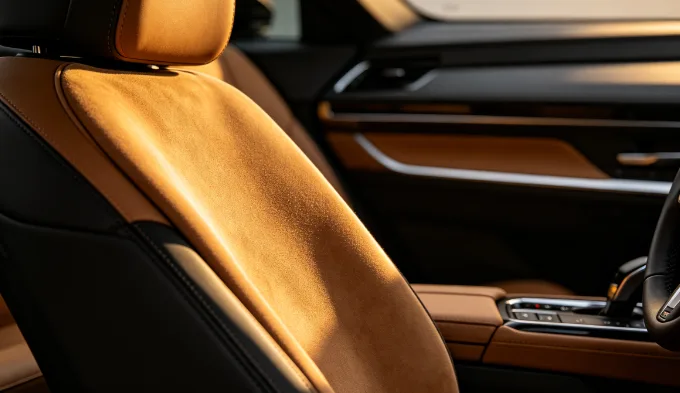
Microfiber Leather in Automotive Interiors: Core Drivers of Adoption
Microfiber leather for automotive interiors is increasingly selected by leading automakers due to performance, sustainability, and cost-efficiency advantages. Microfiber leather is a synthetic material composed of ultra-fine fibers that replicate the structure of natural leather. Compared with traditional leather, microfiber leather offers consistent quality, lower environmental impact, and scalable production. Key conclusions include: 1) improved durability under high-use conditions, 2) reduced lifecycle emissions, and 3) enhanced design flexibility for modern vehicle cabins. These characteristics align with global automotive trends toward lightweight materials and sustainable sourcing.
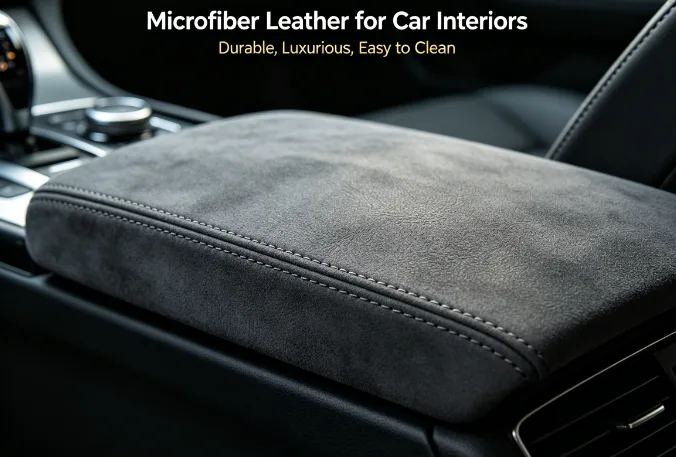
Sustainability Advantages of Microfiber Leather Materials
Microfiber leather supports automotive sustainability goals by reducing reliance on animal-based materials and optimizing manufacturing efficiency. According to the European Environment Agency, the automotive sector is under increasing pressure to reduce lifecycle emissions across supply chains. Synthetic alternatives such as microfiber leather reduce water consumption and eliminate chrome tanning processes associated with traditional leather production.
For detailed material solutions, explore microfiber leather for automotive interiors, which demonstrates reduced volatile organic compound (VOC) emissions and compliance with global environmental standards.
Durability and Performance: Why Microfiber Leather Outperforms Traditional Leather
Microfiber leather provides superior abrasion resistance, tensile strength, and aging stability. Automotive seating surfaces must withstand repeated mechanical stress, UV exposure, and temperature fluctuations. Studies published by the National Institute of Standards and Technology highlight that synthetic fiber composites can outperform natural materials in controlled durability testing.
Key performance metrics include:
| Property | Microfiber Leather | Genuine Leather |
|---|---|---|
|
Abrasion Resistance |
High |
Medium |
|
UV Stability |
High |
Low |
|
Moisture Resistance |
High |
Medium |
|
Thickness Consistency |
Uniform |
Variable |
These attributes make high-performance microfiber leather seats suitable for electric vehicles and shared mobility fleets, where durability requirements are higher.
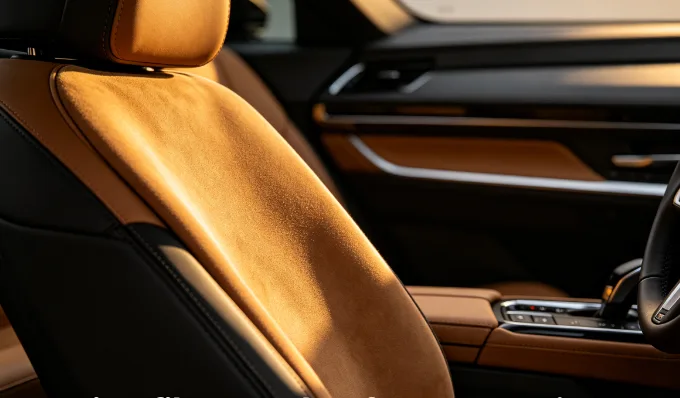
Cost Efficiency and Manufacturing Scalability
Microfiber leather enables predictable cost structures and scalable production processes. Traditional leather depends on livestock supply, which introduces variability in pricing and quality. In contrast, microfiber leather production relies on controlled industrial processes, reducing waste and improving yield rates.
According to the Organisation for Economic Co-operation and Development, supply chain stability is a critical factor in modern manufacturing competitiveness. Microfiber leather aligns with this requirement by offering consistent material availability.
Automakers are increasingly adopting automotive synthetic leather materials to optimize production timelines and reduce procurement risks.
Lightweight Design and Energy Efficiency Benefits
Vehicle lightweighting is a critical strategy for improving fuel efficiency and extending electric vehicle range. Microfiber leather contributes to weight reduction due to its lower density compared to traditional leather. The U.S. Department of Energy reports that reducing vehicle weight by 10% can improve fuel efficiency by 6–8%.
Microfiber leather supports this objective through:
1.Reduced material thickness without compromising strength
2.Lower overall seat assembly weight
3.Improved compatibility with lightweight foam structures
Explore lightweight microfiber leather upholstery for applications focused on energy-efficient vehicle design.
Design Flexibility and Customization in Automotive Interiors
Microfiber leather allows greater design flexibility than natural leather due to controlled manufacturing conditions. Automakers can achieve consistent color matching, texture variation, and embossing patterns. This flexibility is essential for modern vehicle interiors, which prioritize user experience and brand differentiation.
The Massachusetts Institute of Technology highlights the importance of material innovation in human-centered design. Microfiber leather supports advanced interior concepts such as seamless panels and integrated smart surfaces.
Common customization capabilities include:
Multi-tone color integration
-
Laser perforation for ventilation
-
Embossed branding elements
-
Soft-touch surface engineering
For advanced interior applications, consider custom microfiber leather solutions tailored to automotive design requirements.
Environmental Compliance and Regulatory Alignment
Automotive manufacturers must comply with strict environmental and chemical safety regulations. Microfiber leather can be engineered to meet standards such as REACH, RoHS, and low-VOC requirements. The U.S. Environmental Protection Agency emphasizes the importance of reducing harmful emissions in consumer products.
Microfiber leather supports compliance through:
| Regulation Area | Microfiber Leather Capability |
|---|---|
|
VOC Emissions |
Low |
|
Chemical Restrictions |
Customizable formulations |
|
Recycling Potential |
Moderate |
These attributes make eco-friendly microfiber leather materials suitable for global automotive markets with strict regulatory frameworks.
Consumer Perception and Market Trends
Consumer preferences are shifting toward sustainable and animal-free materials. According to the World Economic Forum, demand for sustainable products is increasing across industries, including automotive manufacturing.
Microfiber leather aligns with these trends by offering:
1.Animal-free material composition
2.Comparable tactile experience to genuine leather
3.Improved stain resistance and ease of maintenance
These factors contribute to growing adoption in both premium and mass-market vehicle segments.
Technological Innovation in Microfiber Leather Production
Advancements in microfiber production technology continue to improve material performance. Innovations include water-based polyurethane coatings, solvent-free processing, and enhanced fiber density control. These developments are supported by research institutions such as the National Renewable Energy Laboratory, which studies sustainable material technologies.
Key technological improvements include:
Reduced carbon footprint during manufacturing
-
Enhanced breathability and comfort
-
Improved recyclability
These innovations position microfiber leather as a long-term solution for automotive interiors.
Key Takeaways: Why Automakers Prefer Microfiber Leather
Microfiber leather is becoming a standard material in automotive interiors due to its technical and environmental advantages. Key conclusions include:
1.Superior durability compared to traditional leather
2.Lower environmental impact and regulatory compliance
3.Cost-efficient and scalable production
4.Lightweight properties supporting energy efficiency
5.High design flexibility for modern vehicle interiors
These factors collectively explain the accelerating shift toward microfiber leather across the automotive industry.
FAQ: Microfiber Leather in Automotive Interiors
What is microfiber leather in automotive applications?
Microfiber leather is a synthetic material made from ultra-fine fibers combined with polyurethane. Microfiber leather is designed to replicate the structure and feel of natural leather while offering improved durability, consistency, and environmental performance for automotive interiors.
How does microfiber leather compare to genuine leather in durability?
Microfiber leather generally provides higher abrasion resistance and better UV stability than genuine leather. Microfiber leather maintains structural integrity under repeated use, making it suitable for high-traffic vehicle interiors such as shared mobility fleets and electric vehicles.
Is microfiber leather environmentally friendly?
Microfiber leather can reduce environmental impact by eliminating animal processing and reducing water usage. Advanced production methods allow microfiber leather to meet low-VOC and chemical safety standards, supporting compliance with global environmental regulations.
What factors should be considered when selecting microfiber leather?
Material selection should consider abrasion resistance, thickness uniformity, breathability, and compliance certifications. Automotive manufacturers also evaluate color consistency, processing compatibility, and long-term aging performance when choosing microfiber leather.
What are common misconceptions about microfiber leather?
A common misconception is that microfiber leather lacks premium quality. In reality, modern microfiber leather can replicate the texture and comfort of genuine leather while offering superior durability and easier maintenance, making it suitable for both premium and standard vehicles.