

Introduction
Premium sneaker labels are increasingly choosing microfiber leather because it addresses problems that traditional materials no longer solve well at scale. Beyond appearance, it offers more consistent texture, color, and durability, while giving design and sourcing teams tighter control over quality, waste, and production timelines. For brands competing on both performance and presentation, those advantages matter as much as heritage. This article explains why microfiber leather has become a strategic material in high-end footwear, how it supports premium positioning, and what its rise reveals about changing standards in manufacturing, consumer expectations, and product design.
Technical Benefits of Microfiber Leather for Premium Sneakers
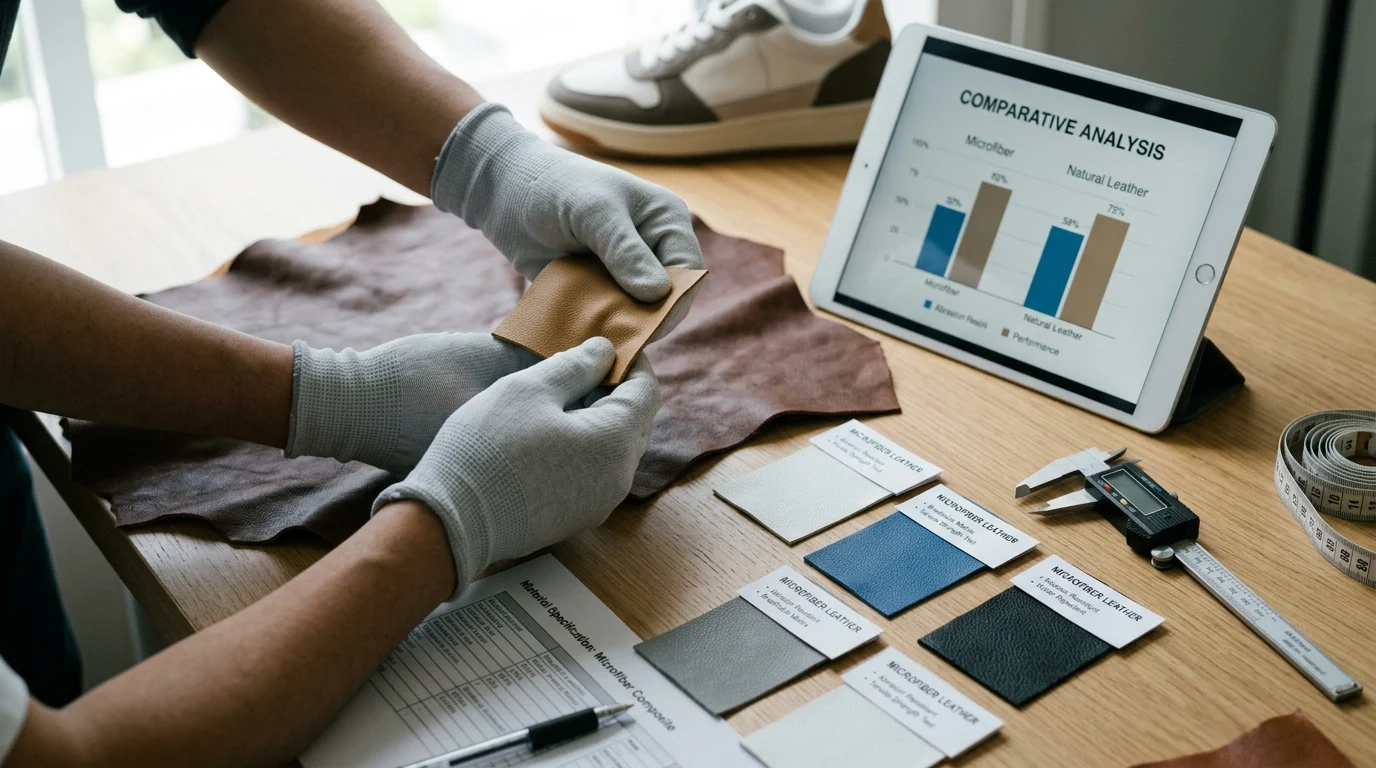
To fully grasp the footwear industry’s pivot, it is essential to examine the structural and physical properties of microfiber leather. Unlike basic polyurethane (PU) or polyvinyl chloride (PVC) synthetics of the past, premium microfiber is engineered from the molecular level up to replicate the complex collagen bundle structure of natural leather.
How microfiber leather is defined in footwear manufacturing
In footwear manufacturing, microfiber leather is defined as a non-woven fabric composed of ultra-fine polyamide (nylon) or polyester fibers embedded within a high-performance polyurethane resin matrix.
This bionic construction mimics the microscopic architecture of natural hides, allowing the material to flex, breathe, and drape much like genuine leather. However, because it is synthetically produced, the fiber density and resin distribution are tightly controlled, resulting in a highly engineered uniformity that natural materials cannot achieve.
Key performance specifications for premium sneakers
Premium sneakers demand rigorous performance thresholds that standard materials often fail to meet. High-grade microfiber leather routinely exceeds 50,000 cycles on the Martindale abrasion test, ensuring exceptional durability in high-friction areas like toe boxes and heel counters.
Furthermore, the material exhibits superior tensile and tear strength while weighing approximately 30% less than traditional bovine leather of the exact same thickness. This precise weight reduction is a critical specification for modern performance-lifestyle footwear, where reducing fatigue is a primary design objective.
Microfiber leather vs traditional leather
When evaluated against traditional leather, microfiber presents distinct technical advantages that appeal directly to footwear engineers.
| Specification | Premium Microfiber Leather | Traditional Bovine Leather |
|---|---|---|
| Cutting Yield | 85% – 95% | 60% – 70% |
| Weight (per sq. meter) | ~600g – 800g | ~900g – 1200g |
| Abrasion Resistance | >50,000 cycles | 30,000 – 40,000 cycles |
| Water Resistance | Inherently highly resistant | Requires intensive surface treatments |
This comparative data highlights why technical designers prefer microfiber for complex silhouettes that require exact tolerances, lightweight profiles, and consistent structural integrity across thousands of units.
Sourcing, Compliance, and Manufacturing Advantages
Beyond the physical performance of the final product, the supply chain dynamics of material sourcing play a pivotal role in brand strategy. Microfiber leather offers distinct operational advantages that streamline global production networks and insulate brands from commodity market volatility.
Why brands value microfiber leather in sourcing
Sourcing managers prioritize microfiber leather for its exceptional supply chain predictability. The production of traditional tanned hides is highly susceptible to agricultural cycles, climate impacts, and regional environmental regulations, often resulting in erratic lead times of 45 to 60 days.
Conversely, synthetic microfiber production is a controlled, industrialized process. Once a supplier is onboarded and formulations are locked, brands can secure steady material deliveries with lead times compressed to 14 to 21 days. This accelerated timeline allows for far more agile inventory management and rapid response to shifting market trends.
Compliance, traceability, and restricted substance requirements
Regulatory compliance is a non-negotiable factor for global footwear brands operating across multiple jurisdictions. Premium microfiber suppliers increasingly utilize solvent-free, water-borne polyurethane systems, aligning perfectly with Zero Discharge of Hazardous Chemicals (ZDHC) guidelines.
The material easily passes stringent European REACH standards, often maintaining volatile organic compound (VOC) emissions well below the critical 30 ppm threshold. Additionally, the material provides an inherent, certified solution for brands seeking to launch vegan components to meet shifting consumer demographics without risking non-compliance penalties.
Factory-floor and production benefits
On the factory floor, the transition from irregular animal hides to rolled goods revolutionizes production efficiency. Microfiber leather is delivered in standardized widths, typically 1.37 meters, which integrates flawlessly with automated CNC cutting machinery.
This standardization eliminates the need for the tedious manual inspection and hand-cutting required to navigate the irregular shapes and blemishes of natural hides. The result is a faster throughput rate, reduced labor costs per unit, and a significant drop in assembly-line bottlenecks.
Commercial Impact Across Logistics and Merchandising
The operational efficiencies gained on the factory floor translate directly into commercial advantages. For brands operating in highly competitive retail environments, the logistics, pricing, and merchandising benefits of microfiber leather have a profound impact on the bottom line.
Landed cost control and supply consistency
Landed cost control is heavily influenced by material weight, yield efficiency, and supply consistency. Because microfiber is up to 30% lighter than natural leather, brands realize measurable savings in international air and ocean freight.
| Commercial Metric | Microfiber Leather Supply | Traditional Leather Supply |
|---|---|---|
| Average Cost per Yard | $12 – $18 (Premium grades) | $20 – $35 (Top-grain/Full-grain) |
| Standard MOQ | 300 – 500 meters | 1,000+ sq. feet |
| Batch Color Variance | Delta E < 1.0 (Imperceptible) | Delta E 2.0 – 3.5 (Visible variation) |
These metrics demonstrate how brands can forecast expenses with greater accuracy, lower their upfront capital commitment, and maintain high retail margins despite fluctuating global logistics costs.
Why material consistency matters for DTC and limited drops
For Direct-to-Consumer (DTC) models and limited-edition sneaker drops, product consistency is absolutely paramount. Consumers receiving the same SKU expect identical products, regardless of whether their pair was manufactured in the first or last production run.
Microfiber leather offers exceptional color-fastness and batch-to-batch consistency, routinely achieving a Delta E color variance of less than 1.0. This strict uniformity prevents the costly returns, negative reviews, and brand damage associated with mismatched panels or varying textures frequently found in natural leather runs.
Trade-offs in luxury perception and brand storytelling
Despite these clear commercial advantages, brands must carefully navigate the trade-offs in luxury perception. Traditional leather carries a historic, deeply ingrained association with craftsmanship and premium value.
To overcome the lingering “synthetic” stigma, forward-thinking brands are reframing the narrative. They focus their marketing and storytelling on the material’s high-tech engineering, cruelty-free credentials, and superior longevity. By doing so, they educate the consumer that premium microfiber is a deliberate, high-value upgrade rather than a cost-cutting compromise.
How Brands Should Evaluate Microfiber Leather
Transitioning to or integrating microfiber leather requires a strategic approach to material selection and supplier vetting. Not all synthetic substrates are engineered to the same standards, and brands must carefully match the material grade to their specific product architectures.
Best-fit product categories, price tiers, and use cases
Microfiber leather is particularly well-suited for performance-lifestyle hybrids, vegan-specific collections, and high-wear panels. For a premium sneaker priced in the $150 to $300 tier, utilizing premium microfiber for the toe box, mudguards, and heel counters ensures structural integrity and long-term scuff resistance.
However, product developers must carefully specify the material thickness—typically 1.2mm to 1.4mm for sneaker uppers—to ensure it mimics the desired plushness and drape of traditional materials without stiffening or compromising the shoe’s intended silhouette.
Practical steps for supplier and material evaluation
Evaluating a supplier requires moving far beyond basic sample swatches. Sourcing teams must audit manufacturing facilities for ISO 9001 and ISO 14001 certifications to ensure strict quality control and environmental management standards are actively maintained.
It is critical to request technical documentation on the PU formulation, specifically demanding water-based or solvent-free resins to avoid toxic off-gassing. Furthermore, brands should negotiate Minimum Order Quantities (MOQs); while standard MOQs sit around 300 to 500 meters per colorway, premium suppliers may offer flexible terms for initial prototyping and small-batch testing phases.
When microfiber leather is the right choice
Ultimately, the decision to utilize microfiber leather rests on a brand’s strategic priorities and target audience. When the primary objectives are maximizing cutting yield, ensuring exact color consistency across global production runs, and meeting stringent environmental compliance standards, microfiber stands out as the superior technical choice.
By treating it as a specialized performance material rather than a mere leather substitute, footwear brands can future-proof their supply chains, reduce their environmental impact, and consistently deliver the high-quality aesthetics that modern consumers demand.
Key Takeaways
- The most important conclusions and rationale for Microfiber Leather
- Specs, compliance, and risk checks worth validating before you commit
- Practical next steps and caveats readers can apply immediately
Frequently Asked Questions
Why do premium sneaker brands choose microfiber leather?
It gives a cleaner, more consistent finish, lighter weight, and stronger abrasion resistance while reducing cutting waste. That helps brands meet premium quality and sustainability goals at scale.
How is microfiber leather better than traditional leather for sneakers?
For sneakers, microfiber leather is typically lighter, more water-resistant, and more uniform in thickness and surface. It also delivers higher cutting yield, which improves production efficiency.
What performance specs matter most for premium sneaker microfiber leather?
Key specs include abrasion resistance above 50,000 Martindale cycles, strong tear and tensile strength, stable thickness, and low weight. These help toe boxes and heel areas last longer.
Can HH microfiber leather help brands improve manufacturing efficiency?
Yes. Roll-based microfiber leather can reach about 85%–95% cutting yield, compared with 60%–70% for natural hides. That means less scrap, more predictable output, and easier large-batch planning.
Is microfiber leather suitable for sustainable sneaker sourcing?
Yes, when sourced from a compliant supplier, it can reduce raw-material waste and improve consistency across batches. Brands should verify performance data, compliance documents, and production stability before ordering.