
Introduction
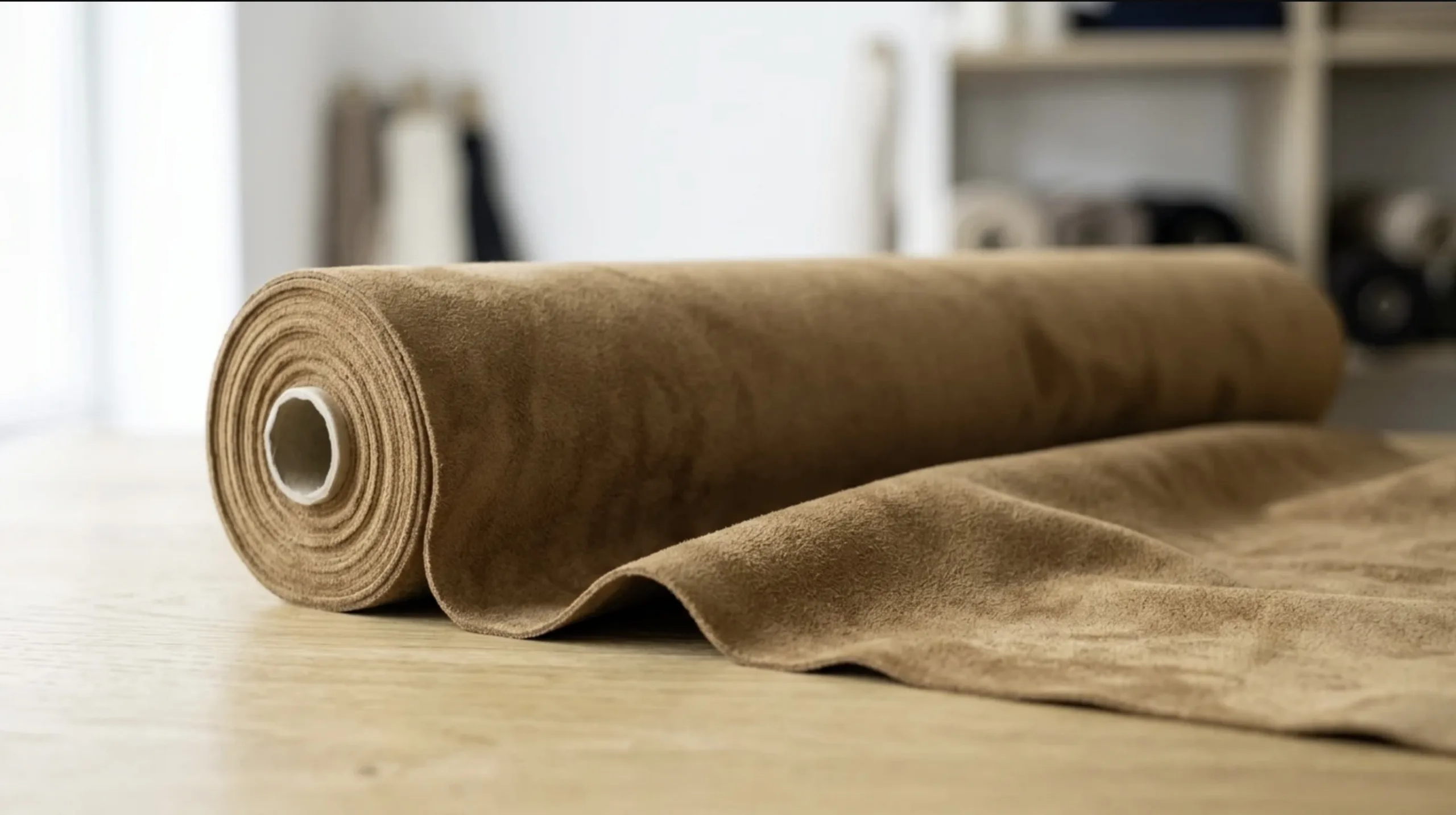
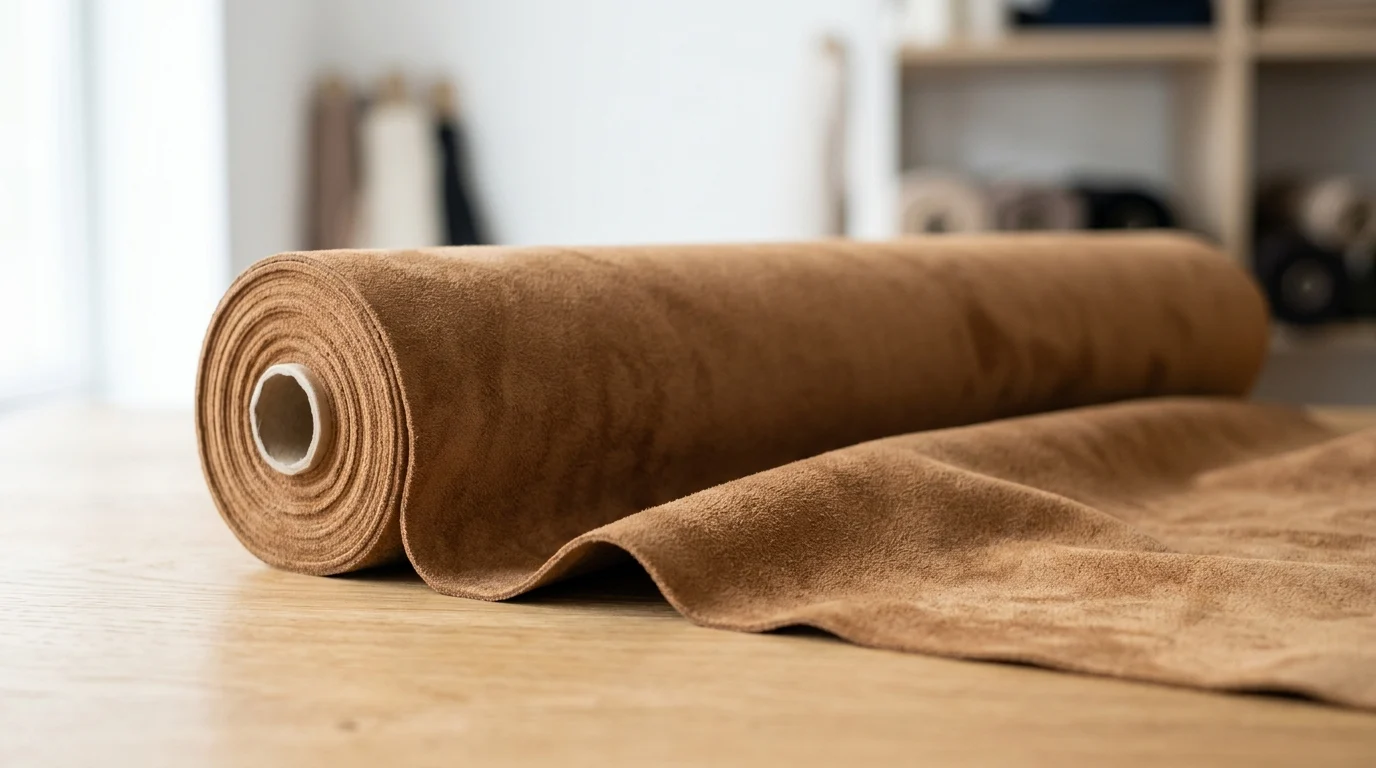
Suede microfiber leather has become a preferred material in fashion and footwear because it combines the soft, matte look of suede with greater durability, easier care, and more consistent performance in production. For brands, it offers design flexibility across shoes, bags, and apparel; for consumers, it often means a similar visual appeal with better resistance to wear, moisture, and deformation. This article explains the material’s key properties, why manufacturers and designers continue to adopt it, and how it fits current demand for practical, high-quality alternatives to traditional suede.
Why Suede Microfiber Leather Matters in Fashion
The global fashion and footwear industries are undergoing a massive material transformation, increasingly shifting toward high-performance synthetic alternatives. Suede microfiber leather has emerged as a premier substitute for traditional animal suede, driven by its unique combination of aesthetic fidelity and robust mechanical properties. As the broader synthetic leather market expands toward a projected valuation exceeding $45 billion with a compound annual growth rate (CAGR) of approximately 7.5%, microfiber-based substrates are capturing a growing share of premium and mid-tier fashion segments.
Unlike earlier generations of synthetic materials, modern suede microfiber leather delivers the tactile richness of natural suede while resolving long-standing vulnerabilities related to moisture damage and structural degradation. This evolution has positioned the material as a strategic asset for brands looking to modernize their supply chains without compromising on the luxury feel that consumers demand.
How it aligns with current fashion trends
Suede microfiber leather aligns seamlessly with the industry’s pivot toward vegan fashion and cruelty-free product lines. As luxury houses and mainstream brands alike commit to phasing out animal-derived materials, procurement teams require substitutes that do not force a downgrade in product quality. Microfiber suede provides the distinct “writing effect”—the visible nap tracking when brushed by a hand—that is the hallmark of premium natural suede, allowing designers to maintain classic silhouettes in footwear and handbags while adhering to new ethical mandates.
Furthermore, the material supports the growing trend of lightweight, seasonless fashion. Because its thickness and density can be precisely engineered, designers are utilizing lighter variants (often between 0.6mm and 0.8mm) for transitional apparel and unlined summer footwear, reducing the overall weight of garments while maintaining structural integrity.
What market forces are driving demand
Volatile raw material costs heavily influence the shift toward microfiber alternatives. Genuine animal hide prices can fluctuate by 15% to 20% annually due to agricultural variables, global meat consumption trends, and complex tanning regulations. In contrast, suede microfiber leather offers a highly predictable cost structure tied to synthetic polymer markets, shielding brands from sudden margin compressions.
Additionally, the push for supply chain transparency and localized manufacturing favors engineered materials. Brands face increasing pressure to standardize their global production, requiring identical material performance whether a shoe is assembled in Vietnam, Mexico, or Portugal. Suede microfiber guarantees this uniformity, allowing manufacturers to scale production rapidly in response to viral fashion trends without the bottleneck of sorting and grading natural hides.
What Defines Suede Microfiber Leather
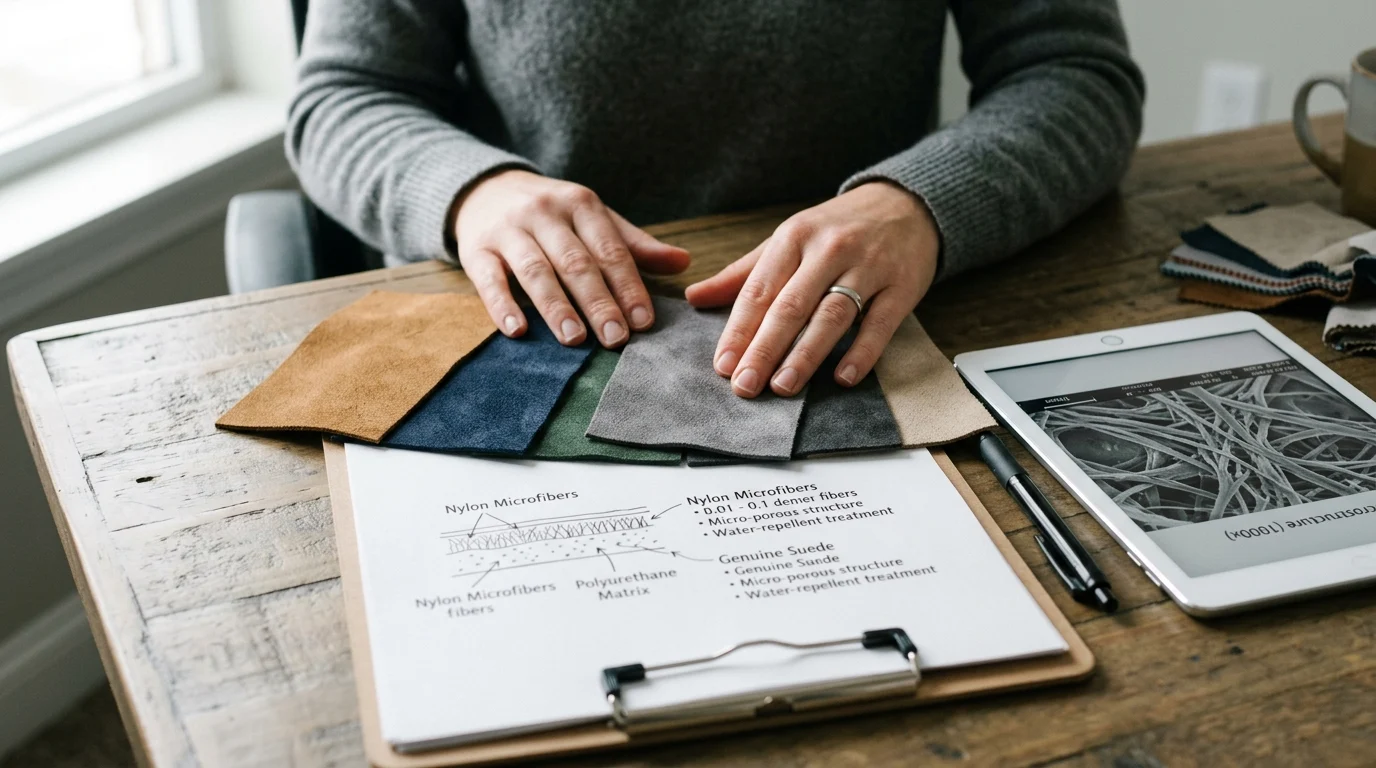
To understand why suede microfiber leather outperforms standard synthetic options, it is necessary to examine its unique morphological structure. Unlike basic polyurethane (PU) coated fabrics, which rely on a woven or knitted backing, microfiber leather is engineered to replicate the complex, interlaced collagen fibers found in natural dermis. This fundamental difference in architecture is what grants the material its exceptional durability and authentic hand feel.
How it is constructed
The construction of suede microfiber leather begins with a non-woven matrix of ultra-fine “sea-island” synthetic fibers. These microfibers are incredibly dense, typically measuring between 0.01 and 0.05 denier—significantly finer than a human hair and closely mirroring the microscopic bundles of natural leather. Through a specialized needle-punching process, these fibers are entangled into a three-dimensional web.
Once the non-woven base is formed, it is impregnated with high-grade polyurethane resin. The “sea” component of the sea-island fiber is then dissolved using specific solvents or water (in eco-friendly iterations), leaving behind only the ultra-fine “island” fibers suspended in the PU matrix. Finally, the surface is buffed and sanded to raise a fine nap, creating the characteristic suede texture. This integrated structure means the material will not delaminate, as there is no distinct separation between a backing fabric and a surface coating.
Which technical properties matter most
For industrial applications, the technical specifications of suede microfiber leather are paramount. Mechanical strength is a primary indicator of quality; high-grade microfiber suede typically exhibits a tear strength exceeding 40 N/mm and a tensile strength greater than 120 N, ensuring it can withstand the high-tension lasting processes required in footwear manufacturing.
Abrasion resistance and breathability are equally critical for consumer comfort and product longevity. Premium suede microfiber routinely surpasses 50,000 cycles on the Martindale abrasion test without significant pilling or surface degradation. Because of its porous 3D structure, it also offers moisture vapor permeability rates that standard PU cannot match, preventing the “clammy” feel often associated with synthetic shoes.
| Technical Property | Typical Microfiber Suede Range | Standard PU Faux Suede | Natural Suede |
|---|---|---|---|
| Tear Strength | > 40 N/mm | 15 – 25 N/mm | > 30 N/mm |
| Abrasion Resistance (Martindale) | 50,000 – 100,000 cycles | 10,000 – 20,000 cycles | 30,000 – 50,000 cycles |
| Thickness Options | 0.4mm – 2.0mm (Highly uniform) | 0.6mm – 1.2mm (Uniform) | 1.0mm – 2.5mm (Variable) |
| Delamination Risk | None (Integrated structure) | High (Coated backing) | None |
How Suede Microfiber Leather Compares with Alternatives
Selecting the right material requires weighing suede microfiber leather against both the traditional animal product it mimics and the lower-cost synthetic alternatives available on the market. While each material has its place in the global fashion supply chain, their comparative advantages dictate their use in specific product tiers, from fast fashion to luxury goods.
How it compares with genuine suede and PU
When compared to genuine animal suede, microfiber offers superior consistency and resistance to environmental damage. Natural suede is notoriously susceptible to water staining, color bleeding, and stiffening upon drying. Microfiber suede, conversely, can be engineered for high water resistance and colorfastness, maintaining its soft hand even after exposure to the elements. However, purists often argue that natural suede develops a unique patina over time that synthetics cannot perfectly replicate.
Against standard PU faux suede, microfiber operates in a completely different performance category. Standard PU faux suede is essentially a woven polyester or cotton fabric with a thin, flocked, or coagulated PU surface. It is prone to peeling and tearing under stress. Microfiber’s non-woven 3D architecture prevents this delamination, offering the structural integrity required for high-stress applications like shoe uppers and heavy-duty handbag straps, whereas standard PU is typically relegated to lightweight apparel or low-cost accessories.
What trade-offs affect cost, aesthetics, and processing
The most significant trade-offs when choosing between these materials revolve around cost, cutting yield, and processing requirements. Genuine suede is priced by the square foot, often ranging from $4.00 to $8.00 depending on the origin and grade of the hide. Furthermore, irregular hide shapes and natural defects (like scars or brand marks) result in substantial waste. Suede microfiber leather is sold in continuous linear yards or meters, typically costing between $4.50 and $9.00 per linear meter (at a standard 54-inch width), offering a highly predictable cost model.
Aesthetic and processing trade-offs also apply. While standard PU is the cheapest option (often under $2.00 per meter), its inability to hold a clean, raw edge forces manufacturers to fold and stitch all visible seams, increasing labor costs. Suede microfiber can be cut with a raw edge—just like genuine leather—allowing for sleeker designs and reduced assembly time, effectively offsetting its higher initial raw material cost compared to basic PU.
| Material | Cost Basis | Average Cutting Yield | Edge Finishing Required |
|---|---|---|---|
| Genuine Suede | $4.00 – $8.00 / sq ft | 60% – 70% | Raw edge capable |
| Microfiber Suede | $4.50 – $9.00 / linear meter | 95% – 99% | Raw edge capable |
| Standard PU Suede | $1.50 – $3.00 / linear meter | 95% – 99% | Must be folded/bound |
What Makes It Practical for Manufacturing and Sourcing
Beyond its mechanical and aesthetic properties, suede microfiber leather presents distinct logistical and operational advantages for manufacturing facilities. Procurement teams and factory managers increasingly favor the material because it streamlines production workflows, reduces material waste, and simplifies the quality control process across large-scale manufacturing runs.
How it affects cutting yield and color consistency
One of the most compelling operational benefits of suede microfiber leather is its impact on cutting yield. Supplied in continuous rolls with a standard width of 1.37 meters (54 inches), manufacturers can utilize automated CNC cutting machines to nest patterns with mathematical precision. This results in cutting yields consistently between 95% and 99%. In contrast, cutting animal hides requires skilled manual labor to avoid natural defects, yielding only 60% to 70% usable material.
Color consistency is another major advantage. Dyeing natural suede is an inexact science, often resulting in significant shade variations between different hides in the same batch. Microfiber suede is manufactured under strict, computer-controlled dyeing processes, ensuring high color uniformity from roll to roll. High-quality suppliers can maintain a color difference value (ΔE) of less than 1.0 across a massive production run, eliminating the need for factories to color-match individual shoe panels prior to stitching.
Which compliance and testing factors matter
Navigating international chemical compliance is a critical hurdle for fashion brands. Suede microfiber leather must be rigorously tested against Restricted Substance Lists (RSL) and global standards such as the EU’s REACH directive. Traditional tanning processes for natural suede often involve heavy metals like chromium, which pose environmental and health risks. Microfiber production bypasses these specific tanning agents.
However, buyers must monitor the solvents used in microfiber manufacturing. Historically, Dimethylformamide (DMF) was heavily used to coagulate the PU resin. Today, brands must specify low-DMF or DMF-free microfiber, with strict compliance thresholds requiring residual DMF levels to remain below 30 ppm (parts per million). Additionally, physical testing for colorfastness to rubbing (crocking)—usually requiring a rating of 4 or higher on a 5-point scale—is mandatory to ensure dye does not transfer onto consumers’ clothing.
What sourcing and qualification steps to follow
Establishing a reliable supply chain for suede microfiber requires a structured qualification process. Brands should begin by evaluating supplier Minimum Order Quantities (MOQs), which typically range from 300 to 500 meters per custom color. Standard lead times for bespoke colors usually span 15 to 25 days, allowing for relatively agile inventory management compared to the long lead times of traditional tanneries.
During the sourcing phase, procurement teams should request comprehensive technical data sheets (TDS) and independent lab test reports (such as SGS or Intertek) verifying physical and chemical properties. Auditing the manufacturing facility for ISO 9001 (Quality Management) and ISO 14001 (Environmental Management) certifications is also recommended to ensure the supplier employs closed-loop water systems and robust solvent recovery technologies, aligning with the brand’s sustainability targets.
When Brands Should Choose Suede Microfiber Leather
Determining when to integrate suede microfiber leather into a product line requires a strategic assessment of the brand’s market positioning, target demographic, and specific functional requirements. While the material is highly versatile, its unique properties deliver the highest return on investment in specific categories where durability and aesthetic appeal must coexist.
Which product categories benefit most
Footwear is arguably the most demanding consumer product category, and it is where suede microfiber leather truly excels. Sneakers, lifestyle shoes, and fashion boots benefit immensely from the material’s high flex resistance. A premium footwear-grade microfiber suede can withstand over 100,000 flexes at room temperature, and up to 50,000 flexes in sub-zero conditions (-20°C), without cracking or delaminating. This makes it an ideal choice for shoe uppers and high-friction lining components.
Luxury and mid-tier handbags also represent a prime application. The ability to source microfiber suede in precise thicknesses—ranging from a delicate 0.6mm for soft, slouchy hobo bags to a rigid 1.8mm for structured totes—gives designers immense flexibility. Furthermore, the material is frequently used as a premium interior lining in luxury leather goods, offering the opulent feel of genuine suede without adding excessive weight or cost to the final product.
How to evaluate it against product requirements
To successfully implement suede microfiber leather, product development teams must evaluate it against their specific
Key Takeaways
- The most important conclusions and rationale for suede microfiber leather
- Specs, compliance, and risk checks worth validating before you commit
- Practical next steps and caveats readers can apply immediately
Frequently Asked Questions
What makes suede microfiber leather popular in fashion and footwear?
It combines a suede-like look and writing effect with better durability, lighter weight, and more stable supply than animal suede.
How is suede microfiber leather different from standard PU synthetic leather?
It uses a dense microfiber nonwoven structure with PU impregnation, so it feels more like real suede and resists peeling or delamination better.
Is suede microfiber leather suitable for vegan fashion lines?
Yes. It offers a cruelty-free suede alternative that helps brands create vegan shoes, bags, and apparel without losing a premium hand feel.
Why do footwear manufacturers choose suede microfiber leather?
It provides consistent thickness, solid tear strength, and abrasion resistance, which helps factories produce shoes with reliable quality across different locations.
Can HH Microfiber support custom suede microfiber leather sourcing?
Yes. On hh-mf.com, buyers can explore microfiber leather options for footwear and fashion and discuss thickness, color, and performance requirements with the supplier.