
What Is Synthetic Leather and Why Does It Matter in Modern Manufacturing?
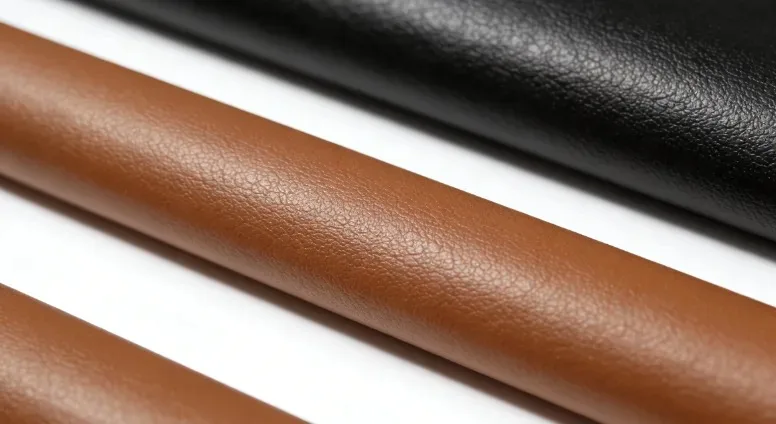
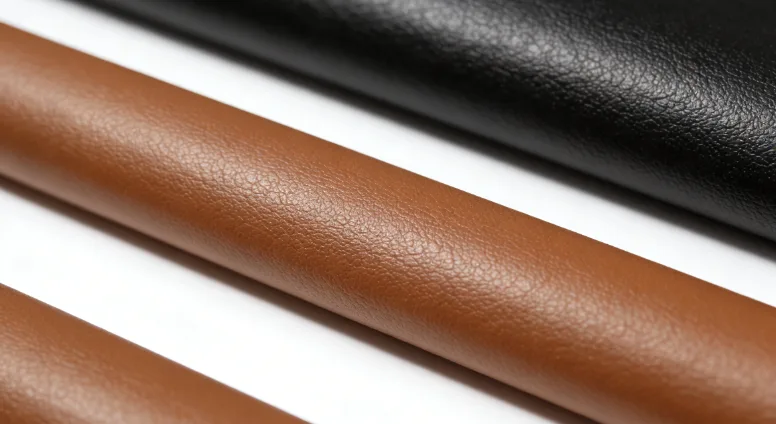
Synthetic leather — also called faux leather, artificial leather, or leather substitute — is a man-made material engineered to replicate the appearance and functional properties of genuine animal hide. Three primary categories dominate the market today.
Polyurethane (PU) leather is the most widely used type, produced by applying a PU coating onto a fabric base (polyester or cotton). It offers versatility, cost efficiency, and customizable properties across a wide softness-to-rigidity range. Microfiber leather represents a premium tier, constructed from ultra-fine fiber non-woven structures that mimic natural leather dermis, delivering superior tear strength, breathability, and a hand feel closer to genuine hide. Waterborne PU leather is the third category, replacing organic solvents with water as the dispersion medium, reducing VOC emissions by up to 90% (American Coatings Association).
The choice between these material types directly affects product performance, regulatory compliance, and brand positioning in an eco-conscious market.
What Are the Key Performance Differences Between PU Leather and Microfiber Leather?
PU leather consists of a polymer surface layer laminated to a fabric backing, limiting its long-term durability under heavy stress. Microfiber leather uses a three-dimensional network of ultrafine polyester or nylon fibers (0.005–0.01 denier), providing exceptional tensile strength. SATRA testing indicates microfiber leather outperforms standard PU leather by 30–50% in tear strength and shows significantly lower surface crack propagation after repeated flexing cycles.
Breathability is another critical differentiator. The open microporous structure of microfiber leather allows superior moisture vapor transmission compared to PU leather’s continuous polymer film. For footwear and safety shoe applications, microfiber leather’s moisture management reduces bacterial growth and material degradation inside the shoe.
In surface feel, microfiber leather achieves a closer approximation to genuine leather through specialized finishing processes including buffing, embossing, and coating — producing textures from smooth full-grain to sueded napa for luxury handbags, premium sofa upholstery, and automotive seat covers.
Why Is Waterborne PU Leather Becoming the Preferred Choice for Eco-Regulatory Compliance?
Environmental regulation is reshaping material selection across global supply chains. The EU REACH regulation and similar frameworks in North America and Asia-Pacific have imposed stricter limits on organic solvents, plasticizers, and heavy metal catalysts in conventional leather production.
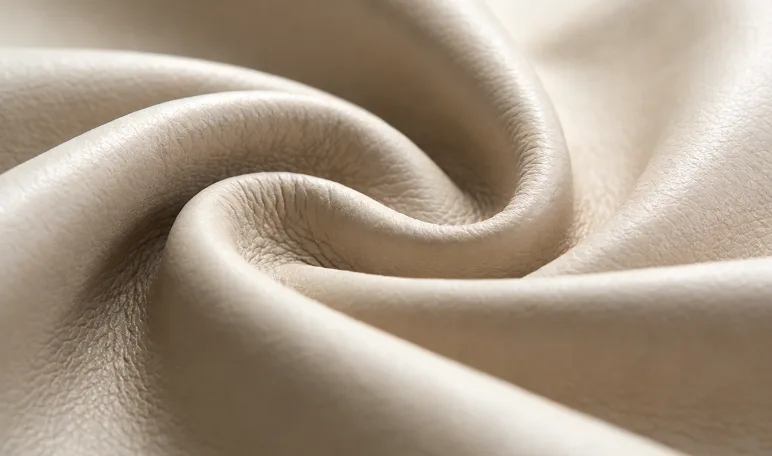
Waterborne PU leather addresses these challenges at the source. Lifecycle assessment data published in the Journal of Cleaner Production shows waterborne PU systems achieve a 35–40% reduction in global warming potential compared to solvent-based PU systems. The finished product maintains comparable physical properties — color fastness, hydrolysis resistance, abrasion durability — while meeting environmental product declarations (EPDs) demanded by major retail brands.
Ningbo HaoHao’s MFWB98 waterborne PU microfiber series (50% waterborne PU, 50% polyester microfiber base, 1.9 mm thickness, 940 g/m²) exemplifies this balance. With a minimum order quantity of 300 meters per color, brand owners can access custom-colored sustainable materials without large inventory commitments.
What Applications Are Best Served by Each Synthetic Leather Type?
| Application | Recommended Material | Key Performance Driver |
|---|---|---|
| Footwear (mid-market) | PU Leather | Cost efficiency, processing flexibility |
| Safety Shoes | Microfiber Leather | Tear strength, fatigue resistance, chemical resistance |
| Sofa / Furniture Upholstery | Microfiber Leather | Martindale abrasion (30,000–50,000 rubs), UV fastness |
| Automotive Interiors | Microfiber Leather | Temperature cycling (-30°C to +80°C), flame retardancy |
| Bags & Luggage | PU Leather | Light weight, embossing flexibility, color range |
PU leather dominates mid-market footwear, bags, and luggage due to cost efficiency and embossing flexibility. Microfiber leather is preferred for safety shoes, furniture, and automotive interiors where durability, breathability, and premium tactile quality are paramount.
How to Evaluate and Select a Synthetic Leather Supplier for Global Markets?
Supplier qualification requires systematic assessment across four dimensions. First, production capacity: a reliable supplier should offer sufficient scale without single-point risk. HaoHao operates three factories in Ningbo, Jiangxi, and Anhui provinces with a combined annual capacity of 50 million meters. Second, quality certifications: ISO 9001 certification combined with third-party testing against SATRA TM92 (tear strength), SATRA TM173 (flex cracking), and ISO 105-B02 (color fastness to light) demonstrates systematic quality control. Third, MOQ flexibility: HaoHao’s MOQ of 300 meters for waterborne microfiber and 700 meters for standard PU colors serves both established brands and emerging market entrants. Fourth, sustainability reporting: environmental product declarations, carbon footprint data per meter, and end-of-life recycling guidance support scope 3 emissions reporting and sustainable procurement scoring.
Frequently Asked Questions (FAQ)
How Long Does Synthetic Leather Last Compared to Genuine Leather?
High-quality microfiber leather in footwear applications typically maintains functional integrity for 3–5 years under normal use, comparable to mid-grade genuine leather. PU leather generally offers 1–3 years before surface cracking or delamination. For furniture upholstery, microfiber leather can last 5–8 years with proper care.
Is Microfiber Leather Fully Recyclable?
Microfiber leather recycling is technically feasible but requires specialized processing infrastructure. The composite structure cannot enter conventional leather or textile recycling streams. HaoHao and other manufacturers are exploring closed-loop systems converting production offcuts into secondary applications such as automotive sound insulation.
Does Waterborne PU Leather Cost More Than Conventional PU Leather?
Waterborne PU leather typically commands a 15–30% price premium over conventional solvent-based PU leather. However, total cost of ownership increasingly favors waterborne materials when factored against regulatory compliance costs, VOC abatement investments, and the commercial value of environmental product claims in brand marketing.
Can Synthetic Leather Be Used in Food Contact Applications?
Standard synthetic leather products are not certified for direct food contact. Food service applications must comply with FDA 21 CFR (US) or EU Regulation 10/2011 (Europe), which impose strict migration limits for primary aromatic amines, plasticizers, and thermal stabilizers. Manufacturers offering food contact-grade synthetic leather maintain separate production lines and certified formulations.
How Should Synthetic Leather Be Stored and Maintained?
Store synthetic leather at 15°C–30°C with relative humidity of 40–60%. Avoid direct sunlight to prevent UV-initiated polymer degradation. Clean with a soft damp cloth and mild neutral-pH detergent. Avoid abrasive cleaners, organic solvents (acetone, thinner), and high-pressure water jets.